
Sarah Al-Ahmed:
A life spent searching for life beyond Earth this week on Planetary Radio. I’m Sarah El Ahmed of The Planetary Society with more of the human adventure across our solar system and beyond. Gentry Lee spent nearly five decades at NASA’s Jet Propulsion Laboratory. He helped land the first spacecraft on Mars. He served on the Voyager Review Board.
He helped create cosmos with Carl Sagan and co-authored science fiction novels with Arthur C. Clark. Now his extraordinary life is the subject of a new documentary called Star Man. Gentry joined me at The Planetary Society’s headquarters just one day after his retirement from JPL. We talked about the search for life in our solar system, what it meant to be part of the only generation that would ever explore it for the first time, and why he believes that if we discover life elsewhere, it will be the greatest scientific discovery in history.
Then our chief scientist, Bruce Betts, joins me for What’s Up, where he’ll tell us about The Planetary Society’s history of supporting the search for life beyond Earth. If you love Planetary Radio, I want to stay informed about the latest space discoveries. Make sure you hit the subscribe button on your favorite podcasting platform. By subscribing, you’ll never miss an episode filled with new and onspiring ways to know the cosmos and our place within it.
Gentry Lee spent his career at the forefront of one of the most profound questions humanities ever asked. Are we alone in the universe? But his path to that question didn’t begin as you might expect. Before he was landing spacecraft on Mars, Gentry was a kid computing baseball batting averages in his head. The beginning of a journey that would take his mind to the farthest reaches of our solar system. As an adult, he joined aerospace contractor, Martin Marietta, to work on the Viking program.
It was humanity’s first attempt to land on Mars and searched directly for signs of life. That mission success ultimately brought him to NASA’s Jet Propulsion Laboratory in 1976, where he would spend most of his space career. Most recently, he served as chief engineer for the Solar System Exploration Directorate, which meant that he was responsible for the engineering integrity of all planetary missions managed by JPL.
That includes the Curiosity Rover, the Dawn mission to the Asteroid Series Investa, the Juno mission to Jupiter, and the twin GRAIL spacecraft that napped the moon’s gravity field. On Viking, which was the Mars mission that began his career, he rose to director of science analysis and mission planning, coordinating hundreds of scientists and engineers that were studying Mars. He later served as chief engineer on the Galileo mission, helping to lead that spacecraft that explored Jupiter and its moons for more than a decade.
He also sat on the Voyager Review Board as those twin spacecraft carried out their historic grand tour of the outer solar system. Gentry has provided engineering oversight for every successful NASA landing on Mars, including spirit and opportunity, Phoenix, and curiosity. He’s helped oversee missions across our whole solar system, Deep Impact, Stardust, Dawn, Juno, and GRAIL. But beyond his science career, he helped create Cosmos with Carl Sagan, one of the most impactful space shows ever created.
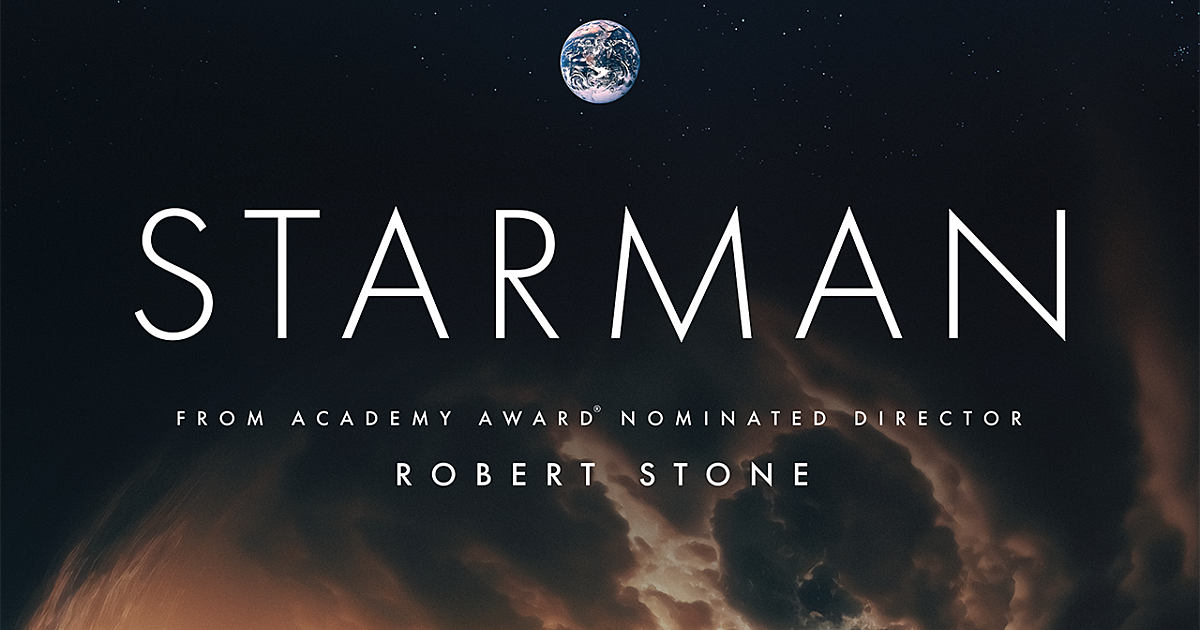
He also co-authored a series of science fiction novels with the renowned science fiction author, Arthur C. Clark. His life’s work is now the subject of a new documentary called Starman, directed by Oscar nominated filmmaker Robert Stone. The film premiered at South by Southwest in 2025. Then it toured the United States to packed houses, and now it’s available on Apple TV, Prime Video, and Google Play. Starman traces the arc of humanity’s solar system exploration through Gentry’s eyes, from the earliest dreams of life on Mars to the question about what might come next.
Gentry will be the first to tell you that his lifelong fascination with science fiction and the cultural mythology around alien life was part of what drew him toward the scientific search. For so many of us, the road to space science runs through human stories, through that feeling of staring up and wondering. For Gentry, that fascination that started with stories about extraterrestrials became a 50-year saga dedicated to the scientific search for life beyond earth. Here’s my conversation with Gentry Lee. Hi, Gentry. Thanks for joining us.
Gentry Lee:
Hi, Sarah. Glad to be here.
Sarah Al-Ahmed:
And it’s wonderful to see you in the studio at our HQ in Pasadena. I love that you’re just right over the way in JPL.
Gentry Lee:
Yes. Well, and I don’t live very far away, and I thought it would be a whole lot easier if we can look at each other while we talk.
Sarah Al-Ahmed:
Yeah. I also wanted to congratulate you on so many wonderful years at JPL, and I understand you only recently retired.
Gentry Lee:
Yes. My official retirement day was yesterday, and I began working at JPL in November of 1976.
Sarah Al-Ahmed:
You’ve seen so much of what that lab has done, and so many of the amazing missions, especially in the search for life, have come out of that place. So you are uniquely positioned in your career to tell a story like this in Starman. Were you interested in the search for life early on in your life, or is it something that emerged as you got into more of these missions?
Gentry Lee:
Well, I was interested in the exploration of the solar system first because of the acquisition of new human knowledge. And I knew that was going to happen. And as I became interested in that, almost concurrently, I started following close encounters of the first kind, the second kind, and of course, the close encounters of the third kind. So as we say in the movies, Sarah, they all run together. Science, fiction, human interest in space, UFOs, all these things are tied together in an intellectual arc.
Sarah Al-Ahmed:
I had a very similar experience when I was younger in that I was convinced that there was life beyond earth, right? But it wasn’t until I actually got more into the meat of the science that I realized the difference between the public perception of the search for life and the actual science behind doing it.
Gentry Lee:
It’s a shame in a way, although I have learned to live with it, but what people don’t seem to realize is that there are ways to determine truth. And one of the subtexts in Starman is, by the way, the scientific method is a way to determine whether or not things are real or not. Whether or not they exist, of course, has been a subject that many people have talked about over a long period of time. And in the movie, we talk about Enrico Fermi saying, “Where are they?”
Well, there are two science fiction explanations for where they are. One is what we highlight in the movie where we use these little light bulbs to determine how long a civilization exists. The history of the universe is so long that unless an advanced civilization lasts for significant period of time, the likelihood that it would be close enough to another emerging civilization to make contact and interact is very low. I believe that there is life and intelligence out there. I have no proof.
The numbers, Sarah, are just absolutely overwhelming, and that’s why I believe it has to be there. I believe that those people who insist that we are special, particular, and it can never happen anywhere else are being too much homocentric. They think that the process that produced us must be the only process to produce intelligence, but I’m going away from here. So anyway, why have we been not been contacted? One is advanced civilizations may not last that long.
The second idea, which is throughout science fiction, is that they are out there and there is a foundation, Galactica, and it’s paying attention to all the emerging civilizations everywhere. And right now they’re watching Howdy Doody and Adolf Hitler’s speeches and looking and seeing what’s going on today. And they see that we spend one quarter of our gross world product making weapons to kill each other. And they say to themselves, “Don’t think those dudes are going to survive.” Or, “Don’t think we want to have anything to do with those dudes.”
Sarah Al-Ahmed:
My mom, when I was a kid, I was so convinced that like, “What if aliens attack us?” And I think it was the movie Independence Day that did this to me, but she always used to say to me, “What are the chances that they’ve come all the way out here just to destroy us? They can do that to themselves if that’s how they feel about it, right?”
Gentry Lee:
Arthur C. Clark and I talked about this for a long, long time, and people don’t seem to understand this. It won’t matter if the aliens are benevolent or malevolent. The moment that we contact them will be the biggest turning point in human history, because our solar system came along very, very late in the history of the universe. And if you imagine that there are creatures out there that have been around for, let’s just say, a billion years, what kind of technology would they have?
And Arthur’s famous quote, “The technology of an advanced extraterrestrial civilization will be indistinguishable for magic.” Now, at one of my recent tour stops for Starman, I was asked the question, “Do you think that there exists something in physics which might allow us to travel to another star in less than the 10,000 years that we’re limited by right now?” And I said, “First of all, anybody who has studied the history of technology knows not to ever say something is impossible.” Okay. And I will say, I will postulate the following.
If there is something in physics, which is to Einstein, as Einstein was to Newton, then perhaps there is some breakthrough out there, which we don’t yet understand. It may be related to the multiple dimensions that we talk about at the beginning of the Big Bang, but if that’s there, that is possible. But with our current physics and our understanding of it, even if we were to get nuclear fusion to propel a spacecraft, it still would take at least a human lifetime to get to even the nearest place.
Sarah Al-Ahmed:
The one consolation is that at least the person inside the spacecraft undergoing that light speed or close to light speed travel would have a little less time of it than the people who are watching back on earth because of special relativity. But even then, it is such an intense ride to go all the way out there and back. Who knows? Maybe somewhere in the mysteries of quantum gravity, we’ll find some way to do it or maybe an Alcubierre drive will be real, but we’re so far from that right now. We need to invest more into space science and into this kind of research if we ever want to get close to that.
Gentry Lee:
I guess, Sarah, I do not fully understand why people are so much into human beings going places. As I say in Starman, when I’m asked, “Have I ever been in space?” I say, “I’ve been in space many times. The best part of me, not my body, but my mind.” And that is the thing about us, which makes us so special. And I guess it’s because of the widespread scientific illiteracy that human beings cannot recognize that if something that was created by a human mind is in space, it’s just as exciting and just as much a miracle as if human beings are there.
Now, I have a whole bunch of friends who say, “Aren’t you excited that we’re going back to the moon?” I say, “Okay, first of all, do not paint me as being against human expedition.” That’s not exploration. That’s not true. I’m for a balanced program and the dividends in terms of the acquisition of new knowledge are clearly on the side of the robotics. Let’s take an example that’s very near and dear to your heart and to my heart, which is the Mars sample return.
After all of our Mars missions, we concluded that there was no way we could send something large enough to determine once and for all whether or not there had ever been life on Mars. And the only way we could fully understand that would be to go and pick up scientifically selected samples and bring them back to the planet earth where we could analyze them with large machines and even build new machines if we needed to to answer this fundamental question as to whether or not there ever was or is life on Mars.
Well, today, the Mars sample return mission is defunct. It is no longer being funded in any way. If you were to walk down the street and ask somebody, “Do you know about the rovers on Mars?” They would say yes. If you were to ask them, “What are we doing in the space station?” Their eyes would go blank. So I think it’s simply a question of why are we not underlining the right effort?
Now, I am very concerned. I have had a lot to deal with the Mars sample return mission, and it is extraordinarily complicated. And as I explained to people, you have to be able to put a launch vehicle inside an aeroshell, land it on the surface of Mars, have it erected, have it survive a hundred days or more of the thermal shock of the day and night that goes on Mars and then take off. That is a very large engineering task.
Sarah Al-Ahmed:
It’s really complicated.
Gentry Lee:
And yes, it costs a lot of money, but that money should be compared to the money that’s being spent in other places. As one of my friends said, “Gentry, point out that the total cost of the entire space science budget at NASA is less than the acknowledged annual waste in the Pentagon.”
Sarah Al-Ahmed:
I’m sure you’re extra passionate about this after having Viking being your first mission here, right? That entire attempt to go there, actually land on Mars, the results being kind of ambiguous and how that resulted in scientists talking about it one way and the public talking about it another way, that’s got to bring up a lot of feelings when we’re now talking about the modern day search for life on Mars, especially knowing that we have evidence of potential bio signatures in that Sapphire Canyon sample just sitting there on Mars waiting for us to bring it back.
Gentry Lee:
Well, one of the things that was remarkable about Viking was first the hubris of us as a human species. I had two Nobel Prize winners. I was the director of science analysis mission planning. So I had 300 scientists and engineers working for me during the Viking operations. I had two Nobel Prize winners and four others who came into my office and explained why they should have won the Nobel Prize.
So this was a blue ribbon group of people. So we went off to Mars and we built instruments that would look for life. Of course, what kind of life would we look for? Duh, only kind of life we knew about was the kind of life that exists on the planet earth. Now, at the time of the data coming back, nobody could figure out what it meant, right? And Gil Levin, who was the labeled release PI, believed all the way till he died, that his instrument, what his instrument found could only be a sign of life.
But at the time, Norm Horowitz was the Caltech chair, and he had all the prestige associated with it. And he announced that because Klaus Biemann’s GC/MS did not find any organic material, that there was clearly no life in the spots we landed on Mars, and that’s what everybody believed. But in 2008, Sarah, when Phoenix landed in the northern regions of Mars, it discovered there was something in the soil called perchlorate.
Now, without going into a long chemical explanation for everybody listening to this right now, let me just explain that perchlorate breaks down organic bonds. So if there was perchlorate where the Viking missions landed, and we suspect there was, it would have destroyed all the organic material. And therefore, the fact that we didn’t find any organics meant nothing for biology. Now, Chris McKay, who’s been following this all his life, just published a wonderful article summarizing the Viking results today as we look back at them, looking at perchlorate.
And I’ve been told that I’ve not yet read that there is another paper that’s coming out in which the writer now says, “If we were to think about all the things we know about the Viking data today, we would not be inclined to say it did not find life.” So I remember Mike Malin sent me a photograph about nine years ago of an asteroid impact near the Viking two landing site with ice in it. And if we had dug twice as deep as we dug, we would have seen ice. And what do you think would have been the response?
The whole history of the exploration of Mars would have been different. Now, wind this long, long monologue up by saying a couple of things. First, when I am asked, where do you think is the most likely place to find life in our solar system? I say subterranean Mars. I still think, although it’s possible that there’s life in the oceans Enceladus and maybe even on Europa, and yes, there are organic chemicals in the atmosphere of Titan, but the surface is at minus 300, so it might not be … I think that there is a very good chance that life might have developed on Mars, but then when the atmosphere was stripped away and the ultraviolet started penetrating the surface, they went underground, just like they would do here.
So I am waiting for that first mission that will actually go into the soil way down deep and sample something from underneath. Now that’s not going to be easy as we discovered on InSight. I worked for a year to try to figure out why the drill wouldn’t drill. All the people who had the drill on InSight said, “We tested all the possible Martian simulant, and it never had this problem before.” There’s something about Mars that always makes us pause and we have to get out of our earth chauvinism in order to understand it.
And as I was at MIT as part of the tourist, Sarah, and they asked me, “What did I think MIT scientists and engineers most needed to be successful in life?” I said, “A life outside of science and engineering.” They need to study art, history, things where there’s a lot of creativity. Some of my best thinking in my career as an engineer has been because I get outside that left brain box into my right brain. I’m a knowledge junkie. I love history and art and all that sort of stuff, and that’s where you find new ways to approach problems.
Sarah Al-Ahmed:
This reminds me too of your origin story, basically. When you were a kid, it wasn’t this innate passion for science that drove you. It was actually your calculating of batting averages as a kid that led you into this discovery that you were good at math, but it was the love of the sport that really drove you at that time, right?
Gentry Lee:
It was the love of the sport. Then it was the love of the math, and that led to love of knowledge of all kinds. My undergraduate education, it was absolutely fantastic. When I was still a young teen, I won a state contest in Texas, and the University of Texas offered me the following blank check. Come to our school, you don’t have to pay a thing. You’ll have two sessions individual with professors on whatever subjects you want every semester.
You can take whatever course you want to take. So I took the history of the British novel, I took Russian, I took French, I took art history, and all of those things, yes, I took math too. And when I got to MIT, I was way behind. Okay, that was the way it was. But that grounding in things other than left brain conscious STEM stuff really served me very well. Now, I will tell you one other thing.
When I was at the University of Texas at Austin as an undergraduate, I thought there was a chance that I was one of the smartest people in the world. But when I went to MIT to graduate school, I said, “Oh my goodness, there’s a whole bunch of other people just as smart as I am.” And so I said, “Well, how am I going to be successful in life?” I said, “Aha, I’m going to have to be broad across all the spectrum of human endeavors and most of these guys won’t be, and perhaps I can be successful doing that.”
Sarah Al-Ahmed:
I had a similar experience. I went to UC Berkeley thinking I knew everything only to realize everyone around me, at least at the time I thought was so much smarter than me. And then I realized we all have our own facets, our own things that we excel at. And it’s only truly by working together that we can accomplish anything like this. And I think that the entire kind of public perception of science, that scientists are just innate geniuses that know everything just really does a disservice to the entire field where we all need each other in order to do this.
Gentry Lee:
There is nothing that can be done today in science and engineering that can be done by an individual. It all has to be … Even if it’s coming up with a new theory, the first thing you have to do is, as I say again in Starman, if you don’t know how to solve a problem, find the smartest people you can possibly find and ask them their opinion. And somewhere out of all that effort, the solutions come.
When we were doing Viking, Sarah, we were scared to death that we would be … Everybody told us, “What are you thinking about? You don’t know the atmosphere. You don’t know the terrain. How in the world are you going to land there carefully?” And today, you can run an EDL, an Entry, Descent and Landing run into the Martian atmosphere. You can do 10,000 runs in a Monte Carlo on your desktop. In those days, to run one Entry, Descent and Landing run, you had to load a tray of cards into the IBM mainframe computer and have it run all night.
So what I had to do was pick spots on the two sigma hypersurface in order to figure out whether or not the algorithm would work. And one of the things that people still don’t seem to realize is once the spacecraft is on its way to the Martian atmosphere, it’s on its own. It doesn’t get any signals from the earth. And if you haven’t programmed it and figure out all the different things, there’s going to be a problem. So until the Chinese landed three or four years ago, nobody except us had ever successfully landed on Mars. And we’d done it seven times and there’d been a dozen failures by other people.
Sarah Al-Ahmed:
I keep thinking about how much could have been waylaid by even just landing on a single rock and a boulder field, right?
Gentry Lee:
We did that analysis on Viking. We were 85% likely to land successfully and 15% likely to have landed on one of those rocks that would have landed. So we were lucky twice, but we were also smart as we spent a long time looking at those pictures, trying to analyze them with the instruments that we had to see where we thought would be the highest probability of being able to land safely.
If we had landed at … I’ll have to tell you a funny story. We were supposed to land on July the 4th. That was in 1976, which of course was going to be the 200th anniversary and Gerald Ford was supposed to fly out to California for us to land. Well, that required that the preselected landing site would be where we chose to land.
So I had to talk to this president’s science advisor and explain to him why we were not going to land on July the 4th. And he said, “But it’s all set up. We’ve got everything ready. President Ford is going to come up.” I said, “Listen.” I said, “I don’t think the president would want to come out for a crash.” So we delayed it until July the 20th.
Sarah Al-Ahmed:
Oh, man. It’s just another example of the way that outside forces and politics can shape the way that we do exploration and space. I’m really glad you guys stuck to your guns and actually landed it successfully instead of accidentally having a crash anniversary for the United States.
Gentry Lee:
Yes.
Sarah Al-Ahmed:
So there’s a moment in the film where you’re talking about that realization, that moment when it kind of clicked with you that you were going to be part of the first generation to actually get to do this kind of exploration, to really search the solar system. Was it something that you really internalized at the time or is it something that really kind of emerges as you get further into your career that you really understand what that meant?
Gentry Lee:
I made the decision to go to Martin Marietta based on my feeling that from a historical point of view, this was the most likely thing I could do that would still be in the history books in the 25th century. Being part of the only generation that would ever explore the solar system for the first time and look at what I have been able to do. It is a miracle.
I have been part of every landing on Mars except the Chinese one. I have been part of the exploration of the solar system. I was the chief engineer on Galileo that looked at all the moons. I was on the review board for Voyager because Voyager and Viking were more or less contemporary, so I couldn’t be chief engineer on both of those two at the same time. I’ve had the great fortune to work with all the engineers who’ve been doing the roving around on Mars.
We have two missions on the way right now, one to Psyche and another one to Europa. And I got to know all those engineers and the engineering issues greatly. So it was initially just a metaphysical idea. But then when I got to Martin Marietta, I realized that I was going to have to weasel my way somehow into that part of the company that was going to do space work. And I managed to do that. And as they say, the rest is history. Somebody said, “Well, how long have you been at JPL?”
Well, I didn’t come to JPL until November of 1976. And there’s probably an interesting story for your listeners there. After the success of Viking, I was called by the CEO of Martin Marietta, for whom I was supposedly working, although I really worked directly for Jim Martin on Viking and said, “Gentry, we have good news for you. We’re going to send you to Sloan School to get an MBA.” And I said, “Oh, I guess that’s good, but what will I do after that?”
He said, “Oh, you’ll come back. You’ll be a vice president. You’ll have a chauffeur driven car. You get to smoke cigars.” And I said, “No, sir, you don’t understand. What will I do?” He said, “You’ll be a vice president.” And just about that time, Johnny Gates at JPL, who had watched me doing the work on Viking, called me up and said, “Would you consider coming to work at JPL?” And I said, “I might consider if there was a good enough job.”
He says, “Well, we don’t ordinarily do this, but I’m willing to offer you the job of being the section manager of mission design and navigation.” I said, “Where do I sign up?” That was in 1976. And that was the beginning of my career at JPL and what an absolutely wonderful career it has been. When I wrote the books with Arthur C. Clark and I was trying to decide what to do with the rest of my life, Tom Gavin and Charles Elachi were sort of regularly in contact with me, “Come back, please. Come back. We’d like to have you come back.”
And I sat down and I said to myself, “What are the most important things that you do in life?” And it’s with whom you work and what you work on. And there’s no place on earth that could match JPL when I came back in 2002 for those two attributes. And I will miss the brilliance and the integrity of my colleagues at JPL for the rest of my life.
Sarah Al-Ahmed:
Well, luckily you had many decades to be there and see that journey and be with them. And I’m sure they’ll welcome you back anytime you want to go try to sneak past security.
Gentry Lee:
Well, I’ve decided now I want to try something new and everybody laughs. I said, “Again?”
Sarah Al-Ahmed:
No, honestly, the moment that you stop learning and changing is the moment you start dying is the way I feel about it.
Gentry Lee:
I have been a student of world literature all my life, and my agent’s going crazy. He says, “I can get you half a million dollars to write another Rama book.” “No, no. I want to write literature. I want to write about how the human emotions and the human heart and the human mind blend together with stories from my life.” And so that’s what I’m going to do next.
Sarah Al-Ahmed:
That’s a beautiful next project.
Gentry Lee:
Although my star man filmmaker says, “No, no, no. We’re going to go on an international tour. Everybody all over the world is calling about Starman. They want to see it.” And we already have a Spanish version and a trip from the Mexico plan and we’re working on a Chinese version. So I guess I might not get to write right away, but Sarah, I intend to write.
Sarah Al-Ahmed:
We’ll be right back with the rest of my interview with Gentry Lee after the short break.
Jack Kiraly:
Hi, I’m Jack Kiraly, Director of Government Relations at The Planetary Society. Last year, NASA’s science program faced the largest proposed budget cut in its history. Missions were at risk and decades of scientific progress hung in the balance, but space advocates like you stood up for the scientific exploration of space and won.
In the United States, that advocacy reached the halls of Congress. Hundreds of people from across the United States came together for our day of action to save NASA science. They held nearly 250 meetings with congressional offices, urging lawmakers to protect NASA’s science programs, and it made a difference. Congress ultimately rejected nearly all of those devastating cuts, but the movement to save NASA science isn’t over, our work continues.
On April 19th and 20th, 2026, The Planetary Society will host our next annual day of action in Washington DC, and we invite you to join us. Our team of space policy experts will equip you with everything you need to come Confidently speak up for the scientific exploration of space. We give you the training, schedule of meetings and materials. You just need to bring your passion for space.
Research shows that in-person meetings with your elected representatives are the most effective way to influence policy. If you’re a US resident and can join us in Washington DC, we’d love to have you with us. Your voice truly matters. Learn more and register today at planetary.org/dayofaction.
Sarah Al-Ahmed:
How did you go from this science career to writing science fiction and then even further to working on things with Arthur C. Clark and even Cosmos? How did that happen?
Gentry Lee:
Well, as we say in the movie, Cosmos was straightforward. Carl and I became friends and he worked for me on Viking. And I’ll tell you a funny story. Carl was always brilliant, but he tended to filibuster during operational meetings. And my job was, we would have a 45-minute media and a decision had to come out the other end and that was my job.
So I took him aside and said, “Look, Carl, I’ll give you two hours a week in my office to filibuster and talk about whatever you want to talk about. But when we’re in operational meetings, will you please not go on for too long?” So we became good friends. And after we were through with Viking, we were both a little disappointed that the world didn’t say, “Hey, an enormous historic event has just taken place. Wake up world.” So he said, “Well, what will we do?”
And I said to him, “Well, we’ll make a television series.” He said, “We don’t know a thing about making a television series.” And I said, “10 years ago, I didn’t know anything about landing on Mars.” And so we set out to do cosmos. And as a matter of fact, on December the 26th, 1976, in my backyard around the pool on a huge legal pad, Carl Sagan and Gentry Lee outlined 13 episodes of a possible TV series, which in that initial thing was called Man in the Cosmos.
Now, did we make a lot of changes after that? Of course. And a lot of the directors and new writers and so forth came in and they made some changes too, but that was the beginning, but we had a big problem. We couldn’t raise all the money and we couldn’t raise all the money because people said, “Well, these two guys are bright and they know what they’re doing, but they don’t know anything about making a television series.” So I watched 50 hours of documentaries and decided that the person I wanted to direct Cosmos was Adrian Malone who had done Jacob Bronowski’s The Ascent of Man.
So out of the clear blue sky and never having fear, I called London and after explaining for at least 30 minutes to a number of different people who I was, they finally let me talk to Adrian and we flew Adrian Malone to New York and I made him an offer he couldn’t refuse and the rest is history.
Sarah Al-Ahmed:
Well, can I thank you for that because Cosmos was one of the things that absolutely blew my mind when I was a kid. And there are many things that influence a person’s life and their trajectory, but I can say with full confidence, I would not be here at The Planetary Society working for the organization that Carl Sagan co-founded without the work that you guys did on that show.
Gentry Lee:
Well, I don’t know if you’ve had a chance. I recently watched it again. It stands up.
Sarah Al-Ahmed:
It does.
Gentry Lee:
It is beautifully done. The ideas, the intellectual arc still holds true. Now, it is true. We’ve learned an awful lot of things since Cosmos. Okay. And some of the points of view that we take in Cosmos would turn out not to be completely correct, but the whole intellectual approach of the show and the historical references all get us ready for what is happening now and what I’m hoping someday in the future will happen again.
Now, some of my colleagues at JPL are very discouraged by the fact that this Mars sample return has been canceled and there are no new big projects coming up anytime soon. And I remind them that there are lots of times in history when the leadership that exists there turns away from the acquisition of new knowledge. But sooner or later, the people who have that hunger, or as I say in the movie, almost a lust for exploration, win out. It will occur. Even if it’s not done by the United States of America, human beings will continue to explore space.
Sarah Al-Ahmed:
I think too, that it’s part of the genius of Carl Sagan and his colleagues, Louis Friedman and Bruce Murray, that they created a nonprofit like The Planetary Society to do that advocacy work so that the scientists can do their work and hopefully those things in tandem will work together to make sure that we don’t necessarily backslide in our funding of things like NASA. We’ve seen that over the last year with the defunding that the proposed 47% cut to NASA science through our work, but also so many other organizations in the United States, we managed to get Congress to roll that back.
And it took the efforts of tens of thousands of people around the world. What you guys have done over at JPL and other NASA centers, not only mobilized people in the United States, but over a hundred countries rallied to our cause. It’s a beautiful thing to see, and I’m glad that we have that because I shudder to think of the day that we stop striving to do that kind of exploration. It makes us so much better and gives us so much context.
Gentry Lee:
I completely agree with you, but if you peel back the onion and you see where the money is going, the money is going to human exploration. It is not going to space science. We’re
Sarah Al-Ahmed:
Just going to have to keep on advocating because there’s so much left to learn. The fact that we did that Voyager Grand Tour and still to this day haven’t been back to see Uranus and Neptune just absolutely kills me. I don’t know how many times we’re going to have to put Uranus in the Decadal survey as a top priority before we get there, but I want to see it happen in my lifetime.
Gentry Lee:
There was a time when I thought that in my lifetime I would get to see Uranus and Neptune, but as we stand today, although the Decadal survey did put a Uranus Orbiter with Probe as its top thing after Morris sample return, make sure we have them in order. There is not today any date for even starting the Uranus Orbiter with Probe.
Sarah Al-Ahmed:
But even the fact that the voyagers are still out there doing their thing all these years later is something so far beyond anything I would have imagined. What is it like knowing that those are still out there doing their thing all these years later?
Gentry Lee:
Well, a whole lot of my portfolio is missions that are flying and still going on and on and on. The Mars reconnaissance orbiter is now 20 years old and it is still getting the best photographs of spots on Mars that people want to see. When you do your engineering, what you try to do is you try to have a high probability that it will last for its lifetime.
If you look at the histogram of how long things will last, the 50%, if you’re trying to have something last for a dozen years with a 95% probability, the 50% level is twice or three times that long. When we do our life testing, Sarah, we test things for three times the life that we’re looking for. So although it’s not completely surprising that some of these things are still going, it is still at the same time, not beyond the realm of computation.
Now, one of the things that’s worrying me the most is this incredible understanding of how to build things that will work and last for a long time. I call it the secret sauce at JPL. If it’s not used, I’m worried that it will vanish. And this move now to commercial landings has been done, in my opinion, in a very poor way. I am not against commercial people trying to land on the moon, but for goodness sakes, they should have been told, “Here’s a group of a dozen advisors who have done this sort of thing and they can help guide you.”
These newbies with their PhDs from Stanford and MIT and Caltech don’t know what they don’t know, and they need to sit down with some of us who have broken our thumbs, had some problems when we’re along the way to help them understand what kinds of things will get them. Now, NASA has a program for these commercial landers to go to the moon. I said publicly and was excoriated for it when it said, I said, “This is not going to work unless they get a lot of help from people who have done this before.” You’re going to see more crashes on the moon.
Sarah Al-Ahmed:
Or upside down missions, as we found out. But it’s one of those things that’s really interesting. It’s like we’re reinventing the space wheel. And I think that your career is a great example of this, how speaking with the people who have been around for a long time, that institutional knowledge, that transfer from one generation to another is really what makes it all work.
And I do worry, especially now that we’ve seen a quarter of all NASA workers leave the agency in the last year, that we’re going to lose so much of that knowledge, not just in the way that it’s translated to commercial entities, but among the people that actually work at these institutions, we can lose a lot of our time by not having those conversations and not having advisors and things like that.
Gentry Lee:
I worry about the loss of talent at JPL and NASA, not being understood by the people who are making the decisions about what our space policy should be. Now, I did see something from Jared Isaacman recently that he is finally waking up, that NASA no longer has the capability to oversee the work that’s being done, and he’s going to make an effort to try to get people in. But if you get youngins in, that’s great, but they’re then going to have to go through what I call the normal growth process.
My engineers at JPL all know me for my mantra, and I’m going to say it now. Know what you know, know what you don’t know, know who knows what you don’t know. That’s the way to be successful at engineering. I’m proud of the fact that in my heyday at JPL, I probably knew 2,000 other people at JPL and not only did I know them, I knew what they were good at. And so when I would encounter something, which I often did, which was not in my area of expertise, I would reach out to them and get their knowledge.
Sarah Al-Ahmed:
It’s the only way it works, right? We really can’t do this alone.
Gentry Lee:
I learned an awful lot, Sarah, from Jim Martin, who was the project manager on Viking. There were 22 positions on Viking that reported to somebody who reported to Jim. What is not well known is 71 people occupied those 22 positions at one time or another during Viking. That means that 49 were fired by Jim Martin, and he always said the same thing. “You’re not the first person ever to land on Mars if you’re mediocre. Sorry, I’m replacing you.”
And so when people asked me, “How in the world did you, at the age of 34, get into the position where you were managing all the science and all the mission planning on Viking?” I said, “It was very simple.” I said,” I started with a small job, but I was always interested in what was contiguous to me and the person who was doing that job would fail.” And Jim Martin would come to me and say, “Can you do that too? Can you do that too?”
And I would say, “Well, I’ll try, sir. I’ll try, sir.” So that was an amazing experience for me. John Casani, who was the best project manager at JPL that I ever dealt with, got upset with me once because I said on national television that Jim Martin was the best project manager I ever worked for. And John said, “Well, what about me?” I said, “John, you may have been the smartest and you were the second-best project manager I ever had, but Jim had one thing that you didn’t have. Jim fired people who couldn’t do their job. You worked around them and gave me more to do.”
Sarah Al-Ahmed:
We’ve been talking a lot about your work on Mars missions, but you’ve also done a lot of things with comments. You worked on stardust, asteroid missions. How are you feeling about the search for life in the context of samples we’ve returned from those kinds of bodies?
Gentry Lee:
Well, the samples that we’ve returned, both the Japanese return samples and we return samples on OSIRIS-REx. I can tell you lots and lots of stories about a OSIRIS-REx. Basically, their initial way to determine how to land and get the samples wouldn’t work. And there was a big screaming match between me and their project manager at a review. They did it my way eventually.
Anyway, what we’re learning is that the geochemistry of our solar system is an absolutely fascinating thing. And this plays into, there’s a whole bunch of competing theories now, Sarah, about the evolution of the solar system. And I’m always asking these experts, I said, “Okay, don’t tell me about all the competing theories. Tell me what measurements will differentiate between theory one, theory two, and theory three.”
Then after that, we’ll start working on the instruments. There’s a big job still to be done to understand our solar system. And somebody said, “What mission would you most like to see?” Well, sample return, of course, with the samples that we already have. Uranus Orbiter with Probe, but I would like to see a sample brought back from Ceres. Ceres is easier to get a sample back than either Europa or Enceladus because basically the difficulty in getting something back is directly proportional to how far you are away from the earth.
And Ceres, which could very well be an ocean world, lies between the orbits of Mars and Jupiter. So getting there and getting the sample back would be easier than getting a sample back from either Europa or Enceladus. And we have a conception for a mission to go there and we were planning to put in a proposal on it, but then that new frontier’s AO got delayed a year and then another year and then another year.
Sarah Al-Ahmed:
Am I remembering correctly that you worked on Dawn as well this year?
Gentry Lee:
Oh, yes.
Sarah Al-Ahmed:
You’ve worked on everything. No, I think you’re right. Ceres would be a really interesting world to bring something back from, especially with what we know about the potential brines and things like that. I want to go back to Ceres.
Gentry Lee:
Yes. Now, of the emissions that I have flown on, I was asked during the Q&A, which one did you think had the least probability of success? I said, “Oh, that’s easy.” It was deep impact. For those of people who don’t remember deep impact, in deep impact, what we did was we flew a spacecraft close to an asteroid and then we would throw a projectile into it and watch it.
When we left the earth, this is true, our computed probability of hitting the target was 7% and a dozen plus me and a few others worked day and night to increase that probability. But when we got there, it was still only 77%. But it hit and it worked. And goodness, that’s been 20. I think that was July the 4th, 2006, Sarah. My memory is no longer perfect, but that was deep impact.
Sarah Al-Ahmed:
Right. Now we can do things like the Double Asteroid Redirection Test Mission. I can’t believe that we nailed that dynamist so hard. It was perfect. It is wild, but we’ve accomplished considering where we started just decades ago, and you’ve gotten to see the entire arc of that. What has it been like seeing your life reflected in a documentary like Starman?
Gentry Lee:
Well, the whole arc of Star Man that was designed, I guess I participated in it, but really it was the filmmaker, Robert Stone. He wanted to go back before we began our exploration of the planets. And so what’s wonderful about Star Man is you see people believing that there was life on Mars and everywhere.
Sarah, only a hundred years ago, just imagine that. And then when we sent the first Mariners to Mars, we thought because of Lowell and Schiaparelli, there were canals there and there was intelligence there and we saw it looked like the moon. So that whole evolution of our views of what’s going on in our solar system has been fantastic. And it is well recreated in the movies. What Robert wanted to do was tie all these things together.
So we go all the way back to when we thought that the stars were campfires in the sky all the way through what we know today. And we reflect on how that’s related to UFOs, to science fiction and all those things. But the end of the movie is about my personal recognition after all this exploration, that all these places that we have been are so incredibly inhospitable, so incredibly different from anything on the earth that we live in paradise.
Sarah Al-Ahmed:
We do.
Gentry Lee:
And we don’t even realize it and take care of it.
Sarah Al-Ahmed:
I think that’s part of the power of science and especially space science, right? Giving us context for our place in the universe. And every time I learn more about the other worlds beyond, even when we’re searching for earth-like worlds and finding our inability to do so. It keeps bringing me back to Carl Sagan’s pale blue dot, that whole idea that it is our responsibility to preserve and cherish this pale blue dot, earth is amazing. And I don’t think people fully understand just how lucky we are to be on this specific rock in the universe.
Gentry Lee:
That is part of a general problem we have in the society, and I’ve talked about it at great length at MIT because they wanted me to talk about it. In the 21st century, a country that is run by scientifically illiterate people is a prescription for disaster. Science and technology now affects a very large portion of our life.
And if the people who are making the decisions not only don’t know enough science and technology to help guide them, but can’t even differentiate between charlatans and people who do know science and technology, it’s a very dangerous situation. So when I’m asked about AI, which I’m often asked, “Are you fearful of AI?” I said, “AI is another tool developed by human beings as part of our expansion of knowledge. Like all tools, including the development of nuclear things, they can be good or bad, depending on the wisdom of the leadership and how it is implemented.”
Sarah Al-Ahmed:
For any young people who are listening to this show right now and thinking, “I want to do that. I want to get in now. Before we’ve discovered life out there, I want to be part of this journey.” What advice would you give them?
Gentry Lee:
The most important piece of advice that I would give to anybody who’s young is you choose what you do in life based on your passion, not on what your mother and father tell you is the right path for you. Whatever it is you do, it must matter to you or you’re living a life that is empty. Secondly, it is impossible for me to tell someone who’s 18 years old today what life will be like 20 years from now.
So the other thing you need to learn is what I call nimble resiliency. Whatever comes, happens in life, you take it in, you throw out your old precepts if necessary, and you go forward. Now, in science, if we do again, embrace the acquisition of knowledge, there are going to be many, many developments that are going to fill in what I call the giant tapestry of our understanding of the universe.
One of these will be, we will finally settle on dark energy and dark matter in the multiple dimensions. Another that’s closer to this is we are virtually certain to find earth-like planets around other stars and we will find one or more that have disequilibrium gases in the atmosphere, which means that something is happening on the surface that replenishes them. For those of you who don’t know this, extraterrestrials looking at the earth right now would mark us with a star because we have methane and oxygen in our atmosphere, which cannot stay here permanently and must be replenished from the ground.
So that’s the way. And we can tell that with our remote sensing instruments from L2 right now. So this could happen in the next five to 10 years, we could start identifying places where there are disequilibrium gases in the atmosphere. Then we’ll come a very big moment. How are we going to determine whether or not there is life on any of these other places?
Now, we may find microbes somewhere in our solar system, but I think that’s as much as could possibly happen. And I’m virtually certain that if they exist, they’re single cells. For those who are not versed in the history of the evolution of life on this planet, single cell life was here for two billion years before we had multi-cells. By the way, nobody’s ever figured out how single cell can be intelligent.
So in order to have intelligence, you have to go through something like the Cambrian explosion. Oh, and now I’m going to put in a couple of good words for reading. The two best science writers of my lifetime are Carl Sagan and Stephen J. Gould. If you’ve never read anything by Stephen J. Gould, go out by The Mismeasure of Man, which is a set of essays and his wonderful, wonderful full book on the Cambrian explosion called Wonderful Life.
I remember reading that book and Sarah, I cried. I said, “How can anyone explain something so beautiful in such a beautiful way?” And reading that book propelled me into all kinds of things on the side that I’ve been learning as you’ve discovered. I’m a knowledge junkie. I just get thrilled every time when I learn something new.
Sarah Al-Ahmed:
There is so much beauty in what we’ve discovered in the universe and such a lack of understanding. And as much as scientists can try to shout from the mountaintops about the amazing things we’re doing, it’s the storytelling and the look at it through specific humans and in their eyes and their lives and the way that they describe it with the poetry and the beauty.
That’s the kind of thing, that artwork, the art of science is what really connects with people, whether it’s science fiction or documentary. So I want to thank you too for what you’ve done because I’m sure whether or not you know it, and I’m sure you’ve heard it more as you’ve gone on tour for this documentary, your life and your work has done a lot of this influence as well.
Gentry Lee:
If I have helped to inspire or motivate people, I am absolutely delighted. And I want to close by making just one comment. Sarah, you and I and every human being are a miracle. The fact that we are conscious and can even ask the questions we ask brings tears to my eyes. It’s a fabulous miracle and we owe it to ourselves to pursue all those questions that we are able to postulate.
Sarah Al-Ahmed:
Well said, Gentry. Thank you so much for joining us and for this documentary. And I wish you all the luck in your new endeavors, scientifically connected or not.
Gentry Lee:
Thank you.
Sarah Al-Ahmed:
And now it’s time for What’s Up with our Chief Scientist, Dr. Bruce Betts. Hey, Bruce.
Bruce Betts:
Hi, Sarah.
Sarah Al-Ahmed:
Hello, Robot Bruce. It was really cool talking to Gentry just about everything that he’s seen during his career at JPL and using all of that to tell the story of the search for life and what we’ve learned in the past few decades. We haven’t found life out there yet, but it’s really inspiring just to think about how much we’ve accomplished, how much we didn’t know before, and how much capability we have to actually answer this question now that we never had.
Bruce Betts:
It’s funny because on the one hand, it’s a field that’s advanced tremendously since Planetary Society started funding study research in the early 1980s, shortly after its founding. And we’ve come so far and are so much more advanced in both the study aspects, but also the study looking for life in our solar system, the instruments that can detect what we’re looking for, the telescopes, the institute instruments, and still the answer is no, not yet.
Sarah Al-Ahmed:
At least so far.
Bruce Betts:
But I have to add, I’m a big fan or in other words, very much against the firmy paradox concept because to me, once you learn how big the haystack is that you’re looking for a needle in, I think we’ve talked about this before, you realize we’ve really, even with all those advances, we’ve only just begone.
Sarah Al-Ahmed:
Yeah.
Bruce Betts:
We’ve only just got going because there’s so many wavelengths, so many different patterns. You’re looking for earth interference, da-da-da. And then physical objects, transporting things, Sarah being a representative of the aliens as I will find out eventually, I’m sure.
Sarah Al-Ahmed:
Really though. We have come a long way, but the problem is so huge and space is so vast. And we’ve only looked in a little bit of places, in a few places, and mostly in radio waves. What if they’re communicating in gravitational waves or something if intelligent life does exist? We don’t know.
Bruce Betts:
Well, then I don’t want to know them. Call me bias, but I don’t want to talk to a civilization that talks in gravity waves. It’s uncouth.
Sarah Al-Ahmed:
But I wanted to come back around to something you said about The Planetary Society’s early work with SETI. Didn’t we help with that SETI at home program?
Bruce Betts:
We did. That was actually a little bit later on, but we gave the key money, which is … We love doing this, and we do this in the science and technology program. So what we try to do is give the key money at the key time, filling the niche, feeling when they needed funding to launch that, eventually we were the ones who gave them the startup funding.
Sarah Al-Ahmed:
Well, I wanted to thank everybody who was involved in that because I tell you, when I was a little kid, I downloaded Study at Home on our computer. And I remember my mom going to the computer and being like, “What is all this?” I’m like, “Don’t mess with it, mom. We’re looking for aliens.”
Bruce Betts:
Yes. And the success was a surprise to everyone, including them, in terms of how many people ran that as a screensaver that was basically most processing and receive the data. They got to the point where they were reprocessing data over and over and over again just to keep people’s screens happy.
So no, we did that. We also sponsored a number of projects at Harvard with Paul Horowitz there, the professor who did really cutting edge electronics. He wrote the textbook for electronics. I actually used it in college. And then it was like, “Wait, that Horowitz?” Yeah, well, they would put advanced detectors for the time, now they look archaic because they are from the first radio observations.
So they kept being able to use more frequencies, more frequencies, gather things with more time resolution. Eventually, we sponsored them doing some optical study looking for laser light transmissions. And then we funded the first optical study where they used a large telescope, just keep looking at the sky over and over again to look for nanosecond pulses, which is what you might get from a high-powered laser.
And we’ve been involved in various get togethers of scientists involved with searching for life and for study. And so it’s been a big deal for us. And it’s one of our three core enterprises is the search for life because of course, the result would, if it is, it’s arguably the most profound discovery in history. Once you find it and actually prove and convince everyone that this very, very hard to convince everyone thing is true.
Sarah Al-Ahmed:
I also really liked that one of our first STEP Grant awardees, our Science and Technology Empowered by the Public program was in fact a search for alien technosignatures, but it was a citizen science project through Zooniverse. Another example of something, I love Zooniverse projects because I think especially with the search for life, people want to be involved, people of all different levels of understanding. And so giving people the opportunity at home to go online and actually help with the search, I think feels very meaningful to people.
Bruce Betts:
So shall we move on to a little-
Speaker 5:
Random Space rack rewind.
Bruce Betts:
Pluto. Pluto year is 248 earth years long, 248 years to go around the sun. That means one Pluto a year ago, the American Revolution was underway. Just a little reference if you’re looking one year ago on Pluto.
Sarah Al-Ahmed:
They didn’t even know Pluto existed back then.
Bruce Betts:
No, no. It was going to be another 170, 80 years. Yeah. Yeah. So anyway, everybody, go out there, look up the night sky and think about where you think life is hanging out beyond earth. And does it look like Sarah? Thank you. Good night.
Sarah Al-Ahmed:
We’ve reached the end of this week’s episode of Planetary Radio, but we’ll be back next week with more space science and exploration. If you love the show, you can get Planetary Radio t-shirts at planetary.org/shop, along with lots of other cool spacey merchandise. Help others discover the passion, beauty, and joy of space science and exploration by leaving a review or a rating on platforms like Apple Podcasts and Spotify.
Your feedback not only brightens our day, but helps other curious minds find their place and space through Planetary Radio. You can also send us your space thoughts, questions, and poetry at our email, [email protected]. Or if you’re a Planetary Society member, you can leave a comment in our online member community in the Planetary Radio Space. Planetary Radio is produced by The Planetary Society in Pasadena, California, and is made possible by our members.
You can join us as we continue to search for life beyond Earth at planetary.org/join. Mark Hilverda and Rae Paoletta are our Associate Producers. Casey Dreier is the host of our monthly space policy edition, and Mat Kaplan hosts our monthly book club edition. Andrew Lucas is our Audio Editor. Josh Doyle composed our theme, which is arranged and performed by Pieter Schlosser. I’m Sarah Al-Ahmed, the Host and Producer of Planetary Radio. And until next week, ad astra.