
A new study found that 727 professional sports teams across 50 countries use wild animals in their branding. The most popular species (lions, tigers, and wolves) face threats in the wild.The lead author has launched The Wild League, a framework to engage sports clubs, sponsors and fans in conserving the species represented in their mascots.Clemson University’s Tigers United program offers a working model, using the school’s tiger mascot to fund tiger conservation in India.The authors argue that with more than a billion people following wildlife-branded teams on social media, sports offer an unrivaled platform for education and fundraising.
See All Key Ideas
Lions, tigers and bears aren’t just among the world’s most iconic wildlife. They’re also among the most popular mascots in professional sports.
A new study published in BioScience finds that across 50 countries and 10 team sports, 727 professional organizations use wild animals in their names, logos or fan nicknames. The most frequently represented species — lions, tigers, grey wolves, leopards and brown bears — are all threatened in the wild.
The research, led by Ugo Arbieu, a postdoctoral researcher at Paris-Saclay University in France, identified 161 distinct animal taxa represented across those teams, spanning mammals, birds, insects, sharks and more. Threatened species and those with declining populations were selected as mascots significantly more than other animals or symbols.
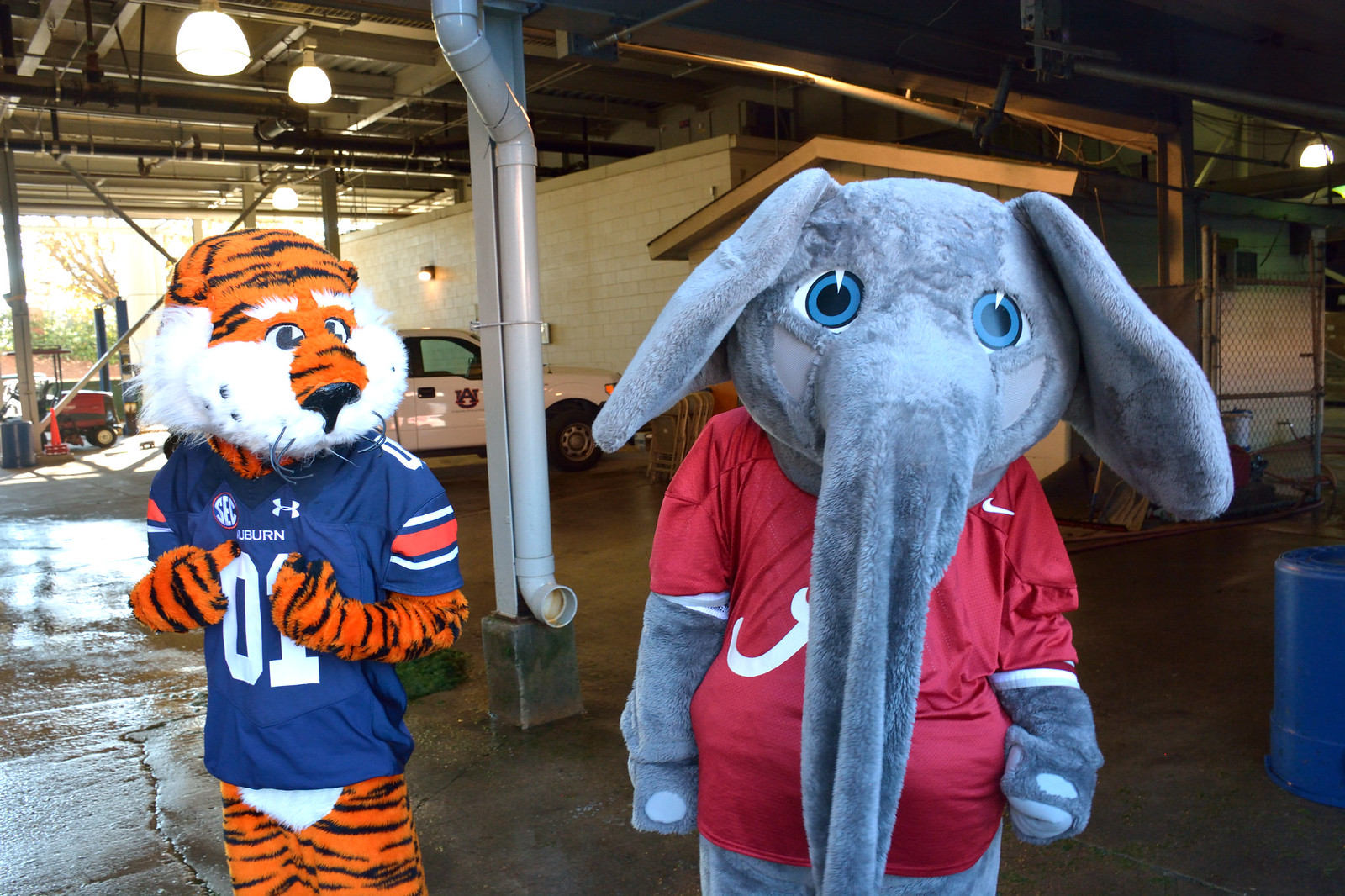 Mascots for rival teams Auburn University (tiger) and University of Alabama (elephant). Photo by Adam Brasher’s via Flickr (CC BY-NC 2.0).
With these clubs social media followers totaling more than a billion combined, the authors argue that there’s an enormous untapped opportunity to channel the emotional bond between fans and mascots into real conservation action.
“Animal imagery is everywhere,” Arbieu told Mongabay. “Across the five continents and across all sports, and both for men and women teams.” Beyond the big cats and wolves, he said, there is a long tail of unique species represented. “There is so much potential to communicate, educate about biodiversity and what it is, but also to engage people in a different way of looking at nature.”
The idea came to Arbieu while playing the video game Madden, which simulates American football. He was struck by the paradox that animal imagery saturated team branding, on jerseys, tattoos, banners, while those same species were declining in the wild. That observation launched years of research and ultimately a new initiative: The Wild League.
Launched alongside the study, The Wild League is a framework designed to rally sports clubs, sponsors and fans around biodiversity conservation. The concept is straightforward. Teams that profit from wildlife imagery should also invest in protecting the species they represent. Arbieu envisions a coalition where clubs compete not just on the field, but in their contributions to conservation.
“If each of these clubs would contribute 0.01% of what they earn on their match days at home, it would be so significant for conservation,” he said.
The Wild League is currently in its pilot phase, with Arbieu and his team reaching out to clubs across Europe and beyond. His task now is to convince clubs that joining a coalition benefits everyone, as well as their brand.
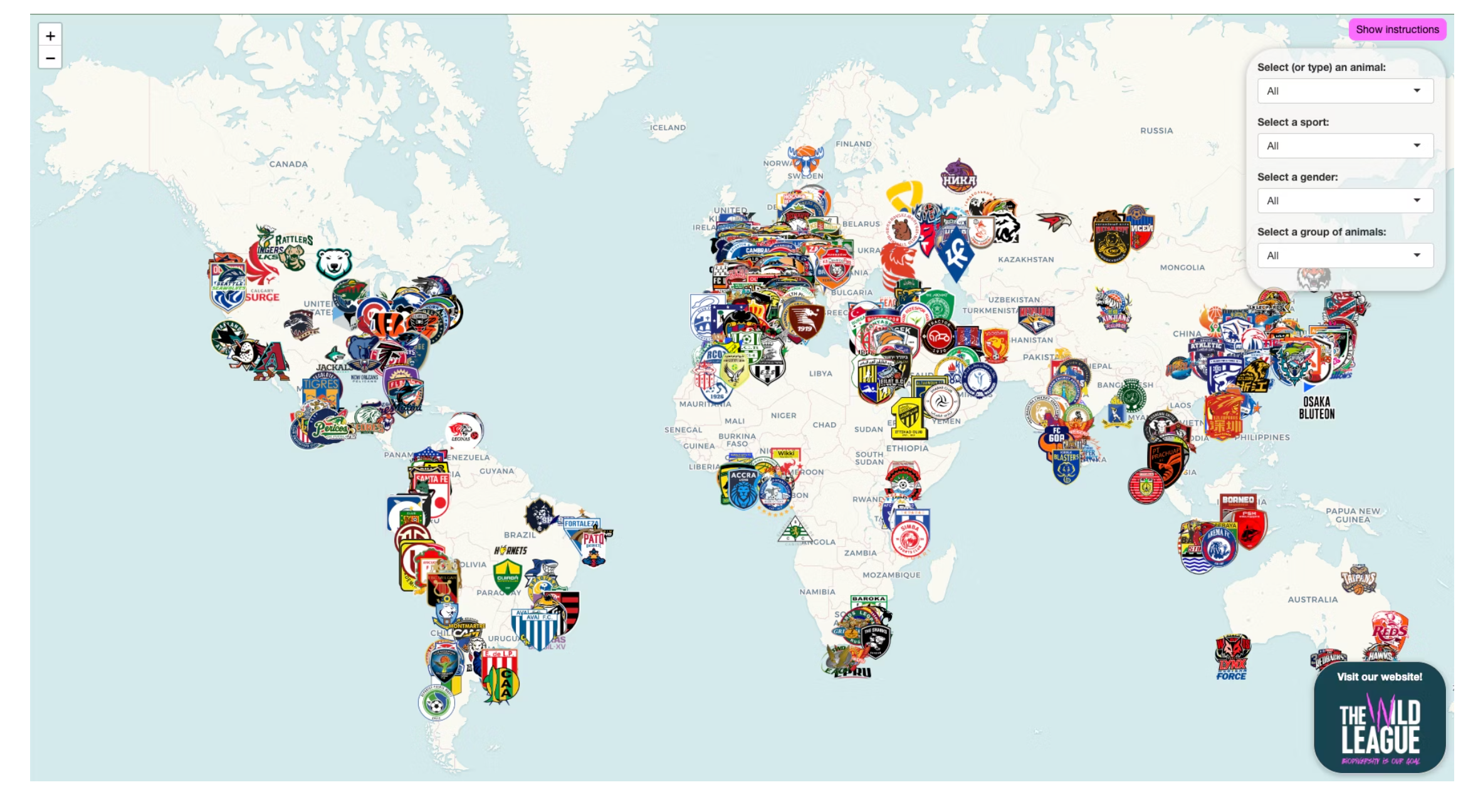 The Wild League’s interactive map showing sports clubs and teams with mascots linked to animals..
While The Wild League is still building its roster, one U.S. initiative already demonstrates what the model might look like in practice. At Clemson University in South Carolina, the Tigers United program has spent years turning the school’s tiger mascot into a vehicle for real-world conservation.
Tigers United is a consortium of universities linked by their tiger mascots and a shared commitment to tiger conservation. The program grew out of a 2017 visit by representatives from Clemson and Auburn universities to New Delhi, where they connected with conservation leaders and the Global Tiger Forum, an intergovernmental body monitoring tiger conservation across 13 range countries.
“We are using athletics as the megaphone for conservation,” Greg Yarrow, a wildlife ecology faculty member at Clemson and the director of Tigers United told Mongabay. He pointed to the sheer scale of the audience. “If you have close to 90,000 individuals in a football stadium, and each contribute $1 to tiger conservation, that’s significant.”
Hrishita Negi, associate director of Tigers United, grew up near Kanha Tiger Reserve in central India, where her father served as director, igniting her passion for tiger conservation. She said Tigers United program has purchased and deployed AI-powered camera traps that can identify tigers and alert wildlife managers in less than 30 seconds, helping prevent human-wildlife conflict before it escalates. The program also runs education initiatives connecting rural schools in India with schools in South Carolina.
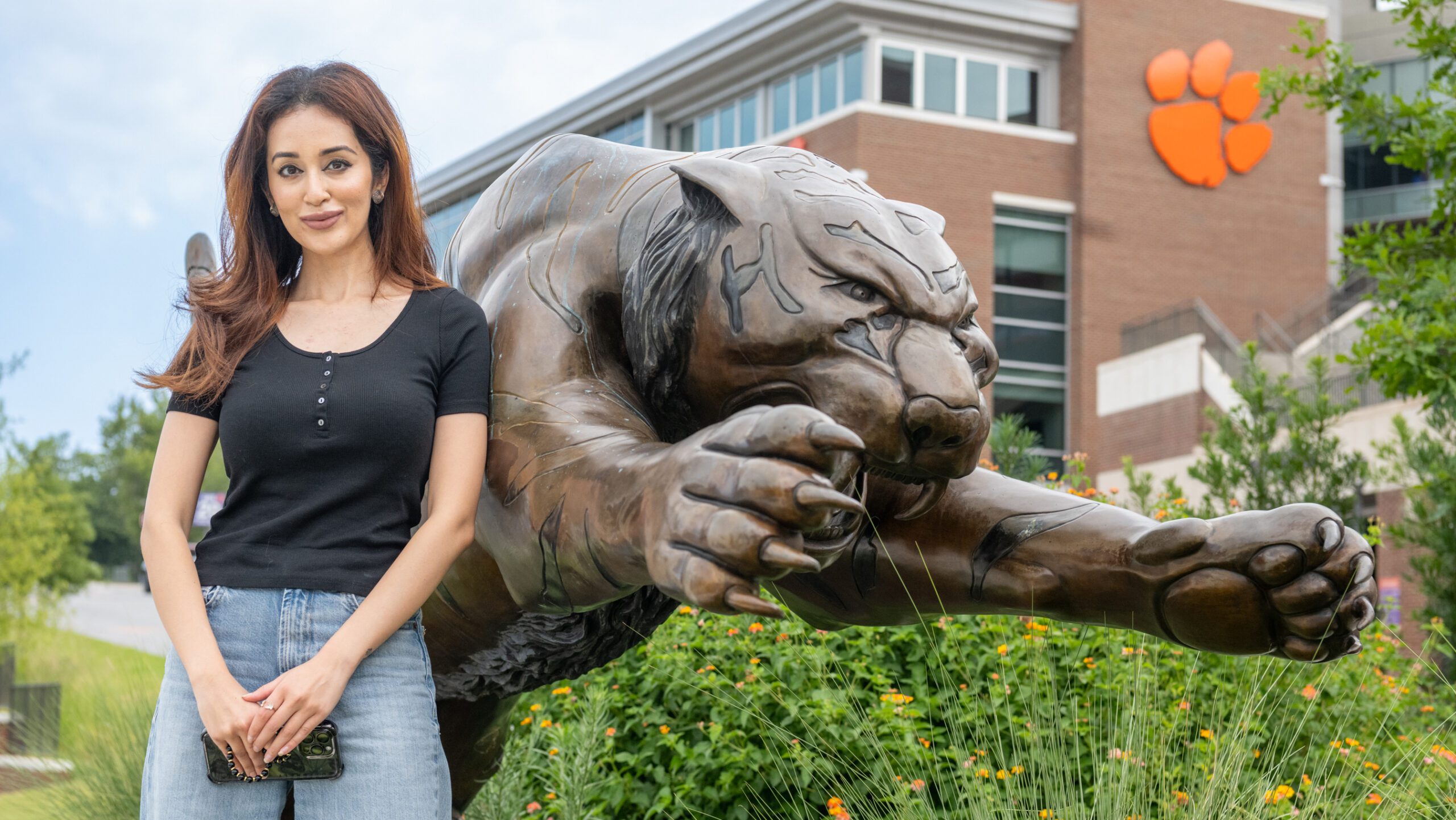 Hrishita Negi, associate director of Tigers United, which leverages the Clemson University tiger mascot and other tiger mascots for tiger conservation. Photo courtesy of Tigers United.
Negi said the program’s strength lies in its unusual position: a university with both a beloved tiger mascot and established partnerships with conservation agencies in tiger range countries.
“A lot of our traditional conservation approaches have truly struggled to mobilize that public support or a sustained kind of support that’s needed for any transformative changes,” Negi told Mongabay. This is why, she said, they “reimagine organized sports as a vehicle for conservation impact.”
The study’s authors note that connections between sports and conservation remains rare and largely ad hoc. The Wild League aims to change that by providing a framework that any team, in any sport, in any country could join.
“I really, sincerely believe that the community of fans around professional sports clubs, their identity is developed through attachment to these symbols,” Arbieu said. “And these symbols are the colors, the jersey and the emblem and the mascot. It’s really a rallying point.”
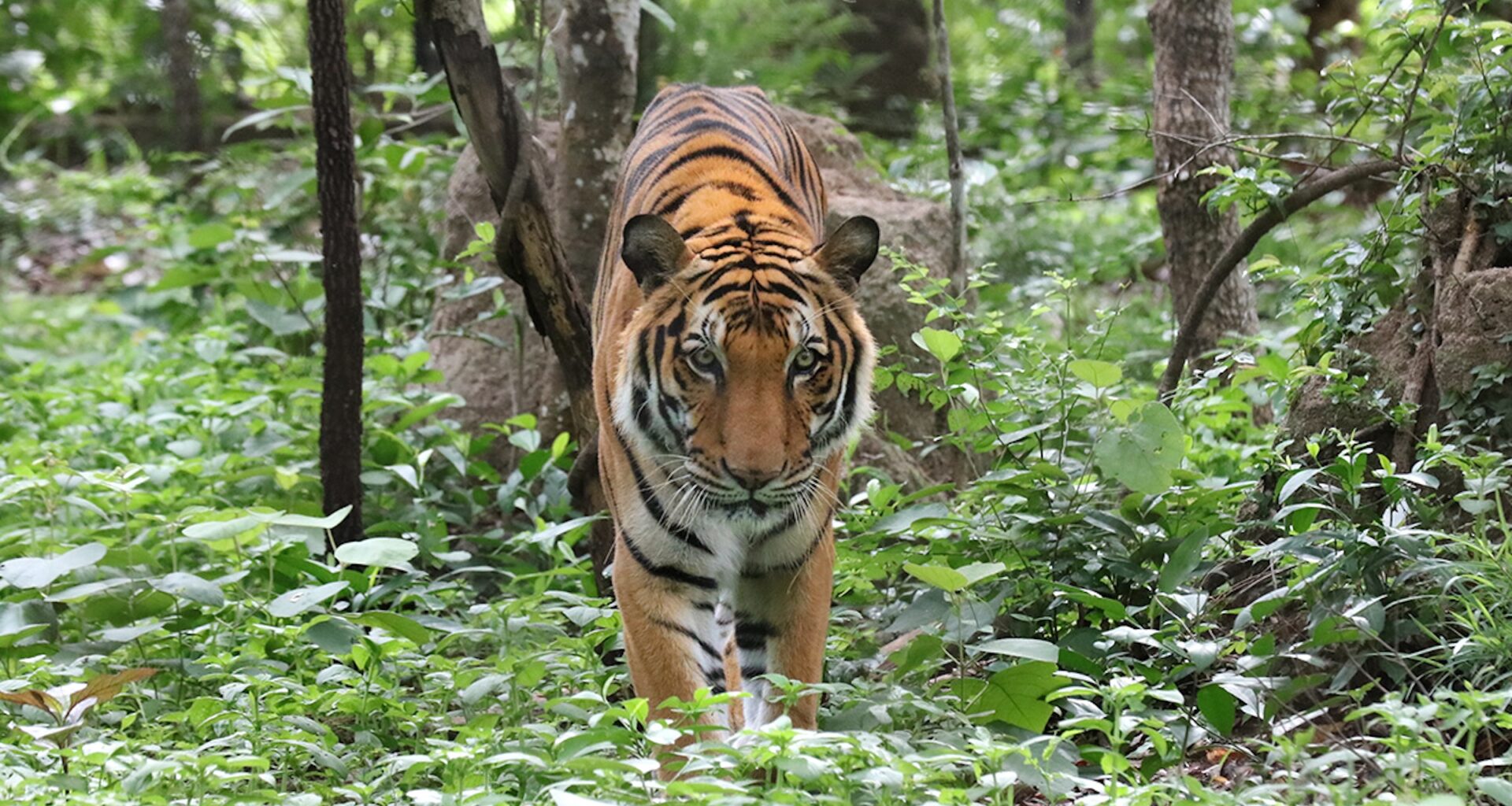
Banner image of an Indochinese tiger. Image by Rhett A. Butler/Mongabay.
Citation:
Arbieu, U., et al. (2025). Wildlife diversity in global team sport branding. BioScience. doi:10.1093/biosci/biaf181
FEEDBACK : Use this form to send a message directly to the author of this post. If you want to post a public comment, you can do that at the bottom of the page.
