
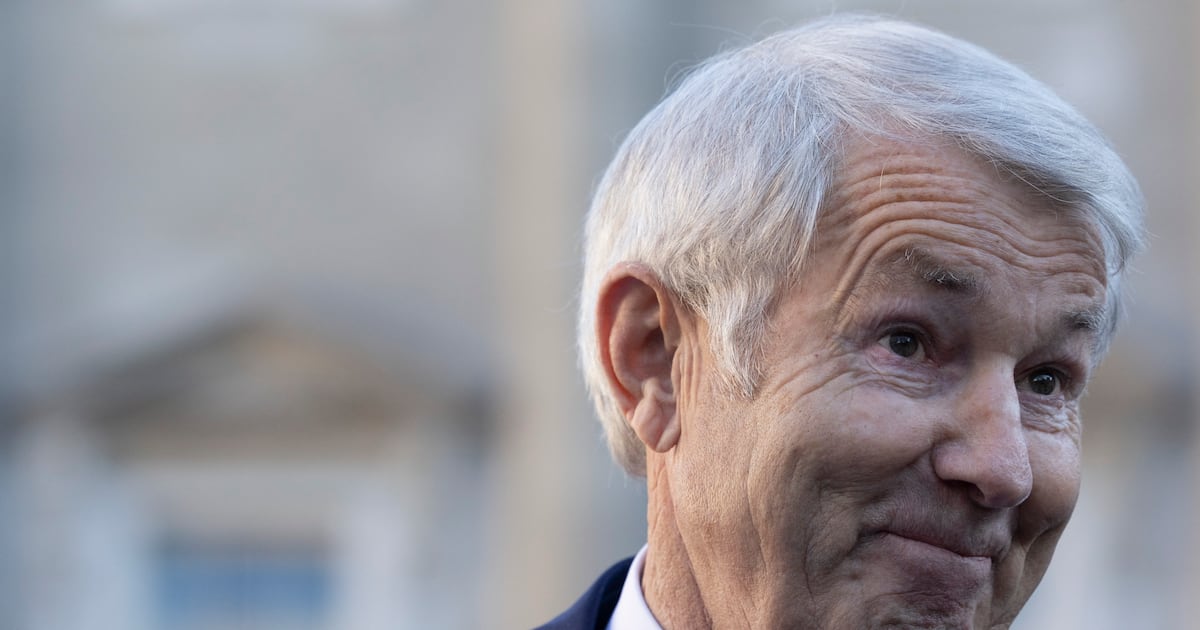
The decision of the Director of Public Prosecutions (DPP) not to bring criminal charges against anyone arising from the Moriarty tribunal’s final report in 2011 has been welcomed by Michael Lowry and Denis O’Brien.
The outcome cannot have come as a great surprise to the two men, given the duration of the Garda investigation – it began in 2011 – and the differences between how tribunals of inquiry operate and the higher standard of proof that applies in criminal law.
However, it marks the end of a controversy that predates the establishment of the tribunal in 1997 and has hung over the careers of both men ever since.
The tribunal’s first report, published in 2006, was predominantly concerned with the financial affairs of the late Charles Haughey, former Fianna Fáil leader and taoiseach.
The second report was focused on payments from O’Brien and supermarket tycoon the late Ben Dunne, to Lowry, as well as the role played by Lowry, as a Fine Gael minister for communications, in the awarding of the State’s second mobile phone licence to O’Brien’s Esat Digifone consortium in 1996.
In his statement on Tuesday, Lowry criticised the tribunal’s 2011 report as “flawed” and based on “conjecture, manipulation and speculation” rather than hard facts or admissible evidence.
O’Brien, in his statement on Wednesday, said tribunals have proven to be “desperately flawed” and “desperately unfair” ways to investigate significant matters of public concern.
The tribunal chairman, Judge Michael Moriarty, had a difficult task, he said, but would “essentially reject available evidence” deemed unhelpful to the “case being prosecuted” by the tribunal.
He cited as an example the evidence of Michael Andersen, the Danish expert who was the lead consultant to the licence competition won by Esat.
In his evidence, Andersen told the tribunal its “predefined theory” when conducting its inquiry “was based on assumptions that were wrong”.
O’Brien said Andersen’s “resolute defence of the integrity of the licence process, very obviously not welcomed by the tribunal, was essentially ignored”.
Neither O’Brien nor Lowry referred in their relatively short statements to the money trail findings of the tribunal, which they rejected at the time of the tribunal’s report.
Tribunals of inquiry are established by the Oireachtas to inquire into matters of serious public concern and are tasked with reporting back to the Oireachtas on their conclusions. The Moriarty (Payments to Politicians) Tribunal was established against a backdrop of huge scandal caused by the 1996 revelation, in the Irish Independent, that extensive renovations to Lowry’s home in Holycross, Co Tipperary, had been paid for by Dunnes Stores and treated in the supermarket’s books as expenditure on its outlet in the Ilac Centre in Dublin, and subsequent revelations about Dunnes payments to Haughey.
In 1996, Lowry was minister for communications and a key figure in Fine Gael’s fundraising operations. He was a potential future leader of the party and a potential taoiseach.
He had availed of the 1993 tax amnesty. He had bank accounts in the Isle of Man into which money from Dunnes was deposited. Money from O’Brien was making its way towards a Lowry account in the Isle of Man in 1996/1997, the tribunal decided, though the transfer later stalled against the backdrop of the huge controversy engulfing Lowry. After Lowry’s fall from grace in late 1996, the tribunal also decided that O’Brien supplied financial support to Lowry for property ventures in England.
Its 2011 report not only linked the O’Brien money-trail events to the Esat licence award, but it also examined Lowry’s interference in a rent review on an O’Connell Street office block owned by Dunne.
Lowry’s unsuccessful effort to secure a rent increase at the public’s expense was the subject of particularly strong comment from Moriarty.
“What was contemplated and attempted on the part of Mr Dunne and Mr Lowry was profoundly corrupt to a degree that was nothing short of breathtaking,” he said in his report.
“What was reprehensible about his actions was that the tenant of the building was Telecom Éireann, of which, as minister for communications, Mr Lowry was the ultimate shareholder.”
The tribunal still exists (though Moriarty is no longer involved); it deals with claims for legal fees and other matters. As of January, it has cost the exchequer €78 million.
No doubt, there are serious issues to be addressed about how the State can investigate matters of significant public concern without unleashing the expense and complexity of tribunals of inquiry and their associated legal fees.
But it is not difficult to argue that the benefit to the State, and its citizens, of the Republic’s relatively low level of public corruption, remains an almost priceless public good.
Lowry is a notably indefatigable player in Irish public life and, despite various crises along the way, seemingly a successful businessman.
However, his career in public life has been beset by scandal. He was a target of the McCracken (Dunnes Payments) Tribunal, the Judge tribunal, an inquiry by the Revenue Commissioners that went on for years and a Garda investigation that also lasted years. His refrigeration business, Garuda Ltd, trading as Streamline Enterprises, was the subject of a company law inquiry in the 1990s and a Revenue conviction.
Despite this chequered history, Lowry, now an independent TD, played a key role in the establishment of the current Fianna Fáil-Fine Gael Coalition Government and remains a significant player in Irish politics. He has represented his constituents in Tipperary in Dáil Éireann uninterrupted since 1987.