
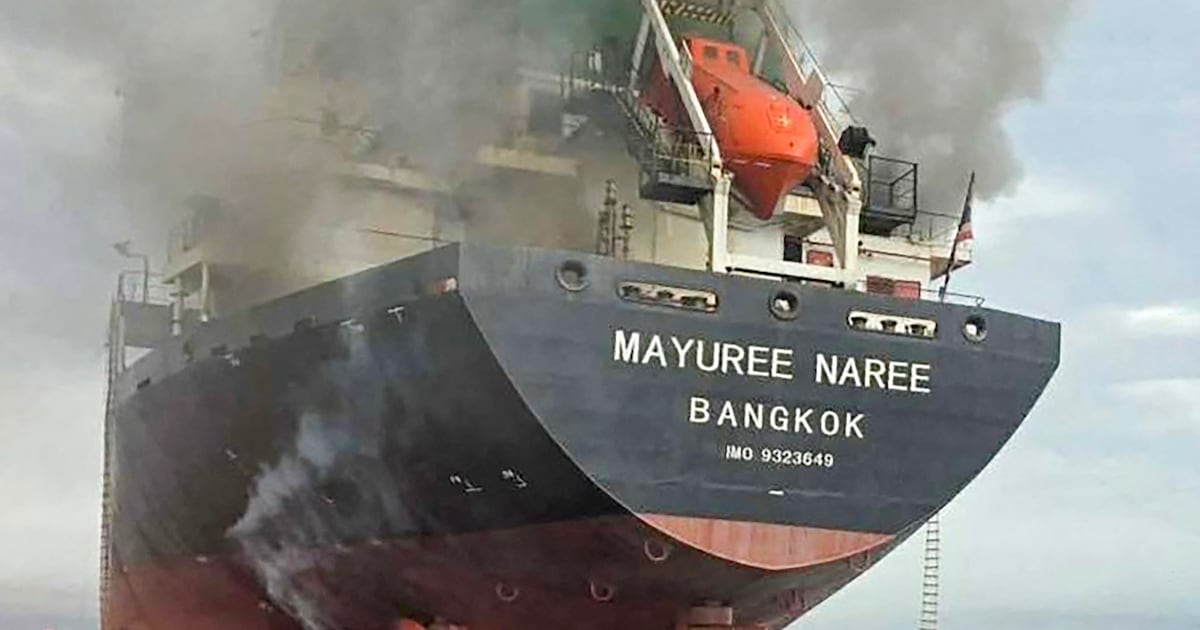
Iran said the world should prepare for soaring energy prices as its forces hit merchant ships and the International Energy Agency recommends a large release of strategic reserves to dampen one of the worst oil shocks since the 1970s.
Three commercial ships were hit by projectiles in the Strait of Hormuz and Iran launched fresh strikes against its oil-exporting neighbours, warning that crude oil prices could rise to $200 a barrel.
“Any vessel whose oil cargo or the vessel itself belongs to the United States, the Zionist regime or their hostile allies will be considered legitimate targets,” the Iranian military said.
Traffic through the Strait of Hormuz, a key artery accounting for about 20 per cent of global oil and gas supply, has dropped rapidly since the Iran war broke out on February 28th.
The US central command issued a warning to Iranians, telling them to “immediately avoid all port facilities where Iranian naval forces are operating”.
Iran has reportedly deployed about a dozen mines in the Strait, in a move likely to complicate the reopening of the narrow waterway. One source said the locations of most of the mines are known but declined to say how the US planned to deal with them.
The US and Israel kept up their pounding of targets across Iran on Wednesday. US forces say they have struck more than 5,500 targets inside Iran, including over 60 naval ships. Iran says more than 1,200 people have been killed.
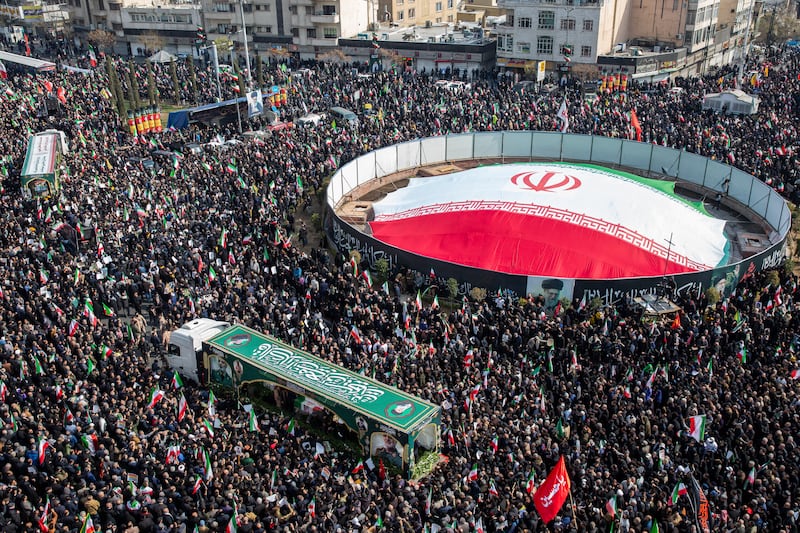 Trucks carry coffins during a funeral ceremony for high-ranking military officials killed by US-Israeli airstrikes in Tehran on Wednesday. Photograph: Arash Khamooshi/The New York Times
A large funeral ceremony took place in Tehran’s Revolution Square for senior Iranian officials killed in the opening strike of the war, including the armed forces chief and head of the Revolutionary Guard. Thousands attended, waving the national flag and shouting “Death to America” in a show of support for the regime.
Meanwhile, Iran confirmed that Mojtaba Khamenei, the country’s new supreme leader, had been “lightly injured” in an air strike but was still active, even though he hasn’t made a public statement since his appointment earlier this week.
[ How will the Iran war affect prices of flights from Ireland?Opens in new window ]
In the US, more than 40 Democratic senators have urged defence secretary Pete Hegseth to provide answers on the air strike on a girls’ primary school on the opening day of the war and hold those responsible to account. Iran has blamed the US for the attack, in which at least 175 people, mainly schoolgirls, were reportedly killed, saying video and satellite images show a US Tomahawk missile hit the structure.
A preliminary investigation by US authorities has found that the strike was the result of outdated target co-ordinates used by the US military, according to a New York Times report. US president Donald Trump, however, has said it was “done by Iran”, without offering evidence.
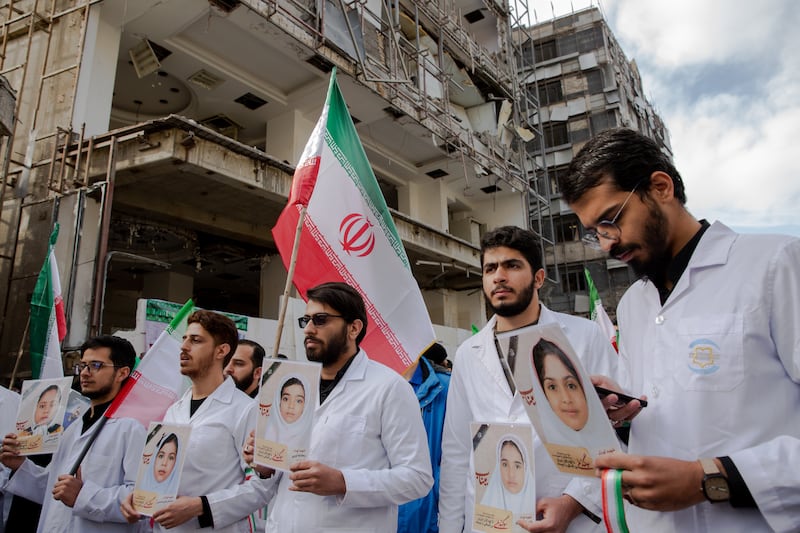 Iranian healthcare workers hold photos of schoolchildren killed in Minab during a demonstration outside the Gandhi Hospital in Tehran. Photograph: Arash Khamooshi/The New York Times
Rocket and drone fire from Iran and Hizbullah in Lebanon kept Israelis running to bomb shelters again on Wednesday, in one of the worst days since the war started.
Amid ongoing speculation over how long the war will last, Trump told news outlet Axios the war will end “soon” and there is “practically nothing left to target”.
“Any time I want it to end, it will end,” he said.
Despite Trump’s comments, prime minister Binyamin Netanyahu told local government leaders in a closed-door meeting that Israel is operating on the assumption that the war will last “a few weeks” rather than days.
People who attended the meeting quote Netanyahu as saying Israel’s aim is to conclude the most intensive phase of the war before Passover, the Jewish holiday that begins this year in early April.
In Lebanon, Israel said it hit more Hizbullah targets in Shia areas, including Beirut’s Dahiyah quarter, as Lebanese officials said 634 people have been killed to date.