
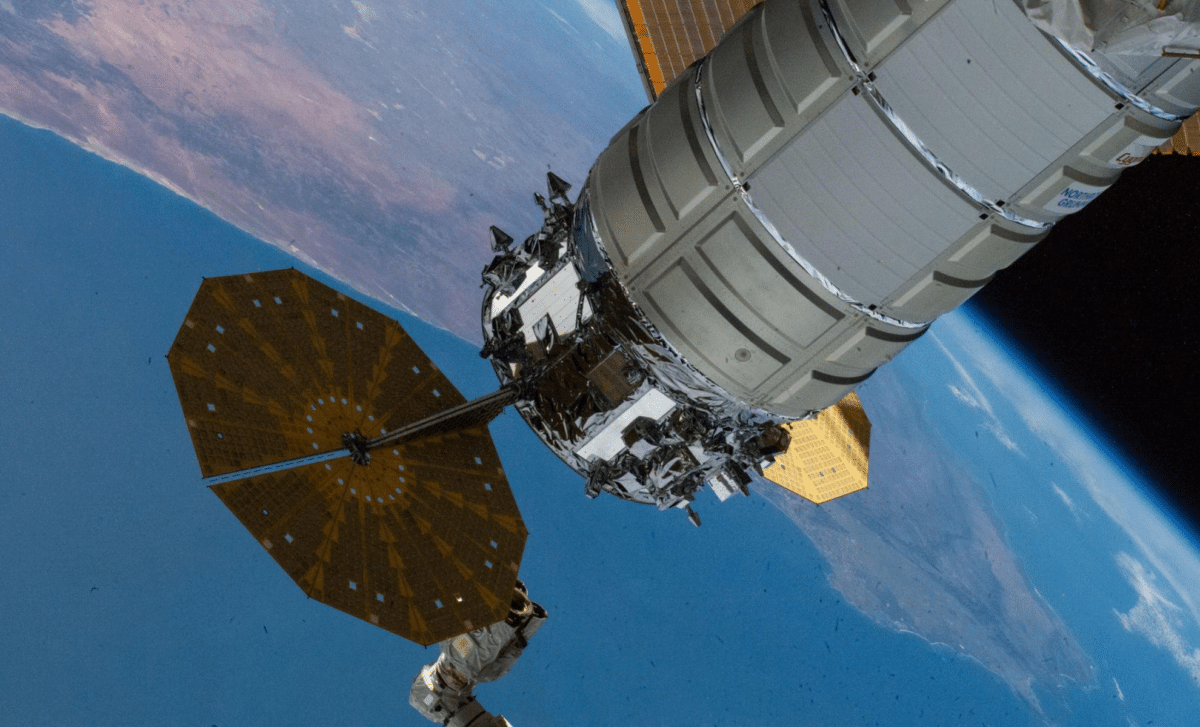
NASA’s Expedition 74 crew is actively engaged in essential spacewalk preparations and groundbreaking scientific research aboard the International Space Station (ISS). With the upcoming departure of the Northrop Grumman Cygnus XL spacecraft, NASA continues to push the boundaries of space exploration while ensuring the ISS remains in top condition. In an exciting move, the team is not only prepping for an important spacewalk to install a new solar array, but also conducting advanced research in vascular health and artificial intelligence (AI). These efforts are critical for future space missions, as they help NASA better understand how the human body adapts to long-term space travel and improve spacecraft operations through AI technology.
NASA’s Spacewalk Preparations: Preparing for the Future of Solar Energy in Space
One of the most significant tasks on the agenda for Expedition 74 is the preparation for a spacewalk that will alter the ISS’s ability to generate solar power. NASA engineers Jessica Meir and Chris Williams, alongside their fellow astronauts, have been actively training for this crucial mission. The objective of the upcoming spacewalk is to install a modification kit and route cables on the ISS’s port side. This is an essential step to ensure the successful installation of the station’s seventh roll-out solar array.
The addition of the new solar array is vital to the ISS’s ongoing operations, as it will augment the station’s power generation capabilities. The spacewalk, which is expected to last about six-and-a-half hours, will help to position the new array and set up the infrastructure for its later installation. For NASA, enhancing the power generation capacity of the ISS is a necessary step as the station ages, and future crewed missions demand more energy.
This preparation for the solar array installation is also indicative of the broader challenges that space exploration faces. As space stations like the ISS continue to age, maintaining their infrastructure becomes a high priority to ensure long-term operations. This effort to update and improve the ISS’s power systems shows how NASA is continually innovating to meet the needs of space missions.
The Exp 74 crew continued spacewalk preps on Tuesday and kept up vascular health research and AI studies. @NorthropGrumman‘s Cygnus XL spacecraft is also go to depart the station on Thursday. https://t.co/hxkkRH28vt
— International Space Station (@Space_Station) March 10, 2026
Biomedical Research in Space: Exploring Vascular Health in Zero Gravity
While preparing for spacewalks and maintaining the ISS, the Expedition 74 crew is also conducting essential biomedical research. Specifically, the crew is looking into vascular health, the state of the blood vessels, during long-duration space missions. Cosmonauts Sergey Kud-Sverchkov and Sergei Mikaev have been using advanced sensors to gather data on how their vascular systems respond to zero gravity.
The sensors, which are placed on their forehead, fingers, and toes, send critical blood flow data back to Earth via Bluetooth. This research is essential for understanding how extended stays in space can affect human health, particularly cardiovascular health. As astronauts spend months aboard the ISS, their bodies undergo significant changes, and monitoring their vascular health is crucial for ensuring their well-being during space missions.
NASA scientists can analyze this data to improve future space mission health protocols and develop better support systems for astronauts. Given that long-duration missions to Mars and beyond are on the horizon, understanding the biological effects of space travel is vital to ensuring the health of astronauts during missions that could last years.
AI in Space Operations: Enhancing Crew Efficiency and Communication
Artificial intelligence is another area of research on the ISS that could transform space operations. For the Expedition 74 crew, testing AI tools to improve crew operations and communication with mission controllers is a top priority. This development comes at a time when NASA is looking to enhance spacecraft efficiency, as AI can play a significant role in supporting astronauts and helping them complete tasks more effectively.
Roscosmos flight engineer Andrey Fedyaev has been testing AI-powered tools designed to assist with everyday operations on the ISS. These tools aim to streamline crew interactions with mission control and enhance the overall efficiency of the space station. Artificial intelligence can assist in real-time decision-making, which is crucial for reducing the workload on astronauts and ensuring their safety in the harsh environment of space.
Moreover, using AI tools to manage communications between the crew and mission control could significantly improve the efficiency of routine tasks, especially during emergencies. As NASA looks to deepen its space exploration capabilities, AI is proving to be an indispensable tool in modernizing space operations.