
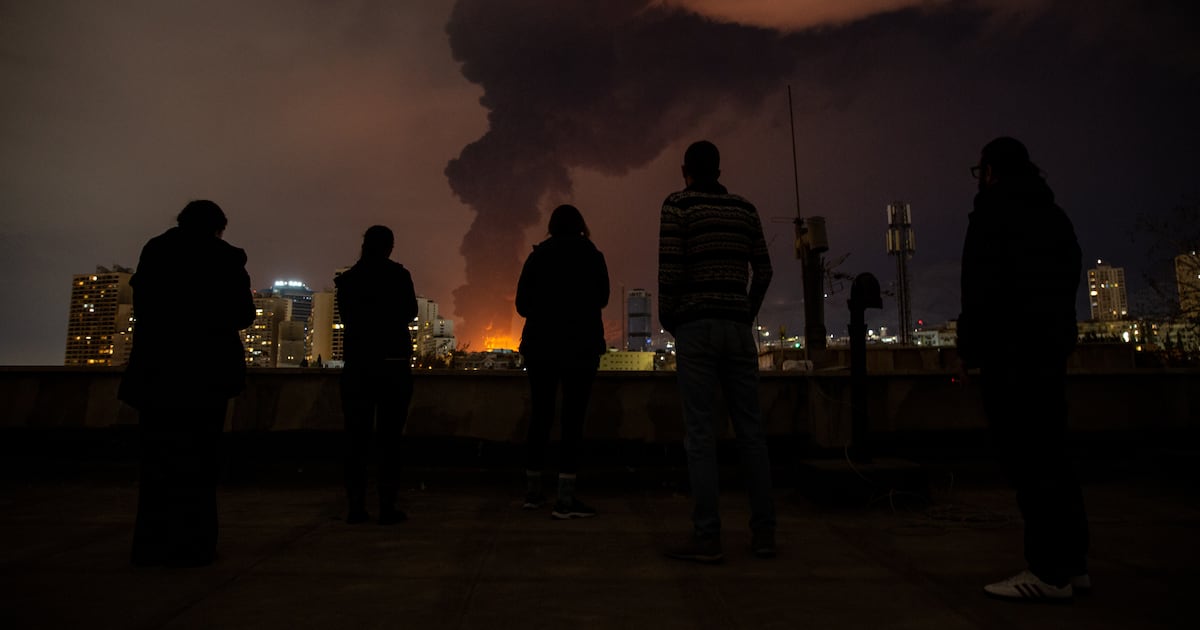
Iran’s supreme leader Mojtaba Khamenei issued a defiant statement on Thursday, directing the military to continue blocking a vital oil shipping route and calling for its neighbours to close US military bases used to attack Iran.
His first statement since his appointment was read on state television by a news anchor. Khamenei did not appear on camera, and an Israeli assessment indicates he was wounded in the war’s opening salvo.
Iran’s unrelenting attacks on shipping traffic and energy infrastructure in the Gulf pushed oil back above $100 a barrel on Thursday, as US and Israeli strikes pounded the Islamic Republic with no sign of an end to the war in sight.
He called for the struggle against the United States and Israel to continue, saying the Strait of Hormuz should remain closed. “We will not refrain from avenging the blood of the martyrs,” he said.
He also promised that attacks on Gulf states would continue. “We believe in friendship with our neighbours and are targeting only military bases. We will be forced to continue these attacks,” he said.
The commander of Iran’s Islamic Revolutionary Guard Corps navy said in a social media post that, in line with the supreme leader’s guidance, Iran “will deliver the most severe blows to the aggressor enemy by maintaining the strategy of keeping the Strait of Hormuz closed”.
At least three more ships were attacked in the Gulf on Thursday, apparently by Iran.
With no let-up in the US and Israeli air strikes on day 13 of the war, the United Nations Refugee Agency estimated that as many as 3.2 million people have been displaced inside Iran as large numbers are fleeing the capital Tehran and other major cities, looking for safety in rural areas.
Among the targets of Thursday’s Israeli air strikes were roadblocks erected in Tehran by the Basij militia, the volunteer force behind the murder of thousands of anti-regime protesters in January.
Addressing the Iranian people during a press conference on Thursday night, Israeli prime minister Binyamin Netanyahu said: “I say to the Iranian people – the moment when you can break free is approaching. We stand by your side and help you, but at the end of the day it depends on you – it’s in your hands.”
More than 1,200 people have now been killed in the war, according to the Iranian authorities.
The US military’s central command said it has struck 6,000 targets and destroyed more than 90 vessels since the war began, more than 60 ships and more than 30 minelaying vessels.
In Lebanon, Israel stepped up its air strikes on what it said were Hizbullah targets across the country after the Iranian-backed group on Wednesday night carried out its most intensive rocket and drone attacks on Israel so far.
“Hizbullah feels our might and it will feel it even more intensely, it will pay a very heavy price for its aggression,” Netanyahu said in comments on Thursday night.
Israel Defence Forces (IDF) chief of staff Eyal Zamir said that “the war on Hizbullah is a war in another main sector, not a secondary arena,” and noted that additional forces will be transferred to the northern region.
The civilian toll from Israel’s military campaign against Hizbullah continues to mount. Lebanese authorities say almost 700 people have been killed, including nearly 100 children, over the past week.
The international charity War Child said that roughly one in 10 children in Lebanon were among the displaced.
Overall, more than 800,000 people have been displaced.