
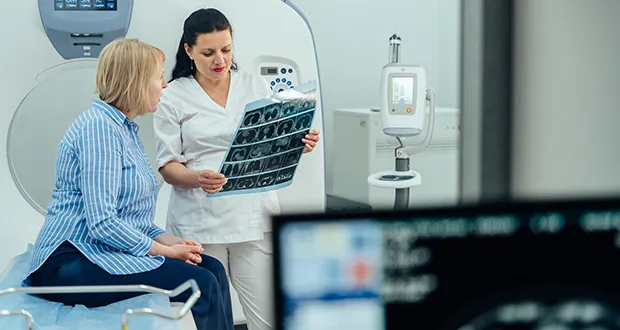
Assessment will consider whether it would be beneficial to measure, record, and notify women attending BreastCheck of their breast density
The health regulator HIQA has begun to assess whether checks for breast density should be included into the BreastCheck screening programme.
Around one-in-ten women have very dense breasts, which means they have more fibrous and glandular tissue and less fatty tissue than other women.
Breast density is one of the strongest independent risk factors for developing breast cancer. Research has suggested that, between the ages of 50 and 70, women with very dense breasts are up to four times more likely to develop breast cancer than women with low breast density.
Breast density changes over time and is typically higher in younger women. Higher levels of breast density can make tumours more difficult to detect during screening with digital mammography.
Yesterday HIQA published a protocol for a Health Technology Assessment (HTA) examining potential modifications to BreastCheck, which offers mammogram every two years to women aged between 50 and 69.
Given the impact of breast density on cancer risk and detection, this assessment will consider whether it would be beneficial to measure, record, and notify women attending BreastCheck of their breast density.
Women with dense breasts could potentially be offered additional screening tests, such as digital breast tomosynthesis, MRI, contrast enhanced mammography, or ultrasound.
“Screening is an important pillar of public health. Breast cancer screening aims to catch cancer earlier in women who do not have symptoms. This enables earlier treatment, which can reduce mortality,” said HIQA’s director of HTA Dr Máirín Ryan.
“Internationally there has been growing interest and advocacy in developing screening pathways that take account of breast density. Approaches that have been adopted in some countries include measuring, recording and notifying women of their breast density, and in some cases offering additional imaging.
“Our assessment will review the available international evidence to help inform a recommendation by the National Screening Advisory Committee to the Minister for Health.”
Breast cancer is the most commonly diagnosed invasive cancer and the second leading cause of cancer related death among women in Ireland.
This HTA was requested by the National Screening Advisory Committee. Depending on the findings of this assessment, further work may be undertaken to assess the economic and organisational implications of accounting for breast density in the BreastCheck programme.
This assessment is being carried out as part of a larger piece of work that will also evaluate potential age extensions to the BreastCheck programme. A separate protocol will outline the approach to the assessment of extending BreastCheck to women aged 45 to 49 years and 70 to 74 years.
The strongest risk factors for breast cancer are female sex and increasing age. Other risk factors include hormonal and reproductive factors, breast density, hereditary and genetic factors, body mass index (BMI), alcohol consumption, and environmental exposures.
Breast density can be influenced by age, BMI, genetic factors, ethnicity, age at menarche (when menstrual periods begin), reproductive factors, use of hormone replacement therapy, and alcohol consumption.