
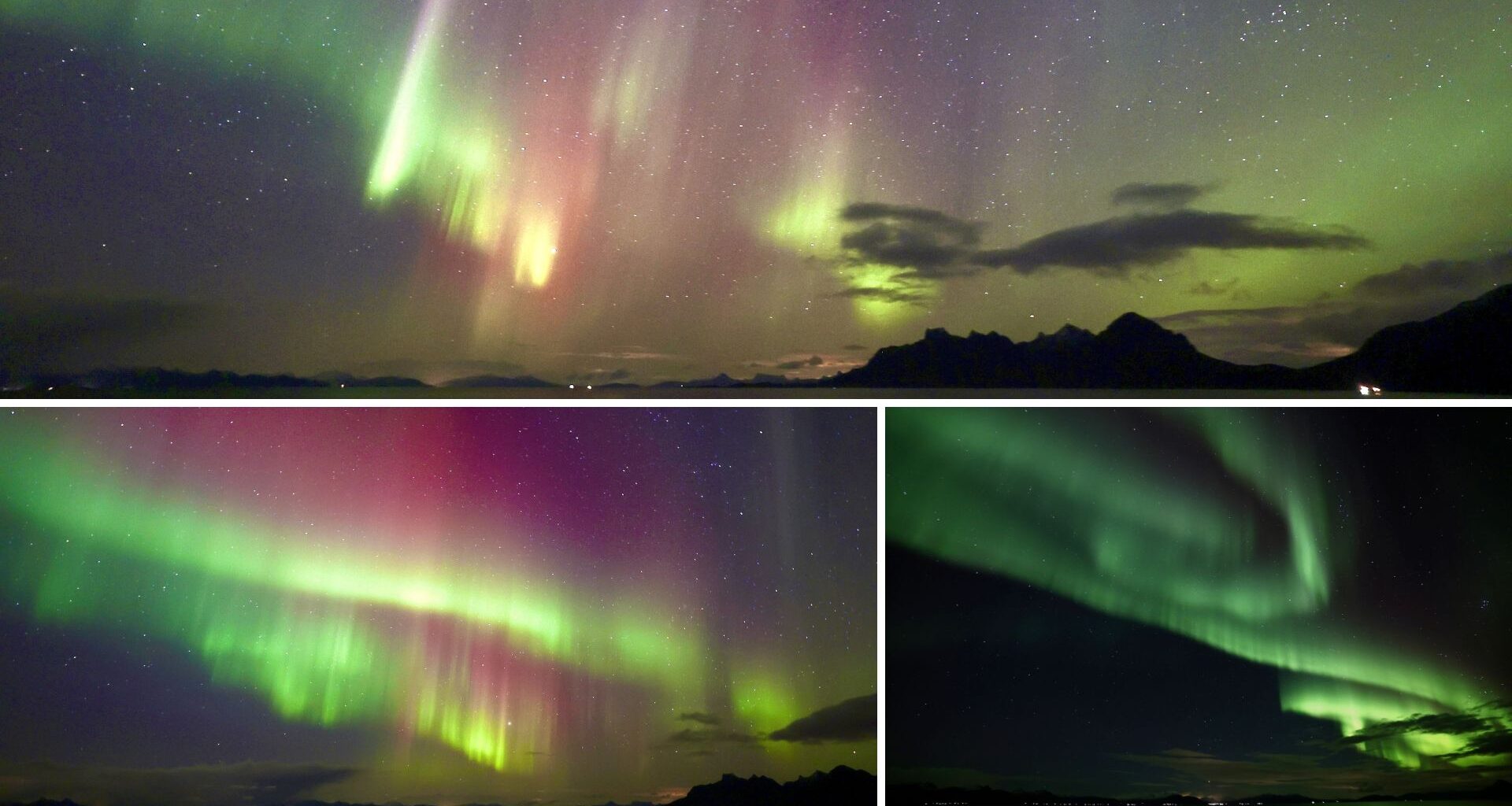
March is widely considered one of the best times of year to see the northern lights, thanks to a seasonal boost in geomagnetic activity around the spring equinox.
The northern lights, or aurora borealis, occur when energetic particles from the sun — released through processes like solar wind and coronal mass ejections (CMEs) — collide with Earth’s atmosphere. Our planet’s magnetic field directs these particles toward the poles, creating dazzling light displays in both hemispheres (known as the aurora australis in the south).
Article continues below
You may like
What’s so good about March?
According to Spaceweather.com, geomagnetic disturbances are almost twice as likely in spring and fall compared to winter and summer due to the Russell-McPherron effect — an explanation proposed in 1973 by geophysicists Christopher Russell and Robert McPherron.
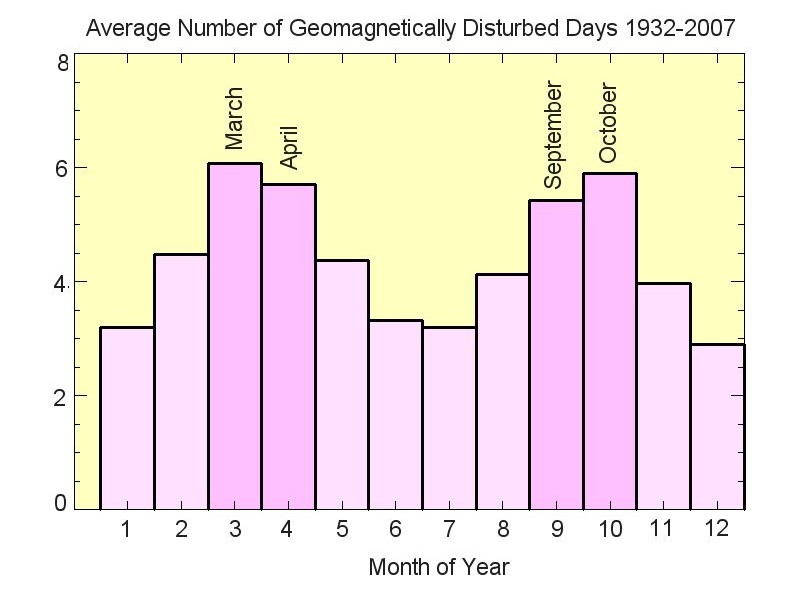
Averaged monthly number of geomagnetically disturbed days for the period 1930-2007. Geomagnetic activity appears to peak during the spring and autumn months. (Image credit: NASA/MSFC – David Hathaway.)
Russell and McPherron determined that the cause lies in how the sun’s and Earth’s respective magnetic fields meet each other. The tilt of Earth’s magnetic field means that, in large part, it is misaligned with the sun’s, which causes much of the incoming solar wind to be deflected away from the planet. But during the equinoxes — when day and night are almost the same length due to our planet’s tilt aligning with its orbit around the sun — the orientation of Earth’s poles is almost perpendicular to that of the sun, which allows more solar wind to get through, resulting in stronger geomagnetic activity and more dramatic auroras.
In 2026, the spring equinox occurs on March 20, when day and night are nearly equal worldwide.
Aurora chasers are already experiencing a great aurora season, thanks in large part to heightened solar activity as we move past the peak of the sun’s approximately 11-year solar cycle. Solar cycle 25 reached its official maximum in 2024-2025, and elevated solar activity is expected to continue for another couple of years, which is great news for aurora chasers.
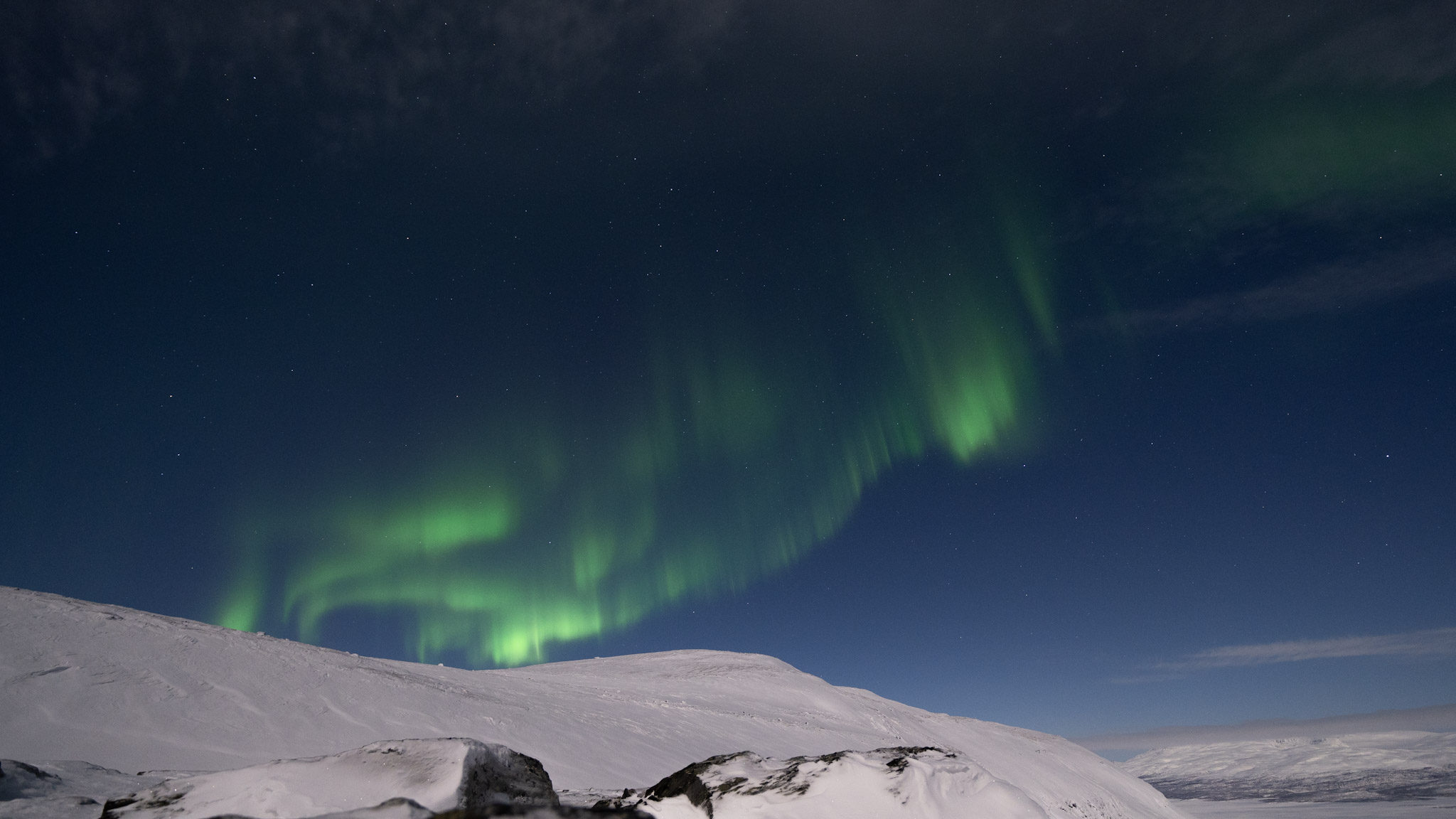
Northern lights above Mount Nuolja, Abisko National Park, Sweden. (Image credit: Daisy Dobrijevic)What time in March should I look for northern lights?
Auroras can appear at any time during the night, but activity most commonly peaks between 10 p.m. and 2 a.m. local time, when geomagnetic activity is often strongest.
What to read next
In March, the longer nights of early spring still provide ample darkness across high-latitude regions such as Alaska, northern Canada, Iceland and Scandinavia. Clear skies and minimal moonlight will give you the best chance of spotting the lights.
Keep up to date with the latest northern lights forecast with our aurora live blog.
So, why wait? If you’re thinking of heading on an aurora hunting trip, now is the time to do it! March is also a great time to visit Arctic regions as the winter snow is at its deepest and the daylight hours are growing visibly longer. It tends to be warmer and there is less cloud cover at night, according to the Aurora Zone.
If you’re dreaming of seeing the northern lights for yourself, I’ve explored several incredible aurora destinations that I highly recommend. You can read about what it is like chasing auroras in Swedish Lapland’s Abisko National Park, sailing along Norway’s dramatic coastline in search of the northern lights, or joining a guided northern lights expedition across Norway.
And if travel isn’t on the cards right now, you can still follow the action from home with some of the best northern lights webcams, which stream live aurora activity from locations around the Arctic.