
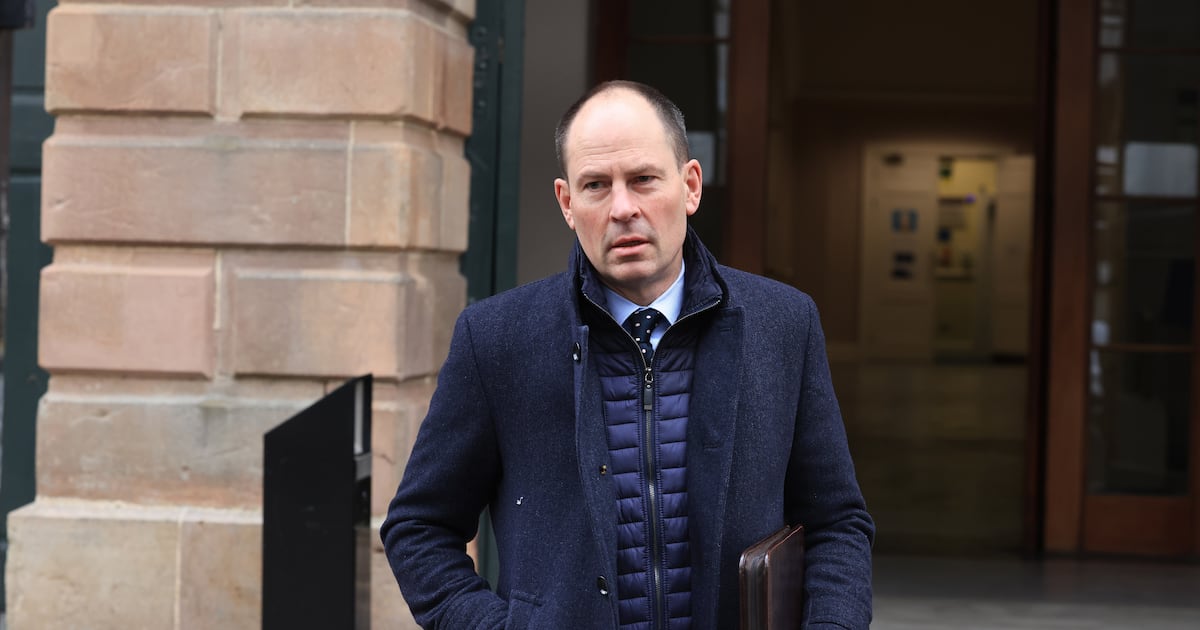
A Coolmore company has been fined €100,000 after it was convicted of four criminal offences for breaching environmental laws by destroying historic hedgerows and clay banks in Tipperary.
Judge Deirdre Browne said she could have imposed fines totalling €1m for the four offences but settled on the €100,000 fine after taking mitigating factors into account. These included the Coolmore company pleading guilty, having no previous convictions so it could be regarded as a “corporate entity of good character”.
Hedgerows Ireland, the environmental group whose complaint sparked the investigation by the Department of Agriculture, welcomed the convictions but said it was disappointed there were not larger fines which would act as a “greater deterrent” to unlawful hedgerow destruction.
In her summation of the evidence in Clonmel Circuit Court, the judge set out how a departmental inspector visited lands in Ballygerald East in October 2022 which was owned by JP Magnier and Kate Wachman, two children of Coolmore Stud owner John Magnier.
The evidence was that the hedgerows being removed by workers was “of considerable vintage”. Senior inspector Imogen McGuinness from the Department of Agriculture told the court she believed the hedges had been planted between 1700 and 1800 and contained mixed species that provided valuable biodiversity and wildlife habitats.
She had described the removal of hedgerow material as “vast”.
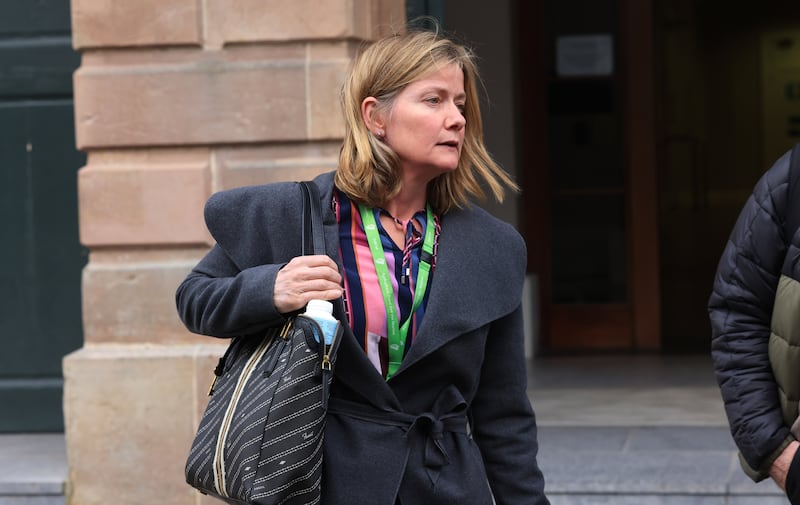 Department of Agriculture senior inspector Imogen McGuinness. Photograph: Dara Mac Dónaill
Under the environmental regulations, anyone seeking to remove more than 500m of hedgerow or seeking to create a field with an area greater than five hectares must check with the department to see if an environmental impact assessment screening report is necessary.
No such screening application was made in this case.
The judge said the court was shown extensive photographic and video evidence showing the removal of the hedgerows, some of which was shot by Alan Moore and his daughter Holly Moore from Hedgerows Ireland. Some 1.15km of hedges were removed.
When the inspectors arrived in October 2022 there were two clay banks remaining that had been cleared of hedges. McGuinness told the court these banks contained “significant biodiversity” and the roots of the hedges. They could have been used to regenerate the cleared hedges.
Joe Houlihan, Coolmore’s farm manager, was contacted by phone and ordered to stop the work. He was informed that a prohibition notice would issue barring Coolmore from destroying the clay banks.
Evidence was given that, at a meeting in January 2023, Houlihan asked a department inspector if he could remove the clay banks but he was “specifically told he could not”.
At an inspection in October 2023, the department learned the two clay banks with a length of 360m had been levelled with diggers causing “negative impact to the environment”. A notice of the breach was served on the company.
The judge on Wednesday heard submissions from the company’s barrister, Michael Delaney, about what sentence should be imposed for the four offences, the first recorded in the State under European Union environmental laws.
In her ruling on Friday, the judge said two of the offences involved the Coolmore company removing hedges without seeking a screening application. It said the company had said it was not aware of the regulations. The other two offences involved a breach of the prohibition notices.
She noted that Shem Drowne was part of the wider Coolmore organisation and that Houlihan is responsible for substantial land holdings both in Ireland and the UK.
The directors of Shem Drowne, Conor Spain and David Gleeson, had said they were not aware of the work on the land.
“The locus of those responsible for the work is unclear,” said the judge.
She said “injury has been caused to the community” by the destruction of the hedges. Coolmore were “custodians of the land for the rest of us” and it was “obliged to comply with the law so that habitats and biodiversity are maintained”.
She said a Coolmore report handed into court showed the company recognised its duty to protect the natural environment.
Coolmore had recognised that hedgerows provide “a multitude of benefits” that include protecting waterways and providing wildlife corridors.
She noted McGuinness had said it would take 50 years to regenerate the biodiversity lost by the destruction of the hedges. The 2.5km of whitethorn hedges planted by Coolmore was “not a like-for-like replacement”. The new hedges do not provide the same quality of biodiversity or shelter.
“The harm here was significant,” said the judge. “It goes to the heart of what the legislation seeks to protect.”
She said Coolmore had offered no explanation of why the hedges were removed but she presumed it was in the interests of the accused.
She accepted that the breach of the first two regulations was “not deliberate” but the third and fourth offences of breaching the prohibition orders were “more egregious”.
The destruction of those two banks despite the “clear” prohibition meant there was no prospect of regeneration of the hedges, the judge said.
She had asked Shem Drowne about its financial standing and had been told it was not making the case that fines would “imperil the future of the company”.
She said the headline fines were €50,000 for the first two offences and €100,000 for the second two. She reduced the overall fine to €100,000 after taking mitigation into account. This included the guilty pleas, no previous convictions, the public acceptance of “significant failings” and the introduction of new processes to prevent a reoccurrence of the offences.
She gave the company two months to pay the fines.
Alan Moore, of Hedgerows Ireland, addressed environmental supporters outside the court.
“We would have expected a higher fine given the extent of the hedgerow removal and the fact that Coolmore breached a prohibition order one year after the initial offence, but we nevertheless believe the sentence sends out a strong message that the environmental regulations work,” he said.
“We have issued an invitation to meet with Coolmore and look forward to working with them on hedgerow restoration projects.”
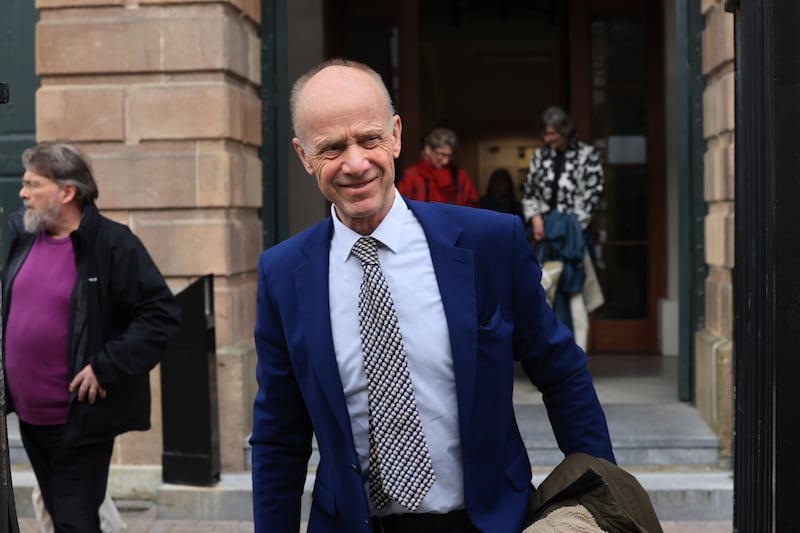 Alan Moore, of Hedgerows Ireland, outside court. Photograph: Dara Mac Dónaill
A Coolmore statement said: “Shem Drowne Ltd is deeply sorry for the removal of hedgerows on lands at Ballygerald and for the unacceptable breach of a prohibition notice. The landowner has cooperated fully with the investigation, acknowledged the internal process failings that brought it about and has implemented rigorous new protocols to ensure these cannot recur.”
It has made a €30,000 donation to community sustainable initiatives with the Native Woodland Trust and St Vincent’s De Paul “in mitigation”.
It said the breaches were “entirely at odds with the broader sustainability and biodiversity efforts of Coolmore”.