
Can David Bars Help You Gain Muscle and Lose Fat?Christine Giordano
“Hearst Magazines and Yahoo may earn commission or revenue on some items through these links.”
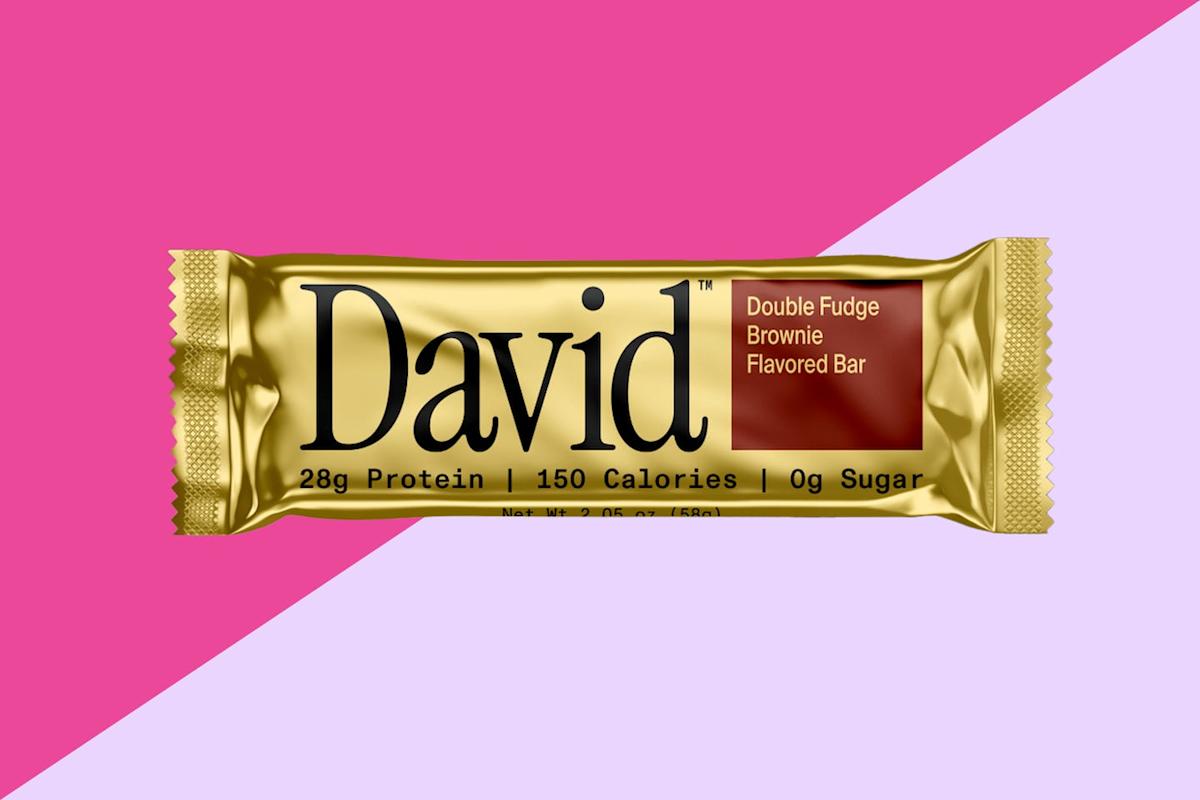
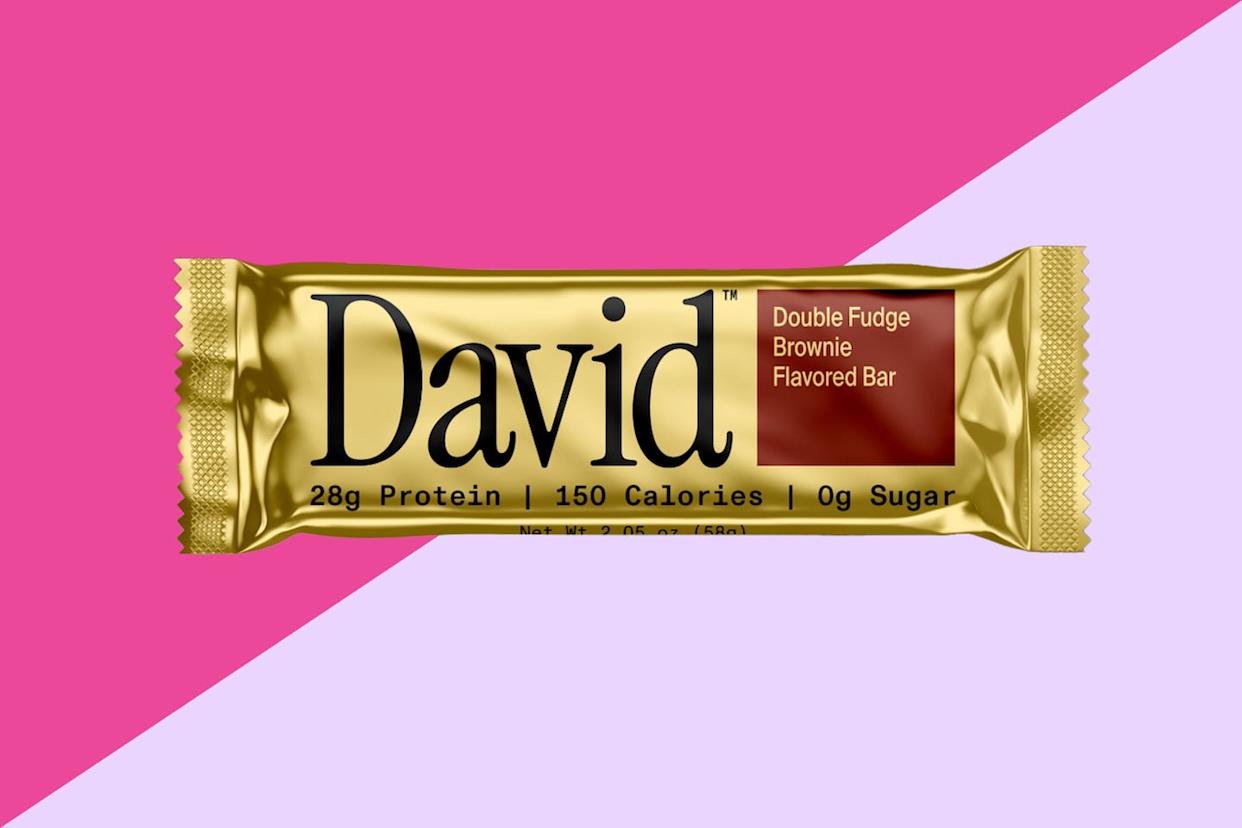
By now you’ve probably heard of David bars, the buzzy, gold-wrapped protein bars with super impressive stats: 28 grams of protein, 150 calories, and zero grams of sugar.
Backed by wellness world major players like Andrew Huberman (of the podcast Huberman Lab) and Peter Attia (who served as the brand’s chief science officer until he recently stepped down following his appearance in the Epstein files), David ushered in an impressive $10 million of seed funding in 2024 to create what the company describes as a protein bar in its “idealized” form, kind of like the Michelangelo sculpture that shares the brand’s name.
Ever since, David bars are everywhere. Per the website, “David helps anyone build strength, lose fat, and be beautiful.” You might see these bars in a lifter’s gym bag—or in the pantry of someone with weight loss goals, as the brand also describes the bars as supporting increasing muscle and decreasing body fat. Initially, the flashy new company marketed itself as being all about developing tools for weight loss, with these bars being their first installment. (Their second: Wild-caught Pacific cod.)
Lately, though, David has been at the center of a class action lawsuit which alleges that the bars have more fat and more calories than advertised. The company says that’s not the full story.
Here’s what you need to know about David bars—whether they can actually serve as a body recomposition tool—and why people are accusing them of mislabeling their macros.
Meet the experts: Michael Russo, MD, is a bariatric surgeon at MemorialCare Surgical Weight Loss Center at Orange Coast Medical Center. Amy Stephens, RDN, is a dietician specializing in sports nutrition. Bryan Le, PhD, is a food scientist and author of 150 Food Science Questions Answered. Abbey Thiel, PhD, is a food scientist and consultant.
The David Class Action Lawsuit, Explained
In late January, a class action lawsuit was filed against Linus Technologies Inc. (the company that produces David Bars) alleging the company misrepresented the calorie and fat count in the bars. Per the complaint, after testing the protein bars at a third-party laboratory, the calorie count was estimated to be 78-83 percent higher than stated on the label—and that fat content was estimated to be 368-400 percent higher. This is in violation of FDA regulations, the lawsuit alleges, and could affect someone’s decision to purchase the bars in the first place.
Peter Rahal, the company’s co-founder, responded directly to Women’s Health’s request for comment, calling the allegations “simply wrong.” He wrote, “It rests on a flawed and misleading interpretation of how calories are determined under U.S. food labeling regulations. Some claims circulating online—and the testing references in the lawsuit—rely on bomb calorimetry, a laboratory method that measures total heat released when food is completely burned. That is not how calories on nutrition labels are calculated. FDA rules require the use of metabolizable energy—the actual energy the human body can absorb and use—not combustion energy. This distinction matters enormously for ingredients such as dietary fiber, certain sweeteners like esterified propoxylated glycerol (EPG). When burned in a calorimeter, these ingredients appear to deliver far more calories than the body actually receives. That is why the FDA mandates specific calculation methods for these ingredients.”
Food scientist Abbey Thiel, PhD, agrees with Rahal, and says that the testing done in the lawsuit, which uses an older analytical method called a gravimetric fat extraction test (which is slightly distinct from bomb calorimetry, as Rahal says), is flawed. That’s because David uses EPG, a highly-engineered fat substitute that the body only absorbs in small amounts. “The issue here isn’t necessarily the bar itself, it’s the testing method,” Thiel says. “The analysis used in the lawsuit measures everything that dissolves in solvent and assumes it’s dietary fat. But the bars contain a fat replacer called EPG, which behaves like fat in the test even though it contributes far fewer calories.” In short: the consumer doesn’t need to factor in this lawsuit—and can go off the existing nutrition label, Thiel says.
What’s in a David Protein bar?Protein
You have to hand it to David; the bars pack more protein than most, clocking in at 28 grams. Made up of milk protein isolate, collagen, whey protein concentrate, and egg white, David bars have a perfect 1.0 protein digestibility-corrected amino acid score—which basically just means that they have all 20 amino acids, says Bryan Le, PhD, a food scientist and author of 150 Food Science Questions Answered. The human body can make 12 on its own, but needs help with the other eight, and not having enough of each amino acid can result in a nutritional deficit, he says. It’s a perk to be getting all 20 aminos, but this is to be expected from a bar that mixes multiple animal-based protein sources and isn’t unique to the brand.
While the protein amount is impressive, there are a few quick things to note. Since David bars are made from animal protein, they wouldn’t be for people looking for a plant-based option. They also contain milk and eggs, so people with sensitivity or allergies to these ingredients, beware.
Binding and Fat
EPG might be at the center of the class action lawsuit, but to Le, the ingredient stands out as unique. It’s a kind of fat that your body can’t break down—which helps decrease the total number of calories in the bar—that you don’t find in a lot of foods, say Le. (You might find it in only David bars going forward, after the company acquired Epogee, the sole manufacturer of the substitute, in 2025, per Men’s Health reporting.) Thanks to ingredients like EPG, David bars have a higher percentage of calories from protein, something that Michael Russo, MD, a bariatric surgeon at MemorialCare Surgical Weight Loss Center at Orange Coast Medical Center says can be beneficial for weight loss.
As for binding, a little food science 101: when you make a protein bar, you’re going to need a few ingredients in there to bind the rest together. Among a few others, David bars use maltitol, allulose, and glycerin to do this, which could leave your stomach feeling upset if you consumed them in large amounts.
“Maltitol is a sugar alcohol and I don’t usually recommend those because they can cause gastrointestinal issues,” says Stephens. “A lot of people that I work with get stomach cramps and stomach aches if they have too many of these in a day.” But, one or two bars shouldn’t set you over the edge. “If you eat four of these, probably the glycerin and the allulose is going to give you gastrointestinal upset, and that’s true of many products with allulose and glycerin in it,” says Le.
One ingredient Stephens isn’t psyched about: Palm kernel oil. This is because it’s high in saturated fat, which has been found to affect cholesterol and heart health, she says. But research is mixed on just how bad palm kernel oil is for you, per a 2018 systematic review in PLOS One.
(No) Sugar
While David bars don’t have any sugar, they do have artificial sweeteners, which is something to consider if you’re sensitive to them for any reason. Depending on the bar, you’ll find a combination of stevia, sucralose, acesulfame potassium, cocoa powder, and/or monk fruit. These are all standard flavoring components, says Le. “You would probably see this pretty often in other protein bars and protein powders,” he says.
There can be a trade-off when it comes to artificial and manufactured sweeteners, adds Stephens. Since they’re not natural sources, they could be harder for your body to break down, and they also might make you consume more, rather than fewer calories of the bar. “Studies show that people end up eating more of these foods that use fake sugars,” she says.
Still, none of these ingredients are a huge cause for concern, say Dr. Russo and Le. “Some people can be sensitive to some of these artificial sweeteners, but they’re not problematic in any way,” says Dr. Russo.
Between the protein, binding, non-digestable fat sources, and artificial sweeteners, David bars are certainly a heavily processed product, which is worth considering. “This is obviously not a clean-label protein bar,” says Le. “If you’re looking for something with natural ingredients, this doesn’t have it.” (Some simpler, less processed options would be RXBARs, which Rahal also co-founded, Kind bars, or Rise bars, which all have fewer and more real food ingredients, but every protein bar will have some level of processing.) If you don’t mind that it’s processed and are open to a highly-engineered, low calorie bar, “This is pretty cool,” Le says. “I actually think it’s an interesting product.”
Can a David bar help you gain muscle and lose fat?
Though David bars have their positives, a bar alone isn’t going to magically make you lose fat and gain muscle (no matter what Cady Heron told Regina George when she handed her a Kälteen bar in Mean Girls). Exercise, the rest of your diet, sleep, genetics, and more play a more important role.
These bars are undeniably high in protein, and protein does have benefits when it comes to both weight loss and muscle-building. It takes longer to digest, which means you stay fuller longer, says Dr. Russo. It’s also the building block of muscle (and women should consume close to 1.2 to 1.5 grams per kilogram of body weight to support tissue growth, FYI). The bars also have a good balance of higher protein to fewer carbs, which can be a beneficial breakdown for weight loss too, he adds.
But, are David bars really a “breakthrough” like the website claims? “I wouldn’t say it’s revolutionary,” says Dr. Russo. “I would say it’s a higher quality protein bar based on the amount of protein that’s packed into a bar. It’s not going to necessarily make you lose more weight than some other equivalent protein bar. As long as you’re meeting your protein needs with regular exercise and a healthy lifestyle, I think that you can achieve that weight loss diet with a variety of brands.”
And remember, protein bars, like protein powders, are a supplement to real food. “It’s another convenient way to grab protein,” says Stephens. If you need help hitting your protein goals for the day, especially in the morning when it can be beneficial for satiety to get some in, a protein bar can do the trick. It’s still best to prioritize unprocessed whole foods whether the goal is weight loss, muscle-building, or overall health, says Stephens.
You Might Also Like