
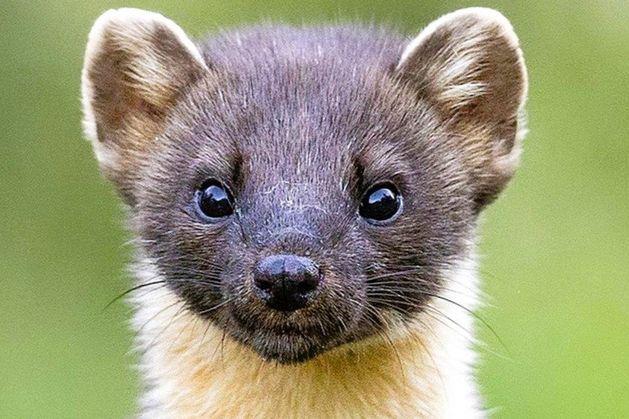
The Pine Marten is regarded as a native Irish mammal with the earliest records of its presence dating back to 6,000 years ago. It is believed that it was common and widespread in the past. However, things were to change.
Pine Martens are associated with woodlands. The destruction of our native woodlands over a long period of time, coupled with persecution of martens due to hunting for their fur, led to a decline in the Pine Marten population to the extent that they were rated rare animals by the 20th century.
However, thankfully, things were to change again. The Pine Marten was afforded legal protection status and tree planting, especially forestry plantations, became widespread resulting in both factors leading, in combination, to a population rise that is still happening.
Pine Marten records show that the cat-sized tree-dweller, an Cat Crainn as Gaeilge, is now found in every county in Ireland. The animal’s stronghold is in the Midlands, and it is scarcest in Munster and Ulster. In 2007, the first and only estimate of the national population was made and it was in the order of 3,000 to 4,000 individuals, so it is still one of our rarest wild animals.
A handsome animal, the chestnut to dark brown fur of its slender and elongated body acts as a foil to show off its contrasting creamy-yellow throat patch that extends down its chest. Its ears are edged with a similarly pale fringe.
Pine Martens are solitary and elusive animals. They spend a lot of time resting and sleeping during the winter and hunt under cover of darkness, so they are seldom seen. During spring and summer, they are more active, are breeding, and tend to be out more during daylight hours.
While they are normally solitary they have to come together to mate. Once a year during spring, females give birth to two or three young, called kits. The mother rears the kits in her den on her own; the father plays no part in rearing his offspring or in family life.
At this time of year, the normally elusive Pine Martens are are more active and are out and about in woodlands during daylight hours, so there is a better chance of spotting one.