
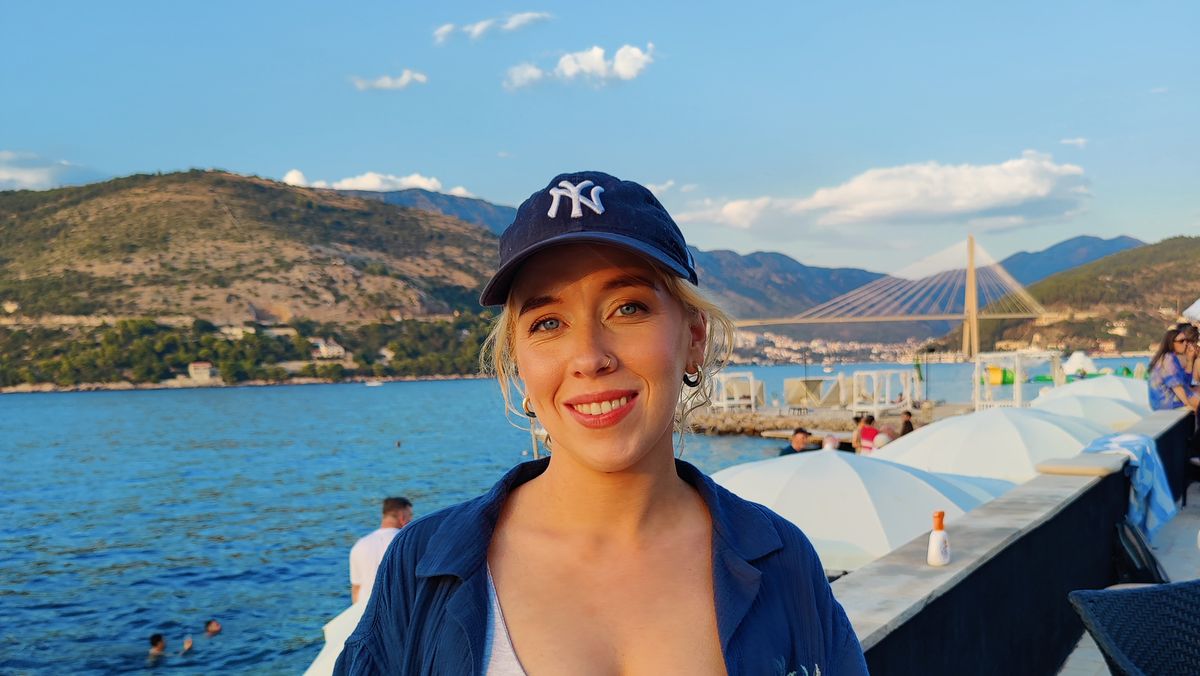
Emma Butler from Dublin was totally shocked when she was diagnosed with a rare form of cancer after initially suspecting that she might be pregnant.
“Back in 2022, I was really exhausted. I had a lot of fatigue that I’d written off, I was busy at the time. I started to get night sweats, which I ignored as well because it was during a heatwave.”
When Emma’s period stopped, she was convinced she was pregnant. She went to the doctor to do a pregnancy test there, and she did a blood test at the same time.
A few hours later, she got a call to say she needed to go to the hospital. The initial doctor’s visit was on a Thursday and she was booked in for a hospital appointment on Monday.
When Emma went to the hospital clinic, she saw signs for oncology, which made her worried. She then went into the doctor, who told her to bring the person accompanying her into the room as she didn’t have good news to share.
Emma was diagnosed with chronic myeloid leukaemia (CML) at just 29 years of age. It’s a rare form of cancer that usually affects men in their 60s and older.
Initially, the doctor told her she had a blood disorder, and it wasn’t until Emma asked them outright if it was cancer that they said yes. “They kept saying it was a treatable, manageable condition, but once they confirmed what it was, I’d have it for life and would need life-long treatment.”
Emma had to go for a bone marrow biopsy and a series of further tests, and then she started oral chemotherapy. Once her test results came through, which confirmed she did have CML, she switched to a targeted treatment called TKI. “They are tablets I have to take every day, they have a lot of side effects. They also leave me immunocompromised and more prone to infections, I can have frequent hospital stays because of these infections.”
Side effects of the medication include heart palpitations, which can be quite scary for Emma. “It increases your QTC interval. Your heart beat changes. Sometimes it feels like my heart stops and I can feel my whole body ‘power down’. That’s really frightening.”
As well as getting infections, Emma can also get petechiae, which are little red dots on her body. “I also get migraines, dizziness and nausea too.”
Emma will be on the treatment for life, and currently she has to get her bloods done every three months. “It’s like an invisible illness because people can’t see my symptoms, for example, bone pain. You have to vocalise when you’re not well.”
“People say to me all the time, ‘You don’t look like someone with cancer’. At the end of the day, I still want to take care of myself and still feel like myself. I might present a certain image, but that doesn’t mean I am feeling great [on the inside].”
Accepting a cancer diagnosis at such a young age was very hard for Emma. “You have an idea of what your 30s will look like. I was planning my 30th birthday party and was going to travel, and all of that was pulled out from under me.”
Thankfully, she has good family and friends to support her, especially her partner who she describes as an “absolute angel.”
She adds that on days when she needs to rest, her friends understand that while she wants to meet them, she’s not always able. “Their kindness and empathy has been tremendously helpful.”
When she was diagnosed initially, Emma took 14 months off work. She has since changed her career completely and is currently retraining as a psychologist. “I received such incredible support from psycho oncology services, I’d like to be able to help people in that way as well.
“People think cancer is a distinctly limiting thing, but it doesn’t have to be. I am really enjoying what I do now and I don’t think I would have done it had I not gotten the diagnosis.”
This Daffodil Day, the Irish Cancer Society are urging you to stand with cancer patients and survivors and to Go All In Against Cancer. They urgently need your support to continue to provide free services for cancer patients and their families, as well as life-changing cancer research. Donate today at cancer.ie/daffodilday.For more information on cancer, visit cancer.ie or ring the Irish Cancer Society’s cancer nurse support line on 1800 200 700.The Irish Cancer Society’s Daffodil Centres, located nationwide, offer face-to-face support from experienced cancer nurses and volunteers.
To read the full article, pick up a copy of RSVP’s March issue, on shelves now.
Want to see more of the stories you love from RSVP ? To add RSVP as a preferred source of news on Google, simply click here