
In this series, Keith Duggan takes to the road across the United States in its 250th year to take the national pulse at a defining moment
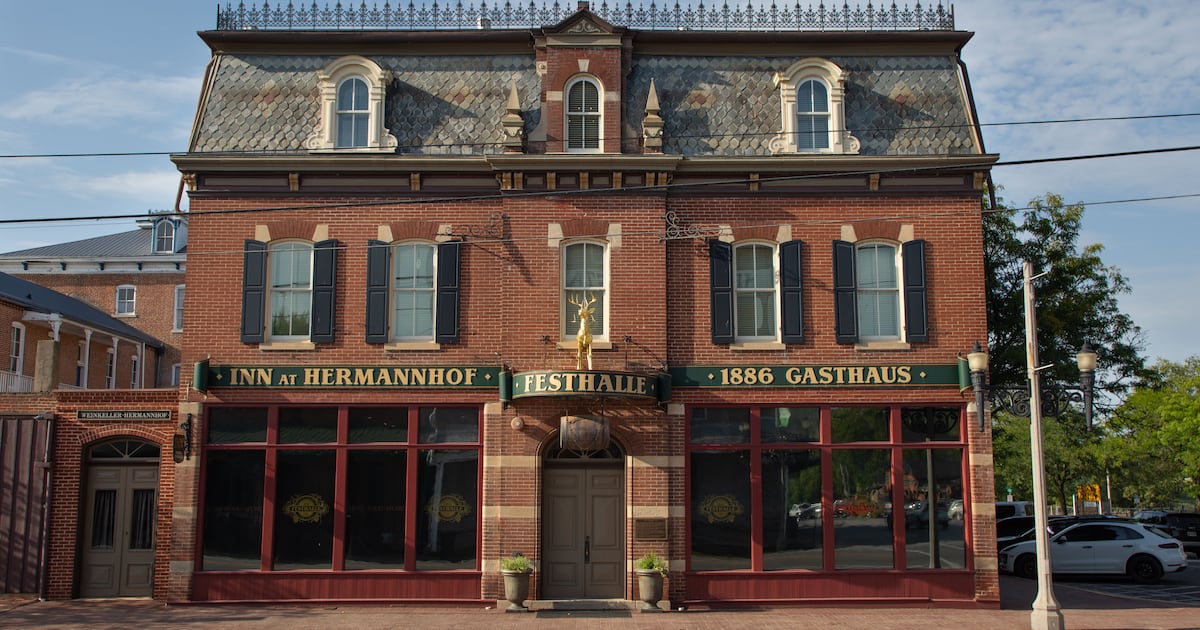
The idea was visionary but the execution was foolhardy. In the winter of 1837, a group of German immigrants, led by George Bayer, set off from Philadelphia for 11,000 acres of Missouri farm land. Alarmed by dilution of their culture, they had decided to strike out, buying a plot of land out west to set up a sort of unofficial enclave modelled on the towns of the Rhineland region. They arrived in the deprivations and darkness of December.
“Well, they found there was nothing here,” John Layman says with a gentle laugh.
“No hotels, no motels. And the winter here. There were just a couple of families in cabins. What the hell do ya do now? Well, thankfully those families took the new arrivals in and they made it through that winter. That was the start of the town.”
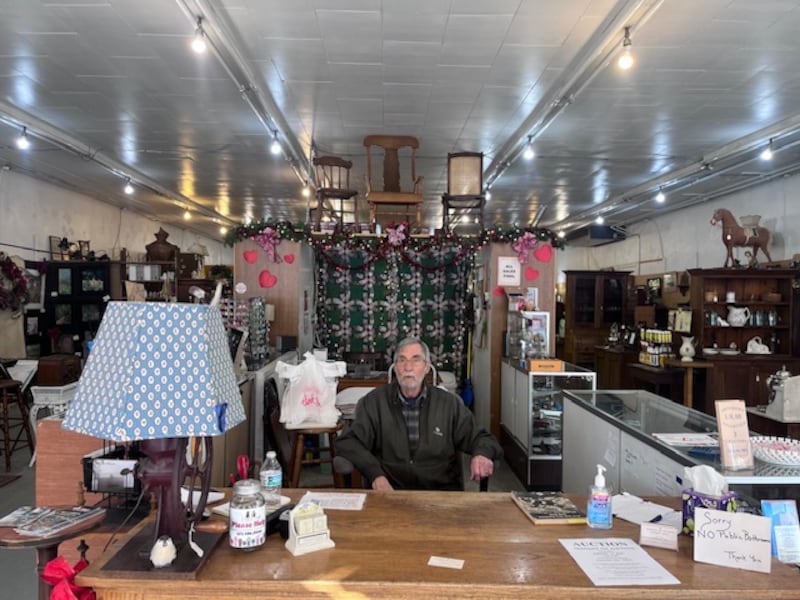 John Layman, who runs an antique shop in Hermann, Missouri. Photograph: Keith Duggan
The town is Hermann, Missouri, a picture-postcard redbrick escape on the bank of the Missouri. Layman, a Minneapolitan, came down to visit a friend in the 1970s, saw something he liked and has operated an antiques shop ever since. He’s droll and laconic and from his chair in the foyer of the shop, he has overseen the transformation of the town from a half-forgotten time warp to a popular weekend tourist destination. Hermann gussied up its handsome buildings and began to lean on its tradition of wineries, breweries and distilleries. The winter population is just short of 3,000 but in weekends, it’s a constant draw.
“Back in the ‘50s, there were so many lit-up signs – you know, Ralph’s Butcher Shop … all that’s gone and it’s cleaned up the buildings. They look better. You can see ‘em. And we have a landmarks commission that kinda regulates what can be done to old buildings. Like, that one over there needs tuck-pointing. A banker out of St Louis owns a lot of property down the corner there.

“He really got the town cleaned up and started the tourism business around 1980. It has grown since. We have nothing going on during the winter but from March we’ll get a couple of thousand out here every weekend.”
It’s easy to see the appeal. Although this is the early-spring off-season, the sky is dazzlingly clear and the air cold and clean. The Missouri river is a stone’s throw away: in summer time, it’s a dream for the outdoorsy and camping set. Hikes. Fresh air. Good booze, decent restaurants and a succession of boutique shops is the surface appeal of Hermann.
But running beneath that is the intangible attraction of a slower pace. The town has the trappings of period-Americana set against its robust, European architecture. It has a curiously timeless feel – and the chain coffee and burger joints have been kept at bay.
“I think we found things to do,” says Spencer Puchta (33) of growing up in Hermann.
“If you want to go to a movie theatre, you had to drive 20 or 30 minutes. We had the carnival come through in the summer. Fourth of July, everyone’s on the river front. It was kind of like scenes from that movie The Sandlot. That’s how I would describe it. There’s really no crime- you might get one or two murders every seven or eight years and they are usually drug addicts, sadly. Nothing crazy weird – it’s too small and everyone knows everyone’s business.”
 A downtown wall mural for Missouri Valley Ice Cream in Hermann, Missouri. Photograph: George Rose/Getty Images
The Puchtas are part of the Hermann origin story. Adam Puchta landed in Missouri with his father and set up the winery in 1855: it now holds the distinction of operating as the oldest family-owned winery in the United States.
The drive to the Puchta Winery, a couple of miles outside town is as you’d imagine: winding and verdant. A small wooden ramp over a stream serves as the entry to the winery. It was after 4pm when I arrived there. The gift shop was ready to close for the day. It’s located in what was the kitchen of the family home Adam Puchta built in the mid-1850s: original beams and floorboards and brickwork all good as day one.
Spencer and I talk in the tasting room, where the walls are decorated with photographs of his dad, Timothy, who died in 2022, and solemn portraits of Puchta men dating back to Adam himself. It’s an extraordinary story of steadfast, Germanic perseverance.
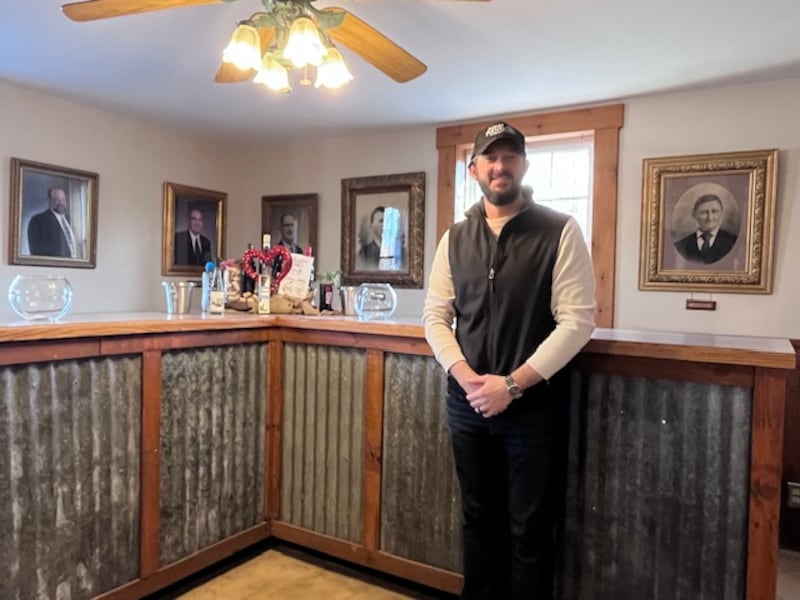 Spencer Puchta. Photograph: Keith Duggan
“As the story goes, Adam’s dad was a Bavarian winemaker, butcher, carpenter – they did it all,” Spencer says.
“There’s a town across river called Rhineland. Suburb called Black Forest. Every couple of years we find out a little bit more. Gasconade County has a historical county office downtown and back in the day, when the town was bilingual, there was a whole separate newspaper in German. They have archives and translations. It’s kinda funny, one of the Missourian newspaper writers was doing a piece on wine production in the civil war and reached out the other day. What my step grandmother could tell me is that the Germans here in town were very anti-slavery. But some of the farms on the other side of the Missouri river, there was some of the slavery stuff.”
By the 1920s, Missouri was the biggest wine-producing state in America. Prohibition killed that and many of the wineries around Hermann just perished. The Puchtas maintained family production but the main building fell into disrepair until Timothy Puchta decided to revive it as a commercial interest in the 1980s.
“Right now, the wine market is saturated,” says Spencer, who runs the business with his brother Parker. He’s affable and easy to chat with and is optimistic that the next generation – his daughter is just three months old – will continue with the business. But he’s aware time is diluting Hermann’s connection to the old world.
“I think it’s tough because I don’t know if the town has done a good enough job passing the core culture down. There are pockets of it. For a town of 3,300 people when they do Wurst Fest, in March or Oktober Fest, we have the dancers and stuff in lederhosen. But you can see the average age of the dancers keeps getting older – it’s the same dancers every year. And the language was fizzling out because fewer families were teaching the language. We only have one high school and half the kids pick Spanish rather than German. We still promote our heritage. But I mean, I took Spanish because it was more practical for college. The family names are still German. Most of the last names are German. My best friend growing up here, the family name is Baumstarken – it translates to tree strong and the entire family are carpenters. So, it’s still there.”
Like many business owners in the town, he is conscious of the acute reliance on tourism. Many local conversations revolve around the consequences of a tourism downturn. Other towns along the Missouri are objecting to the imposition of data centres, proposed as a means of revival. For Hermann, transforming the town into an attraction has worked.
“But we are asking if there is anything else we can bring here without sacrificing the historical element. And with that, finding staff is hard. Because the whole town can’t just work weekends.”
This July 4th will, of course, resonate strongly in Hermann. As he reflects at this moment in the United States, Layman is troubled. He thinks back to what he sensed was an inherent optimism in the years after the Vietnam War, which ended because the government listened to the protests. The January violence in his native city of Minneapolis left him uneasy and he fears November’s midterm elections may not take place.
“I think we are in big trouble. I don’t think there will be a November election. Everybody is convinced the Democrats will take back Congress – both Houses. And if that happened, he would be shut down on every damn thing he wants to do. So, he will make a crisis. He will dream up something to make sure that doesn’t happen.”
[ Keith Duggan’s US road trip: The farther west you go the less real Trump becomesOpens in new window ]
Out at the winery, Spencer Puchta is uncertain about the future for different reasons. During Covid, the Puchta winery maintained outdoor events at stay-safe distances. Spencer says his research during the pandemic inculcated a profound distrust of the official, federal information cycle and this has completely altered his view on how the country works.
“Well, I think generally speaking, America is still probably one of the best places to change the trajectory of your life – if you are smart enough to get there,” he tells me as his dad and the gone generations of Puchtas look on.
“And I know America is not the only place where that happens. But I do think it can be life-changing. In terms of the political landscape, I dove into mass amounts of research around Covid. Because there were things I saw on TV. And now I am pretty much a full-blown conspiracy theorist. Which the CIA coined to label theories which haven’t or won’t be proved because they won’t be verified by sources we deem official. We have the Epstein files now … I don’t know. Everyone wants to make this a left-versus-right thing. But I voted one way in my 20s and another in my 30s. And now I have gone past even that. It’s not ever right-versus-left any more. It’s who sits up here at the table and controls the money and everything else, and the rest of us are all down here. So, my optimism in terms of where the common man will be in 10, 20, 30 years … I don’t really know.”
He says all of this with a light laugh that rings around the home built by Adam, where it’s extraordinarily peaceful, and could just as easily be in the Black Forest as the Midwest.