
By the mid-18th Century, Saint Patrick’s Day parades had taken on political significance, used in recruitment drives first for the British army and later, during the American War of Independence, for revolutionary forces. Irish identity became increasingly associated with ideas of liberty and resistance, and Patrick emerged as a symbolic figure for migrant communities seeking visibility and belonging.
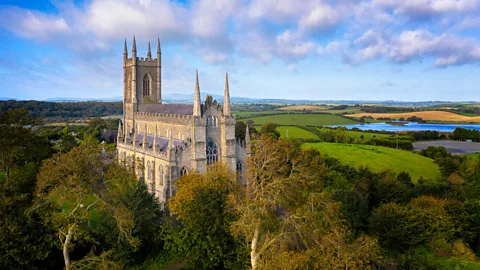 AlamyDown Cathedral in Downpatrick stands beside the site traditionally believed to be the burial place of Saint Patrick (Credit: Alamy)

Today there are more than 450 churches dedicated to Saint Patrick in the US alone, and hundreds of thousands of children named after him. For communities shaped by migration and displacement, Patrick’s story – of exile, endurance and return – continues to resonate across borders and generations. Walking Saint Patrick’s Way brings that global story back to its source.
“People think they come because they want a good walk or some scenery, but very often something else is going on,” says Purdy. “I always say it’s a kind of invitation. Patrick draws people back, and moving through the landscape where his story actually happened, in a place that once had so many divisions, is powerful in itself.”
—
If you liked this story, sign up for The Essential List newsletter – a handpicked selection of features, videos and can’t-miss news, delivered to your inbox twice a week.
For more Travel stories from the BBC, follow us on Facebook and Instagram.