
It is not clear how or when the US–Israeli war against Iran will end. Even if the US and Israel agree to halt their military action, the war will only end if Iran also desists from armed resistance.
Without an agreed end to hostilities, Iran could keep up limited military action for quite some time, launching periodic drone attacks on ships passing through the Strait of Hormuz. This could potentially keep the channel closed to shipping. Even if Iran didn’t hit anything, they can still make it too risky for ships carrying highly inflammable cargoes, preventing export of oil or liquefied natural gas (LNG).
While the thousands of lives lost are clearly the biggest casualty, the war is also causing significant damage to the world economy, particularly due to the impact of higher oil and gas prices. The impact will worsen, the longer the war drags on.
Gas is a particularly important energy source for Europe, and the price rises following the invasion of Ukraine have had a continuing impact on European electricity prices.
In the current Middle East war, the blockading of LNG exports from the Gulf will also have a significant negative impact on other economies. China, India and Pakistan source most of their LNG in the Gulf. Already, some LNG supplies on the way to Europe are being redirected to Asia, due to the higher price on offer there.
So LNG scarcity due to the blockade is raising gas prices not only in the primary Asian market for Gulf supplies, but also across Europe, including here in Ireland.
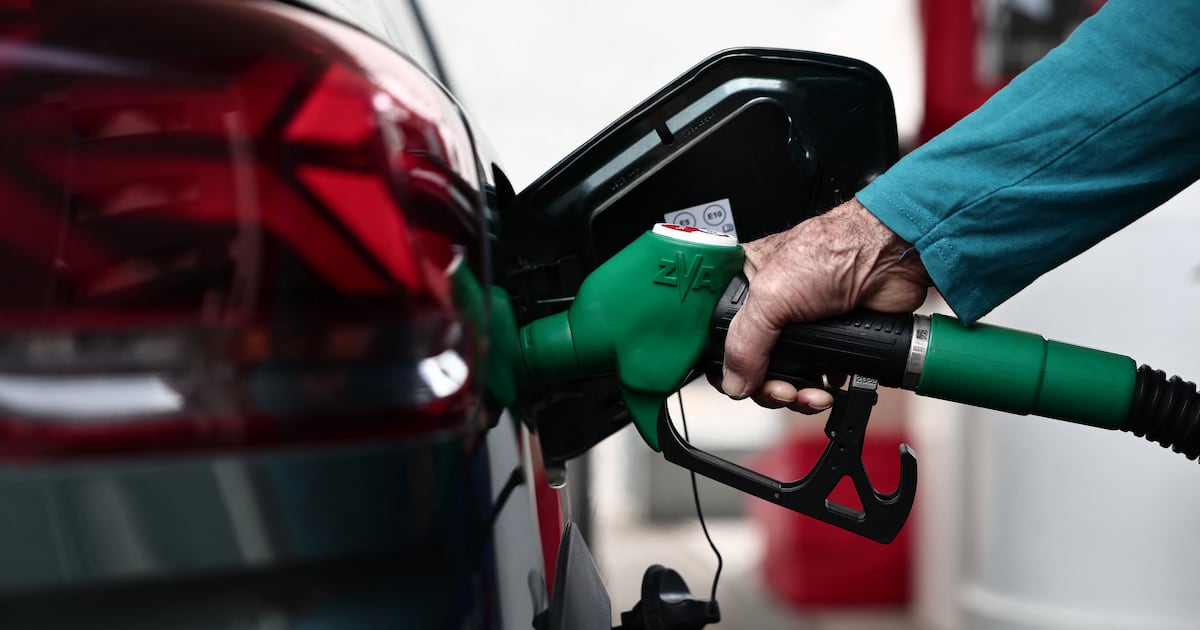
Crude oil’s price has jumped, reflecting the loss of world supplies from the Gulf. The impact on petrol prices at the pumps has been immediate, as happened during previous outbreaks of war in the Middle East – in 1956, 1973, 1979, 1990 and 2003.
We have had lots of exposure to energy price surges as a result of conflict – the experience of what worked and what didn’t should guide our response now.
We shouldn’t repeat the disastrous attempt in 1979 to cap petrol prices, when unrest in the Middle East led to a jump in oil prices. Within days of the cap, petrol destined for Ireland was redirected elsewhere. The result was massive queues at all petrol stations just to get a few litres of fuel.
[ Price of our dependence on fossil fuels is becoming clear yet againOpens in new window ]
After this experience, no Irish government will try that approach again. It was rationing by chaos. At least in the 1956 Suez crisis, the government had rationed petrol in an orderly fashion.
When the Russian invasion of Ukraine led to a spike in energy prices in 2022, the government here attempted to insulate consumers through blanket subsidies. This policy was also misguided. Providing subsidies for everyone just means that the same people will have to pay them back in higher taxes, so the relief is only short-term.
We all become worse off, one way or another, when the cost of imported energy moves against us. All-round subsidies also blunt the message that we need to reduce our consumption of fossil fuels.
If the current price surge continues for long, the Government should move to protect vulnerable households on low income. This is best done through the welfare system, targeted at those hardest hit by any exceptional surge in the cost of heating and electricity.
The main lesson that should be learned from the periodic oil price shocks over the past 70 years is that governments need to take the issue of energy security seriously. After the oil crises of the 1970s, governments (including in Ireland) decided to hold a few months’ stock of oil. However, while providing a supply cushion, this is of little use in keeping prices in check. Instead, we need to wean ourselves off dependence on fossil fuels.
We must accelerate measures to decarbonise our economy: as it is, we have been failing to meet the targets set. Fewer households would now be facing sizeable heating bills if we had been on target with retrofitting homes, and the switch to heat pumps.
[ ‘You don’t get your money back for 64 years’: Why retrofitting doesn’t make senseOpens in new window ]
Electric car numbers are also way off target. Making fossil-fuel cars significantly more expensive to buy could have incentivised more motorists to switch. Instead, the majority of car owners are facing big increases for petrol and diesel at the pumps.
Some argue that carbon costs should be reduced: that’s the wrong answer. Governments need to accelerate measures to eliminate oil and gas from our economies. If Europe can deliver on its climate change commitments, by 2040 we will no longer be dependent on volatile energy supplies from troubled regions.