
Main pointsIsrael continued to launch strikes on Iran as well as Lebanon and Gaza, beginning what it described as “limited ground operations” against HizbullahEuropean Union’s foreign policy chief is encouraging member states to redirect the bloc’s Red Sea naval mission to help restart oil and gas shipments in the Strait of Hormuz after US president Donald Trump demanded assistanceTrump also warned that Nato faces a “very bad” future if its members don’t assist in reopening the strait, the Financial Times reportedFlights are resuming at Dubai International Airport, according to its operator, after a “drone-related incident” sparked a fuel tank fire nearby earlierKey readsIsrael captures territory in southern Lebanon
Israel is expanding its military presence across southern Lebanon following a surge in cross-border rocket attacks by Hizbullah.
The Israel Defence Forces have moved into more than a dozen locations in Lebanon and are likely to deploy further, according to an Israeli official who requested anonymity to discuss military movements.
The advance is meant to “strengthen a forward defensive posture” against Hizbullah, an Iranian ally, according to an IDF statement on Monday.
It is the latest escalation of what is now a major front of the war in the Middle East and a further indication that Israeli operations in Lebanon could outlast its fighting with Iran.
Hizbullah began firing rockets toward Israel in retaliation for the US-Israeli strikes that kicked off the war more than two weeks ago. Subsequent Israeli air strikes in Lebanon have killed 850 people, according to the Lebanese government, and displaced hundreds of thousands. Parts of Beirut have been leveled.
According to Nadav Shoshani, an IDF spokesperson, Hizbullah attacks have recently intensified, with the group launching around a hundred rockets and drones toward Israel every day since late last week. Around a third of Israelis live within range of the weapons.
Hizbullah attacks have so far killed two IDF soldiers in southern Lebanon – Bloomberg
Trump threatens to delay China summit
US president Donald Trump threatened to delay his summit with Xi Jinping if Beijing doesn’t help secure the Strait of Hormuz, as the US-Israel war stifles oil supplies and unsettles ties between the world’s biggest economies.
Trump stressed China’s dependence on oil from the Middle East in an interview with the Financial Times, as he reiterated a demand for Beijing to help unblock the key waterway. One day earlier, the Republican leader appealed to China to join a team effort to send ships to the strait through which a fifth of the world’s oil supply passes.
“It’s only appropriate that people who are the beneficiaries of the strait will help to make sure that nothing bad happens there,” Trump said Sunday in the FT interview.
His trip to Beijing slated for the end of this month would be too late, Trump added, underscoring the growing urgency around efforts to counter Iran’s chokehold on the strait.
Iranians are victims both of internal oppression and external agression, writes two Iranian academics living in Ireland.
Trump is not offering liberation for Iran, and the Islamic regime is not offering resistance to empire. Both are bullies buying time to navigate domestic protests, to test the limits of their power and to rally their political base on a war footing.
Prof Roja Fazaeli, who was born in Iran, is established professor of Law and Islamic Studies at the Irish Centre for Human Rights, School of Law, University of Galway. Dr Joel Hanisek is research fellow at the Irish Centre for Human Rights, University of Galway.
You can read their analysis here.
The closure of the Strait of Hormuz hurts the global economy and helps Russia fund its war.
It is affecting our partners in the region and is dangerous for global energy supplies.
Today, EU Foreign Ministers will discuss how to better protect shipping in the region, including… pic.twitter.com/iJSVdT7FqA
— Kaja Kallas (@kajakallas) March 16, 2026
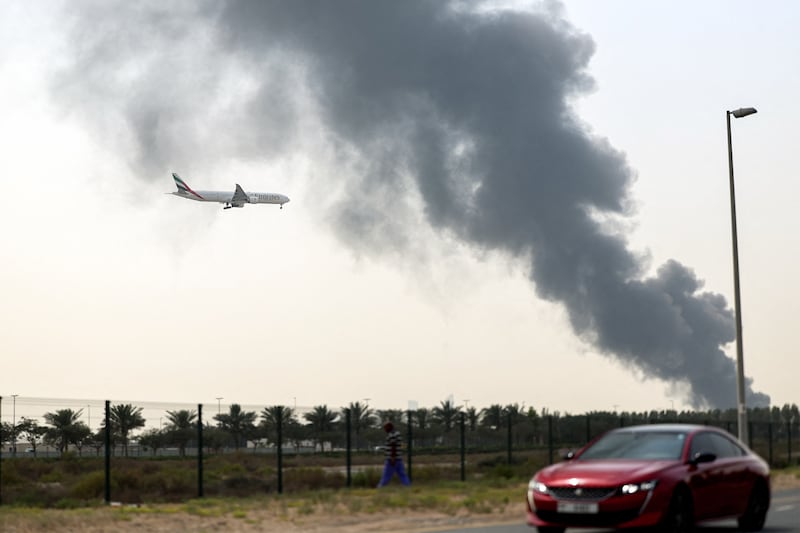 An Emirates Airbus A350 aircraft prepares for landing as a smoke plume rises from an ongoing fire at Dubai International Airport in Dubai on March 16, 2026. Flights were gradually resuming at Dubai airport on March 16, previously the world’s busiest for international flights, the airport operator said, after a “drone-related incident” sparked a fuel tank fire nearby, as Iran kept up its Gulf attacks. (Photo by AFP via Getty Images) /
Message from the Editor
 Irish Times Editor Ruadhán Mac Cormaic
Thanks for reading. If you’re interested in world news, The Irish Times has the largest network of foreign correspondents of any Irish news organisation.
Our team provides sharp reporting, in-depth analysis and thought-provoking commentary. Receive our Global Briefing newsletter in your inbox every morning to enjoy Denis Staunton’s guide to understanding world events; what’s happening, why it matters and how it affects you.
At The Irish Times, our journalism is free of any personal, political or commercial control. Unlike most publishers, we have no shareholders to satisfy, no media baron owner in the background telling us what we can and cannot publish.
We are owned by a Trust that mandates us to uphold a set of public-interest values. Those values describe a worldview that is outward-looking, tolerant, curious, interested in divergent views and attentive to the needs of minorities.
Our watchwords are fairness and accuracy. Our goal is to enable you to make informed and independent judgments. And any profit we make goes towards supporting our journalism.
Ruadhán Mac Cormaic
Editor
To join Ireland’s biggest community of news subscribers, sign up hereEU ponders intervention to unblock Strait of Hormuz
The European Union’s foreign policy chief is encouraging member states to redirect the bloc’s Red Sea naval mission to help restart oil and gas shipments in the Strait of Hormuz.
“If we want to have security in this region, it would be easiest to already use the operation we have in the region and maybe change a bit,” Kaja Kallas said Monday, ahead of a meeting of EU foreign ministers.
The EU operation in question is Aspides, which was launched in 2024 after the Houthis attacked shipping vessels in the Red Sea. Officials are now discussing whether the bloc could turn that mission to the Strait of Hormuz, a key shipping route that has been effectively closed since the US and Israel attacked Iran.
Ministers will debate “whether it’s possible to really change the mandate of this mission,” Kallas said.
The blockade has sent energy prices soaring, leaving European officials anxious about inflation, economic slowdowns and even food supply disruptions. Roughly a fifth of the world’s oil moves through the narrow passage.
In addition to shifting the Aspides operation, countries are also exploring a “coalition of the willing” operation, Kallas said.
“We also need to see what would be the fastest way to provide this opening of the Strait of Hormuz,” Kallas said.
President Donald Trump is separately trying to pressure countries to help reopen the strait. On Sunday, he said he was “demanding” that others offer assistance.
“Why are we maintaining the Hormuz strait when it’s really there for China and many other countries? Why aren’t they doing it?” Trump said – Bloomberg
Oil rallied as supply risks in the Middle East escalated following a second attack in three days on Fujairah, a vital port in the United Arab Emirates that’s just outside the Strait of Hormuz.
Brent rose above $106 a barrel, while West Texas Intermediate was near $101. Futures had risen more than 40 per cent in the past two weeks. The US said late on Friday that it had struck military sites on Kharg Island, which handles the bulk of Iran’s oil shipments, although the Fars News Agency reported that exports from the island were continuing.
Oil loading at Fujairah was suspended and damage was being assessed, according to people familiar with the latest incident. That followed a drone strike at the site on Saturday, which interrupted shipments from the country’s only viable oil export route.
Meanwhile, US president Donald Trump told reporters on Air Force One that he is “demanding” that other countries contribute to the defence of the Strait of Hormuz, the vital maritime thoroughfare linking the Persian Gulf to international markets.
The bombing of Kharg Island added to the scope of the conflict, which the International Energy Agency last week said has already caused the largest supply disruption in the history of the global oil market. Traffic through the Strait of Hormuz has remained at a near-standstill since fighting began – Bloomberg
Passenger Update – Monday 16th March
Due to airspace constraints in the Middle East, Emirates has temporarily suspended all flights to/from Dubai, including flights to/from Dublin Airport.
As always, passengers due to fly today should contact their airline directly for the… pic.twitter.com/V4YcFx7cnk
— Dublin Airport (@DublinAirport) March 16, 2026
 The site of an overnight Israeli airstrikes is pictured in the southern suburbs of Beirut on March 16, 2026. The Israeli military has begun what it described as “limited ground operations” against Hezbollah in southern Lebanon. (Photo by AFP via Getty Images) /
China is in communication “with all sides” about the situation in the Strait of Hormuz, the foreign ministry said on Monday, reiterating the country’s call for a de-escalation of the Middle East conflict.
At a regular press briefing, the ministry was asked if China had received any request from US president Donald Trump to assist in ensuring the security of the strait, a vital artery for global energy shipments.
“We are in communication with all parties on the current situation and are committed to promoting the easing and cooling down of the situation,” ministry spokesperson Lin Jian told reporters.
Lin said China again urged all sides to cease fighting immediately to prevent escalation and broader economic fallout – Reuters
Trump Strait of Hormuz call goes unanswered
US president Donald Trump’s demand that other countries help reopen the Strait of Hormuz has been made with a resounding no by most countries that have been asked, with none committing to the task, according to this analysis.
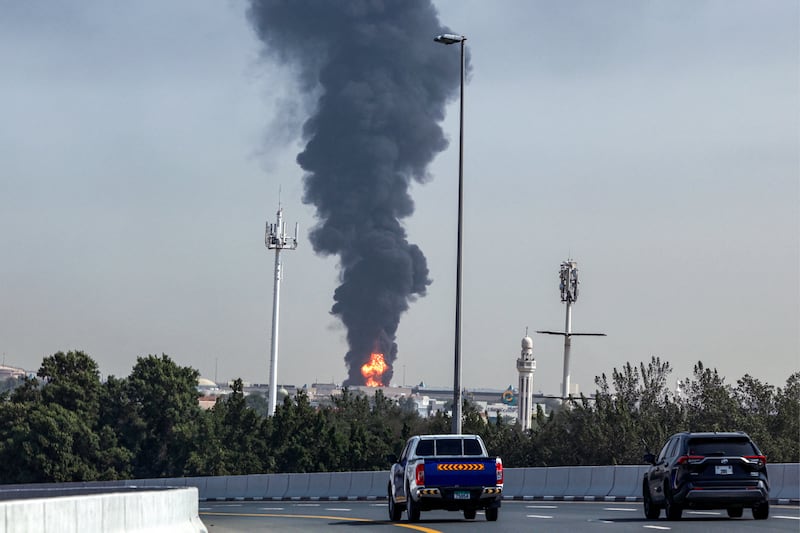 A smoke plume rises from a fire at Dubai International Airport on Monday. Photograph: AFP via Getty Images Dubai International Airport to reopen after drone incident
Emirates said it will resume limited services at Dubai’s main international airport after a drone incident caused a suspension of flights hours earlier, the latest incident to set back the aviation hub’s efforts to normalise operations as the Iran conflict enters its third week.
Emirates said it expects to operate a limited schedule after 10am local time. The state-owned carrier had to cancel some flights from today’s schedule after a suspension of operations that lasted more than seven hours — the longest halt since Dubai restarted flights at the airport through what it calls “safe air corridors” three days into the war.
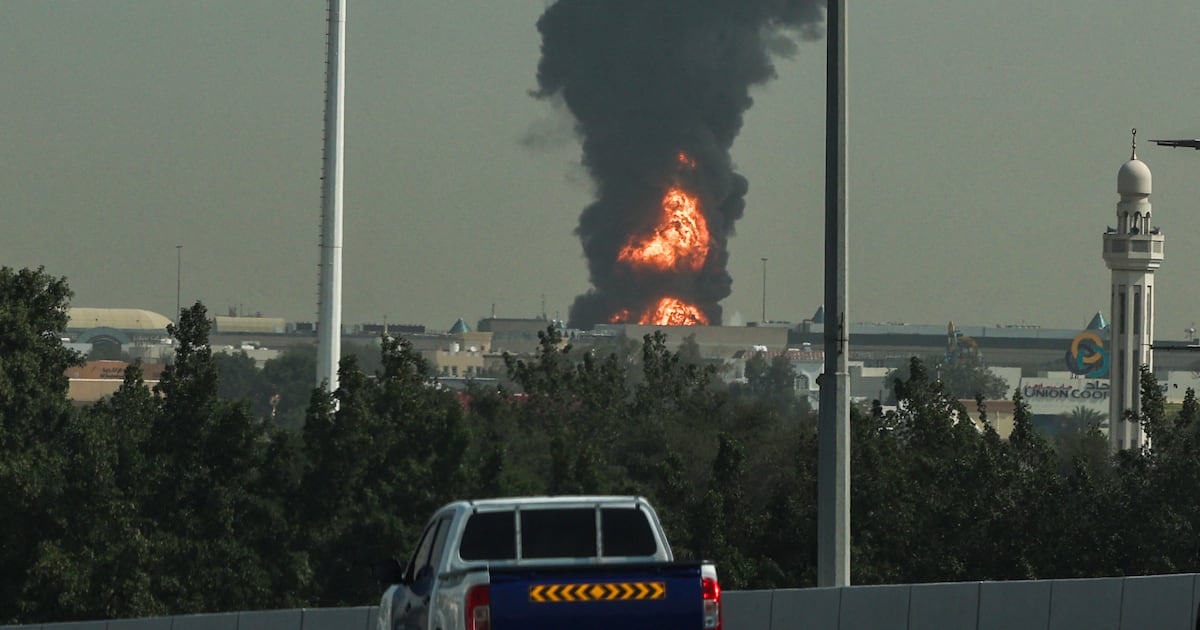
Local authorities announced the suspension after a “drone incident” caused a fire at a nearby fuel tank on Monday, which forced aircraft to circle outside the airport while emergency teams responded. The fire was successfully contained, Dubai’s media office said in a post on X. No injuries have been reported so far.
Dubai, the world’s busiest international hub, has faced a series of attacks since the war started, regularly disrupting flights. It’s the third incident the media office has confirmed in the past two weeks, including a hit on the second day of hostilities that damaged a concourse and resulted in four injuries.
Two drones also fell in the vicinity of the airport last week on Wednesday, resulting in injuries to four people. All the attacks, along with missile and drone interceptions happening across Dubai, have resulted in frequent delays and lengthened flight times as aircraft circle the skies outside Dubai International Airport on a daily basis.
The facility had stopped all flights for more than two days at the start of the conflict as Iran launched retaliatory strikes.
Emirates, the biggest carrier operating out of the airport and the world’s largest international airline, had suspended flights overnight and urged passengers not to go to the airport. Dubai police shut down several roads that lead there.
EU to discuss Strait of Hormuz
EU member states will discuss what can be done from the European side to keep the Strait of Hormuz open, the EU’s foreign policy chief Kaja Kallas said on Monday.
“It is in our interest to keep the Strait of Hormuz open and that’s why we are also discussing what we can do in this regard from the European side,” she said, speaking to journalists ahead of a EU foreign affairs meeting in Brussels – Reuters.
Authorities in Dubai announced a temporary suspension of flights at the international airport—one of the busiest in the world—following a drone attack that struck fuel storage facilities.
Access roads to the airport have also been closed.
The fire at the airport complex continue pic.twitter.com/zXerFWyxwe
— Jeronimo (@Jeronim77706053) March 16, 2026
Israel completely underestimated the resilience of Hizbullah, according to this analysis by Mark Weiss.