
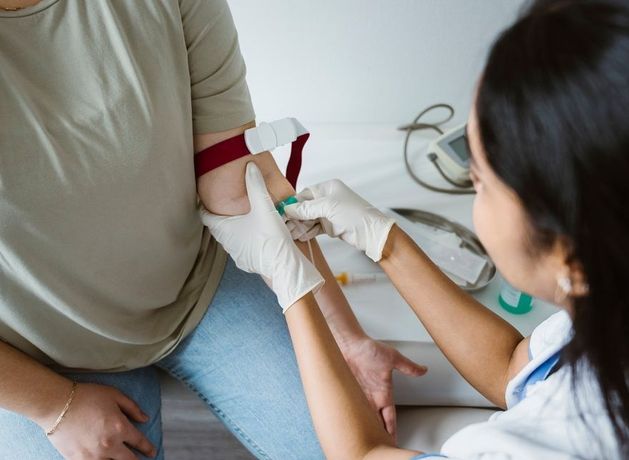
The new test is over 90pc accurate and could be used by GPs to pick up deadly glioblastomas. It is also being expanded to include other brain tumours. At present, diagnosing and treating patients can be complex, requiring MRI scans and invasive surgical biopsies.
Now, researchers have found that a pair of proteins in the blood help identify tumours with high accuracy and provide insights into how the disease responds to treatment.
The study, led by scientists at the University of Manchester and involving teams in Denmark, has been published in the journal Neuro-oncology Advances.
Patients with glioblastoma were used to check the validity of the blood test during surgery, radiotherapy and chemotherapy.
Professor Petra Hamerlik, the Brain Tumour Charity chair of translational neuro-oncology at the University of Manchester, who led the research, said: “Glioblastoma is one of the most devastating cancers we face.
“The lack of reliable tests has been a major barrier to earlier diagnosis and treatment response monitoring.
“What is remarkable about our findings is that, despite these tumours being very different in genetic make-up and constantly evolving, the signal in the blood is stable, robust and highly informative,” she added.
“We hope that once validated, this simple blood test may pave the way for earlier diagnosis and more precise monitoring of patients during and after therapy. Our dual-marker blood test achieved diagnostic accuracy greater than 90pc and continued to perform just as well when the disease returned.
“This opens the door to a future where we can follow the tumour’s behaviour through a simple blood sample, complement brain scans, and potentially recognise when the treatment isn’t working and the cancer returns – all much earlier than is currently possible.”
Dr Simon Newman, chief scientific officer at the Brain Tumour Charity, said: “Early and accurate diagnosis is absolutely critical for people with brain tumours, yet current tools are limited and often invasive.
“This research therefore marks a significant step towards a simple blood test that could help clinicians detect glioblastoma and monitor how patients are responding to treatment in real time.”
Prof Hamerlik, whose father had glioblastoma, told the Press Association people can often see a GP six to eight times before being sent for an MRI for a potential brain tumour. The idea with our work is that, if you come more than once with a headache, such as three times.