
Key events
Show key events only
Please turn on JavaScript to use this feature
What we learned today, Tuesday 17 March
Thanks for joining us today. We’ll be back with more live news tomorrow morning. Here’s a reminder of today’s top stories:
The Reserve Bank of Australia has increased interest rates amid a global energy shock that threatens to push Australian inflation towards 5%.
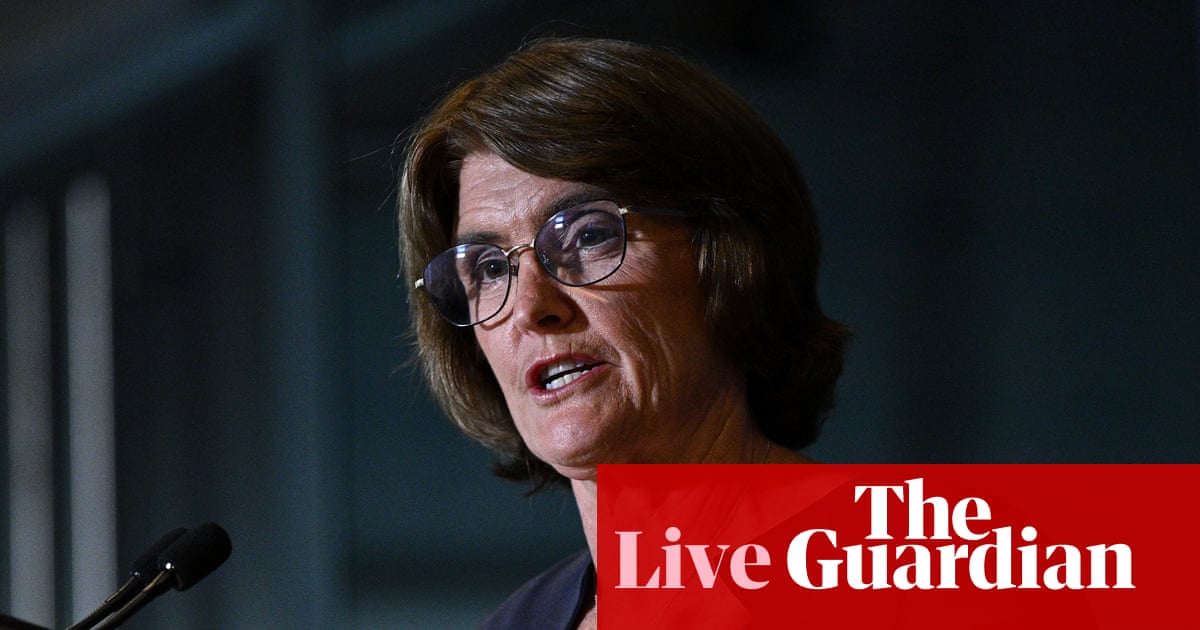
The RBA governor, Michele Bullock, says higher petrol prices were “not the reason” for the cash rate hike.
The treasurer, Jim Chalmers, says pressures are real on Australians and more savings will be delivered in the May budget.
The defence minister, Richard Marles, and his New Zealand counterpart, Judith Collins, signed a statement of intent, “operationalising the Australia and New Zealand alliance, with a focus to vision of Anzac 2035”.
The energy minister, Chris Bowen, has issued an urgent call for Australians to stop panic buying fuel amid the Middle East conflict.
The consumer watchdog has summoned major fuel suppliers and retailers to an emergency meeting to demand explanations for the recent surge in petrol prices.
The federal government is widening its crackdown on dodgy immigration agents.
The NSW government has introduced measures it says will toughen penalties and lead to more prosecutions for hate crimes against the LGBTQ+ community.
The South Australia opposition leader, Ashton Hurn, says the Liberals will preference One Nation over Labor in her seat of Schubert in the upcoming state election.
Updated at 02.54 EDT
 Benita Kolovos
Jacinta Allan responds to allegations she was warned about wrongdoing on construction sites in 2023
The fallout from the CFMEU saga that continues to threaten the Victorian premier Jacinta Allan’s leadership has continued at state parliament this morning, with allegations a top infrastructure executive warned her of serious wrongdoing on Labor’s $100bn Big Build well before the scandal emerged in 2024.
A report in the Age this morning alleges that Kevin Devlin, director general of the Victorian Infrastructure Delivery Authority, which oversees much of the Big Build, repeatedly raised concerns about the construction union with Allan when she was transport infrastructure minister in 2023.
Speaking this morning, Allan confirmed Devlin had raised allegations of criminal activity on work sites at a meeting in June 2023. She said she then referred the allegations to the Department of Transport:
double quotation markWhen Kevin Devlin, raised with me in a meeting in June 2023 that … the authority at the time was aware of anecdotal claims of alleged criminal behaviour, I ordered for those claims to be investigated by the agency with the Department of Transport at the time. They came back and provided advice that there was no evidence that there was systematic behaviour.
She said she was “still concerned”, so referred the matter to police:
double quotation markI was concerned that this needed to be investigated further, which is why, in addition to the authority referring this matter to Victoria police, I also, too in June of 2023 wrote to the chief commissioner of Victoria police.
Allan was asked multiple times how many allegations of CFMEU misconduct were raised with her but she refused to provide a figure.
It wasn’t until mid 2024 that the Age’s Building Bad investigation was released, triggering state secretary John Setka’s resignation and the union being placed in administration.
Victorian premier Jacinta Allan. Photograph: Jay Kogler/AAPShare
Updated at 02.21 EDT
Anzac 2035 deal signed in ‘deadly serious’ meeting
The defence minister, Richard Marles, and foreign affairs minister, Penny Wong, have spoken live from Canberra about the ANZMIN meeting this afternoon, with their New Zealand counterparts.
Marles confirmed he and NZ minster of defence, Judith Collins, had signed a statement of intent, “operationalising the Australia and New Zealand alliance, with a focus to vision of Anzac 2035.” He said:
double quotation markToday’s ANZMIN meeting happens against the backdrop of conflict in the Middle East but also a very volatile world. Both minister Collins and myself have been very focused on building our defence forces together, over the course of the next decade.
Winston Peters, NZ minster of foreign affairs, said the meeting covered how NZ and Australia will “work together on issues that matter most to our countries”.
He said some of the topics discussed include: the Middle East, Pacific partners, instability in the Indo-Pacific region and upholding the Antarctica treaty system.
Peters said:
double quotation markThe difference about these meetings of late, they’re deadly serious, and we’re conducting them with our eyes wide open and endeavour to work together to get the best possible outcomes.
(L-R) Australia’s deputy prime minister Richard Marles, New Zealand’s minister of defence Judith Collins, Australia’s minister for foreign affairs Penny Wong and New Zealand’s minister of foreign affairs Winston Peters speak to the media during a press conference at Parliament House in Canberra on Tuesday. Photograph: Mick Tsikas/AAPShare
Updated at 02.05 EDT
Benita Kolovos
Last week, the union announced teachers would stop work for 24 hours on 24 March after 98% of members voted yes to take stopwork action.
Carroll told reporters he was confident the government had the workforce to keep schools open during the action:
double quotation markWe think we still will have a teaching workforce, because there will be some teachers who particularly don’t want to go out on strike and lose a day’s wages, because you do lose a day’s wages … We’ll work with the principals and the schools and education staff to ensure that our schools remain open.
He said students of similar ages may be grouped together and participate in different activities than usual:
double quotation markIt could be a mixed curriculum. It could be a range of different activities. Obviously, a homeroom teacher might not be there, there may be a substitute teacher, there may be a casual relief teacher. So be a range of options that we’re working through.
I’ve been with the secretary, we are planning ahead, but we don’t want this disruption to go ahead. We want to prioritise dialogue and do a deal.
If the strike goes ahead it will be the first time in 13 years that teachers have walked off the job in Victoria.
Updated at 01.54 EDT
Benita Kolovos
Victorian education minister offers teachers 18% pay rise to avoid strike
The Australian Education Union has rejected a pay offer made by the Victorian government as it attempts to prevent a statewide teachers’ strike next week.
The education minister, Ben Carroll, held a press conference this morning to confirm the government had made an 18.5% offer to teachers, which he described as the highest in the country:
double quotation markI’m not the only education minister negotiating with teachers and unions. At the moment, Queensland are offering 8%, Tasmania 8%, Catholic education offered 13% just recently. This is 18.5% – $2.6bn in wages directly into teachers and support staff pockets.
Carroll also said the government had committed to an extra student-free day and a trial of flexible work arrangements.
However, the union said the offer was well below the 35% pay increase over four years that would bring Victorian teachers’ salaries in line with their NSW counterparts.
It said the 18.5% offer was actually 17%: an 8% pay rise for teachers and a 4% rise for education staff to take effect in April, followed by a 3% rise each year for the following three years, as well as a 1.5% overtime allowance.
The Australian Education Union Victorian branch president, Justin Mullaly, said the offer “does not go far enough to keep experienced teachers in the system nor attract the next generation who are the future of the profession”.
He said:
double quotation markThis offer is completely unacceptable to hard-working teachers, principals and education support staff. I don’t think the premier and education minister could in good conscience look Victorian parents in the eye and say they are doing their best to support the workforce who teach their children.
Updated at 01.50 EDT
Capital gains tax discount ‘skewing home ownership’ towards investors, inquiry finds Tom McIlroy
A much anticipated parliamentary inquiry has called for reform of the capital gains tax discount, in a bid to help first home buyers improve their access to the market over investors.
The Greens-led inquiry considered settings in place since 1999 ahead of the May federal budget.
The inquiry found the capital gains tax discount, in combination with negative gearing, has “skewed the ownership of housing away from owner-occupiers and towards investors”.
“The benefits of the capital gains tax discount are also unequally distributed, with implications for income and wealth inequality and intergenerational inequality,” it said.
The inquiry chair and Greens treasury spokesperson, Nick McKim, said the CGT discount was helping fuel Australia’s housing crisis, and building more intergenerational inequity.
He said:
double quotation markLabor has now been handed a historic opportunity to pass genuinely ambitious and progressive tax reform in this parliament.
The only limits are Labor’s level of ambition and courage.
Coalition senators did not agree changes to CGT were necessary, instead calling for additional housing supply options to help newcomers access the market.
 What is capital gains tax and how does it work? – videoShare
Updated at 02.08 EDT
 Graham Readfearn
BoM releases first track map of likely cyclone
The Bureau of Meteorology has released a first track map of the likely route that tropical low 34U is likely to take in the coming days.
The bureau is forecasting the tropical low, now south of Solomon Islands, could become a cyclone as early as this evening and will likely move west, crossing the Queensland coast north of Cooktown on Friday morning.
Once the cyclone forms, it will be called Narelle.
A map showing the likely track of tropical low 34U. Illustration: Bureau of MeteorologyShare
Updated at 01.29 EDT
Bullock has conceded some people might have to make tough decisions:
double quotation markThat is also effectively affecting people’s cashflow, so it’s going to impact demand in some way, to the extent that people have got constrained budgets, and many people do, I know. So that is going to be hard.
Some people might have to make tough decisions on what they do.
Bullock also says people on low and fixed incomes, especially renters, are “particularly badly hit by inflation”.
Michele Bullock speaks to media after the RBA’s rate rise. Photograph: Dan Himbrechts/AAPShare
Updated at 01.39 EDT
Bullock says ‘if we have to change tack we will’ on raising rates
Michele Bullock says she understands the rate rise will be “tough for some people” – but “it’ll be much worse if inflation gets built into the fibres”.
“Then we will see the costs of everything going up, and that will be a much worse outcome,” she says.
Asked about a looming risk of recession, particularly as global conflict continues, she says:
double quotation markThere’s been lots of predictions that the world economy would [go into recession] particularly after the tariff problems in early 25, that the world would go into recession … and the world economy actually ended up doing OK, doing quite well in some cases.
It’s still possible if this resolves that everything will turn out OK.
Having said that, the board is alert to risks of that nature …
If circumstances change and if it does look like the world economy is in big trouble … then that will have different implications for inflation and we will be looking very hard at what we need to do in those circumstances.
The board is going to be monitoring this stuff very closely and if we have to change tack we will.
Michele Bullock speaks to media in Sydney. Photograph: Dan Himbrechts/AAPShare
Updated at 01.07 EDT
Bullock says higher petrol prices ‘not the reason’ for RBA’s decision to hike cash rate
Now the Reserve Bank of Australia governor, Michele Bullock, is speaking live.
She says:
double quotation markHigher petrol prices will add to inflation but they’re not the reason for today’s decision …
If the Middle East conflicts get worse or are not resolved soon, higher fuel costs will push inflation here even higher …
All members agreed that another rate increase was needed to address domestic inflationary pressures.
Domestic inflation remains too high and high inflation hurts all Australians.
Updated at 01.43 EDT
Wilson says it is a ‘devastating day’ for Australian households
Now we hear from the shadow treasurer, Tim Wilson, speaking live from Melbourne.
He calls it a “devastating day for Australian households” and says:
double quotation markAnd even more devastating, the only response the Albanese government seemed to have in the face of increased market prices, increased petrol prices and increased interest rates, is to see where they can add more taxes on Australian households.
Updated at 01.43 EDT
Chalmers says ‘pressures are real’ on Australians and ‘more savings’ to be delivered in May budget
The treasurer, Jim Chalmers, is speaking live from Canberra.
He acknowledges the RBA decision to raise interest rates by 25 basis points to 4.1% comes in the face of “substantial global economic volatility and uncertainty”.
He says:
double quotation markThe main point from this decision is that we know we had an inflation challenge already in our economy. Developments in the Middle East are already making that challenge harder rather than easier …
We say to Australians around the country who are hearing about this news of an interest rate increase, who are dealing with some of these global pressures at the petrol bowser, that we know that those pressures are real and that we will do what we responsibly can to respond to them.
We take into consideration the pressures on people, the economic circumstances …
I’m going to get into this in some detail on Thursday at the Australian Business Economists, because that’s an important factor in these considerations and in the government’s work.
I meant it when I said there’ll be more savings in the budget in May.
Jim Chalmers speaks at Parliament House in Canberra. Photograph: Lukas Coch/AAPShare
Updated at 01.44 EDT
 Nick Visser
That’s all from me. Ima Caldwell will take things from here. Enjoy your arvo!
NSW expands free access to Japanese encephalitis vaccine
NSW Health will expand free access to the Japanese encephalitis vaccine for people who plan to visit high-risk local government areas for outdoor recreation.
People living or working in eight extra LGAs will now be eligible to access the free vaccine, including Armidale, Ballina, Bathurst, Byron, Oberon, Tweed, Walcha and Yass Valley.
Vaccination is also now available until the start of winter for anyone in the state who plans to visit any defined high-risk LGAs.
Japanese encephalitis is a rare but serious illness spread by infected mosquitoes. Infection only causes mild illness for many people, but for some it can cause severe neurological symptoms and, in rare cases, can be fatal.
There is no specific treatment, so prevention is the main target of health initiatives.
Updated at 00.07 EDT
More on the RBA’s decision
Australia’s RBA was the only central bank expected to hike so soon, with its counterparts in the US, UK, European Union, Japan, Canada, Switzerland and Sweden all expected to leave rates on hold this week.
Even before the US and Israel struck Iran, Australian inflation had been elevated at 3.8% – well above the Reserve Bank’s 2-3% target.
The economy has been growing at its fastest pace in almost three years and unemployment has fallen since September.
The week before the decision, predictions of a rate hike firmed when the central bank’s deputy governor, Andrew Hauser, said data had “confirmed even more decisively … that our economy currently has limited spare capacity”.
Some economists, though, had warned the RBA needed to leave interest rates on hold for fear of a downturn in consumer spending.
Read more here:
Updated at 01.44 EDT
RBA hikes official interest rate to 4.1% Luca Ittimani
The Reserve Bank has increased interest rates amid a global energy shock that threatens to push Australian inflation towards 5%.
The hike takes the RBA’s cash rate target from 3.85% to 4.1%, back to where it was in February 2025, wiping out the relief offered by two cuts last year.
Household budgets, already under pressure after a rate rise in February and soaring petrol prices, will face higher mortgage costs.
Someone with a $600,000, 30-year mortgage will see their weekly repayments rise by another $95 a month, once their bank passes the hike on.
The Reserve Bank of Australia headquarters in Sydney. Photograph: Bianca de Marchi/AAPShare
Updated at 23.33 EDT