
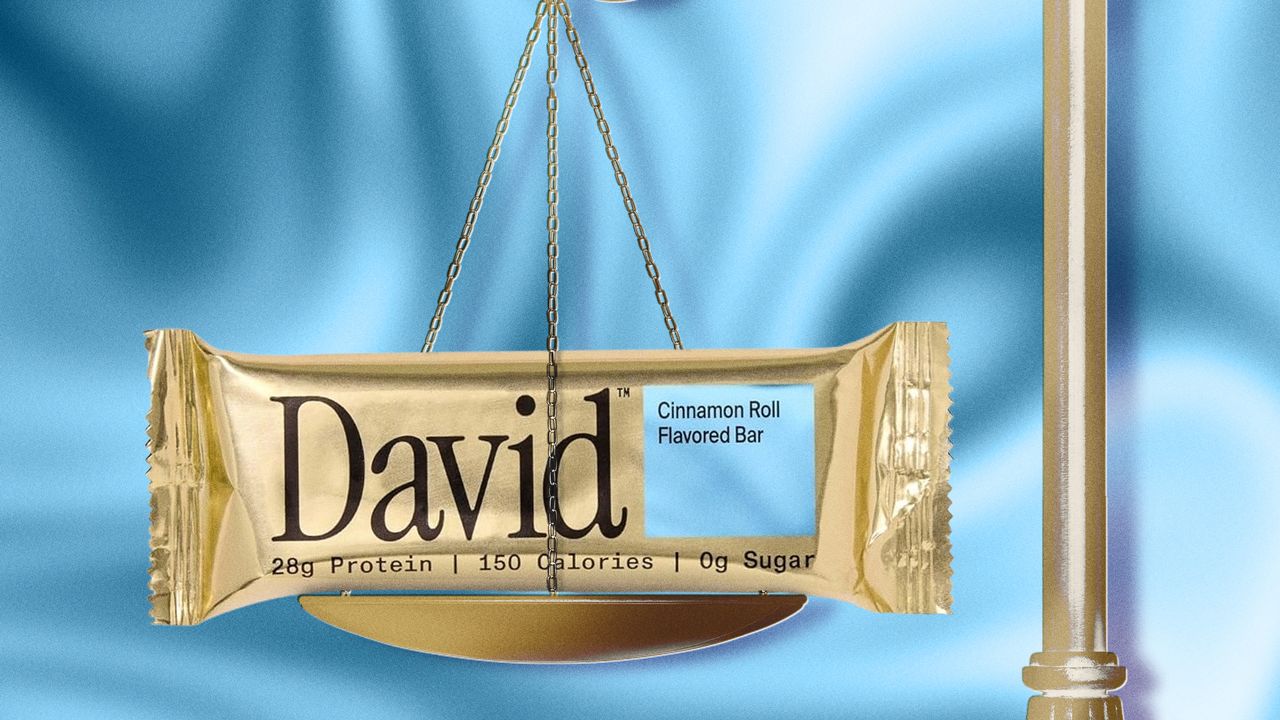
David Protein, with its sleek gold packaging, TikTok-first marketing strategy, and its bars boasting impressive nutritional value (0 grams of sugar, 28 grams of protein, and 150 calories) has successfully captured the zeitgeist. So much so that last week, when a lawsuit that alleged that the protein bars might actually have as much as 83 percent more calories and 400 percent more fat than listed on their nutrition labels went viral, it sparked a public outcry. On TikTok, users compared David to Kälteen, the fictional bars Regina George ate in Mean Girls that made her rapidly gain weight. “David Protein Bars are actually Fat Bars,” wrote one TikTok user.
The David co-founder and CEO hit back with a statement on March 12th. “Our products are labeled correctly and in full compliance with all FDA regulations,” Peter Rahal wrote. “The claims in this lawsuit are meritless and reflect a fundamental misunderstanding of basic, well-established scientific principles regarding how calories are determined under U.S. nutrition labeling standards for ingredients like EPG [esterified propoxylated glycerol].”
While the suit alleges that both fat and calories have been misrepresented on the packaging, the public’s reaction to this saga might just showcase how little we understand about calories to begin with. In the U.S., calorie counts on labels are often calculated using the Atwater method, says Debbie Fetter, a professor in nutrition at UC Davis. This system assesses a food’s energy content through “general factors”—the average amount of calories associated with each macronutrient (4 per gram of protein, 4 per gram of carbohydrates, 9 per gram of fat), sometimes with adjustments for digestibility.
The lawsuit alleges that tests performed by a third-party, FDA-recognized lab found that the bars’ calorie counts dramatically overshot what’s listed on their labels. Such a discrepancy, the suit argues, would violate FDA regulations stipulating that nutrient contents cannot exceed what’s stated on labels by more than 20 percent.
But these results, David’s CEO has contended, stem from misapplying something called “bomb calorimetry,” a lab method for measuring energy. The lawsuit doesn’t specify the exact procedure utilized to analyze the bars, but does mention Atwater factors being used in some capacity. And the laboratory that conducted the tests declined to offer comment when contacted by NBC News, citing confidentiality agreements. However, if the tests cited in the suit used bomb calorimetry, it could go a long way in explaining the discrepancies between their findings and David’s labels. An analysis solely relying on Atwater factors would use predetermined benchmarks of calorie counts, while one using bomb calorimetry would incorporate direct measurement of calories through a lab protocol.
So how exactly does bomb calorimetry measure calories? In essence: by burning food. A food sample is placed in a sealed, oxygen-filled chamber surrounded by water, and ignited. The heat released by the burned food warms the water, and registering the water’s temperature increase reveals the total energy (measured in calories) in the food item.
Though this gives a picture of the energy contained within a food, it can overstate the calories we actually absorb from that food by eating it. “Let’s use fiber as an example,” Fetter says. “It contains energy, it contains calories, but the human body doesn’t have the enzymes needed to break down that fiber. So that energy is not available for absorption for us, but it could be computed as an energy amount.”
“While bomb calorimetry is a recognized calorie testing method for many foods,” David’s CEO wrote in the March 12th statement, “It is widely accepted in the industry that bomb calorimetry is not the right testing method for determining calories in foods containing certain ingredients, such as dietary fiber, certain sweeteners, and, critically for us, fat substitutes like esterified propoxylated glycerol.”