
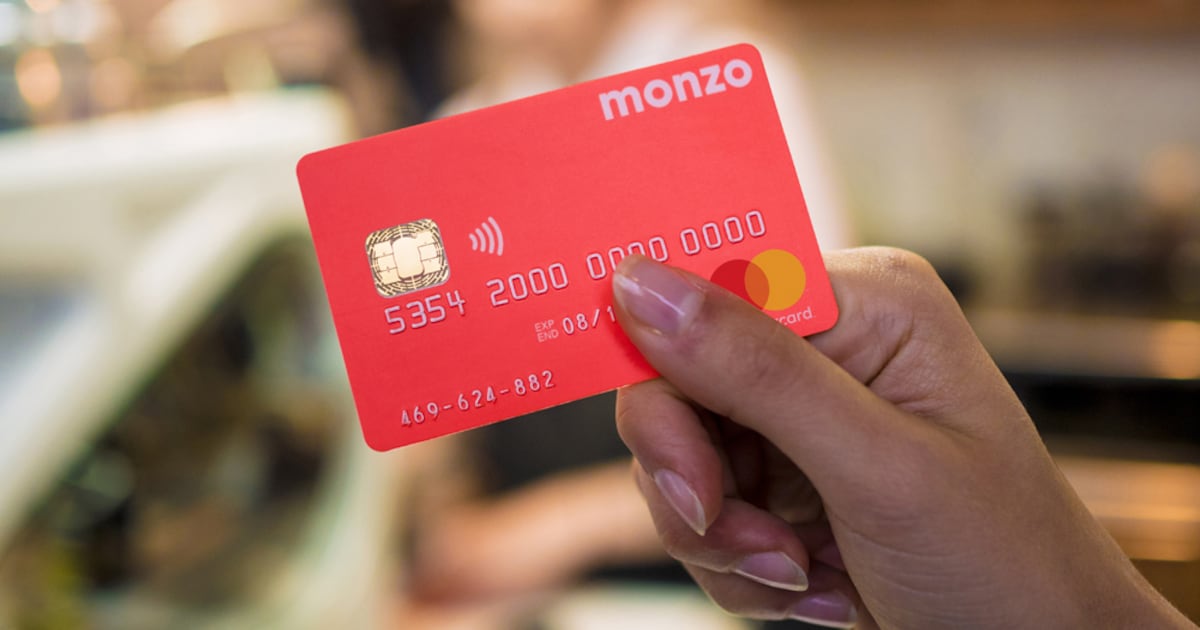
Queues are cool it seems. Whether it’s snaking around the corner from the latest pop-up bakery or filing towards some artisanal pizza place, Gen Z loves a line. But would you queue for a new bank? That’s exactly what thousands of people in Ireland are doing.
British challenger bank Monzo hit Irish shores last year and is now offering current accounts. But you’ll have to get in line. There were about 8,000 in the queue, but the fintech says numbers are whittling down.
Monzo is giving a €25 bonus to those on the waiting list who receive an invitation and then activate their card. Refer a friend and they will be bumped up the line. So who is Monzo, and is their current account worth the hype?
Monzo is the latest “neobank” to offer a current account in Ireland. It follows the likes of Revolut, Bunq and N26 – all fintechs with no bank branches and so no facility for direct cash lodgements. Like them, Monzo is a fintech – so it’s a banking institution all right, but with an outsize tech department.
These neobanks are digital natives, born online, unencumbered by a bricks-and-mortar heritage. With these being sired by techies, there’s been no getting bogged down in re-engineering legacy processes and culture. The pillar banks in Ireland talk about having an app: neobanks are their apps.
The neobanks have specialised in fast, digital-first banking from day one. Monzo has had a few run-ins with the regulators, however. It was fined £21 million last year by the UK’s Financial Conduct Authority for failures in its anti-financial crime processes between 2018 and 2022.
In its rapid growth spurt, Monzo had allowed thousands of risky customers, some citing implausible “Buckingham Palace” and “10 Downing Street” addresses, to open accounts. Revolut was also fined €3.5 million last year over money laundering failures.
That’s in the past, says Monzo, which has grown to 14 million customers in the UK, including more than 800,000 businesses. One in five UK adults now banks with Monzo and one in seven businesses, it says.
Do Monzo’s customers like its current account?
It was voted number one for quality of service in the UK in a British Competition and Markets Authority survey published last year. Northern Ireland customers ranked it number one for personal current accounts, with Bank of Ireland and AIB coming 11th and 12th out of 12 banks in the poll.
Revolut, Bunq and N26 are licensed by the Lithuanian, Dutch and German central banks, respectively. Monzo is the first digital bank to secure a full European banking licence through the Central Bank of Ireland. It has opened its European headquarters here.
Monzo customers, like those with Revolut, will have an Irish Iban. Deposits, as with all the neobanks here, are protected up to €100,000.
Monzo has most of the neobank basics – including free current account banking, advanced budgeting and savings tools, instant payments and split-bill features.
It offers instant access savings too, at a rate of 1.6 per cent, which compares with 2.01 per cent at Bunq or 0.25 per cent with AIB. You’ll get better savings rates through the likes of Raisin and MoCo.
Free current account
Are you paying fees for a personal current account? You don’t have to. Monzo, like Revolut, Bunq and N26, doesn’t charge daily banking fees. Monzo doesn’t charge for ATM withdrawals in Ireland either, though some other neobanks do over a certain limit.
So for those used to paying monthly or quarterly fees to the pillar banks here, there are savings.
AIB personal current account customers pay an €18-a-year maintenance fee, plus a hefty 20 cent charge for every online transaction, direct debit, chip-and-pin transaction, standing order and self-service lodgement. They pay 35 cent for every ATM withdrawal.
Bank of Ireland charges a flat fee of €6 a month, or €72 a year in maintenance fees.
PTSB customers pay a hefty €8 account maintenance fee every month or €96 a year, though you can earn five cent every time you use your debit card to pay for something in store or online up to a maximum of €5 a month, which could go a way towards offsetting that fee.
Some Irish banks say fees go towards keeping branches open and investing in their apps, but younger customers will have no history with branch banking and are used to neobanks’ vastly superior apps.
Why pay €70 or more a year for a personal current account, and double that if there are two current accounts in the household?
Monzo’s basic business account offers free banking too, which will appeal to sole traders and small limited companies.
Like N26 and Revolut, it doesn’t charge for using your debit card for purchases in a foreign currency, which is useful for those travelling abroad.
The pillar banks will charge you a 1.75 to 2 per cent foreign exchange transaction fee for purchases made with your debit card outside the euro zone, such as in the UK, which can really add up. Some will also charge a minimum fee on every transaction.
Despite all this, most of us are still clinging to the pillar banks.
Instant payments
Instant payments were the gateway drug to neobanking for most Irish people. Revolut has amassed a whopping three million customers here on the back of this feature, including a third of all children in Ireland. From nights out, sports club collections, end-of-year teacher presents to kids’ pocket money, “Revolut me” has become a routine instruction.
Monzo offers instant transfers too, though the usefulness of this feature will be limited by how many Monzo customers there are in your network.
It will be hard to shake Revolut’s dominance of instant payments here. And now there’s Zippay too. That’s the instant payments system launched last week by the pillar banks – AIB, Bank of Ireland and PTSB. “Good morning Irish banks, welcome to 2017,” as one Reddit poster quipped.
The one big advantage for Zippay is that it’s in the app of these three banks, so it has potential to reach more than five million customers. And using it will spare them having to keep toggling to Revolut. Monzo will struggle to compete with Revolut and Zippay on instant payments.
[ Can you Zippay me a fiver? Banks enter a new world with a new wordOpens in new window ]
Budgeting
Your current account is the battleground of your finances, where income and expenses duke it out every month. But if you are crossing your fingers and hoping things balance out each month, you’re probably flying blind with your money. This is where Monzo and other neobanks come into their own.
Instead of the binary current account and savings account interface and after-the-fact analysis of your spending offered by the pillar banks, the neobanks can help you get more granular with your budgeting and saving.
With Monzo’s “pots”, like Revolut’s “pockets”, Bunq’s “money pockets” and N26’s “spaces”, you can separate your money into discrete subaccounts within your main account, dedicated to specific expenses such as rent, bills or holidays.
You can create multiple spending and savings pots, nickname them, stick a photo on each one if you like and instantly move money between them and your main balance. You might call your holiday pot France, add a picture of the Eiffel tower and start making monthly deposits into it.
Summer camps, back-to-school costs, Christmas, money to service the car, your annual car tax bill – you’ll have no shortage of pots. So, ideally when that bill hits, you have squirrelled money into that pot over time to cover it.
Monzo’s app can even split your salary automatically into your saving and spending pots. You can set savings goals and targets too and track your progress. You can even use a “lock pot” feature to stop yourself from withdrawing money until a specific date.
Monzo offers joint accounts. Two customers with personal Monzo accounts can apply for one where you can manage shared finances in one place with a partner, a friend or a flatmate, saving towards shared goals, for example.
This visibility and control can help you feel more secure about your finances in general.
As with Revolut, Bunq and N26, Monzo customers can opt in to automatically save the change from every purchase. Do this and the next time you spend €4.50 on a coffee, the 50 cent change will be added to your savings.
Features such as this are handy and can gamify saving, adding to the motivation for some people. But be mindful of saving too much into a sub current account or a low-paying savings account, David Looney, of Alpha Wealth, warns.
“Personally, I tell my clients to have one all-inclusive short-term savings pot and ensure your money is earning the best interest available,” says Looney. “Any longer-term savings objectives – of five-plus years – should of course be invested to ensure outperforming inflation.”
Banter
How sassy do you like your bank? As a Monzo customer, you’d better be up for “the bants”.
One UK Monzo customer complained to the financial ombudsman there about what she called “shaming language” in the end of year review sent to her by the bank last year, the Guardian reported.
In a Spotify Wrapped-like synopsis, it described the customer’s 2025 as a “year of glory and folly”. “You foraged and feasted. But mainly you fast-fooded,” Monzo told her.
Monzo said she was in the top 15 per cent for Just Eat, adding: “You spent more than most on Just Eat, did someone say just stop?”
The customer said Monzo had used her financial information to “generate humiliating behavioural commentary” that “crossed into personal and moral judgment”. She claimed this was not appropriate for a bank and amounted to a misuse of personal data.
The ombudsman sided with Monzo, who said its Year in Monzo feature automatically generated content based on spending patterns, not personalised commentary written by a human.
Other Monzo customers seem to enjoy the feature and have shared examples of their spending peccadillos with pride, such as being named the biggest spenders in their local pub or chipper.
All banks hold a lot of data on your spending; few would be brave enough to provide commentary on it, however.
So can neobanks such as Monzo eat market share?
“Very few of my clients have taken the leap of closing their Irish bank current account and migrated to a neobank for their salary, direct debits and everything else,” says Looney.
It boils down to the “familiarity bias” we have towards the incumbents, as well as the “just-in-case” need to walk into a physical branch, he says
“As a result, most of us are still paying current account fees by virtue of having at least one current account with a pillar bank, even if we are using neobanks in some form – so we are not benefiting from a cost perspective,” says Looney.
The vast majority of consumers do still use AIB, Bank of Ireland or PTSB for the bulk of their banking but most younger customers also use Revolut, according to the Department of Finance’s consumer sentiment banking survey published last year.
It found that 89 per cent of consumers here still use one of the State’s big three banks for their main account. However, 43 per cent say they use fintechs. That’s up 14 percentage points since 2023.
The use of fintechs is particularly pronounced among younger consumers. Nearly three-quarters of 18- to 24-year-olds use mobile apps as the main way of interacting with their banks; 53 per cent of over 65s prefer to go in-branch.
“The neobanks are gradually winning more and more market share but it will be slow in my opinion,” says Looney.
Monzo doesn’t offer mortgages. Until the neobanks do – and Revolut has been teasing Irish customers on this – consumers may have to use a coterie of banks to get the best value, one for a mortgage, one for a free current account and perhaps a savings platform such as Raisin to access other banks’ savings rates.