
PUBLISHED : 18 Mar 2026 at 05:40
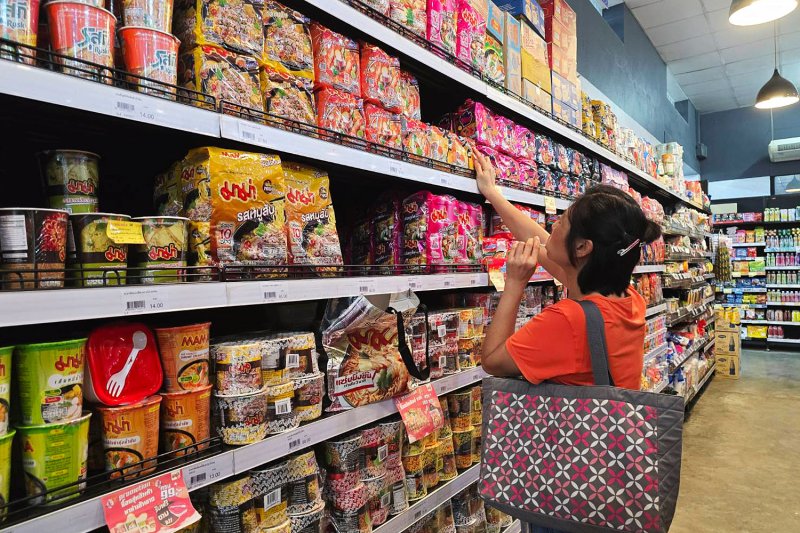
A shopper selects instant noodles at a supermarket. As a controlled item, instant noodle price changes require departmental approval.
The Department of Internal Trade (DIT) has asked producers and distributors to keep product prices unchanged to help stabilise the cost of living during the oil shock.
No producers have yet applied for permission to raise their prices.
Wittayakorn Maneenetr, director-general of the DIT, said the department is monitoring consumer goods prices, especially items with cost structures linked to oil prices and imported raw materials, to prevent any impact on household expenses.
Some 59 controlled items are regulated under the Price of Goods and Services Act (1999). Producers and distributors must obtain department approval before adjusting prices. The department carefully assesses cost structures before granting approval.
The department identified six groups that may be affected by oil costs and transport conditions: fresh food such as eggs, pork and chicken; major agricultural products such as rice, palm oil and fruit; essential consumer goods such as tissue paper and paper packaging; canned food, especially canned fish; beverages and plastic-packaged goods such as drinking water, bottled milk and vegetable oil; and construction materials such as cement, steel bars, paint, PVC pipes and tiles.
To manage product availability, the department uses a three-tier monitoring system. The Sensitive List includes 18 items such as fertilisers, eggs, pork, vegetable oil, diesel and plastic pellets, which are monitored daily with strict inspections.
The Priority Watch List covers four items — prepared food, powdered milk, pesticides and hot-rolled steel — which are monitored twice weekly to prevent hoarding. The Watch List includes 197 items such as soap and detergent, which are inspected every 15 days.
“The outlook for goods and prices remains manageable. The department is monitoring stock levels and cost structures to ensure sufficient supply nationwide. We urge the public to purchase goods responsibly and avoid hoarding to ensure fair distribution,” he said.
Regarding agricultural inputs, Mr Wittayakorn said Thailand has sufficient fertiliser stocks, while importers have diversified sourcing from countries unaffected by the conflict, such as Malaysia, Brunei and Oman.
The DIT wants to connect fertiliser producers directly with farmers to support the planting season from May to August, targeting key crops such as rice, corn, oil palm and fruit. The focus is on urea, phosphate and potash, which are applicable across all crops and growth stages, he said.
The department plans to organise affordable Blue Flag fertiliser campaigns to help reduce farmers’ expenses.