
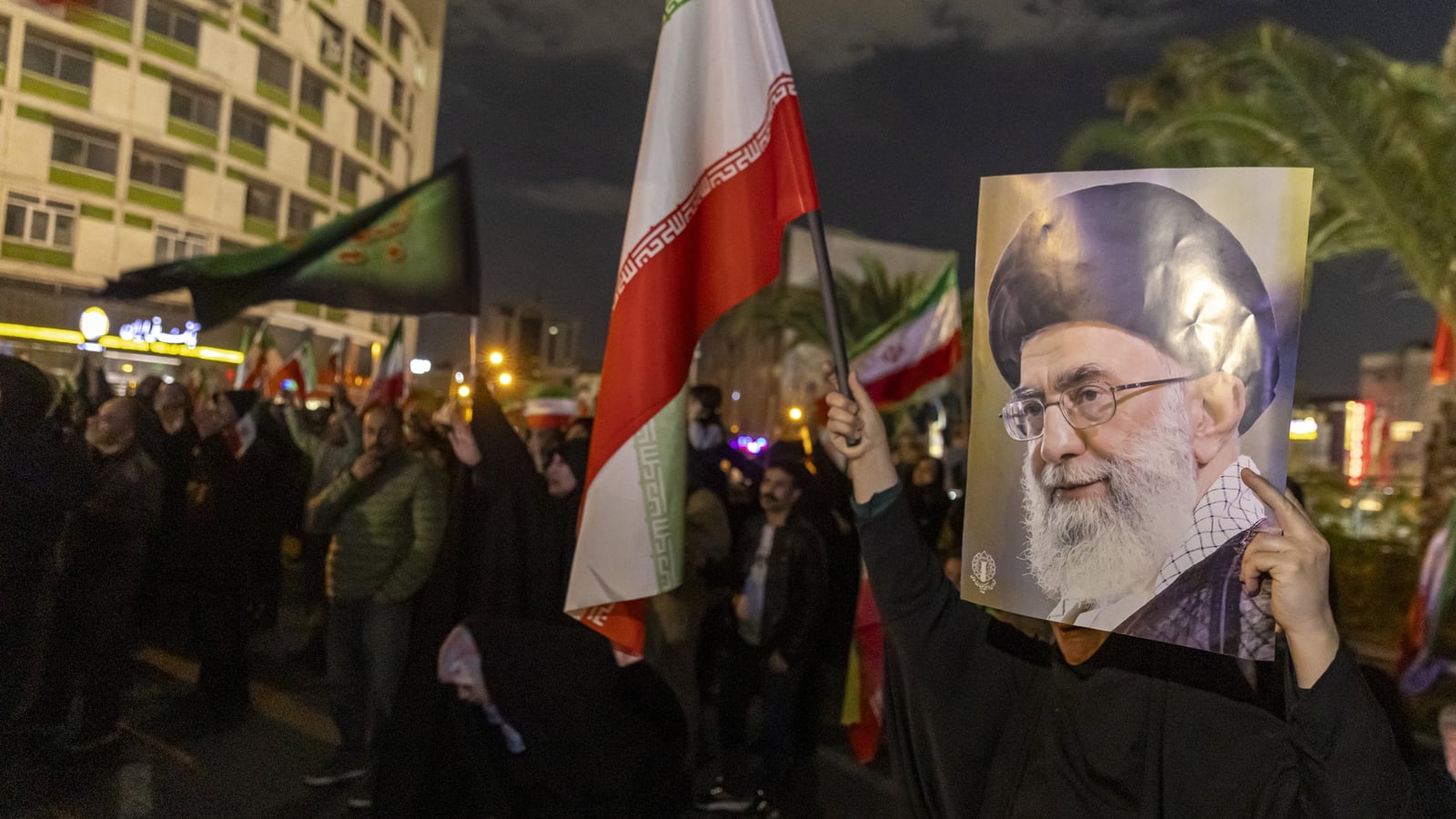
The assassination of Iran’s Supreme Leader, Ayatollah Ali Khamenei, last month, was a brutal calculation to decapitate the Iranian leadership.
It was hoped the killing, along with the deaths of approximately 40 other top officials in the US-Israeli strike, would lead to a popular effort to overthrow those in power in Tehran.
The debate over the strategic wisdom of the assassination will no doubt continue for some time, but the speed by which Khamenei’s son, Mojtaba, was elevated to the top job was to show the people of Iran, and indeed the world, that in an extremely precarious moment, the government was functioning in line with the constitution.
After the Iranian Revolution of 1979, a constitution was created which under the sect of Shia Islam that the overwhelming majority of Iranians follow, asserted that state affairs should be administered by religious jurists, until the return of the 12th imam, who is believed to have gone into hiding in the year 874.
This concept was conceived by the first Supreme Leader Ayatollah Ruhollah Khomeini, who ruled Iran for ten years until his death in 1989.
Supreme Leader
Placing religious authority at the top of the constitutional pecking order is why Iran is frequently called a theocracy.
However, while the supreme leader holds direct or indirect power over all matters of state, from foreign policy to domestic politics, and is appointed for life, the system is defined by a dual structure; republican institutions operating alongside clerical bodies.
Khomeini laid out his ideas for governing a post-revolutionary Iran while in exile, mostly in Iraq.
He believed the laws of society should be made up only of the laws of God, Sharia. Khomeini ensured that theologians and clerics whose ideas conflicted with his were sidelined.
This, in effect, tore down any possibility of a religious or a secular opposition.
The death of Khomeini, known as the Father of the 1979 Revolution, presented the first real test to the nascent constitution and prompted immediate and significant amendments.
His personal religious authority gave him immense power, and so it was quickly recognised that the role needed to be reconfigured to one based on political control and institutional support.
Assembly of Experts and Council of Guardians
To ensure the smooth transfer of power, always a moment of concern within non-democratic political systems, constitutional revisions clarified the process for selecting a successor and managing the transition.
The Assembly of Experts is tasked with electing, supervising, and potentially dismissing the supreme leader. But the constitution is structured in such a way that the current leader has a decisive influence on the selection of his successor.
That is why Mojtaba Khamenei’s elevation was not a huge surprise to most Iran watchers.
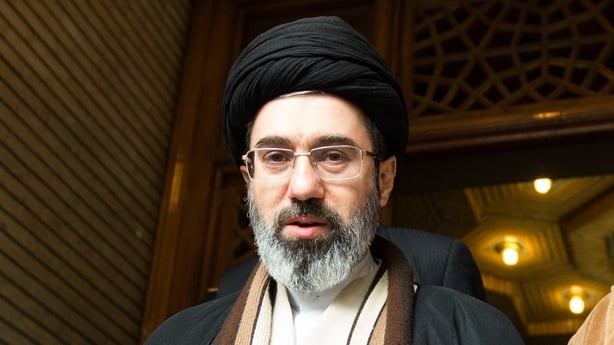
Mojtaba Khamenei was elected supreme leader following the killing of his father on 28 February
All candidates for the assembly must be qualified clerics, but their eligibility has to be approved by the Council of Guardians, which is mostly controlled by the supreme leader.
This council wields considerable power, as it can veto legislation passed by parliament and supervises elections.
It also operates within the judicial system, essentially performing as a watchdog for the supreme leader, ensuring clerical oversight is deep within republican institutions.
President and parliament
Iran may constitutionally be a republic, but its democratic credentials are severely lacking. According to the 2024 Economist Intelligence Unit’s Democracy Index, it ranked a lowly 154 out of 167 countries, officially classing it as an authoritarian regime.
Iran has elections to its parliament, known as the Majles, which operates as a legislative body, and the president is the head of state, also popularly elected, responsible for the day-to-day administration of government.
The presidency represents the country’s executive authority and is officially the second most powerful position within government, after the supreme leader.
However, in practice, its capacity has increasingly been constrained. It is the role that mostly embodies the persistent struggle between reformists and conservatives.
Its current occupier, Masoud Pezeshkian, sits firmly in the reformist camp, but his influence, and that of the diminished influence of the role itself, was recently on display when he suggested Tehran should avoid escalating tensions with its Arab neighbours.
His remarks were quickly rebuked, suggesting the deep factional characteristics of Iranian politics remain, even in a time of existential war.
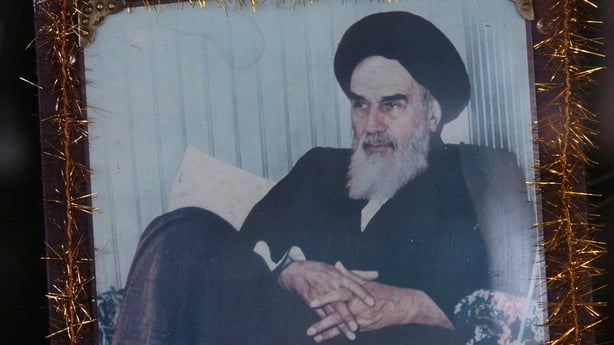
Ayatollah Ruhollah Khomeini, leader of Iran’s 1979 Islamic revolution
Expediency Council
The tensions between the parliament and the conservative clerical bodies have been ongoing for decades. The constitutional reforms in 1989 included the creation of the Expediency Council to resolve differences or conflicts between lawmakers and the supreme leader-controlled guardian council.
But again, this body became another tool of the supreme leader and his allies within the system to monitor reformists.
Official turnout for the 2024 legislative elections was 41%, the lowest since the 1979 revolution. Many analysts point to the fact that pre-registration was introduced for the first time, as well as most moderate and reformist figures being disqualified from running, impacted turnout.
Also, in a country in which 40% of the population is under 25 years of age, some of whom were involved in the recent protests, raises serious questions surrounding regime legitimacy.
National security and intelligence
Undoubtedly, Ali Larijani’s killing leaves a huge void. As security chief, he was a powerful figure, tasked with directing Tehran’s war effort. In many ways, his assassination could have a greater impact on this conflict than that of Ayatollah Khamenei.
Both were shaped by the bloody Iran-Iraq War of the 1980s, and the fact that Tehran has been at battle with Israel and the US since the foundation of the Islamic Republic.
But whoever replaces Mr Larijani will be shaped by this war, likely brutalised and angry, meaning that the apparent resilience of the Iranian regime will impact the region and beyond for many more years to come.
Iran’s armed forces have a combined headcount of close to one million personnel, making it a formidable fighting machine, helping place it 16th in the Global Firepower index.
However, it is the military’s deliberately complex structure that makes it stand out. The country maintains two parallel armies.
The regular standing army known as the Artesh and the Islamic Revolutionary Guard Corps (IRGC). The role of the IRGC, which places ideology front and centre, is to protect the integrity of the revolution.
Its power and influence are immense, and its reach has grown deep into the economy and politics.
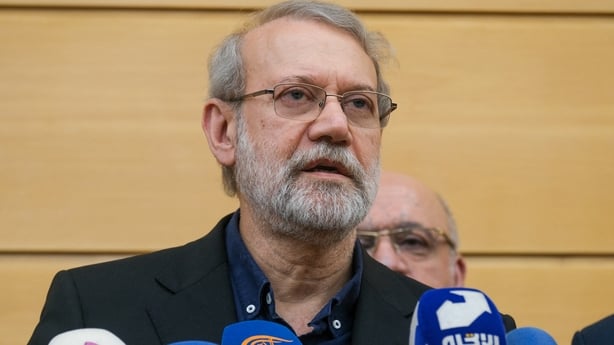
Ali Larijani’s killing leaves a huge void for Iran
Within the IRGC, there are multiple divisions and forces. These are not only designed to prevent coups but also to prevent enemy infiltration.
One of the divisions is the Quds Force, Quds being the Farsi name for Jerusalem, meaning “The Holy” or “The Holy Sanctuary”. The force supports non-state actors beyond its borders, including Hezbollah, Hamas, and the Houthis, amongst many other armed groups.
It is these operations that place it in direct conflict, not only with Israel, but also with several of its neighbours.
As ever, the web of control, even within the military, weaves its way up to the supreme leader. The Supreme National Security Council is another institution added to the constitution in 1989, and it is tasked with formulating national security policy, all of course within the framework of policies determined by the supreme leader.
This, coupled with a vast network of nearly 20 intelligence agencies, ensures the leadership’s grip on power is firm and unlikely to easily collapse.
Israeli strategy of beheading the leadership is dramatic and devastating, but the Iranian system remains resilient.
The oppressive nature of the Iranian government means it is difficult to provide analysis, but from examining the structure of its institutions, it can be seen that Iran’s political system is not only about ideology, but also about the survival of the regime, which has faced immense pressures since its foundation 47 years ago.