

Diversification is a must, but so are alternative assets that can buttress your portfolio, such as gold
GEOPOLITICAL tensions are roiling markets. How resilient is your portfolio?
In this roundtable, our panellists share insights on three issues:
As geopolitical risk soars, what strategies can investors pursue to shock-proof their portfolios?What are the most promising themes in artificial intelligence and how can investors participate without too much concentration risk?What is the outlook for Asia equities?
Ongoing tensions in the Middle East are raising red flags for global growth and inflation. Portfolio diversification is a must, not just geographically but also across asset classes. Alternative assets such as gold can buttress your portfolio.
AI is clearly a multi-year mega theme, and as capital expenditure rises, monetisation and profitability will increasingly come into focus. As for Asia, a top performer globally last year, it remains favoured as global investors seek to rebalance portfolios that are heavily weighted in the US.
Joseph Poon, group head, DBS Private BankJason Moo, chief executive officer, Bank of SingaporePatricia Quek, head of wealth management Singapore and Malaysia, UBS Global Wealth ManagementDr Neo Teng Hwee, chief investment officer and head of investment products and solutions, UOB Private BankEvonne Tan, head, Barclays Private Bank SingaporeFoo Tian Ong, regional head for South-east Asia and Singapore location head, Standard Chartered Global Private Bank
Moderated by Genevieve Cua, wealth editor, The Business Times
Joseph Poon, group head, DBS Private Bank 
Building resilience. We have long been proponents of going beyond the traditional 60/40 (60 per cent equities, 40 per cent bonds) portfolio, given that traditional asset class correlations have proven to be increasingly unreliable since the Covid-19 pandemic.
We advocate adding alternatives such as gold and private assets for their ability to cushion drawdowns or even benefit during times of market volatility. One such investment expression is scarce assets, where supply is finite and demand is high.
Navigate Asia in
a new global order
Get the insights delivered to your inbox.
For example, investments in gold and real estate hedge against inflation, while essential infrastructure demand persists through economic cycles.
In fact, gold has been one of our highest-conviction calls for the past several years, given the persistent tailwinds of monetary debasement risk, geopolitical uncertainty and continued central bank gold buying.
As geopolitical tensions persist, we continue to advocate adopting our barbell strategy to build a robust investment portfolio during such challenging times. This strategy allows clients to capture superior returns from long-term, irreversible structural growth trends, while generating stable income.
SEE ALSO

On the growth side of our barbell strategy, we adopt our in-house IDEA (Innovators, Disrupters, Enablers and Adaptors) framework to gain outsized exposure to companies benefiting from long-term secular trends such as AI adoption and an ageing global population.
On the income side, we complement the growth exposures with high-quality bonds and dividend-yielding equities such as real estate investment trusts. The strategy also incorporates risk diversifiers such as gold, which has historically shown to have low correlation to equities and bonds.
AI opportunities. The obvious answer to avoid concentration risk is to have a diversified portfolio. However, with the “Magnificent Seven” comprising an outsized portion of the market, index funds might be insufficient. Instead, consider defensive industries including consumer sectors or healthcare.
It’s crucial to understand that AI is not a singular, self-actualising intangible. Rather, AI acts as an enabler and amplifier that will selectively benefit and/or disrupt industries. A polarised backdrop and exploding numbers of applications will continue to play out. We expect large players will continue to dominate, where success begets success.
While agentic AI disruption is a reality confronting the software industry (a trend we highlighted last August), we believe the severity of the latest sell-off is overdone and reflects an over-extrapolation of logic.
Within the AI universe, our top preferences are anchored with leading innovators and participants that operate on a resilient moat ecosystem. These elements enable them to lead in innovation, command pricing power, and maintain global reach in their revenue mix.
Asia in favour. The de-escalation of trade tensions is an important tailwind for Asian markets. This is coupled with strong corporate earnings and improving investor sentiment.
On the back of this, global funds are strategically re-entering Asia, a phenomenon supported by initial public offers and the rapid completion of deals in Hong Kong.
The region’s economic growth is being propelled by its movement up the value chain, which is happening thanks to rising capex in AI infrastructure, energy transition initiatives, leading-edge semiconductor chips, and spending on industrial capacity.
For China in particular, 2026 marks the start of its 15th Five-Year Plan, which shapes the direction of its development. The outlook on this is positive, strengthened by optimistic development in AI applications and humanoid technology.
Jason Moo, chief executive officer, Bank of Singapore 
Building resilience. Geopolitical shocks are a recurring feature of markets. Our experience is that the most effective defence is not to trade each headline, but to build portfolios that are designed to withstand them.
We begin with structure. A disciplined strategic asset allocation – diversified across regions, asset classes and currencies – remains the foundation of resilience. History shows that while geopolitical events can trigger sharp sell-offs, long-term market trends are rarely defined by a single episode.
We also ensure that portfolios contain deliberate stabilisers. High-quality fixed income, selective safe-haven exposures, and prudent liquidity provide ballast during periods of stress.
Clients may consider incorporating insurance solutions – both for immediate liquidity needs during unexpected life events and for income, or annuity products that function as fixed-income-like allocations within their overall asset mix.
Geographic and currency diversification further reduces vulnerability to localised shocks, sanctions or policy disruptions. Concentration risk, particularly in uncertain times, is rarely rewarded.
Finally, process discipline matters. Clear rebalancing frameworks and defined risk budgets allow us to act decisively when markets dislocate, rather than react emotionally. Resilience is not built through prediction, but through thoughtful architecture and consistent execution.
AI opportunities. We are constructive on the AI infrastructure buildout theme, particularly with hyperscalers’ guidance for yet another year of record capex at over US$600 billion in 2026.
Furthermore, supply constraints are broadening beyond AI chips into memory and wafer capacity, which could in turn prolong the AI spending cycle.
In addition to accelerated AI and custom chips, wafer fabrication equipment could also benefit with technology inflections and capacity constraints. Chip-design software names are likely to ride on the strong demand while offering more resilience as R&D budgets are largely preserved in downturns.
We think AI monetisation will increasingly come into focus. The monetisation effect so far has primarily come in the form of cost savings or efficiency improvements. Current AI products that generate revenue directly include – but are not limited to – cloud-based AI subscriptions, per-seat enterprise licensing and AI-powered advertising platforms.
While some may argue that value is emerging in the software segment after the sell-down, we remain cautious on software at this juncture as investors increasingly question the terminal value of some of the listed software players, and are also concerned about the limited insight into potential disintermediation risks for some verticals over the next few years.
Asia in favour. Asia ex-Japan equities provide direct access to a key growth driver of the world, comprising the fastest-growing economies supported by structural tailwinds including rapid urbanisation, a rising middle class and significant technological innovation.
As corporate governance improves and supply chains diversify, these markets offer a unique blend of long-term structural growth and improving shareholder returns.
In the near term, however, risks arising from developments in the Middle East should not be ignored as many economies in Asia rely on energy imports via the Strait of Hormuz, and markets may be affected in varying degrees.
Still, as transformative mega trends reshape economies, we see clear investment opportunities in sectors such as AI and robotics, advanced manufacturing, and metals and mining.
Our preferences are for China, Hong Kong and Singapore equities. For Singapore equities, besides the relatively defensive nature and attractive dividend yields, a rerating of stocks is likely to continue with the ongoing implementation of the Equity Market Development Programme.
Patricia Quek, head of wealth management Singapore and Malaysia, UBS Global Wealth Management 
Building resilience. We favour adding portfolio stabilisers rather than exiting risk assets. Exiting markets in response to immediate geopolitical uncertainty like the current Middle East situation tends to be counterproductive. Instead, there are ways investors can consider to improve the resilience of portfolios, such as proper diversification, including an allocation to hedge funds and gold.
We see gold as an effective hedge against geopolitical and inflation risks. Following strong demand reported by the World Gold Council, our Chief Investment Office (CIO) raised our 2026 demand forecasts to reflect expectations for sustained central bank purchases, rising exchange-traded fund (ETF) inflows, and increased demand for bars and coins – all spurred by lower real interest rates in the US and persistent geopolitical uncertainty.
We have been advising clients that potential market dips could also offer an opportunity to build long-term exposure to stocks.
Alternatives such as hedge funds can be considered in a diversified portfolio, for risk-tolerant investors. Investors considering alternative assets should be aware of the unique risks, including illiquidity, complexity and lower transparency.
AI opportunities. Our CIO remains constructive on AI in the medium term.
Adoption is still early, and capex momentum is strong, with the big five hyperscalers set to spend over US$650 billion on AI this year, an amount larger than the gross domestic product of more than 190 countries. Tech valuations are also well below bubble levels.
That said, monetisation risks are rising as shareholder scrutiny on capex increases, so concentration matters. Our approach is to broaden exposure across the enabling, intelligence and application layers.
Within the enabling layer, we prefer supply chain names with strong pricing power and clear competitive positioning, spanning foundry, networking, memory, semiconductor equipment, advanced chip packaging, as well as power and grid infrastructure.
Within the intelligence and application layers, we favour vertical integrators – companies with full stack capabilities across chip design, data centres, AI models and platforms.
Asia in favour. After outperforming in 2025, Asian equities continue to present compelling opportunities in 2026. Our CIO projects regional earnings to grow by 22 per cent this year, with a revised December 2026 index target of 1,065 for the MSCI Asia ex-Japan index. Our preferred markets remain China, China tech, Hong Kong, India, Singapore and Japan.
In South-east Asia, Singapore stands out. The city-state continues to draw attention as initiatives to revitalise its equity capital market gain traction. Indonesia also remains compelling, supported by its strong dividend yields, undemanding valuations and a positive shift in earnings momentum.
Our preference for China’s technology sector (most attractive) also underpins our stance on broader China equities. This view is further supported by improved liquidity conditions and early signs of macroeconomic stabilisation.
India remains attractive, with earnings growth and demand set to recover on the back of front-loaded government reforms and supportive central bank liquidity measures.
Dr Neo Teng Hwee, chief investment officer and head of investment products and solutions, UOB Private Bank 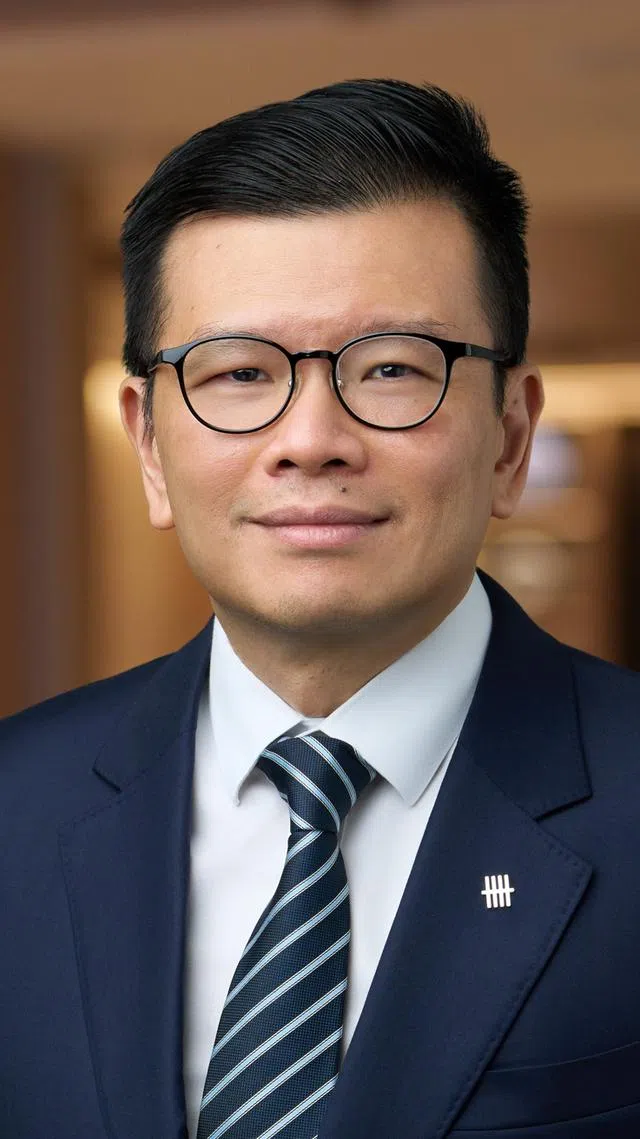
Building resilience. The sudden repricing of geopolitical risk following the Iran strikes illustrates a simple reality: Elaborate hedging programmes can fail when liquidity thins. We prefer to keep it simple using two assets that have consistently delivered defensive ballast: gold and investment-grade bonds.
Gold’s role is straightforward. When the market contemplates oil price spikes, global recession risk or shipping route disruption, gold’s non-correlated properties become more valuable. The current threat that Iran could endanger the Strait of Hormuz – through which 20 per cent of global liquefied natural gas and crude exports pass – reinforces gold’s relevance as a geopolitical hedge.
High-net-worth portfolios can express this via vaulted physical gold in Singapore or institutional class ETFs.
Investment-grade credit offers the second anchor. With the US Federal Reserve expected to guide rates towards roughly 3.25 per cent by end-2026, the carry and convexity in high quality bonds are attractive, especially when equity volatility spikes.
Laddered investment-grade portfolios and bespoke SGD or USD-hedged mandates remain robust tools for private client portfolios that prioritise capital preservation under duress.
AI opportunities. 2026 marks the broadening of the AI capex cycle into memory, networking, advanced packaging and data centre infrastructure. About 75 per cent of hyperscaler spending is set to be directed to AI-specific hardware rather than legacy cloud workloads.
Nvidia’s latest earnings underscore this trend: Data centre revenue surged 75 per cent year on year, with networking demand accelerating as model sizes grow and cluster density increases.
The supply chain is also diversifying. Tight high-bandwidth memory capacity persists across SK hynix, Micron and Samsung. Despite expanding to increase supply, the supply crunch is expected until the end of 2027. Coupled with rising demand for power and cooling infrastructure, investors now have a far broader opportunity set than a handful of headline semiconductor names.
Asia in favour. Asia’s positioning in 2026 is more favourable than what the consensus appreciates. Korea and Taiwan are prime beneficiaries of the AI hardware and memory super cycle, underpinned by tight supply and capex acceleration extending well into 2027. Some parts of Asean appear under-owned and also have a longer-term theme of supply chain reconfiguration.
China warrants a selective but constructive stance. Policymakers have intensified fiscal and regulatory support to stabilise the property market and pivot towards consumption, with around 4.5 per cent GDP growth projected for 2026. However, we think that targeted easing is unlikely to spark a broad property demand revival, making valuation discipline essential.
Where views must be more differentiated is India. Despite expectations for 15 to 16 per cent earnings growth, its software export model faces structural pressure from AI. The global shift towards AI-enabled, outcome-based delivery erodes pricing power for traditional IT services, and India’s under participation in the AI hardware cycle has been reflected in market performance.
For investors, this argues for a transition towards domestic demand leaders, financials, high-quality manufacturing and selective tech innovators, rather than legacy IT names most exposed to margin compression from generative AI automation.
Evonne Tan, head, Barclays Private Bank Singapore 
Building resilience. As we’re seeing in 2026, geopolitical risk is unpredictable: Shocks have had large impact in the short term, and their longer-lasting impacts are hard to determine at the outset.
It is likely that we will continue to see more emergent themes with successive intermittent shocks such as trade tensions, regulatory changes, regional conflicts or policy surprises.
In this environment, portfolios that are narrow or highly concentrated are more vulnerable. One consistent takeaway is that diversification across regions, asset classes and investment styles becomes more valuable, not less. This includes balancing growth and defensive exposures, as well as avoiding over-reliance on any single geographic or macro outcome.
A second important pillar is an emphasis on quality and cash flow durability. Companies with strong balance sheets, resilient cash flows and pricing power tend to be better positioned to absorb volatility, particularly if growth slows or uncertainty rises.
Third, investors should prioritise active risk management over binary positioning. Rather than “all in or all out” decisions, portfolios should be structured to withstand periods of volatility, maintain liquidity and flexibility, and take advantage of market dislocations when they arise.
Ultimately, shock-proofing portfolios is less about predicting specific geopolitical events, and more about building resilience into portfolios construction. In an increasingly complex and unpredictable global backdrop, this involves maintaining diversification, tilting towards quality assets, and applying disciplined risk management over time.
AI opportunities. In the near term, some of the most compelling AI opportunities are likely to come not from the companies building AI models, but from those effectively using the technology to improve real productivity and efficiency in real-world business settings.
Market leadership in AI has become heavily skewed towards a small group of large technology companies. This argues for diversification across both sectors and geographies.
AI adoption is increasingly global, with opportunities not only in the US, but also across Asia, including China, where AI is being applied across financial services, healthcare, manufacturing, supply chains, industrial automation and logistics. Looking beyond a single geography helps reduce reliance on one market or policy environment.
Another important, and often overlooked, theme is the link between AI, energy and infrastructure. The growth of data centres and AI usage is driving higher demand for power, electrification and grid investment. In that sense, AI is not just a technology story, but also an infrastructure and energy story.
Asia in favour. The outlook for Asian equities is nuanced and requires selectivity, rather than broad-based exposure.
One key positive is Asia’s deep integration into global technology supply chains, particularly in semiconductors, automation, electrification and AI-related hardware, even if the region is not always at the forefront of AI model development itself.
Selective exposure to China remains an area of interest. While structural challenges persist, targeted exposure to areas such as AI-related technologies, green and energy transition technologies, and segments of domestic consumption can offer asymmetric upside, especially given depressed valuations and low investor expectations.
Elsewhere in Asia, markets with strong balance sheets, policy credibility and exposure to global manufacturing and services cycles may also be well placed over time.
Asia, however, is not immune to geopolitical risk. Regional tensions, trade dynamics and policy uncertainty remain important considerations. As a result, broad-brush exposure should be approached cautiously.
Foo Tian Ong, regional head for South-east Asia and Singapore location head, Standard Chartered Global Private Bank 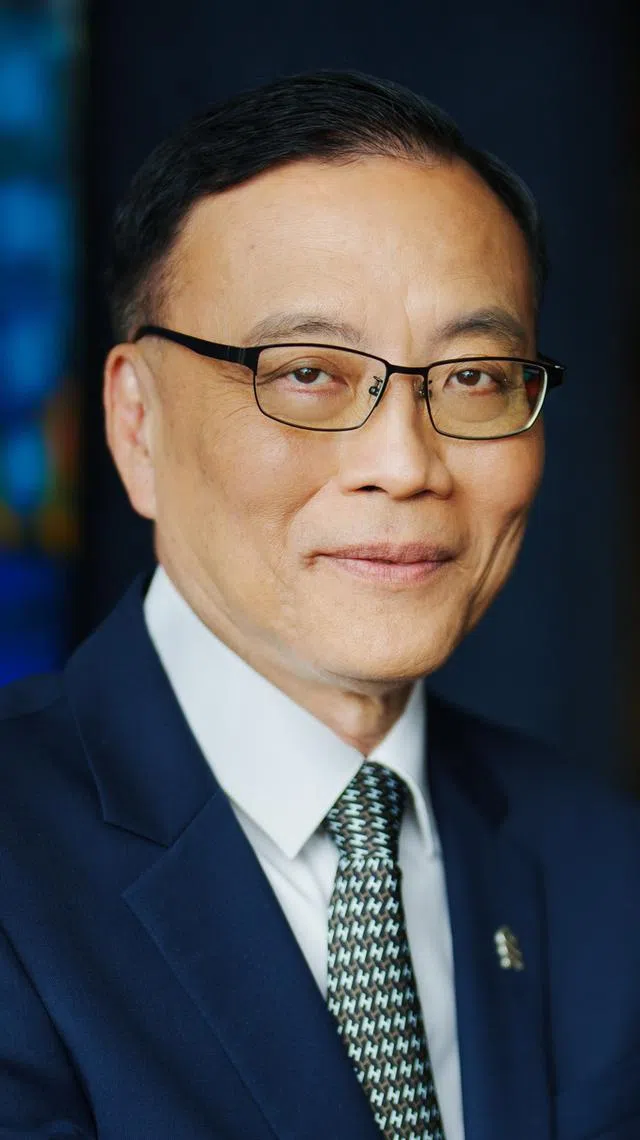
Building resilience. The Middle East conflict is a known near-term geopolitical risk. It could lead to a temporary surge in oil prices, and thus higher inflation expectations, resulting in a delay in Fed rate cuts.
Our base case assumes the conflict will last a few weeks, with no sustained oil supply disruption, given ample global supplies. However, investors can hedge any short-term oil price spike through inflation-protected bonds, US energy equities, gold and other alternative assets.
Gold remains a structural hedge for investors looking to shock-proof their portfolios against broader geopolitical tensions.
We have an overweight (6 per cent) allocation to gold in our balanced portfolio. We expect gold to continue outperforming, supported by sustained emerging market central bank demand as they diversify from USD assets.
Despite the recent rather extreme volatility of gold (and silver), we expect prices to consolidate in the near term. The latest correction offers medium-term investors who are under-invested another chance to average into gold.
AI opportunities. We see significant growth in capex linked to AI, a trend that was confirmed during the most recent earnings season. We estimate that global AI capex would increase by 54 per cent in 2026, and there is good visibility to justify 2025-to-2030 compound annual growth of 27 per cent.
We expect three areas to benefit from this capex growth. First, the near-term beneficiary would be the semiconductor industry given we are still in the early stages of the technology cycle for AI investments. Earnings growth in the semiconductor industry is outpacing that of the broader technology sector, and it has been upgraded since the start of the year.
Internet companies that provide cloud services would also benefit as AI models are trained and deployed in the cloud, which require significant cloud capacity and infrastructure.
The third are companies involved in the buildout of data centres, which house the equipment performing AI computations. Effective thermal management in data centres, as well as the significant power supply required to support them, represent critical areas of focus. We expect serious power load issues with the existing US infrastructure and grid upgrades would be required.
Asia in favour. Asia is likely to be negatively impacted by higher oil prices caused by the Middle East conflict as it’s a net importer of energy. However, we expect the conflict and its impact to be short-lived.
Hence, we remain bullish on Asian equities, particularly the Asia ex-Japan region. Asia ex-Japan equities have done well over the last 12 months, outperforming global equities, driven by earnings growth and improving valuations.
We expect this to continue, with 2026 consensus estimates showing the highest growth for Asia ex-Japan (33 per cent) among the major equity regions. Asia ex-Japan valuations also remain at an attractive discount to global equities.
Within Asia ex-Japan, we currently favour China and India equities. China offers a significant valuation discount, but we see scope for this to narrow as Chinese policymakers maintain stable economic growth and unveil policies to support consumption growth.
We prefer a barbell approach in China, with exposure to the more stable non-financial high dividend state-owned enterprises, along with growth exposure in the Hang Seng technology index.
India equities have been underperforming over the last one and a half years, and we turned positive on the market at the end of last year. We see scope for a turnaround driven by an improving earnings outlook.
Decoding Asia newsletter: your guide to navigating Asia in a new global order. Sign up here to get Decoding Asia newsletter. Delivered to your inbox. Free.