
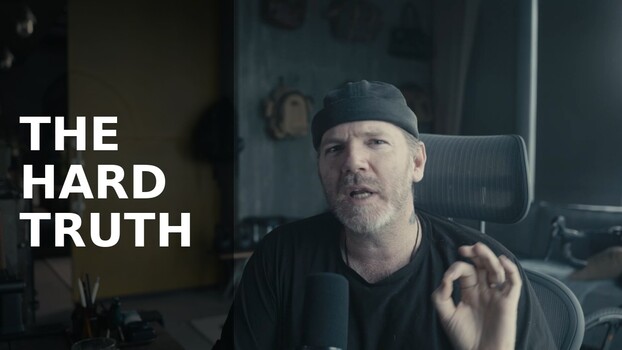
Most people wildly misread what a photography career actually looks like. The gap between what gets posted online and what the work actually involves is wide enough to wreck your expectations if you’re not paying attention.
Coming to you from Justin Mott, this candid video pulls back the curtain on what a two-decade professional photography career actually looks like from the inside. Mott has shot for the New York Times, landed work in a Leica ad campaign seen in magazines around the world, and built a commercial production company in Hanoi. He’s upfront that he’s probably in the upper tier of working photographers in terms of consistency and client quality, and he makes that point deliberately: even at that level, the career looks nothing like what social media suggests. You don’t see the posts about self-funded photo books that lost money, the year-long personal projects that earned nothing, or the hotel trade where you swap three days of shooting and two days of editing for a free meal and a few portfolio shots.
The wildlife work people associate with Mott is a good example of the gap between perception and reality. When his rhino images ran in a Leica campaign, people assumed he was being paid to fly around the world telling dramatic environmental stories. He funded that project himself. He set up access himself. Much of his New York Times work, which sounds impressive on paper, was business stories and economic coverage for newswire services. He describes one assignment to photograph a bird thought extinct for 40 years in central Vietnam, a week of hiking through jungle that produced around 500 frames of a researcher looking through binoculars. Another job, a luxury cruise for a gourmet travel magazine, turned into four stranded days after the staff writer quietly informed him the food wasn’t good enough for their readership and the guests were the wrong demographic.
The commercial side of photography is where the real money tends to be, and Mott is specific about the numbers. He’s worked with clients who pay $10,000 to $15,000 a day when usage rights are included, but he didn’t land that tier of work consistently until his early 40s. And even then, a client giving you 20 days a year at that rate can vanish the next year because of a new creative director or a budget shift. He describes the actual rhythm of luxury hotel work, the kind his production company M Visuals does regularly, as mostly moving through room categories on a tripod, carefully lighting suites, bathrooms, and conference rooms, sometimes taking 50 composite shots to get a single clean room image. Not yachts and champagne, though that does happen occasionally. One stretch he describes captures the range well: 10 days shooting a luxury hotel, then a conservation story for CNN in a village guesthouse that paid around $200 a day, then a corporate portrait, then a fabric softener commercial, then a TV show he was hosting about photography. That kind of swing was normal across his entire career.
Mott is now 47, running a production company with his wife, still doing assignment work, and still feeling the rhythm of unpredictable months driven by whether the right email shows up. Check out the video above for the full rundown from Mott, including how he thinks about the quiet stretches, what he’s built around the gaps, and what he’d tell anyone trying to build something real in this industry.