
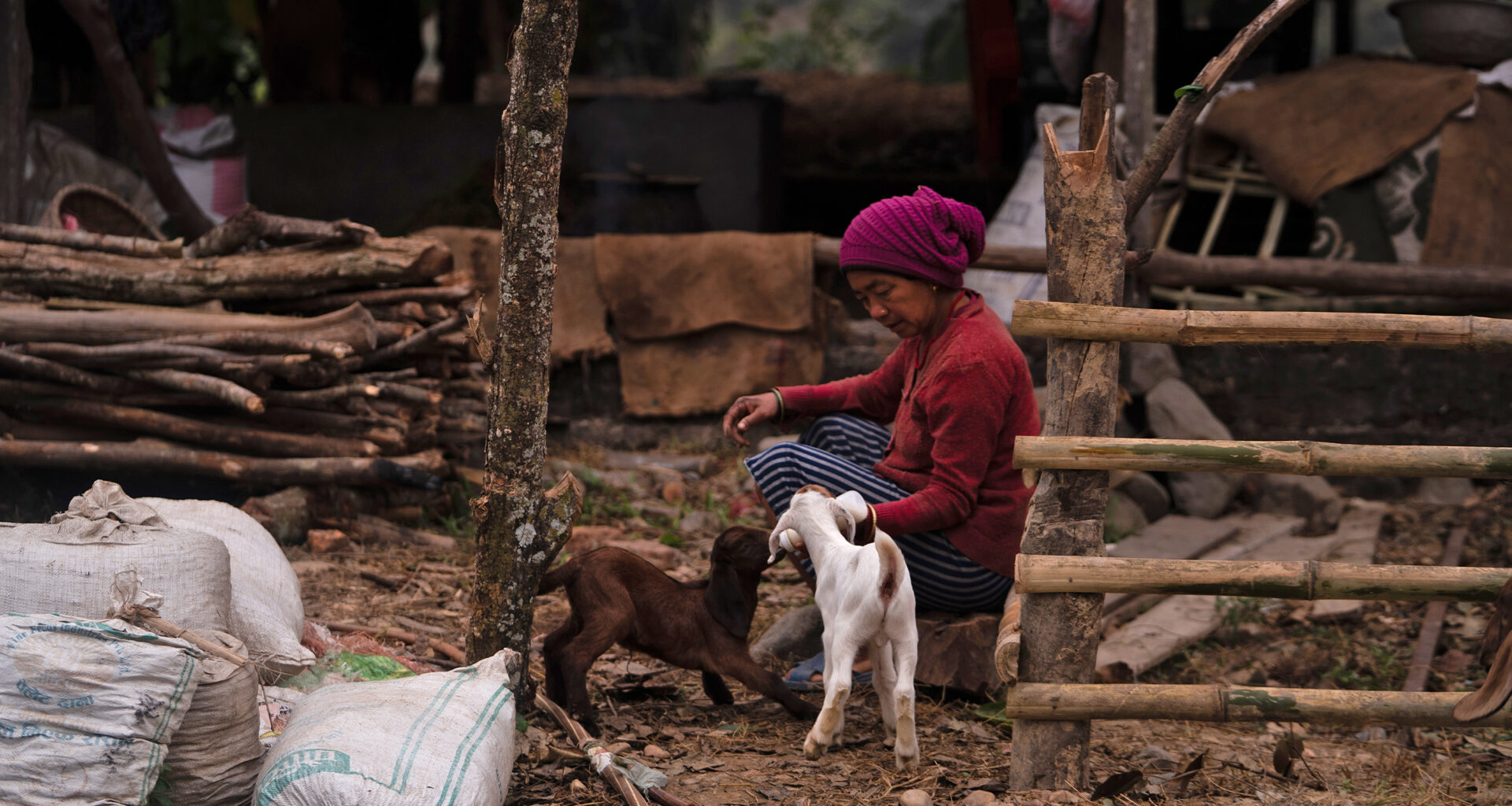
Women in forest-edge communities around Bardiya National Park are increasingly exposed to human-wildlife conflict, as daily subsistence work brings them into forests where encounters with tigers and other wildlife occur.Labor migration has shifted agricultural and household responsibilities onto women, pushing many to collect fodder, firewood and other forest resources in high-risk areas.Most fatal wildlife encounters occur during routine livelihood activities, such as cutting grass or grazing livestock in forests and buffer zones where people and wildlife share space.Nepal’s widely celebrated tiger conservation success is unfolding alongside growing risks for rural communities, particularly women who depend on forests for daily survival; meanwhile, women remain largely absent from the institutions that shape conservation policy.
See All Key Ideas
BARDIYA, Nepal — On the morning of Feb. 6, the road leading to the Bardiya District Administration Office in western Nepal was filled with people moving as one. Dust rose from their footsteps. Voices layered over each other, murmurs turned into chants and anger hardened into demands that echoed off the building’s walls.
Dozens pushed through the main gate, some carrying hastily painted banners, others empty-handed but resolute. Their three demands: fair compensation for families, death to leopards that attacked villagers and protection for people who should have been there all along.
As Nepal celebrates major conservation gains, rural women in forest-edge communities like Bardiya are increasingly exposed to human–wildlife conflict because migration-driven labor shifts and daily subsistence work push them into the same forest corridors where wildlife movement and deadly encounters are most likely.
The previous day, in the span of a few hours, a man and a woman had been killed by leopards, one while cutting grass in the community forest, the other while working in her own field.
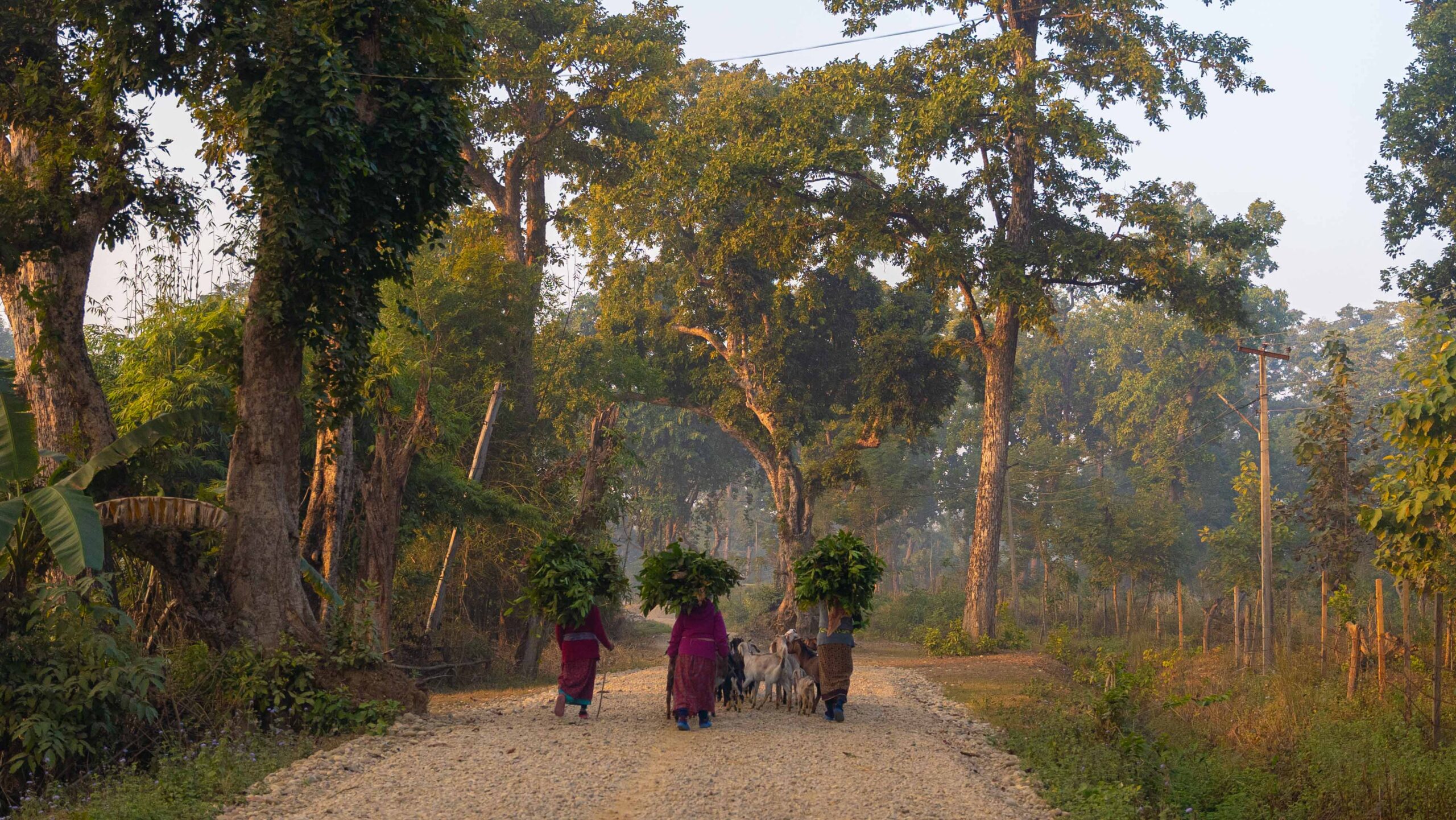 Women in the buffer zone in Bardiya head home after collecting grass. Image by Tulsi Rauniyar for Mongabay.
A winter of fatal encounters
The protest marked the breaking point of a winter shaped by repeated wildlife attacks — a pattern many residents trace to December 2025, in Madhuwan, a settlement along the outer edge of Bardiya National Park, home to 125 of Nepal’s 355 tigers.
Weeks before the protest reached Bardiya’s administrative offices, mornings in Madhuwan began much the same way they always had. At first light, women step quietly into the trees, curved sickles tucked into their waistbands, returning hours later bent slightly under towering bundles of fresh grass.
When routine work becomes deadly
On Dec. 30, 2025, Binita Pariyar left for the forest like the others, from this same settlement. She was 17 years old. She had finished her household chores, picked up a sickle and walked toward the forest to cut grass for her family’s livestock. She never came home. A Bengal tiger attacked and killed her while she was working.
In the four weeks following Binita’s death, five more people were killed in wildlife encounters in Bardiya. Four of them were attacked while herding livestock, cutting grass or working in their fields. One was a man, attacked near the forest edge while relieving himself. Another was killed while collecting grass. All deaths occurred in the forests outside the national park. None of the deceased had been trespassing.
A friend of Binita’s, who used to herd livestock alongside her, no longer wants to go to the forest. Other women described sleepless nights before the morning walk to cut grass, listening for sounds that might signal movement. One woman said she now checks behind trees constantly. She cannot rid herself of the image of Binita’s body being carried back to the village.
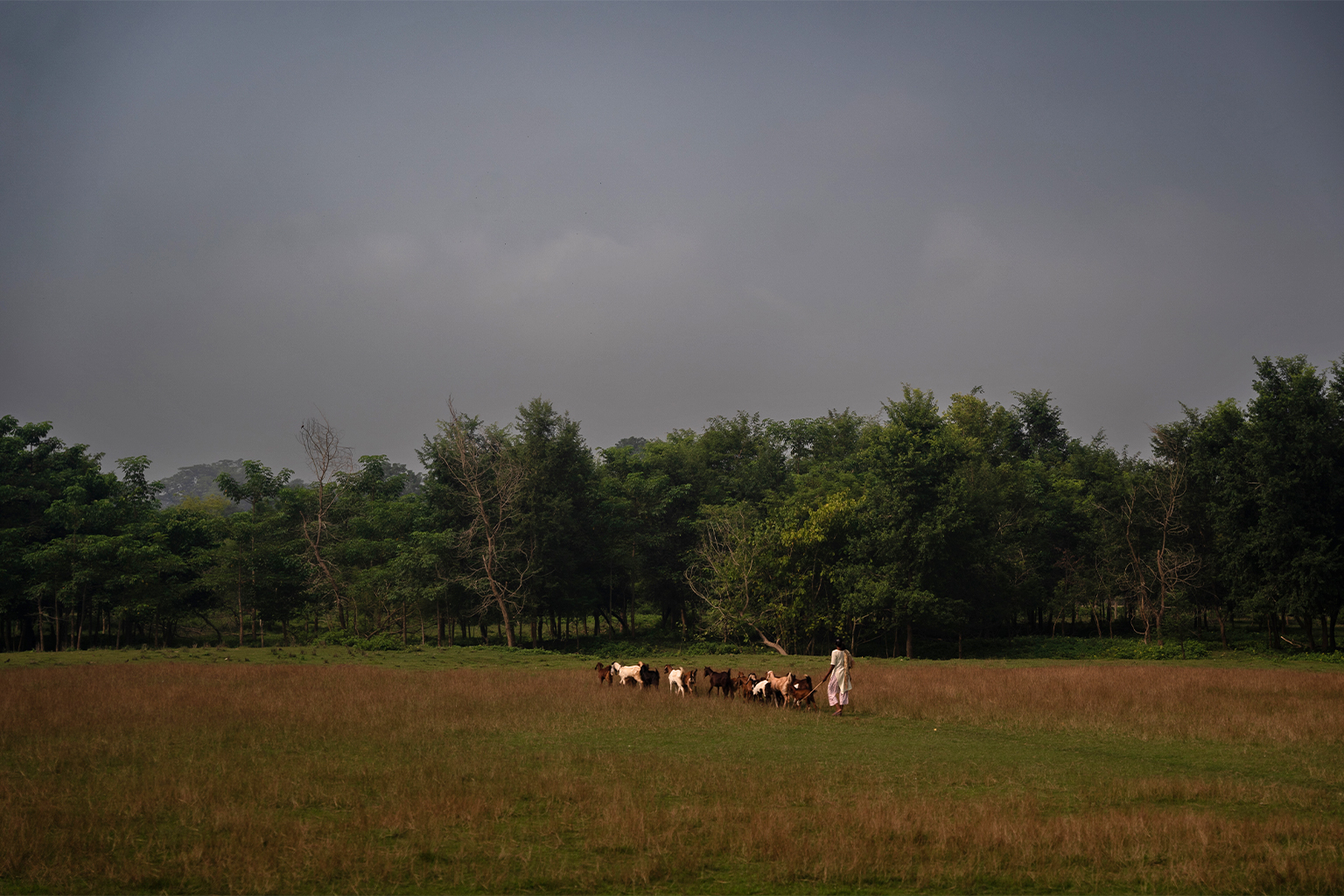 A woman herds her goats next to the forest in Bardiya. Image by Tulsi Rauniyar for Mongabay.
Still, they go
Rupsi Thapa used to graze livestock with another woman, Padamkala Thapa, until Padamkala was killed in a wildlife encounter. A year later, Rupsi still lives with panic attacks. She hasn’t returned to the forest since. “I don’t know if it will ever get better,” she said.
The cattle need feeding by noon.
The forests where they cut grass are designated spaces to collect fodder, firewood and grazing materials.
Recent research on human–wildlife conflict in the Bardiya–Banke landscape shows that nearly a third of fatal wildlife attacks happen while people are herding cattle, and another third while cutting grass. Firewood collection accounts for a further share, followed by fishing and gathering vegetables. Most people have died while doing exactly what these women are doing now.
Records from the Division Forest Office covering 2021-25 show that the majority of those injured or killed while cutting grass have been women.
Inside the forest, the women spread out to find their patches. They’re looking for siru and khar, tall grasses that grow densely around forest edges where daily fodder extraction occurs, along with other forest resources such as wild vegetables, firewood and seasonal foods. The grass grows thickest along the edges and slopes, the same places where studies from the corridor show wildlife movement peaks in early morning. During the monsoon and post-monsoon months, these grasses grow especially thick, reducing visibility and increasing the chances of sudden encounters with wildlife.
One woman works bent low, her sickle moving in short, focused strokes. She doesn’t look up often. In this posture, conservationists say, a tiger can mistake a person for prey. When she does, she scans the tree line, then returns to cutting. The work requires rhythm and attention. It’s hard to maintain both while listening for movement in the undergrowth.
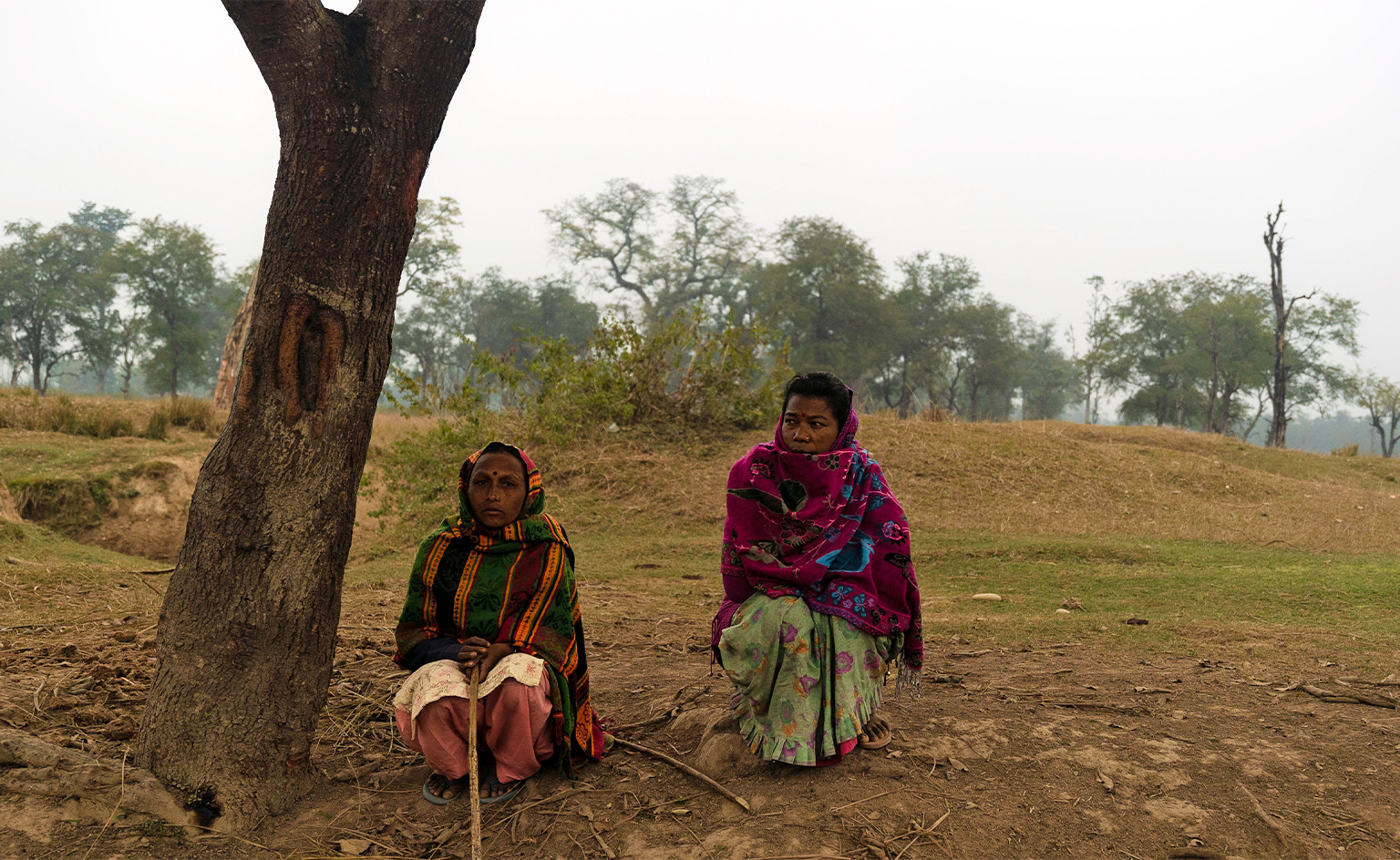 Women look after their cattle on the fringes of Bardiya National Park. Image by Tulsi Rauniyar for Mongabay.
Migration and the feminization of forest labor
Bardiya is shaped as much by what is missing as by what remains. The district is home to 60,831 people, many living in villages bordering forests around the national park. Across Nepal, women now outnumber men in the population, a demographic shift partly linked to large-scale male labor migration abroad. Men account for an estimated 80-90% of those who migrate, spending months or years working in construction in Indian cities or manual labor in the Persian Gulf.
With scarce agricultural land and few local jobs, migration has become a survival strategy. As men leave, responsibility for agriculture and household survival increasingly falls to women, a shift widely described as the “feminization of agriculture” across Nepal’s Terai and hill regions. The work that remains falls to those who stay behind. In practice, women are pulled repeatedly into forest edges by routine subsistence labor, often alone and in the very spaces where encounters with wildlife are most likely.
Halfway through the morning, one of the women stops cutting and raises her hand. The others pause. No one speaks. She points to a narrow opening in the grass where yesterday someone saw a tiger crossing. Someone suggests turning back. Another woman shakes her head. The cattle would need feeding. After a few minutes, one woman adjusts the strap of her basket and continues into the forest. The others follow, spaced apart.
Hari Gurung, chairman of the Khata Community Forest, has tracked the deaths closely. Those killed in wildlife encounters, he said, are overwhelmingly from marginalized communities, including Dalit families like Binita’s, whose survival depends on daily access to forests within or adjacent to protected areas.
With few alternatives for income or fodder, these households are often the most exposed to danger and the least able to avoid it. For most families here, the choice is not between safety and danger, but between fear and livelihood.
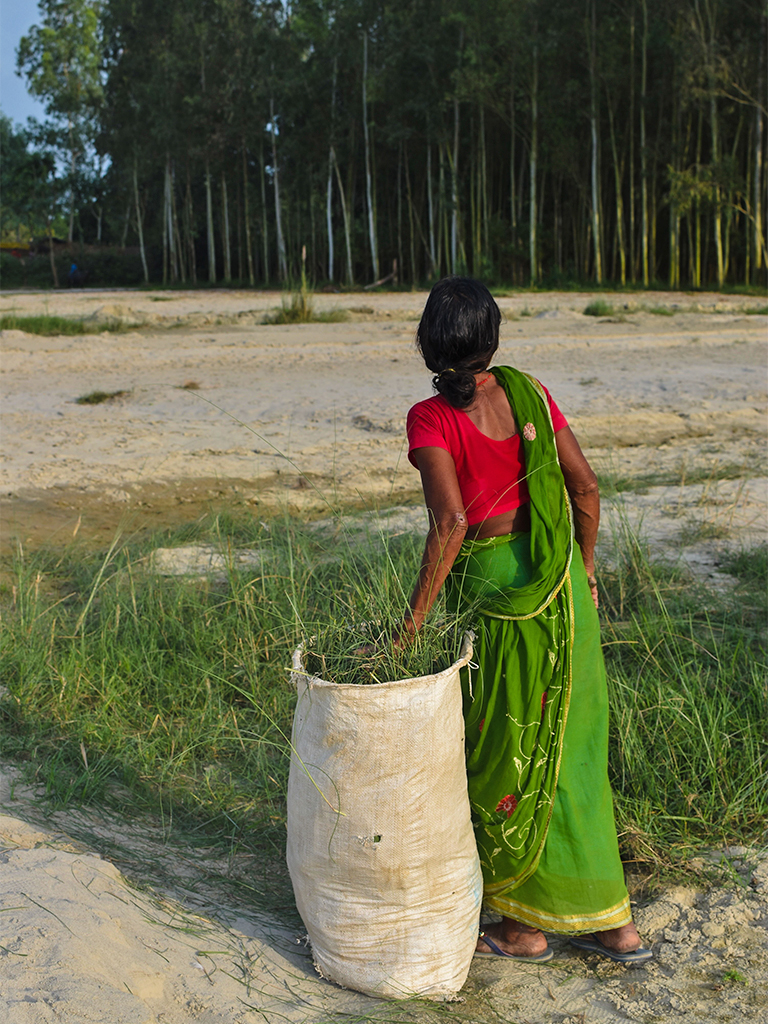 A woman collects grass on the fringes of Bardiya National Park. Image by Tulsi Rauniyar for Mongabay.
Where wildlife corridors and daily work collide
The risk concentrates where people work. The Khata Corridor, a forested stretch connecting Bardiya with Katarniaghat Wildlife Sanctuary across the Indian border, appears repeatedly in records as the district’s highest-conflict zone.
In 2024, 84% of recorded attacks in Bardiya occurred within 1 kilometer (0.6 miles) of forest boundaries. Many recent fatal attacks have occurred in and around the corridor. All six recent fatal attacks occurred in division forests, not inside the park itself.
Rama Mishra, a conservationist and co-founder of Wild Care Nepal, said identifying the corridor matters because it reveals a pattern rather than isolated incidents. “Wildlife movement in the corridor often peaks in the early morning and at dusk, along forest edges, trails and water sources,” Mishra said.
“These are the same times and places when people, especially women, enter forests to cut grass or collect firewood.” The overlap is not coincidental. Conflict is driven less by animals entering villages than by the frequency with which people must enter forested areas to sustain their livelihoods. Attacks are uncommon deep inside villages or in core forest interiors. They cluster along forest edges, the same spaces where routine work takes place.
Even within the corridor, risk is unevenly distributed. Studies show that encounters with tigers and the frequency of forest use are highest in villages farthest from Bardiya National Park, where households receive few of the economic benefits associated with tiger tourism. In places without lodges, guiding work or conservation-linked income, daily life remains closely tied to the forest, and exposure to danger rises accordingly.
Conservation success and its hidden costs
Nepal is widely celebrated as a conservation success story. Since 2009, the country’s tiger population has more than doubled, reaching an estimated 355 individuals and meeting the global TX2 target.
What connects these patterns, Mishra said, is not only the increase in tiger numbers, but a transformation of the landscape itself. “Land use around Bardiya hasn’t changed simply because forests have been lost,” she said. “It has become more fragmented and edge-dominated, where forest patches and human trails overlap.”
In practice, that means more forest edges, the places where people enter daily to cut grass, collect firewood and graze livestock, and where wildlife moving between patches is most likely to encounter them.
Women, especially Indigenous women from Tharu and other forest-dependent communities, have long been central to forest stewardship and conservation through community forestry, resource management and informal conflict mitigation. Yet they remain largely absent from the institutions that shape conservation policy. Women make up less than 15% of the national park workforce, and their representation in decision-making bodies remains minimal, even as they bear the greatest risk.
Hemanta Acharya, who leads a Community-Based Anti-Poaching Unit in Bardiya and regularly assists communities after wildlife attacks, said Nepal’s conservation success is usually told in numbers. “Tigers are counted, habitats mapped, poaching incidents tracked and reduced. The metrics are clean, upward-moving and legible to global audiences. What is harder to measure, and therefore easier to overlook, are the human costs that accompany this recovery.”
In the last five years, Bardiya has recorded 53 deaths from wildlife, including tigers, making it one of Nepal’s most dangerous protected landscapes. In landscapes where tiger populations have rebounded most sharply, deaths from wildlife have not declined at the same pace, and in some places have remained steady or increased. The disruption this causes to daily work, the fear that reshapes routine and the withdrawal of women from forest spaces after an attack are not captured in conservation scorecards. They do not register as loss, even as they reorder life at the forest edge.
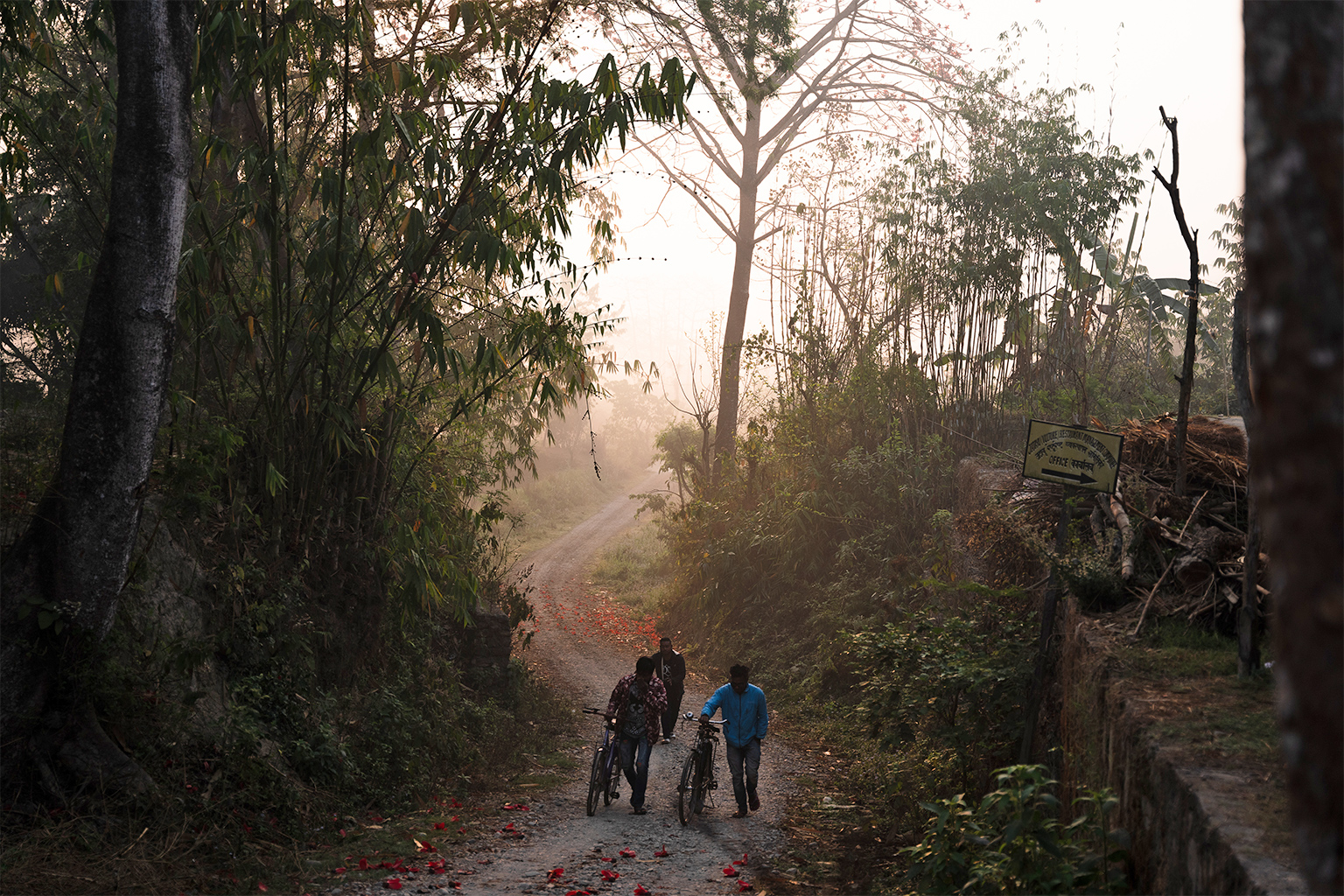 Men walk with their bicycles along a path next to the forest in Bardiya. Image by Tulsi Rauniyar for Mongabay.
What conservation debates often miss, Acharya said, is this space between fear and necessity, where danger is acknowledged, and still endured. “The question here is no longer only about saving people or protecting wildlife, but about what it means to live with both. We have to stop looking at only saving human lives or the lives of the animals,” he said, “and start looking at the livelihoods of the people affected by conflict.”
When human-wildlife conflict becomes political
As attacks increased through the winter, the issue began to move beyond forest edges and into political campaigning. That space between fear and necessity has now become a political battleground.
During the recent parliamentary elections in early March, human–wildlife conflict has rapidly become a defining campaign issue across affected districts. In Bardiya, voters have directly confronted political candidates, urging them to prioritize solutions to the escalating crisis. At campaign gatherings, residents speak openly about mounting insecurity, repeated wildlife incursions into settlements and the growing sense that daily life at the forest edge has become increasingly unpredictable.
Conservation groups and local observers report that several candidates are responding with promises of immediate removal — or even killing — of so-called “problem animals,” often without outlining concrete policy mechanisms. The rhetoric resonates with communities living with daily risk, but experts warn it risks spreading misinformation and inflaming tensions while diverting attention from long-term mitigation strategies such as compensation reform, safer fodder access, early-warning systems and community-based conflict prevention.
As debates over conservation and safety continue far from the forest edge, mornings in Madhuwan unfold much as they always have.
By mid-morning, the baskets are full. The women begin walking back, one behind another, along the same narrow trails they took in. Their livelihoods and wildlife territory have become inseparable. When one of them was asked what would need to change for her to feel safe, she paused for a long time, her sickle resting against a tree.
Then she said, “I don’t think about feeling safe. I think about coming back.”
They walk out of the forest in silence, baskets balanced on their heads. Tomorrow, before light reaches the fields, they will do this again.
Banner image: A woman with her goats in the buffer area. Image by Tulsi Rauniyar for Mongabay.
Photos: The volunteers standing guard at one of Nepal’s human-wildlife frontiers
Citations:
Paudel, U., KC, R., Kadariya, R., Karki, A., Shrestha, B., Shah, S., … Thapa, S. (2024). Human–wildlife conflict in Bardia—Banke complex: Patterns of human fatalities and injuries caused by large mammals. Ecology and Evolution, 14(10). doi:10.1002/ece3.70395
Sharma, B., Hope, A. G., & Neupane, D. (2024). Dimensions of human–tiger conflict and solutions for coexistence in the forests of the Khata corridor, Bardiya, Nepal. Oryx, 58(6), 806-814. doi:10.1017/s0030605323001849
Kim, J. J., Stites, E., Webb, P., Constas, M. A., & Maxwell, D. (2019). The effects of male out-migration on household food security in rural Nepal. Food Security, 11(3), 719-732. doi:10.1007/s12571-019-00919-w
Dhakal, B., Lamichhane, B. R., Kandel, S., Subedi, N., Low, M., & SILWAL, T. (2026). Reprint, amsmath,amssymb, APS, ]revtex4-2 tigers in the neighborhood: Factors associated with fatal tiger attacks in a human-dominated landscape, Nepal. doi:10.22541/au.177208401.15292642/v1
