
Here’s what you’ll learn when you read this story:
The lightest structural metal, magnesium, is known for being a versatile component in some of the world’s most advanced technologies.
A new study improved on the versatility of pure magnesium by mixing in an atypical material: dried leaf powder.
An agricultural waste byproduct of mangos, this dried leaf powder increased the metal’s dampening ability without sacrificing its strength or durability.
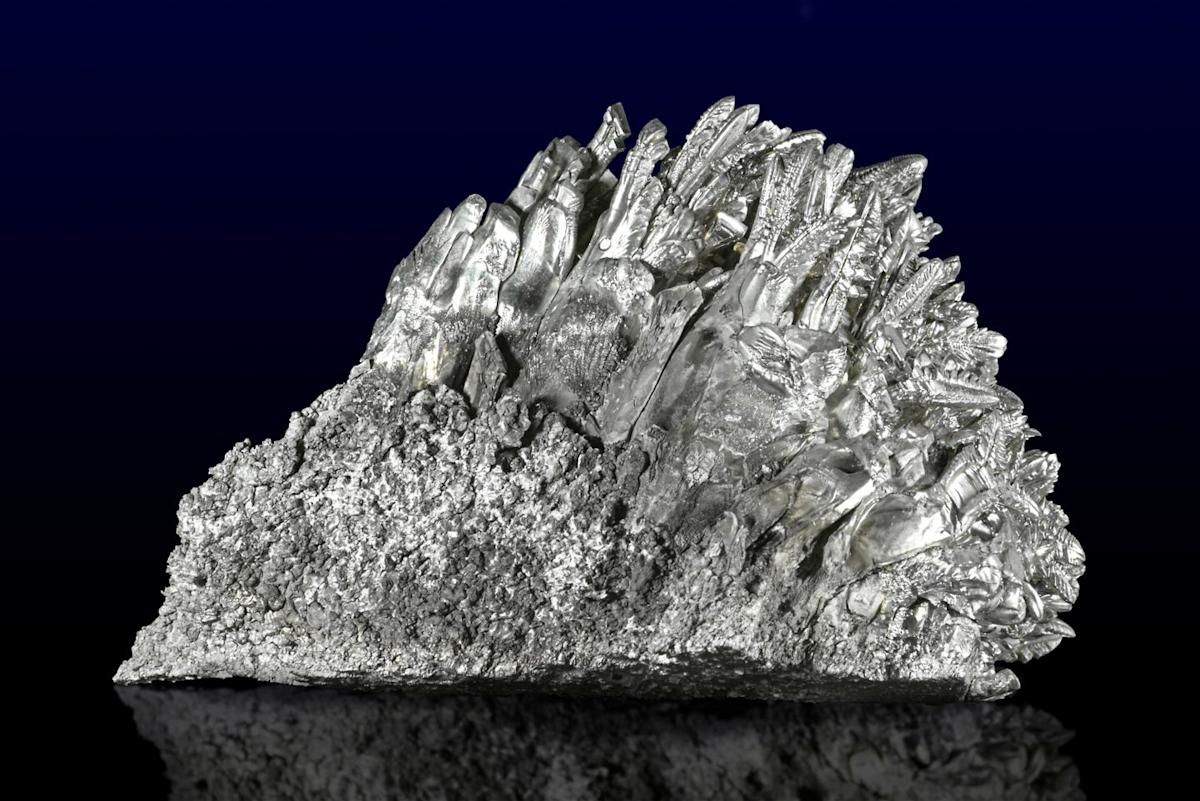
The world relies on magnesium, but it isn’t a metal that typically makes headlines. Steel forms the structural skeleton of the world’s tallest buildings, the world’s most advanced aircraft are wrapped in aluminum, and titanium makes up the critical components of most space-faring rockets. Yet behind many of these metallic wonders lies magnesium, the lightest structural metal used today. Pure magnesium is 30 percent lighter than aluminum, and alloys made with aluminum have higher melting points, making them ideal for the automotive and aircraft industries. Magnesium can even be found in most aluminum beverage cans at a rate of about 5 percent.
Now, scientists from the National University of Singapore have proposed a one-of-a-kind “alloy” that combines fallen leaves—agricultural waste from mango crops—with pure magnesium. Surprisingly, magnesium alloyed with the leaf powder saw its damping capability (a.k.a. its ability to withstand vibration) enhanced by a staggering 54 percent over pure magnesium. The results of the study were published in the journal Metals.
“[Magnesium] has gained widespread interest for both industrial and biomedical applications due to its high specific strength, good machinability, excellent damping capacity, and natural abundance,” the authors wrote. “Converted biomass materials, such as leaf powder, have demonstrated promising potential in diverse applications, including ceramics, catalysts, supercapacitors, and even microwave-absorbing materials.”
With these two ideas in mind—and with scientists ever eager to find ways to reduce the weight of magnesium alloys without sacrificing performance—the research team thought they’d see if leafy biomass could add benefits to magnesium composites. To achieve this breakthrough, the research team simply collected fallen leaves from mango trees (Mangifera indica) and dried them using a microwave (not a fancy laboratory microwave either, just a standard Sharp convection oven). The leaves were then ball-milled and dried in an oven, resulting in a dried leaf powder.
The powder was then incorporated into the magnesium, making up only 5 percent of the final mixture. During the sintering process (a manufacturing technique using pressure and heat that transforms powdered metals into dense structures), the dried powder vaporized, leaving behind microscopic pores. While holes in metal might sound concerning, it turns out that these pores made the new-and-improved magnesium more shock-absorbent.
To form the best material, scientists had to find the perfect Goldilocks temperature for the extrusion process. Too hot, and the heated plant powder turns into carbon that would exacerbate rusting. Too cold, on the other hand, produced its own negative impacts.
“Mechanical performance showed a trade-off with decreasing extrusion temperature: lower temperatures led to increased porosity, which reduced hardness, compressive strength, and ductility,” the authors wrote.
They found that extrusion done at around 350 degrees Celsius produced the best results for the magnesium-dried leaf powder mixture, as it kept the metal grains tightly compact so that the final product resisted bending.
“These findings not only highlight the potential of incorporating natural biomass into metallic systems for developing lightweight and sustainable materials,” the authors wrote, “but also establish a strong foundation for future investigations into metal-biomass composite design, processing optimization, and performance enhancement while minimizing the potential limitations.”
Magnesium was already one of the most versatile alloy ingredients, but scientists are showing that its miraculous composite capabilities reach further than we imagined.
You Might Also Like