

The 340B drug discount program requires manufacturers to sell drugs to safety-net hospitals at deep discounts, so they can reinvest the savings into care for low-income and uninsured patients.
Despite its original intent, recent meteoric growth in this program has attracted considerable attention from various sectors. The Trump administration is currently on its second attempt to launch a 340B rebate model this year to help address some of the issues in the program.
But there may actually be an unwitting successor to the 340B program lurking on the horizon, one that would end up keeping the system mired in the same problems. Such a successor would be a consequence of two dominoes that begin in 2028 with the launch of the negotiated prices for Medicare Part B drugs in the Medicare Drug Price Negotiation Program (MDPNP).
The pivot from drug price negotiation to 340B may seem distant, but the key challenges in front of lawmakers and the likely pathways for resolution could make such a scenario possible. Ultimately, these changes will only perpetuate the labyrinthine payment pathways that make it challenging to rein in expensive health care spending.
The first domino will be the effect of the drug price negotiation on provider reimbursement.


The drug supply chain, which moves drugs from manufacturers to wholesalers to the outpatient clinics where they are administered, is incentivized to compete on price by retaining a small percentage of the cost of the drugs they are moving. For every drug that makes its way to the patient, a portion of the drug price — the drug margin — goes to each member of the supply chain, including the clinic where it is administered to the patient. In the case of outpatient clinics, this payment takes the form of reimbursement of the average sales price along with a 6% add-on fee.
Health care providers have increasingly come to rely on this 6% add-on fee to make up for losses in reimbursements elsewhere in the system. This precarious balance has allowed providers to survive, and sometimes even thrive, resulting in perverse incentives that encourage the use of higher priced drugs in pursuit of higher margin payments.
The MDPNP now threatens to rock the boat off this fragile perch when negotiated prices for Part B outpatient drugs go into effect in 2028. CMS plans to implement the negotiated price for Part B drugs by calculating the 6% add-on fee based on the lower negotiated price instead of the average sales price. As a result, the add-on fee will be smaller, resulting in revenue losses for outpatient clinics.
The next domino comes in the form of existing proposals to address reimbursement challenges.
The loss in drug margin has already created alarm among provider groups. The Community Oncology Alliance reports that it expects a 47% reduction in drug payment revenue to outpatient clinics, accounting for nearly $25 billion in total lost revenue, which may result in oncology clinics shutting down. Similar cries for attention are being shared by senior care pharmacists, consultant pharmacists, infusion centers, and urologists.
Notably, many of these organizations have a strong presence on Capitol Hill. When I worked on the Hill, I could recognize their lobbyists and representatives from the other end of the hallway. Since the alarm bells have started ringing, these organizations have been calling for fixes that ensure that the reductions in drug margin due to the negotiation program affect only the drug manufacturers and not the health care providers.
Typically, the proposed solutions include add-on payments to outpatient clinics from either Medicare or the drug manufacturer. For example, Sen. John Barrasso (R-Wyo.) introduced a bill that would require manufacturers to provide additional rebates so that outpatient clinics can continue to be paid the drug margin.
Such proposals will set up yet another channel for drug manufacturers to transfer funds to outpatient clinics — a dynamic that echoes 340B. Different from 340B in design and purpose, yes, but it further entrenches the crutch that drug margin represents in physician reimbursement.
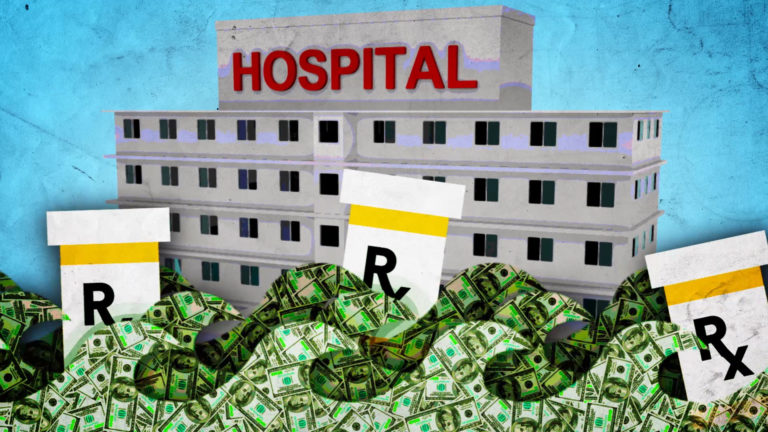
It is also emblematic of how absurdly complex and dysfunctional our health care system has become. These short-term solutions that aim to keep the clinics open will create a lose-lose situation for all involved parties. Manufacturers, who are already crying foul about losses in revenue from MDPNP, will be worried about even larger losses. Providers will continue to have perverse incentives to prescribe high-cost medications and may see delays in reimbursement and more points of failure in their reimbursement process, leading to additional administrative burden. Patients will have to contend with an even more complex access pipeline that will be impossible to navigate.
If additional government spending is necessary to implement these programs, taxpayers may fail to realize the promised savings in the MDPNP.
The appetite for these proposals on the Hill seems scant at the moment. But the urgency of the issue will be elevated soon. As the government signals an intent to negotiate drug prices more aggressively, projections of the lost revenue for clinics are likely to increase. Legislators will be keen to avoid negative press resulting from the closure of cancer clinics in their hometowns.
The closer we get to 2028, the more likely it is that the U.S. may settle for short-term solutions that do not meaningfully reform the system.
To adequately address this issue, we need to reform the root of the convoluted system we have for paying for prescription drugs in outpatient clinics. Reimbursement to health care providers for drug dispensing has been tied to the cost of the drug for far too long. Outpatient clinics should be compensated fairly for services they provide but not incentivized to dispense higher priced drugs just to get a larger profit from drug margin.
The solutions to reform this system can be as simple as banning price-linked fees, as was done in Medicare Part D recently. But this is controversial because it does not replace the revenue physicians derive from drugs.
We should learn from our previous attempts to address this problem, and find coalitions that can drive consensus on the issue.
Sujith Ramachandran is an associate professor of pharmacy administration at the University of Mississippi School of Pharmacy.