
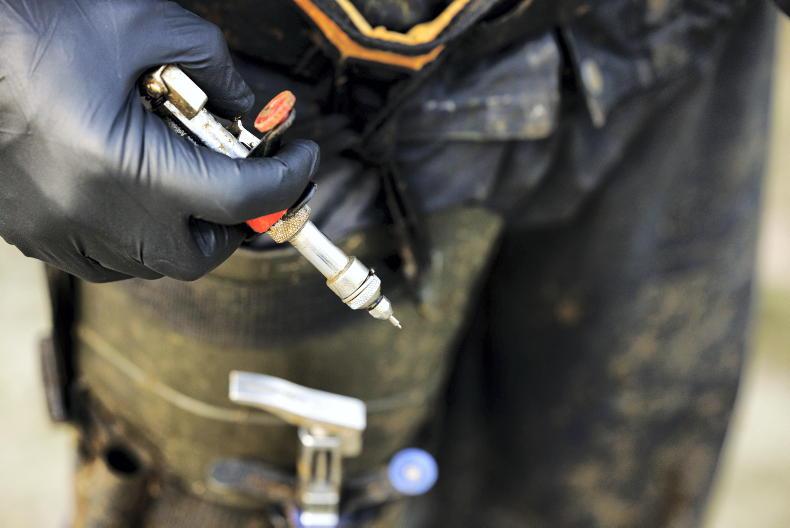
Bluetongue: a lot of farmers have been asking about bluetongue vaccine and whether or not it is necessary or sensible to vaccinate. Answering that largely depends on your attitude to risk.
The risks are reasonably well-known and include sick cows, a drop in milk yield, but, more importantly, a big impact on pregnancy rates during an outbreak and abortions in pregnant cows.
Unlike say an all-year-round calving herd, if a bluetongue outbreak occurs during or after the breeding season on a spring calving herd then the implications in terms of fertility could be much greater.
It’s easy to quantify the impact of higher empty rates or even dead cows and compare that against the cost of vaccination. What is less clear though is how likely an outbreak will be on any specific farm.
Listening to the IFA webinar on it a few weeks ago, the British experience is that some farms will be badly affected while others less so, for no apparent reason. The other thing is there are over 30 strains of bluetongue but the vaccine only works for the BTV 3 strain, which is by far the most common strain in both north-west Europe and Britain. It is the only strain identified in Ireland so far. In terms of vaccinating animals, most farmers and Teagasc are taking the view of vaccinating breeding stock only, not beef cattle or calves. Bulls will need to be vaccinated.
Maiden heifers: most maiden heifers have yet to see grass in 2026 whereas this time last year, many farmers would have had them out for a few weeks at this stage.
With mixed enough weather for the week ahead, it’s hard to know how many will be turned out. While a lot lighter than cows, they are a group of stock that can do a lot of damage in a small space of time.
They tend to walk a lot, particularly when it’s wet and can redden fields easily. The advantages of getting them out are enormous in terms of liveweight gain as the quality of grass is far superior to meal and silage. With six weeks before breeding starts, time is running out for this group of stock to be at target weight. For most, that’s around 330kg liveweight.
Even to get the lightest out to grass will be a big help. I know some farmers will just let out four or five to a field and leave them at it. They won’t do any noticeable damage but will get to eat plenty of grass. Where heifers are going out in bigger bunches, they will need to be assigned grass at least once a day and back-fenced.
Milk recording: the best time to do the first milk recording of the season is around now. This will give a good indication as to how successful the dry period was and highlight any high SCC cows for further investigation. This typically requires a Californian Milk Test (CMT) to identify the high quarter for treatment.
A good few farmers now use the CMT test as standard practice in spring before a cow can enter the bulk tank after calving. If a freshly calved cow fails the CMT test, she either has an active infection or just needs more time. It’s a good way of keeping the bulk tank SCC low.
Bluetongue: a lot of farmers have been asking about bluetongue vaccine and whether or not it is necessary or sensible to vaccinate. Answering that largely depends on your attitude to risk.
The risks are reasonably well-known and include sick cows, a drop in milk yield, but, more importantly, a big impact on pregnancy rates during an outbreak and abortions in pregnant cows.
Unlike say an all-year-round calving herd, if a bluetongue outbreak occurs during or after the breeding season on a spring calving herd then the implications in terms of fertility could be much greater.
It’s easy to quantify the impact of higher empty rates or even dead cows and compare that against the cost of vaccination. What is less clear though is how likely an outbreak will be on any specific farm.
Listening to the IFA webinar on it a few weeks ago, the British experience is that some farms will be badly affected while others less so, for no apparent reason. The other thing is there are over 30 strains of bluetongue but the vaccine only works for the BTV 3 strain, which is by far the most common strain in both north-west Europe and Britain. It is the only strain identified in Ireland so far. In terms of vaccinating animals, most farmers and Teagasc are taking the view of vaccinating breeding stock only, not beef cattle or calves. Bulls will need to be vaccinated.
Maiden heifers: most maiden heifers have yet to see grass in 2026 whereas this time last year, many farmers would have had them out for a few weeks at this stage.
With mixed enough weather for the week ahead, it’s hard to know how many will be turned out. While a lot lighter than cows, they are a group of stock that can do a lot of damage in a small space of time.
They tend to walk a lot, particularly when it’s wet and can redden fields easily. The advantages of getting them out are enormous in terms of liveweight gain as the quality of grass is far superior to meal and silage. With six weeks before breeding starts, time is running out for this group of stock to be at target weight. For most, that’s around 330kg liveweight.
Even to get the lightest out to grass will be a big help. I know some farmers will just let out four or five to a field and leave them at it. They won’t do any noticeable damage but will get to eat plenty of grass. Where heifers are going out in bigger bunches, they will need to be assigned grass at least once a day and back-fenced.
Milk recording: the best time to do the first milk recording of the season is around now. This will give a good indication as to how successful the dry period was and highlight any high SCC cows for further investigation. This typically requires a Californian Milk Test (CMT) to identify the high quarter for treatment.
A good few farmers now use the CMT test as standard practice in spring before a cow can enter the bulk tank after calving. If a freshly calved cow fails the CMT test, she either has an active infection or just needs more time. It’s a good way of keeping the bulk tank SCC low.