
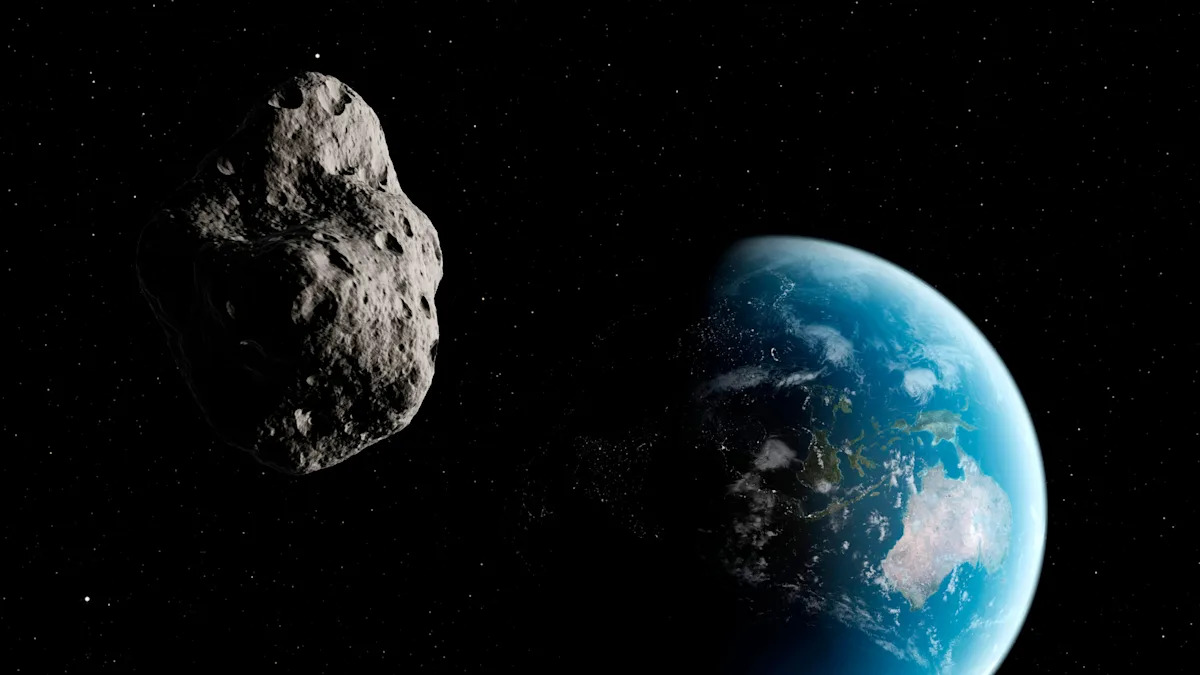
A study published this week in the journal Nature Astronomy presents evidence that the asteroid Ryugu contains all five of the nucleotide bases that make up the genetic code. That includes the “letters” in DNA—Adenine, Cytosine, Thymine, and Guanine—along with the final letter in RNA, Uracil.
This is a huge update in the ongoing discussion over the origins of life on Earth. Some say that the fundamental building blocks of life could have arisen due solely to the chemistry on primordial Earth, while others say that the most complex molecules of life are much more likely to have arrived from elsewhere.
By demonstrating not some, but all of the nucleotide bases that underlie human biology, asteroid Ryugu has shown that it would at least be possible for life to have been kick-started from space.
The finding doesn’t just show that an asteroid could have carried these raw materials to Earth, but also that they are likely abundant throughout the Solar System. That being the case, there could have been several carriers that brought them to Earth.
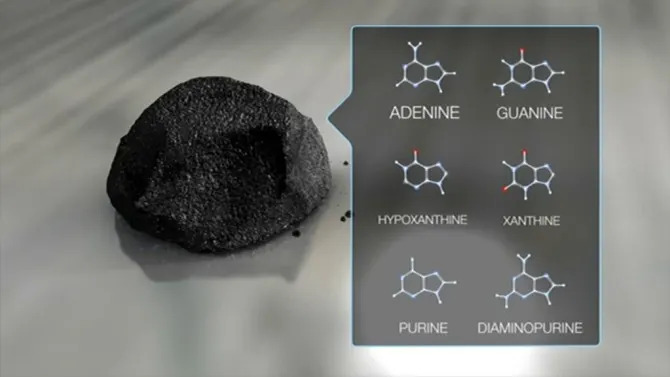
dna in asteroid fragment
This figure from earlier NASA work showed the precursors to nucleobases, but not the full compliment of real ones found here. Credit: NASA
Asteroids are thought of as the most likely candidates, but icy comets could also have brought important material to Earth—and likely did.
An asteroid might seem like an inhospitable way to put down on a planet, vaporizing the very molecules that life needs, but asteroid impacts, especially smaller ones, don’t vaporize the entire rock. Large rock fragments can keep complex molecules intact at their centers during impact.
The molecules that could have arrived are much more diverse than just DNA and RNA bases, and the overall topic of an off-world catalyst for abiogenesis has gotten a lot of coverage over the years.
Oddly enough, the presence of Uracil might be a bit of a distraction here. RNAs are incorporated into the biology of a cell in extremely complex ways and as part of multi-step processes; it’s unlikely that such processes could have come about without evolution (life) already bootstrapping them into existence.

primordial earth render
The good old days. Credit: NASA Astrobiology Institute
That being the case, the four bases of DNA are more relevant to the origins of life, while the presence of RNA building blocks could indicate that, once the first proto-cells existed, they had environmental access to Uracil, allowing them to begin evolving a DNA-RNA relationship for the first time.
From there, cells would have evolved their current ability to synthesize Uracil and the other nucleobases independently.
These sorts of direct studies of material from space can be massively more insightful than viewing through telescopes and other remote instruments, with Mars rocks now providing a home for analysis as well. Overall, though, sample-return missions are expensive at a time when pure science is being cut to the bone.
For now, we’ll have to keep hoping that scientists can wring further insights from those few, precious samples we have.