
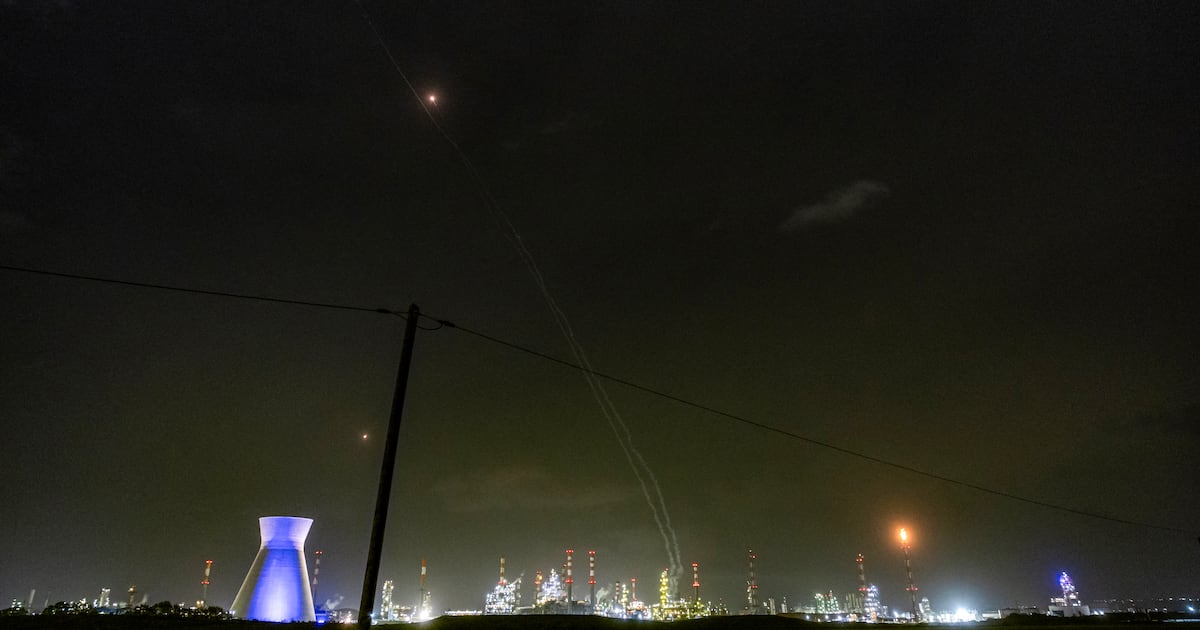
Attacks on refineries and gasfields in the Middle East have compounded fears the escalating war in Iran and the wider region may lead to a prolonged shock to global oil and gas prices, even if shipping routes are unblocked.
US president Donald Trump threatened to destroy Iran’s largest gasfield unless Tehran halted drone and missile attacks on energy production plants and infrastructure in Qatar and neighbouring Gulf states.
European gas prices jumped by 35 per cent on Thursday as Iran and Israel traded strikes on sites involved in the production and supply of oil and gas.
The targeting of energy infrastructure sent alarm bells ringing in Washington and European capitals, where governments had already been trying to contain an earlier surge in fuel prices, as the war heads towards its fourth week.
Speaking after the summit late on Thursday night, European Commission president Ursula von der Leyen said the EU would table measures that are “temporary, tailored and targeted” to help ease the burden of high energy costs.
The German politician said national governments would be given more flexibility to subsidise energy-intensive industries.
The head of the EU executive said Brussels officials would propose a separate plan to lower taxes charged on electricity, to bring the rate below levies paid on gas and other fossil fuels.
In a statement on Thursday night, Tánaiste Simon Harris said the conflict in the Gulf is “deeply concerning” from a “humanitarian point of view, but also now, in a very real way, from an economic point of view”.
“We will finalise an intervention to assist people very shortly. While I know the focus is currently on fuel costs and we will seek to assist in relation to that, every day this conflict continues I am ever more concerned about the broader economic impact on the global economy and the impact of that on Ireland.
“This war needs to urgently de-escalate. Failure to do this will present significant inflationary challenges.”
Harris also said he is “in constant contact” with his European counterparts and that another meeting of the Eurogroup is set for next week.
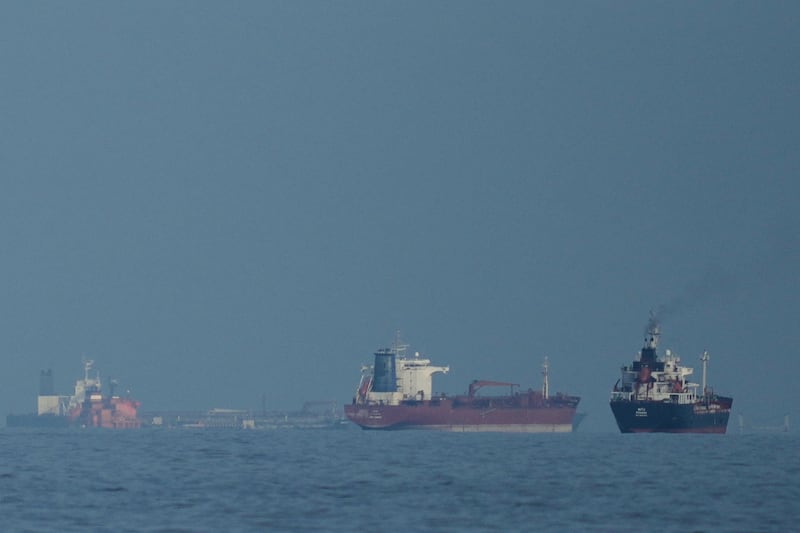 Oil tankers and cargo ships line up in the Strait of Hormuz on Thursday. Photograph: Altaf Qadri/AP
At the start of the conflict, Iran in effect closed off the Strait of Hormuz, a key shipping route that about a fifth of the world’s oil and gas passes through, sending prices shooting up in response.
French president Emmanuel Macron said the destruction of the region’s oil and gas production facilities would have a “much more lasting impact” than a temporary closure of the strait.
The French leader called for direct talks between the US and Iran, to bring about a halt in attacks on the energy supply chain. Iran’s retaliation had followed Israel bombing one of its main gasfields earlier this week.
About 8 per cent of the European Union’s supply of liquefied natural gas (LNG) comes from Qatar, where Iran damaged a huge LNG facility, spooking energy markets.
Qatar’s state-owned gas company said the damage could take between three and five years to fully repair, significantly cutting its output and forcing it to consider cancelling long-term contracts it has to supply energy to Italy, Belgium and China.
Governments across Europe are mulling short-term interventions to insulate households and industry from the worst of the spiralling fuel costs.
[ European leaders say they will not be drawn into Iran warOpens in new window ]
Steep increases in energy prices and the likely economic blow that will follow dominated a summit of the EU’s 27 leaders on Thursday.
Speaking before the Brussels summit, Taoiseach Micheál Martin said a package of support was coming to soften the impact of the spike in energy and fuel costs.
“Our immediate priority is to try to alleviate pressures on people, on families in particular, and then to make sure we can do it in a way that doesn’t do any damage to the economy or doesn’t create any secondary effects in terms of inflation,” he said.
A group of European powers – Germany, France, the UK, Italy, the Netherlands – plus Japan, called for an “immediate” moratorium on the bombing of oil and gas installations.
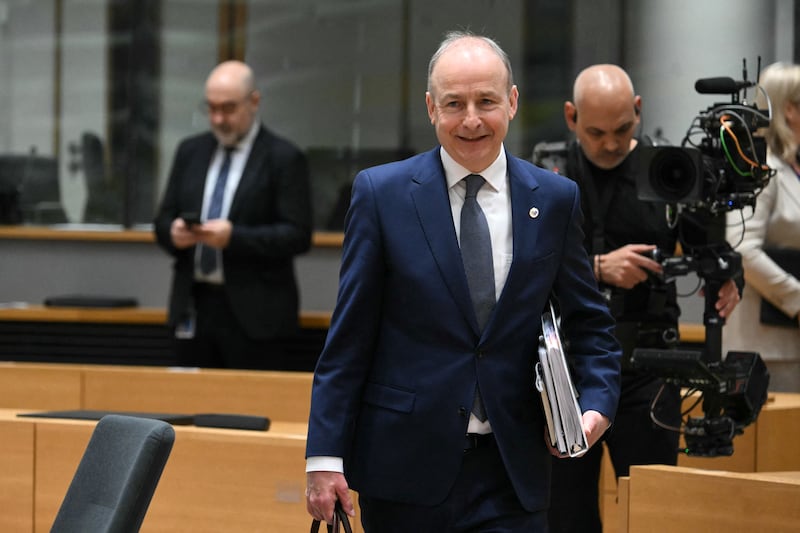 Taoiseach Micheál Martin arrives ahead of rountable during the EU Summit at the EU headquarters in Brussels, on March 19th. Photograph: Nicolas Tucat/AFP via Getty
The countries said they would be willing to contribute to “appropriate efforts” to ensure ships and tankers could safely travel through the Strait of Hormuz.
Trump recently criticised European and Nato allies for refusing to take part in a US plan to send warships into the Gulf to reopen the shipping chokepoint.
Italy and Denmark, two hardliners on migration, are privately advocating for the EU to prepare “emergency” measures in the event the war sends large numbers of asylum seekers and refugees towards Europe, similar to flows in 2015 that put European asylum systems under pressure.
Brussels should plan to pre-emptively toughen up the union’s borders and develop some type of “emergency brake” to pull in response to any “sudden large-scale migratory movements”, said Denmark’s Mette Frederiksen and Italian prime minister Giorgia Meloni in a March 18th letter to other EU leaders seen by The Irish Times.
The 27 leaders negotiated a joint position during the late night summit, stating that in order to “avoid a similar situation” to 2015, the EU stood ready to “mobilise its diplomatic, legal, operational and financial tools to prevent uncontrolled migratory movements” into the bloc.
In Lebanon, the number of people killed in Israel’s ground offensive and bombing campaign, targeting Hizbullah militants, reached 1,001, according to the Lebanese health ministry.