
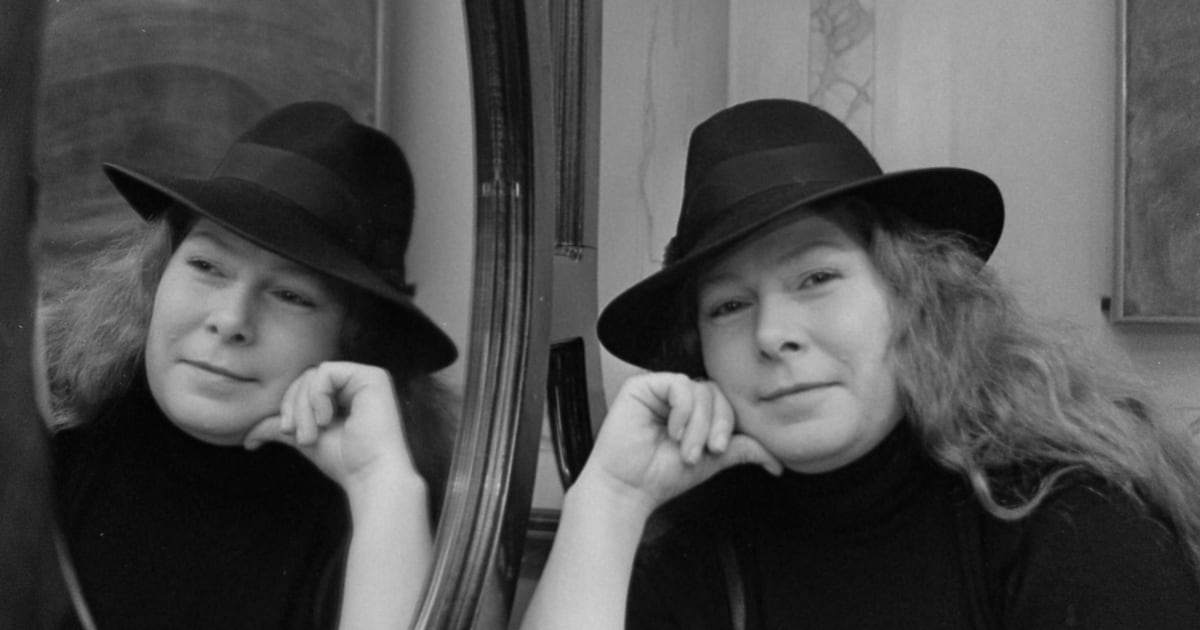
Irish singer Mary Coughlan woke up in New Zealand earlier this week to learn of the death of her fellow Galwegian Dolores Keane and paid tribute to the beauty of her voice. Coughlan moves next to Australia as part of her current tour, before returning for a gig in Galway, continuing to deliver sets imbued with the soulfulness, lyricism, resilience, pain and power that also marked the career of Keane.
The extent of the distances they and their voices have travelled is striking. A photograph in the Irish Traditional Music Archive in Dublin sees Keane in 1978 at the Newfoundland folk festival. For Nuala O’Connor’s RTÉ/BBC Bringing it All Back Home series (1991), Keane performed in Nashville with Mary Black and Emmylou Harris. These were voyages far from the thatched cottage in Carragh, Caherlistrane in Galway, home of her aunts Rita and Sarah Keane and a hive of traditional Irish musical endeavour where their mother May was a noted collector. The Keane family céilí band stormed the dance halls in Galway and beyond in the 1940s and 1950s.
Rita and Sarah did much to promote the sean-nós tradition, while also helping to rear the family of their brother Matt, including his daughter Dolores as she absorbed the influences and found her voice. She recalled that even at the age of four or five the “noble call” applied to her, and “I was expected to do my bit … learning songs was like learning to read or to walk”.
That homestead was a zone of familiar and familial comfort, but Dolores’s aunts also travelled with her to Scandinavia and made a mark at British folk festivals. It was fitting that the songs would spread, especially given the centrality of the theme of emigration. Keane’s 1980 album with John Faulkner and Eamonn Curran was titled Farewell to Éirinn: Music and songs of emigration from Ireland to America.
The Belfast poet Ciarán Carson was keen to document the significance of such musical traditions in his 1996 book Last Night’s Fun: “All along the townland shadows flit between the scattered lighted houses, until, late on in the evening, they converge on one house pre-arranged among themselves, or authorised by custom.” In his seminal book Remembering Peasants: A Personal History of a Vanished World, Irish historian Patrick Joyce underlined the impact of the emotional soundtracks aired in such houses, when “memory is so often at its most piercing, because music itself pierces the body, entering it, and taking up habitation there”.
Liam Clancy recalled the power of Connemara singer Joe Heaney: “When he got immersed in a song he became possessed by that song. And it was like he was a medium. It wasn’t an individual that was singing. It came out of everything that had gone before him. And anybody whoever watched him singing got that sense.”
These male reminiscences are a reminder of a largely male world. Look at the 1970s line up of the Bothy Band and you will see Tríona Ní Dhomhnaill surrounded by men; or Keane amid the men in Dé Dannan. This was during a decade when another folk singer and collector, David Hammond, described the great surge of traditional Irish music and singing as “something that approaches a social revolution”.
But it was often the women who were the custodians, as with Ní Dhomhnaill’s aunt Neilí with her stores of Irish and Scottish songs. Yet as Ní Dhomhnaill remembers of that decade “there weren’t too many women who were playing or touring, bar Dolores”. The scale and range of Irish women’s musical talent achieved renown with the success of the A Woman’s Heart album in 1992, and Ní Dhomhnaill subsequently applauded the extent to which “young women have come out of the shadows”. But in recent years Waterford singer Karan Casey, one of the founders in 2018 of the Fairplé initiative to achieve gender balance in the production, performance, promotion and development of Irish traditional and folk music, was asking why there were still so few women performers headlining festival line-ups and concert billings.
A profile of Keane in 1990 described her as producing a sound “like pure spring water bubbling through mountain gravel”. Nanci Griffith called her “the soul of Ireland”. Keane was, in later life, brutally honest about the pressures her career brought. Her struggles with alcoholism, depression and cancer were well aired and her candidness, as with Mary Coughlan, who faced similar tribulations, was as piercing as her singing. Being the custodian of so much was no easy path, and as Keane saw it, her obligation was to nurture and impart tradition rather than inhabiting it for the purposes of self-promotion. She spoke movingly of the need to confront her personal demons, but she knew and accepted, to the benefit of so many, that she could not stop singing.