
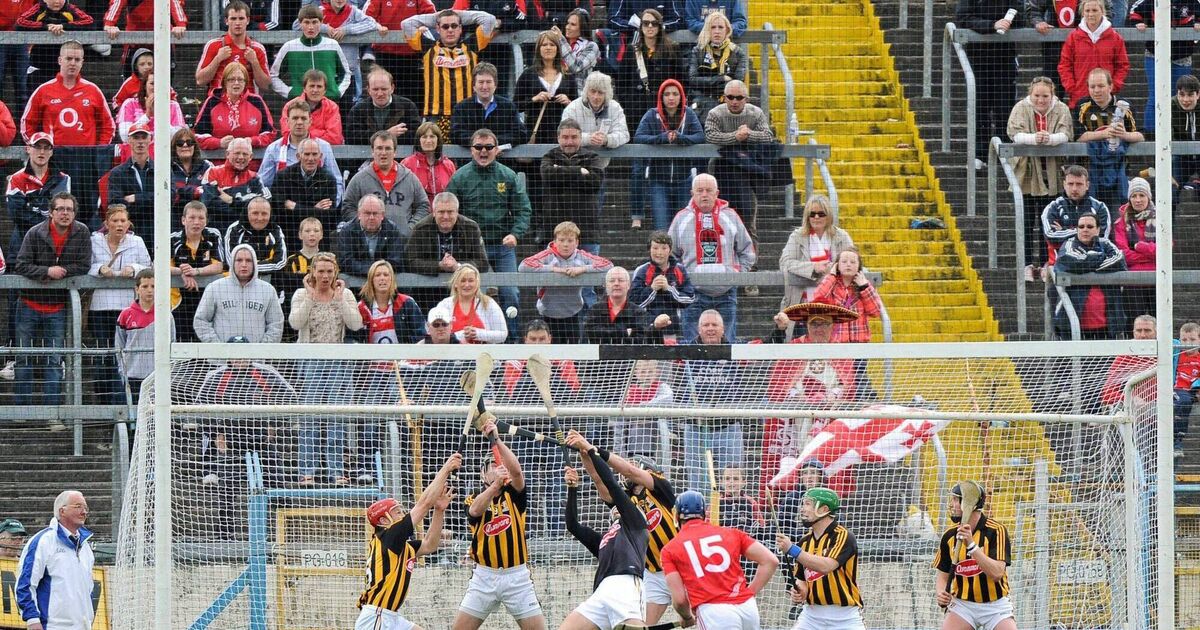
At the time it was routine, almost like an annual pilgrimage – not the one that the Cork GAA public fully wanted – but they had still become well accustomed to that regular trek to league finals at the end of April and the start of May.
After winning the Division 2 football title in 2009, Cork won three successive Division 1 titles, 2010-’12. In two of those years, Cork had also reached the league hurling final, in 2010 and 2012.
The hurlers were beaten both times but the footballers were the league kingpins back then, winning three in-a-row.
If you include the Division 2 title, it was four league titles in succession.
Was there a connection between the footballers’ journey to the 2010 All-Ireland and their league success at that time?
Absolutely. Was there a link to the hurlers’ inability to win a league title back then to their championship struggles at that time? Yes.
Cork just weren’t good enough.
Still, at least the hurlers were getting closer to getting back to All-Ireland finals.
Well beaten by Kilkenny in the 2010 All-Ireland semi-final, Cork went closer in 2012 when losing to Galway by five points, before beating Dublin in the 2013 semi-final.
By that stage, the footballers had moved off the stage after having contested seven All-Ireland semi-finals in eight years, reaching three finals.
It would be different now if the footballers won an All-Ireland (and because of the hurling famine) but that era wasn’t really considered a memorable one in Cork GAA because the hurlers didn’t win an All-Ireland.
Looking back now though, it was still a highly productive era for Cork in both codes.
In a 10-year period between 2003-’13, Cork reached 14 national finals, in league and championship.
That number could have been higher only that the footballers lost three All-Ireland semi-finals to Kerry.
Cork only won six of those 14 finals but the annual trek to national finals was more common than in any other county.
Those 2010 and 2012 league finals were the only time that the hurlers and footballers reached national finals in the same season, in that period. But it was still an era when Cork supporters were continually on the road for big days out in Croke Park. Sometimes on the same weekend.
At that time, Cork were the most regular visitors to Croke Park in both codes, which had meant millions of euros spent on tickets, travel, accommodation, food and drink.
The Cork supporters were as important to the exchequer and the economy as they were to the GAA but there was also a strong feeling amongst those supporters that the GAA could be doing more to facilitate them.
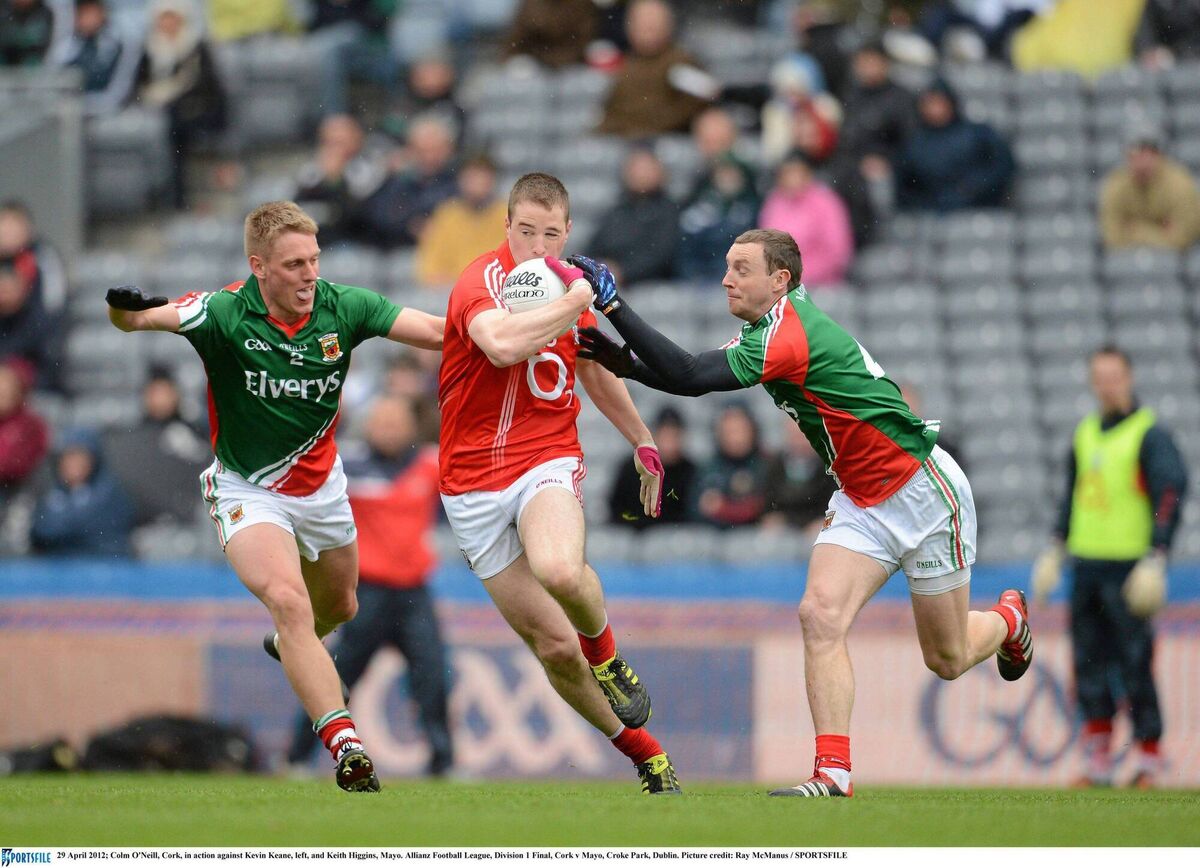 Colm O’Neill, Cork, in action against Kevin Keane and Keith Higgins, Mayo, in the 2012 Allianz Football League, Division 1 final at Croke Park. Picture: Ray McManus/SPORTSFILE
When Cork and Kilkenny were due to meet in an All-Ireland hurling semi-final in August 2008, there was an immediate clamour for Cork’s All-Ireland football quarter-final clash with Kildare to be played as the curtain raiser.
To try and ease the financial burden, some Cork supporters even called for the support of the county board and the players from both squads to ensure that it happened. It did, on the same afternoon in early August 2008. The footballers won but the hurlers were well beaten by Kilkenny.
Cork supporters (especially the dual fans) had to wait another 16 years before the hurlers and footballers were on the same championship bill again. In 2024, the hurlers played Offaly in their preliminary All-Ireland quarter-final, while the footballers took on Tyrone in their All-Ireland round robin match.
Cork hurling supporters have become well accustomed to the national stage ever since, having reached successive All-Ireland finals. After Sunday, Cork should be back in successive league hurling deciders.
That’s what the fans expect but it would be a massive boost for Cork GAA if the footballers were to get a result against Tyrone at the weekend to secure promotion and reach a national final in Croke Park for the first time in over a decade.
The big difference this time around compared to back then is that Cork are no longer the dominant footballing force in Division 1, with this group seeking a return to top-flight league football for the first time in over a decade.
In that context, a Division 2 league final would be an even bigger prize for Cork now than it was back then. At that time, Cork were such regular visitors to Croke Park that they played at the venue far more often than they played in Páirc Uí Chaoimh. In an eight-year period between 2005-’12, the Cork footballers played in Croke Park a staggering 26 times.
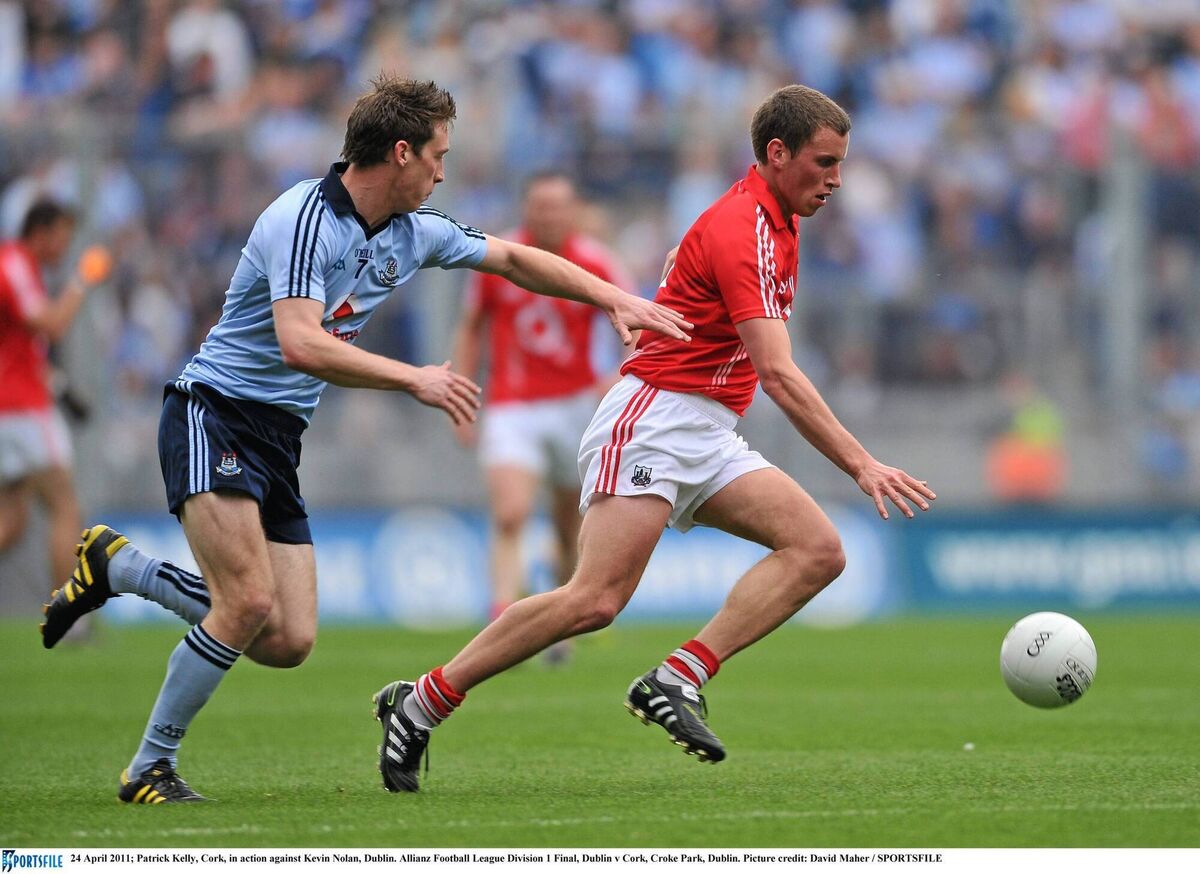 Patrick Kelly, Cork, in action against Kevin Nolan, Dublin, in the 2011 Allianz Football League Division 1 final at Croke Park. Picture: David Maher/SPORTSFILE
The current group are still a long way off from accumulating that kind of experience but the more Cork get exposed to the big days at Headquarters, the more used they will become to being comfortable there.
The hurlers are well used to Croke Park by now. Their league final will more than likely be held in the Gaelic Grounds (it will be if Limerick advance to the decider) or Thurles if their opponents are Galway.
The hurlers don’t necessarily need another trip back to Headquarters just yet but it would be a huge plus for the footballers to get back to Croke Park for a national final.
And if the footballers can get a result in Omagh on Sunday, it will be just like the (not so) old days again of 2010 and 2012 when the hurlers and footballers fetched up together in league finals in the same season.