
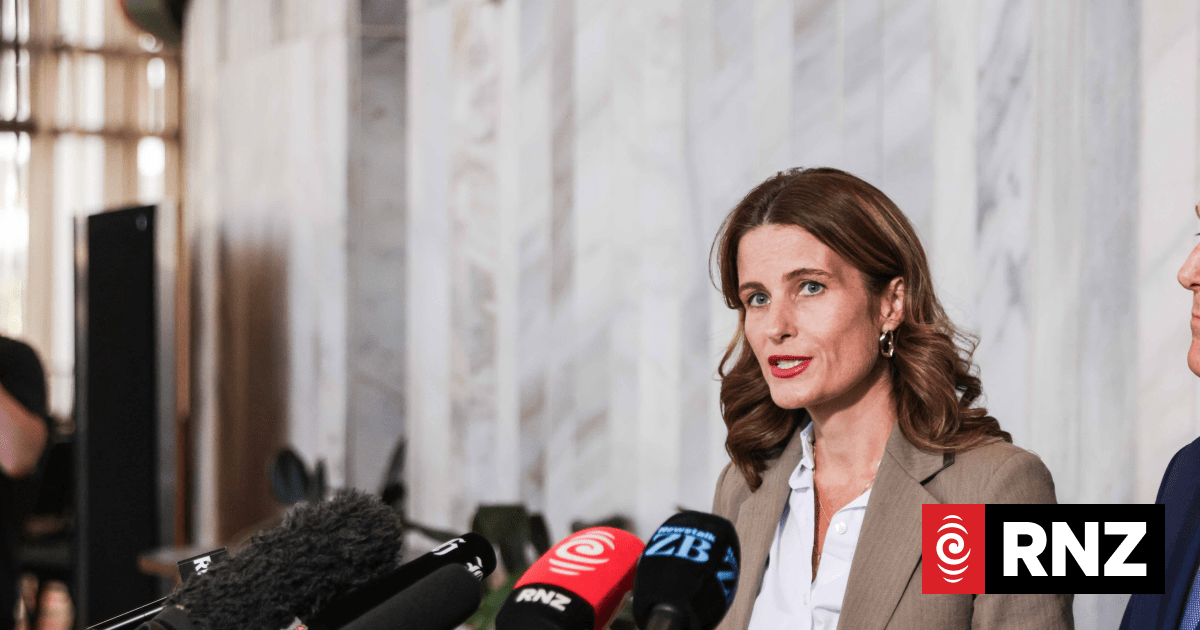
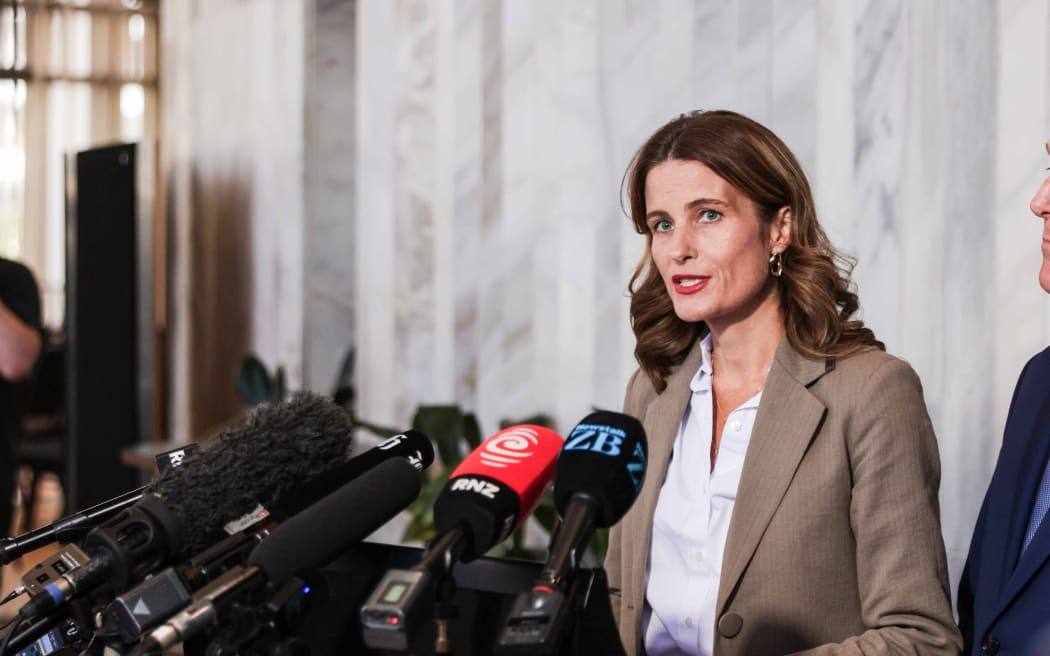
Prime Minister Christopher Luxon and Finance Minister Nicola Willis face questions on the fuel crisis.
Photo: RNZ / Samuel Rillstone
With the cost of fuel and other essentials rising due to the conflict in the Middle East, the government is looking at ways to ease the cost pressure for those feeling it the most.
Finance Minister Nicola Willis told Morning Report the price increases are extremely tough and affecting all New Zealanders, but said some are feeling it more than others.
“I can’t solve the pain for everyone. The cost of doing that would potentially involve levels of spending that would drive inflation higher, and certainly would put us in a more fragile position in terms of debt.
“So what we are looking at, is there something very targeted and temporary that we could do to assist those workers in particular who are most acutely impacted by these household budget squeezes?”
Willis said she doesn’t want to see a situation where people can’t drive to work, and has instructed the IRD and Treasury to come up with a package that could be implemented with urgency ahead of the Budget, but Cabinet will ultimately decide on timing.
Willis wouldn’t say what the income thresholds would be, but said the package would take into account household income and number of children.
“We’re also looking at forecasts at the moment and putting together a budget, all of which involves questions that we have to address on the way through. But I do want to stick to our fiscal strategy,” Willis said.
Fuel supply disruption
Willis also discussed rising fuel prices, and said the message remains the same, “this is not the time to panic, we’ve got plenty of fuel in the country and on its way.”
On Thursday, Prime Minister Christopher Luxon acknowledged a “big shift” in the government’s messaging around the war in the Middle East, warning New Zealanders the fuel situation could get worse before it gets better.
Willis said the government was preparing for scenarios where supply from Singapore and South Korea, where New Zealand gets petrol, diesel, jet fuel from, could be disrupted.
“We know that they are having challenges getting crude oil out of the Middle East and so are either reducing the amount of products they’re refining or, in South Korea’s case, looking to prioritise domestic customers.
“So what we’re anticipating is there could be a point down the line where that makes it harder for our fuel importers to get the refined products they need out of Asia.”
Willis also defended the government’s LNG plans, despite the attacks on Iran’s South Pars gas field and Qatar’s Ras Laffan.
Willis said the focus was still for New Zealand’s energy to be “largely renewable”, but having LNG as a back up remained the government’s strategy.
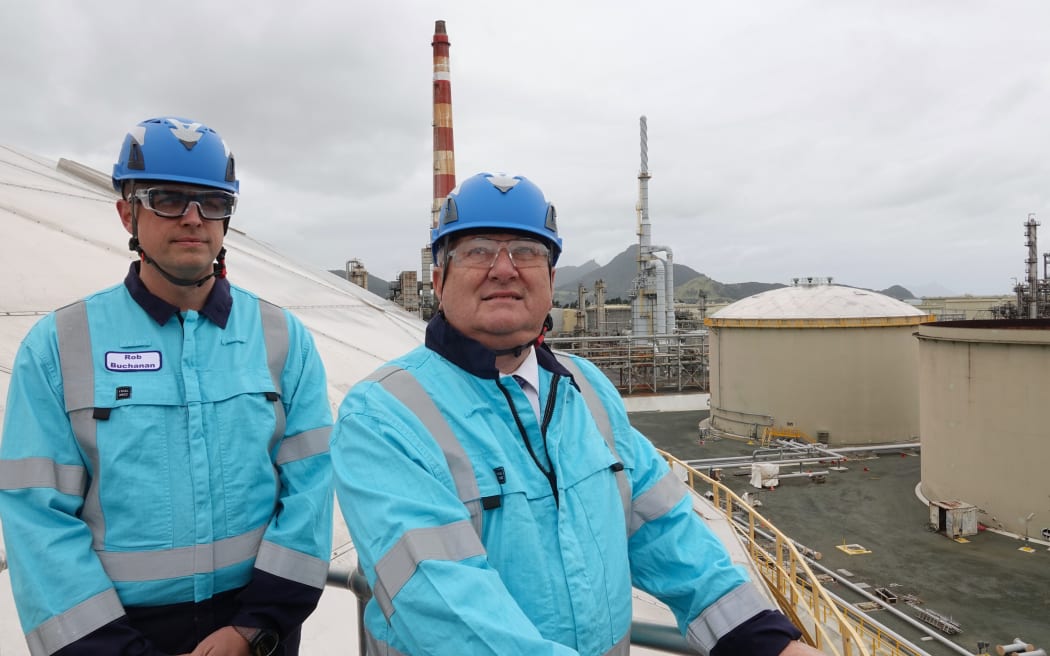
Channel Infrastructure chief executive Rob Buchanan, left, with Regional Development Minister Shane Jones.
Photo: RNZ / Peter de Graaf
Normal levels of fuel – import terminal boss
The head of New Zealand’s biggest fuel import terminal, Rob Buchanan, said he hasn’t seen the Iran war disrupt the country’s fuel supply yet.
Channel Infrastructure can store 300 million litres on its Marsden Point Northland site, and about 40 percent of New Zealand’s transport fuel comes through it.
Buchanan told Morning Report the conflict was concerning, but there were normal levels of fuel at the facility.
“We continue to also see ships depart refineries in Asia and head for, at least in terms of our part of the supply chain, Marsden Point, and so we track those ships as they depart and come down here, and we see those ships on the way.”
He said a very large vessel was due in this weekend.
Buchanan said looking at relaxing fuel specifications to shore up supply was the right approach.
Willis yesterday said Cabinet was open to looking at the fuel specifications, including where it should come from, in a bid for fuel security as the crisis deepened.
“From our perspective I think anything that aligns us with changes that are being made in Australia and elsewhere to help sure up fuel security and fuel supply, makes sense to us.”
Not our conflict
Willis said the fighting in the Middle East was “not our conflict”, and reiterated calls for a humanitarian end.
“What we want to see is that the rules of international engagement are upheld, which involves not targeting civilians and protecting human life.
“We are not involved, we haven’t been asked for authorisation, we haven’t been asked for support, we haven’t been asked for assistance.
“Our opinion has not been relevant to the events that are unfolding in that region of the world.”
Hipkins calls for clarity
Labour leader Chris Hipkins told Midday Report messaging suggesting the government did not support the war was a change in direction from the its earlier positioning.
“That is a new position from the government, and I think that Christopher Luxon and Winston Peters both need to clarify whether that is actually the government’s position or whether that’s just Nicola Willis’s personal position.”
The government was struggling to articulate a clear position on the war, he said.
“Even the Prime Minister himself hasn’t ruled out military support for the conflict. It’s about time the government actually articulated a clear and coherent position”.
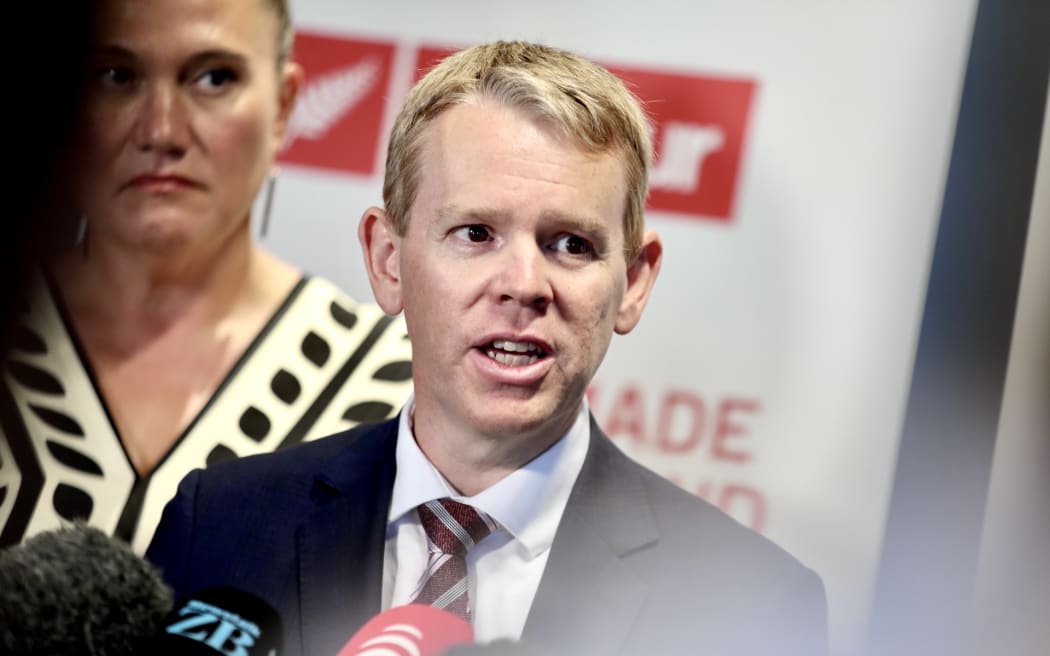
Chris Hipkins said the government was struggling to articulate a clear position on the war.
Photo: RNZ / Marika Khabazi
The government should be “absolutely opposing” the war, Hipkins said.
“We were not consulted on it, we were not a party to it. It’s a violation of international law, it’s against New Zealand’s long-standing principles.”
The US and Israel went into the war with no clear objective and no regard for international law, Hipkins said, which he characterised as “absolutely disgraceful”.
“I don’t think this is something New Zealand should be in any way be aligning itself with.”
The government was taking a “far too passive” approach to its relations with the US, Hipkins added.
Sign up for Ngā Pitopito Kōrero, a daily newsletter curated by our editors and delivered straight to your inbox every weekday.