
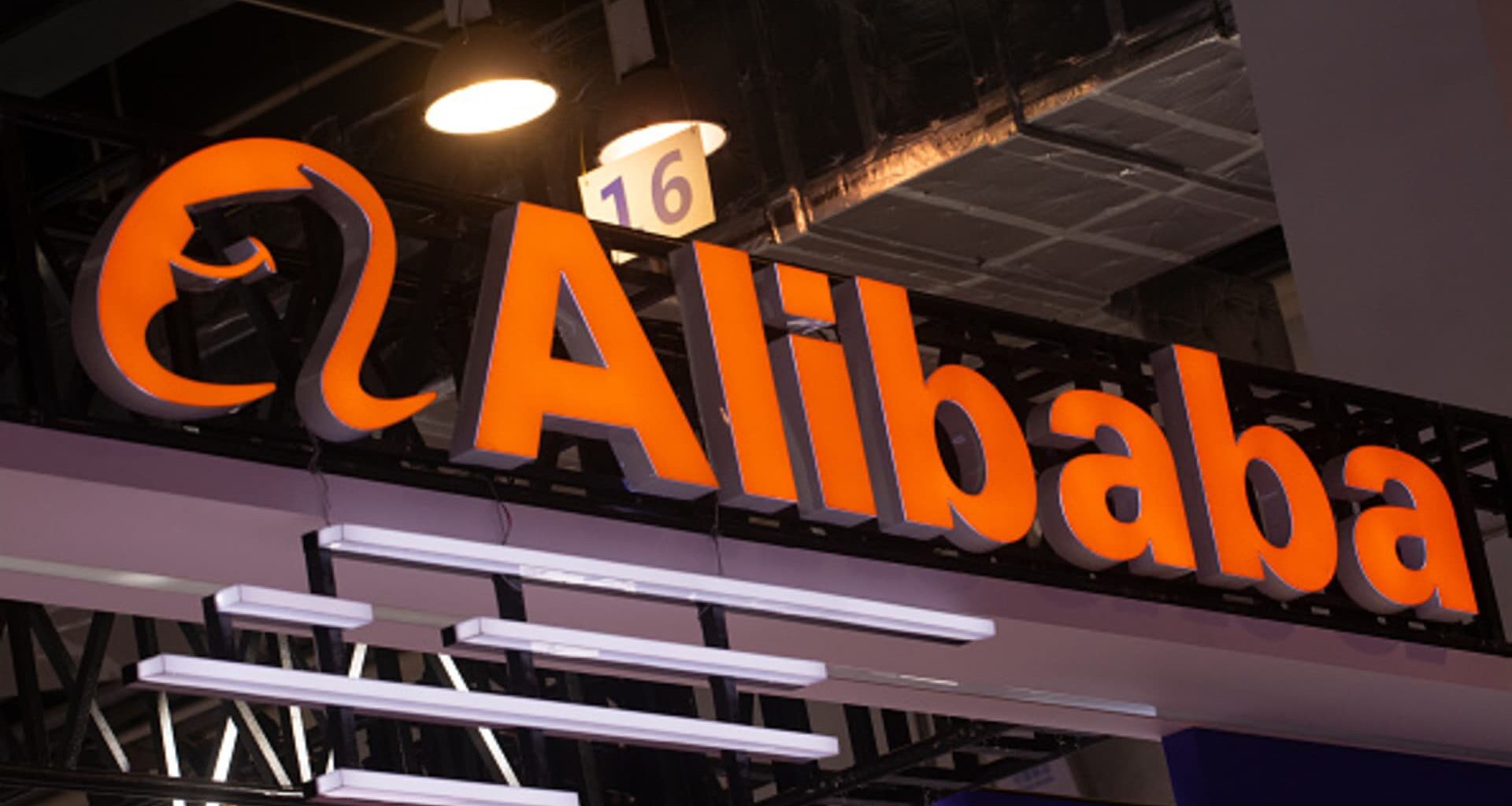
The Alibaba stand at the World Artificial Intelligence Conference at the Shanghai World Expo Exhibition Center in Shanghai, China, on July 5, 2024.
Nurphoto | Nurphoto | Getty Images
Alibaba‘s workforce shrank by roughly 34% over the course of 2025, as the company offloaded some of its offline retail businesses while doubling down on artificial intelligence.
The Chinese e-commerce and technology giant ended December with 128,197 employees, down from 194,320 a year earlier.
The disclosure of its latest headcount came in an earnings report released Thursday that showed the firm’s profit plunging 67% and its revenue missing expectations for the last three months of last year.
The company’s shares in Hong Kong were trading down 6% Friday.
Stock Chart IconStock chart icon
The bulk of Alibaba’s workforce reduction was revealed in its March 2025 quarter following the sale of Sun Art retail group at the end of 2024. The tech giant also exited its stake in department store chain Intime around the same period.
China’s second-largest tech company by market cap is amongst a raft of other major tech firms that have reduced headcounts in the past year from Silicon Valley to Hangzhou, China.
Alibaba’s staff has supported its sprawling network of business units spanning e-commerce, cloud, logistics, and other related services.
However, Alibaba has been steadily reducing headcount in recent years, though the latest cuts were much larger than the 11% reduction in December 2024 from the prior year.
This comes as Alibaba has sought to offload labor-intensive holdings and restructure its core businesses, with a major focus on artificial intelligence.
The tech giant aims to become a full-stack AI company spanning semiconductor manufacturing to computing and AI models.
The company this week launched an agentic AI service known as Wukong for businesses, and hiked prices for its cloud and storage services by as much as 34% due to rising demand and supply chain costs.
Alibaba CEO Eddie Wu said during an earnings call Thursday that the company aimed to grow its cloud and AI revenue to over $100 billion annually over the next five years.