
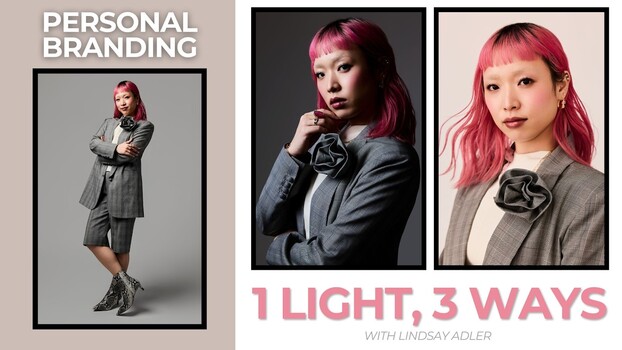
Shooting personal branding with a single light sounds limiting until you see what Lindsay Adler does with one modifier, a few small adjustments, and a corner of the room. The gap between a dramatic, shadow-heavy portrait and a soft, glowing high-key image can come down to nothing more than removing a grid and pointing a light at the ceiling.
Coming to you from Adorama, this practical video follows Adler through three distinct lighting setups built around a single 4 ft octabox, all shot on a Canon EOS R5 Mark II with a Canon RF 24-105mm f/2.8L IS USM Z. The zoom choice is deliberate: with that focal range, you can go from full-length to close-up without swapping glass, which keeps the session moving. The backdrop is Savage Universal Super White seamless paper, and what’s interesting is how dramatically its appearance shifts across the three setups without touching it once. That single observation tells you a lot about how light direction and modifiers shape the entire frame.
The first setup uses the octabox positioned to camera left with a grid attached. The grid controls spill, tightens the beam, and speeds up light falloff, which keeps the background a dark gray even though the paper itself is white. The shadow on the subject’s face is deep, and the overall feel is serious and sculptural, the kind of image that works for a consultant, an attorney, or anyone whose brand needs to project authority. For the second setup, Adler pulls the grid off and brings in a white V-flat to bounce light back into the shadows. The background brightens noticeably, the shadows fill in, and the result lands somewhere neutral, neither dramatic nor soft. It’s a versatile look that works across a wide range of personal brands without committing to either extreme.
The third setup is where things get genuinely unexpected. Instead of pointing the octabox at the subject, Adler turns it toward the corner of the room, bouncing light off the walls and ceiling. The logic is counterintuitive but solid: by bouncing the light, you effectively make the entire room the light source, which means it’s enormous and extremely soft. The background goes pure white, the shadows nearly disappear, and the whole image takes on that glowing, high-key quality that reads as warm and approachable. There’s still some directionality because the light was aimed to camera left before bouncing, so the image doesn’t go completely flat. Adler also makes the point that as the lighting mood shifts, so should the pose and expression, something worth keeping in mind as you work through variations with your own clients. Check out the video above for the full breakdown and real shots from Adler.