

AUSTIN, Texas — For most Texans, Charles Butt is a name encountered under fluorescent lights, pushing a grocery cart down the aisles of H-E-B.

#TBT: Inside H-E-B’s Charles Butt’s Private American Modernism Collection at the Blanton
But step inside the Blanton Museum of Art this spring, and that same name appears in a quieter, more intimate context, on wall labels beside watercolors, abstractions, and small, searching paintings that together sketch a different kind of legacy.
#TBT: Inside H-E-B’s Charles Butt’s Private American Modernism Collection at the Blanton
“This is a collection of Charles Butt, who has developed this incredible collection of American modernism,” said Carter Foster, the Blanton’s chief curator and deputy director of collections.
The exhibition, American Modernism from the Charles Butt Collection: From Edward Hopper to Alma Thomas, brings together more than 80 works from Butt’s private holdings, many of which are on public view for the first time, spanning nearly the entire 20th century.
It is, at first glance, a roster of giants: Hopper, Georgia O’Keeffe, Jacob Lawrence, Joan Mitchell, Ellsworth Kelly, Alma Thomas.
But what emerges is something more personal.
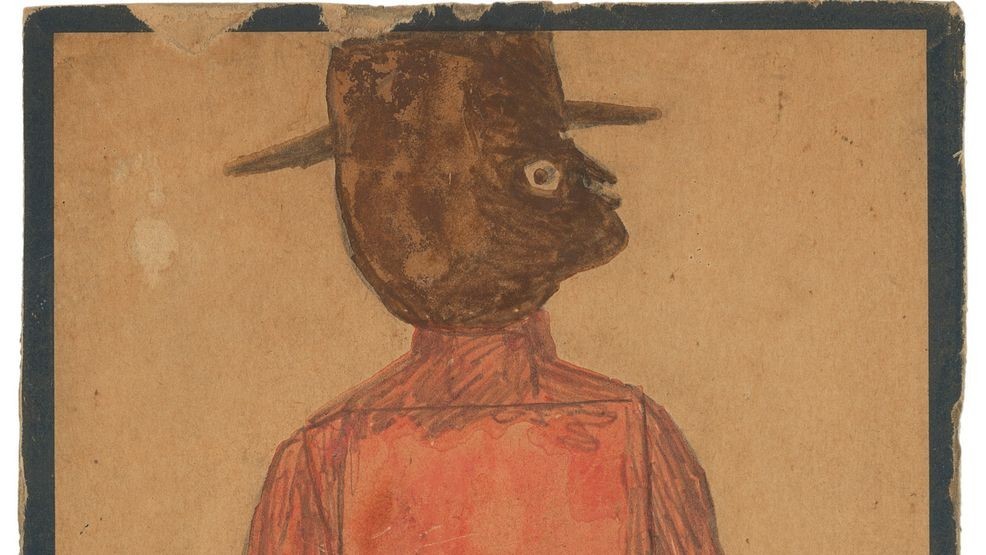
Bill Traylor (1853-1949) Man in Red Shirt with Hat, Umbrella, and Lunchbox, 1939-42 Poster paint and pencil on cardboard 2019.15
ALSO | #TBT: Austin’s LBJ Presidential Library debuts renovated gallery ahead of America’s 250th
“He’s not a trophy hunter,” Foster said. “That’s one of the things I like.”
In a collecting world often driven by status and spectacle, Butt’s approach stands apart.

H-E-B chairman Charles Butt, whose private art collection is now on public view at the Blanton Museum of Art. Photo courtesy H-E-B.
A Texas billionaire and philanthropist, he has built his collection with what Foster describes as curiosity and intellect, favoring depth, experimentation, and intimacy over marquee masterpieces.
“The Hopper that’s in this show is kind of an early atypical Hopper,” Foster said, pointing to a work that reveals the artist before he became synonymous with stark American solitude.
Organized into seven thematic sections, the exhibition moves through Cubism, urban life, portraiture, industrial precision, seascapes, and abstraction.
It is structured enough to suggest a timeline, yet loose enough to feel like a series of conversations across decades.
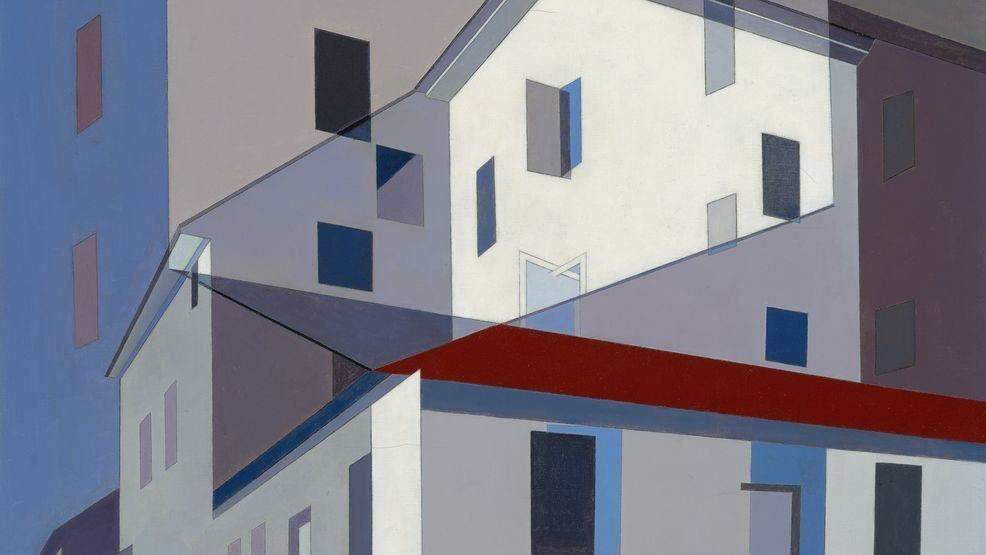
Charles Sheeler (1883–1965), On a Shaker Theme, 1956, oil on canvas. Collection of Charles Butt.Charles Sheeler (1883-1965) On a Shaker Theme, 1956 Oil on canvas 2022.2
“It basically spans most of the 20th century and covers most schools and movements in American art,” Foster said.
So you can tell kind of a history of American painting from this show.
MORE | #TBT: Spanish masters take center stage at Blanton Museum with El Greco & Velázquez
Still, it resists the feeling of a textbook survey. The galleries carry the rhythm of a lived-in space, reflecting how Butt himself has collected.
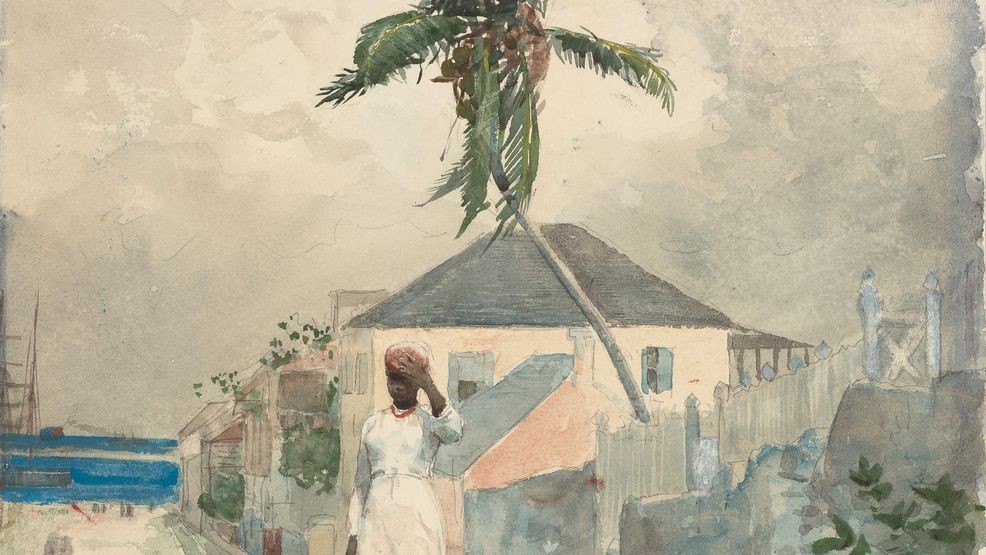
Winslow Homer (1836–1910), Along the Road, Bahamas, 1885, watercolor on paper. Collection of Charles Butt.
“He very much lives with these,” Foster said.
He’s collecting for his own interests and also domestic spaces.
That sensibility is most evident in the exhibition’s quieter works.
A sequence of small, unframed watercolors by John Marin, known as the Weehawken series, invites close looking.
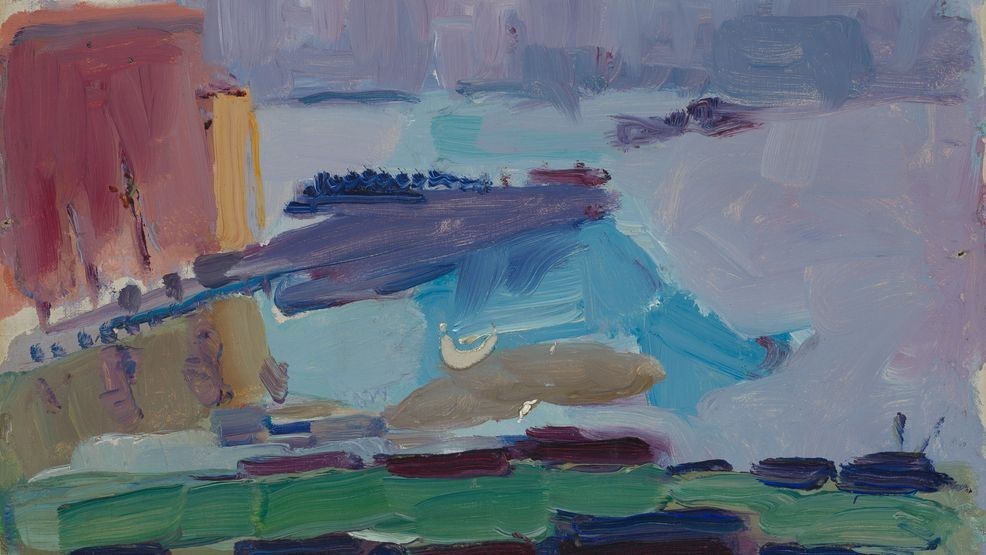
John Marin (1870–1953), Weehawken Sequence, by 1916, oil on canvas board. Collection of Charles Butt.
“One of my favorite things is this series called the Weehawken sequence,” Foster said.
Nearby, modest paintings by Thomas Hart Benton and others might be overlooked at a glance, but reward attention.
These are not works chosen to dominate a gallery. They are chosen to be lived with.
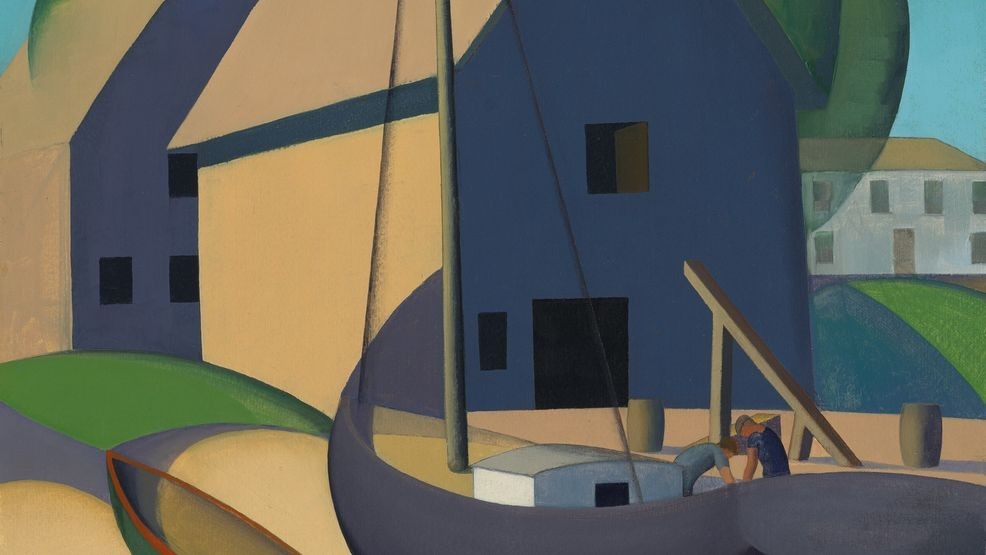
George Ault (1891–1948), Provincetown: Boat and Houses, 1922, oil on board. Collection of Charles Butt.
“He’s a curiosity-minded collector,” Foster said. The exhibition also reflects Butt’s personal interests.
A section devoted to the sea nods to his lifelong connection to coastal life, while clusters of works by certain artists reveal a tendency to collect in depth rather than breadth.
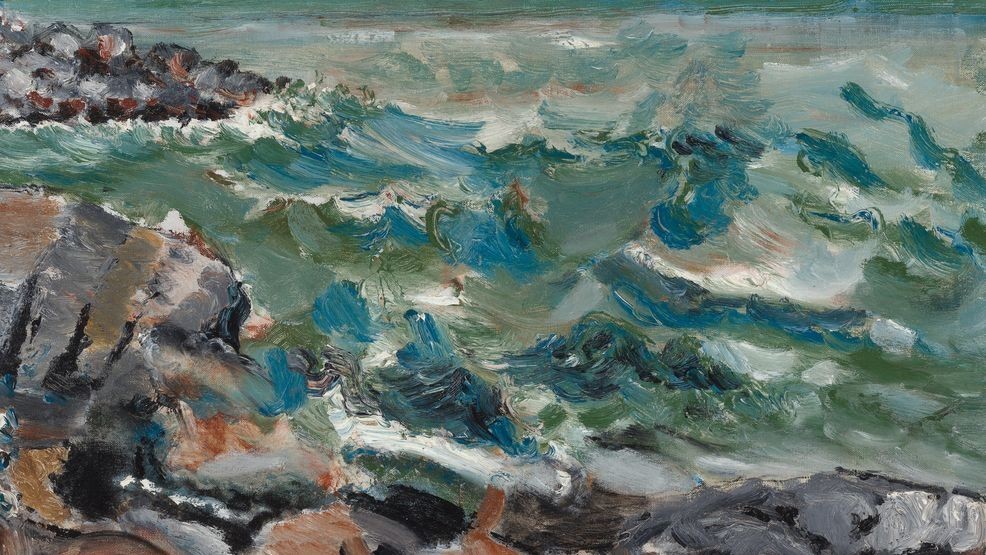
John Marin (1870–1953), My Hell-Raising Sea, 1941, oil on canvas. Collection of Charles Butt.
“I think there’s a personality you sense,” Foster said.
You wouldn’t sense it in the same way if you’re trying just to do a broad survey.
For the Blanton, the exhibition represents both a scholarly opportunity and a public one.
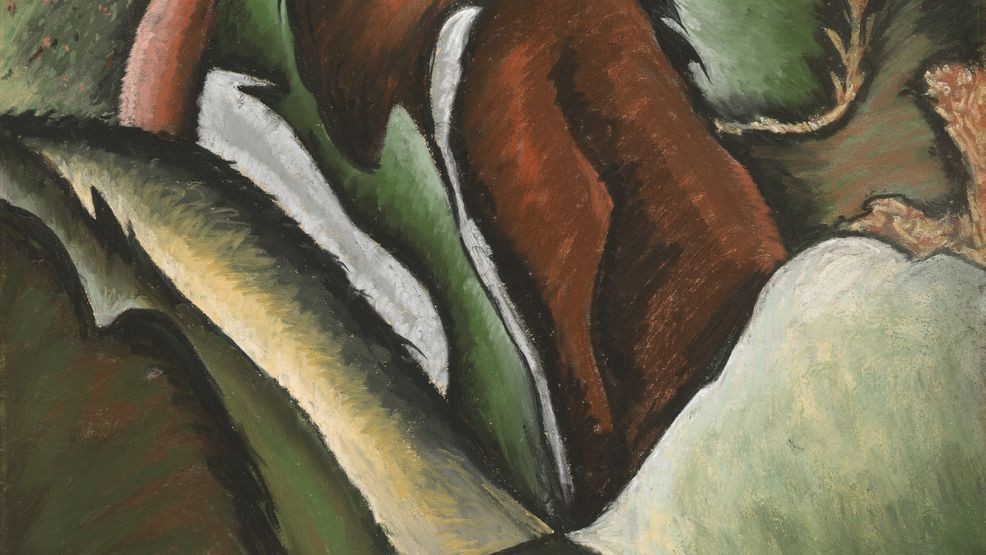
Arthur Dove (1880–1946), Horses Plowing on a Hill, 1927, pastel on paper. Collection of Charles Butt.
“Charles Butt’s vision as a collector reflects his deep belief in expanding access to art and education,” said Simone Wicha, the museum’s director.
Many of these works have never been seen outside his private collection.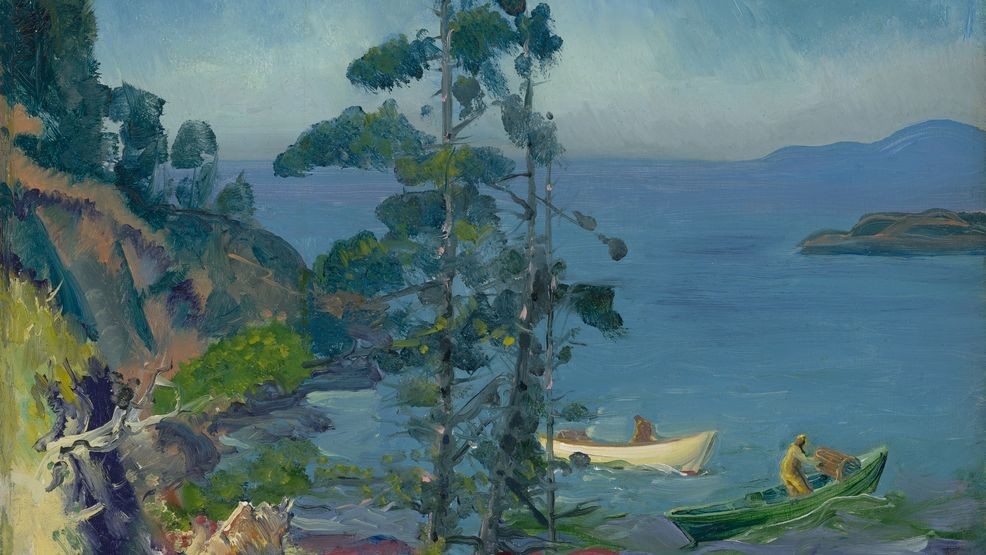
George Bellows (1882–1925), Evening Blue (Tending the Lobster Traps, Early Morning), 1916, oil on panel. Collection of Charles Butt.
The American Modernism from the Charles Butt Collection exhibition runs through August 2, 2026, as part of a Texas tour that will also travel to Houston and San Antonio.
For visitors, the experience is designed to be both accessible and expansive.
“I think it’s cool to be able to walk into one room and get the span of American art in the 20th century,” Foster said.
The Blanton Museum of Art is located on the University of Texas campus and is typically open Tuesday through Wednesday and Friday through Saturday from 10 a.m. to 5 p.m., Thursday from 10 a.m. to 8 p.m., and Sunday from 1 p.m. to 5 p.m., with extended evening hours on Thursdays.
EDITOR NOTE: #TBT or Turning Back Time is an award-winning series of stories by CBS Austin This Morning Anchor John-Carlos Estrada. The series focuses on the history of Central Texas and its impact on the community. If you want to share a story idea with him, email him (jcestrada@cbsaustin.com) or message him on social media via Facebook, Twitter, TikTok, BlueSky, or Instagram.