
Comment & Analysis: The International Energy Agency (IEA) has today outlined a range of “demand-side actions that could be taken by governments, businesses and households can take to alleviate the economic impacts on consumers” — basically, the experts in this sort of thing are saying loudly to act now rather than have people suffer.
The US-Israeli Iran War threatens the world’s economy and is perdicted it will cause a food-price shock across the developing world, but Western governments are taking a wait-and-see approach rather than acting now.
WANT TO KEEP READING? DON”T DISMISS THIS UNTIL IT’S TOO LATE: If you like IrishCycle.com’s independent journalism, take action today and help keep it going. Subscribe monthly or yearly today.
Here are the IEA’s bullet-point recommendations, and an irreverent look at why it’s impossible for Ireland to follow the expert advice (at least until things get much, much worse here)…
1. Work from home where possible
Displaces oil use from commuting, particularly where jobs are suitable for remote work.
Reply: If we did this so quickly, it’d show that the push to get people back to the office in recent years wasn’t needed in the first place. This would have all the wider benefits of working from home, but some middle managers and office owners might be upset. So, sorry, but no.
2. Reduce highway speed limits by at least 10 km/h
Lower speeds reduce fuel use for passenger cars, vans and trucks.
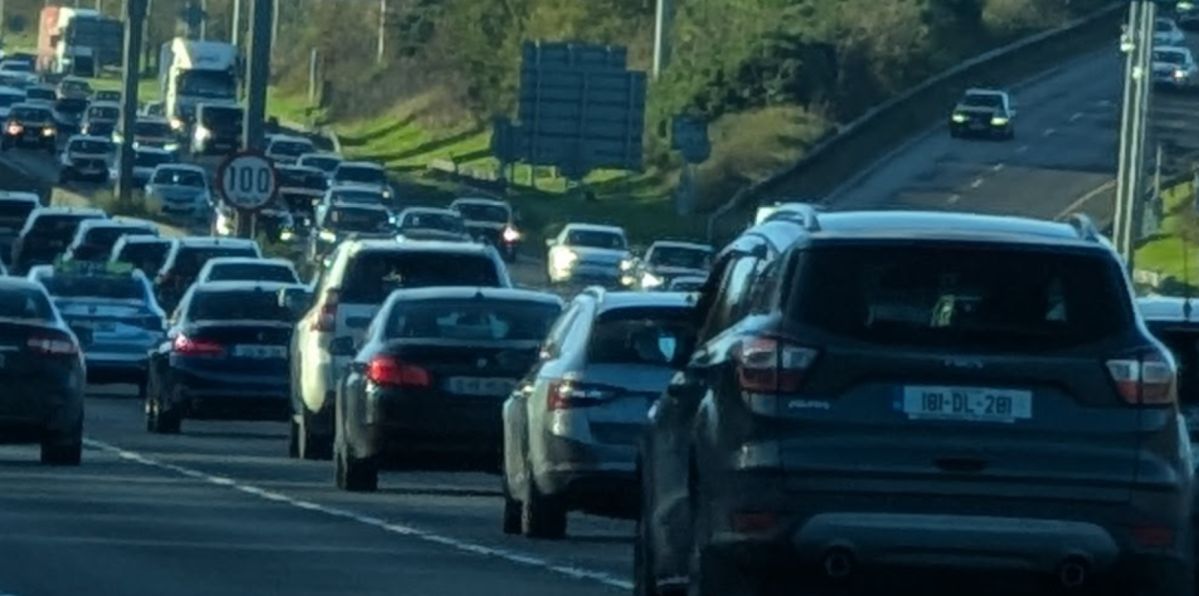
Reply: Average speed cameras are effective — on the M7, speeding went from 32% of motorists to just 4% — and the cameras can be deployed across the motorway network with ease. It’s also been known for a long time that driving at 100km/h instead of 120km/h reduces fuel consumption by 20-30%. But none of that matters, nor do the road safety benefits. Because drivers would be mad, and so would the rural independents and Independent Ireland might say something hurtful to the Government, like they are worse than the Greens or something of that sort.
3. Encourage public transport
A shift from private cars to buses and trains can quickly reduce oil demand.
Reply: Our trains are generally full at peak times, and the new ones are delayed — while some people keep saying Irish Rail should add carriages to this and that service, when there are no extra trains just lying around, the suggestion is about as helpful as magic beans in the real world. Buses are also largely full at peak times. The installation of electric chargers for replacement buses is also delayed, leaving buses unused. Is it too much to ask to accelerate that process and extend the use of the diesel buses? Yes. Yes, it is.
4. Alternate private car access to roads in large cities on different days
Number-plate rotation schemes can reduce congestion and fuel-intensive driving.
Reply: We’re not Communist. And we don’t want to be accused of being cyclists, that’d be worse.
5. Increase car sharing and adopt efficient driving practices
Higher car occupancy and eco-driving can lower fuel consumption quickly.
Reply: Maybe a few more pilot projects are in order? Followed by a delayed report or two. Then a Minister will explain it on national TV that people can voluntarily carpool, and they’ll be accused of saying everybody should do it all the time. And Independent Ireland will probably accuse the Minister of being a Communist.
6. Efficient driving for road commercial vehicles and delivery of goods
Better driving practices, vehicle maintenance and load optimisation can cut diesel use.
Reply: Every single driver is already driving nicely and easily; there’s no need to insult hard-pressed working motorists by accusing them of anything less than perfectly efficient driving. And “load optimisation” sounds like code words for State-controlled transport… have we mentioned that we’re not Communists already?
7. Divert LPG use from transport
Shifting bi-fuel and converted vehicles from LPG to gasoline can preserve LPG for cooking and other essential needs.
Reply: We didn’t care enough about fresh air or lower emissions to start using LPG vehicles in any meaningful way, so it does not matter. And, anyway, our essential use of gas is for data centres, not cooking or heating homes.
8. Avoid air travel where alternative options exist
Reducing business flights can quickly ease pressure on jet fuel markets.
Reply: Once the Dublin Airport cap is gone, we can have more flights… what do you mean we were already running flights way above the cap?
9. Where possible, switch to other modern cooking solutions
Encouraging electric cooking and other modern options can reduce reliance on LPG.
Reply: Sound, sure, everybody has an air fryer now. Just make sure you don’t use them at the same time; we need to reserve energy for data centres.
10. Leverage flexibility with petrochemical feedstocks and implement short-term efficiency and maintenance measures
Industry can help free up LPG for essential uses while reducing oil consumption through quick operational improvements.
Reply: “Essential uses” = AI-generated cat videos. Look, we all know the real solution is that everybody should cycle everywhere all the time.
Postscript: If you got this far and are annoyed by this article, you probably shouldn’t take it too seriously, especially since it was marked as irreverent. But there’s a serious point to it — regardless of the issue being climate action, the widespread impact of inactivity, the misery of peak congestion in many of our towns and cities, our ongoing issues with power demand vs capacity, and now another oil crisis:
Leadership seems to be all too often missing, action is nearly always deferred, and short-termism is usually favoured over what’s good for the country. The latest crisis would not be as severe on us if there were already more substantive action on the crises we already face.
Our Government — like others have already done — will likely have to take steps to reduce VAT on fuel to try to avoid cripping the economy and mobility for those who have no or few others options. Doing this without lowering demand, as suggested by the IEA or by other means, would be reckless.
Like this:
Like Loading…
Related