
The Office of the Inspector of Prisons (OIP) has today released a lengthy report into the death of convicted drug dealer Michael ‘Skin’ Devlin
19:06, 20 Mar 2026Updated 19:41, 20 Mar 2026
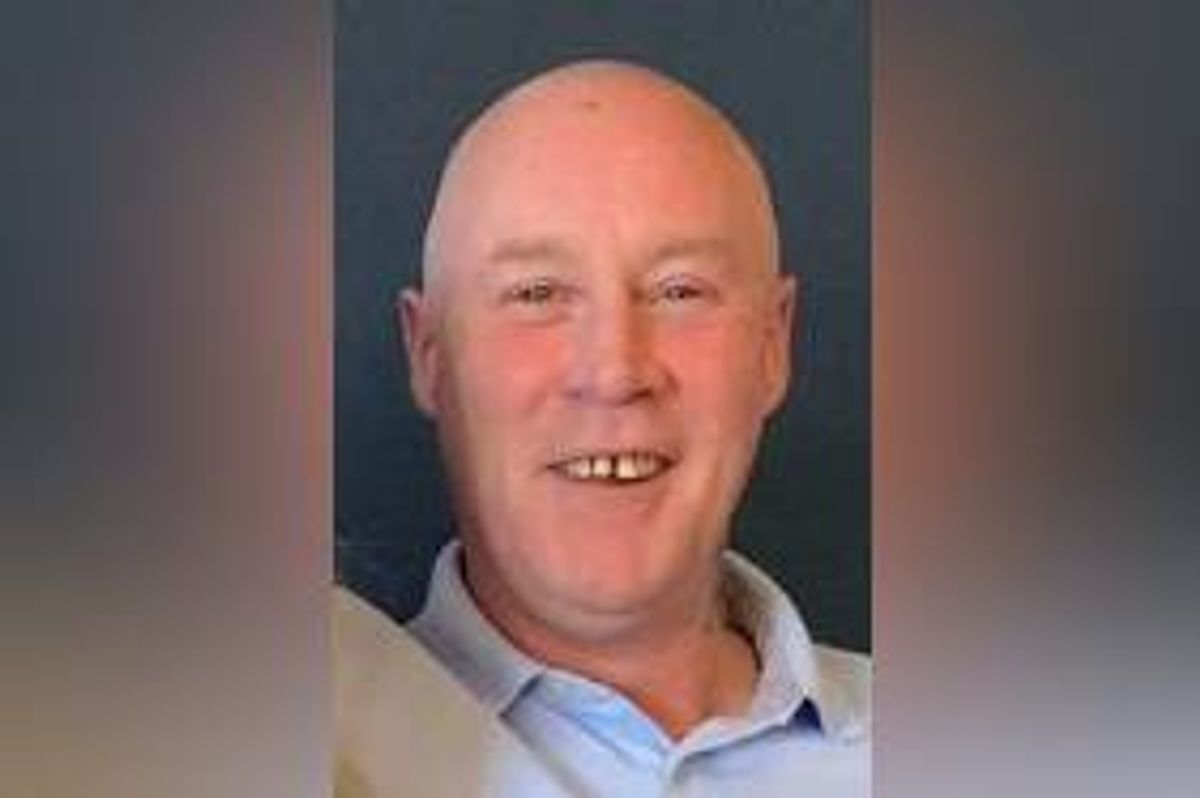
Michael ‘Skin’ Devlin
A prisoner has told in harrowing detail how he watched his cellmate die – hours after he allegedly asked to be sent to the hospital.
The Office of the Inspector of Prisons (OIP) has today released a lengthy report into the death of convicted drug dealer Michael ‘Skin’ Devlin, who died hours after complaining of breathing difficulties in his cell in Dublin’s Cloverhill Prison in the early hours of February 21, 2024.
Drogheda native Devlin (50), who infamously escaped Shelton Abbey open prison in Arklow, Co Wicklow in June 2020 before being returned to custody, was coming to end end of his 10 year sentence for possession of €1.3M worth of cannabis when he died from a suspected bacterial infection which swells the larynx – in the early hours of the morning.
The report, anonymized as ‘Mr D’ (which we understand pertains to Devlin), however outlines that medical and staff accounts at the prison differ in key parts from the account given by the criminal’s cellmate – who watched him die.
In the report, seen by us, Devlin’s cellmate was interviewed and claimed he was first complaining of “having difficulties with his throat,” before activating an “emergency light” in his cell where he then requested to see a nurse at 8:15pm. However the cellmate claimed that the prison officer said “the nurse was busy with committals and would come up after.”
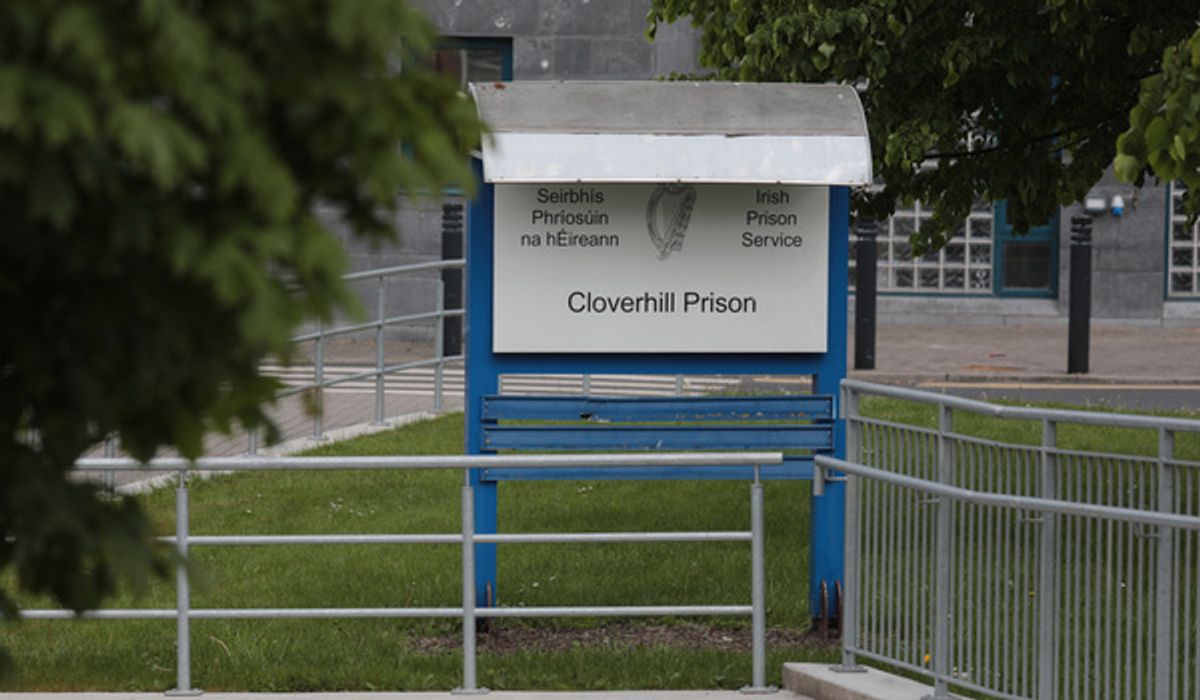
General view of Cloverhill Prison in Dublin(Image: Collins Courts)
This differs to accounts made by the prison officer on duty at the time and the nurse, who later claimed the incident did not appear immediately urgent and that Devlin agreed to see a GP in the morning.
However, according to the cellmate, Devlin whose breathing was “laboured” saw the nurse at 10pm and asked to be sent to the hospital. The cellmate said Devlin was told to take two paracetamol but “you could see his neck was swollen on his left hand side.
Devlin, according to the cellmate, allegedly told the nurse “what the f*ck is paracetamol going to do, my neck is swollen, I can’t breathe”.
The cellmate claimed he went to bed but was woken when Devlin was banging the cell door at around 1am and saying “Boys I can’t breathe, help me, help me,” while pacing the floor of his cell.
According to the cellmate, the nurse arrived at the cell about 20 minutes later and had what he described as “oxygen” with her on this occasion. He claimed that Devlin told the nurse at this stage: “I can’t breathe, I want to go to hospital.”
The nurse asked Devlin where his asthma inhaler was, he claimed, and he was attempting to tell the nurse that he could not breathe with the face mask on, but the nurse was telling him to stop talking.
The cellmate further claimed that after taking Devlin’s blood pressure the nurse tried to give him a liquid but he said “it’s not going down, it’s stuck in my throat.”
When the nurse left the cell, the cellmate claimed he watched Devlin trying to get air from the window and he was “plaguing us saying I can’t breathe.”
“I jumped down out of the bed and went over to the cell door and put the alarm on and started banging the door for the Officer to come back” he told OIP investigators. The cellmate said when an officer arrived Devlin was “going pure white from the head down.”
The officer went away then came back and said the medic had already seen him and there was nothing she could do”, the cellmate claimed. After this he claimed that Devlin “started going blue and purple from the neck upwards,” and began sliding down the stairs of the bunkbed to his knees.
“I reached for him and put him on his side and got a pillow and put it under his head. I was going to do CPR but seen blood on his tongue. I went back banging the door again, [a cellmate] was back banging the door too” the cellmate said.
After a few minutes he said the prison officer returned to the cell with the nurse but “you could tell (Devlin) was gone.”
“I was on the floor holding his hand saying ‘stay with us [….]’ but you could tell he was gone” the cellmate said.
According to the OIP, the claims made by the cellmate are at “significant variance, in certain respects, to the notes made and/or accounts given by some of the IPS staff regarding their interactions with Mr. D on 20 to 21 February 2024.”
The nurse in her initial notes said that she had attended the landing and spoke to Devlin at approximately 10pm and he had told her it “feels like tonsils are enlarging/becoming painful [but] nil other concerns voiced”.
She said she provided paracetamol for pain relief and placed him on the GP list for review the following morning. In her initial post-death report to the Prison Governor the nurse said Devlin was “in no obvious signs of distress and was agreeable to wait for a while before I attended A Division”.
Further clinical notes by the nurse at 3:11am on February 21 recorded that she was called to the cell at 12:55am when Devlin complained of a sore throat, difficulty breathing and that she applied oxygen therapy and took his blood pressure.
According to her account, having administered “Brufen liquid” to Devlin, the nurse left the cell at 1:25am and was called back five minutes later. Upon arrival he was lying on his back on the floor of the cell, unresponsive and with no pulse discernible.
The nurse, along with the officers present commenced CPR on Devlin but to no avail before a defibrillator was brought to the cell but no shock was delivered when a rhythm could not be found. Attempts were made to resuscitate the prisoner. The prison doctor ultimately arrived at the cell at approximately 3:59am and pronounced him dead by 4:05am.
The report notes that a ‘Critical Incident Meeting’ occurred at the prison on February 29th during which the nurse recalled that initially while reviewing new committals in reception she was made aware that she was requested to see Devlin, but that it was “not urgent.”
A prison officer provided a detailed recollection of his involvement in the response to the medical emergency, saying he recalled that around 9:20pm Devlin had complained to him of a “sore throat” but said he “could wait a while” when the officer asked him if he needed to see the nurse immediately.
The officer informed the meeting that he then rang the nurse and informed her of Devlin’s first request at approximately 10:20pm. He went on to inform the meeting that at 12:45am Devlin used the cell system again – but he “seemed to be ok” when complaining of a sore throat.
In concluding the report the OIP made several recommendations to the Irish Prison Service – including having two nurses on duty at night. The OIP stated that it had in the past ” repeatedly highlighted the dangers of nursing under-staffing at night, especially in large committal prisons such as Cloverhill.”
“Mr. D experienced an – ultimately fatal – medical crisis at night, while the one nurse on duty was intermittently otherwise engaged in reviewing new committals in reception.
These are precisely the kinds of circumstances that have previously led the OIP to recommend that nursing cover at night in Cloverhill Prison be increased,” it said.In response the Irish Prison Service said it is in the process of reviewing nursing cover at night as part of the Joint Task Review process.
The OIP also recommended that prison staff, including recruit prison officers, should receive cardiac first responder training. The IPS said in response that the response time from the prison healthcare team to a prisoner is likely to be much less than the response time from the HSE to an ambulance call-out.
However it said that first responder training is provided to Gym Officers, PSEC Staff and Open Centre staff.
“It should be recognised that in the prison setting, a nurse is one of the first members of staff on the scene in an emergency situation. Basic Life Support and First Responder Training is a core element of the skillset of all nurses employed in the prison service,” it said.
Finally the OIP said that the IPS should improve its procedures for the monitoring and supervision for prisoners who show signs of serious medical decline, especially if they exhibit symptoms such as difficulty breathing, distress, or a history of requesting medical attention repeatedly.
The IPS responded that “The Irish Prison Service Healthcare team provide 24/7 care to all prisoners in custody. Continuous observation and emergency responses are provided for as required.”
Want to see more of the stories you love from Dublin Live? Making us your preferred source on Google means you’ll get more of our exclusives, top stories and must-read content straight away. To add Dublin Live as a preferred source, simply click here.
Join our Dublin Live breaking news service on WhatsApp. Click this link to receive your daily dose of Dublin Live content.