
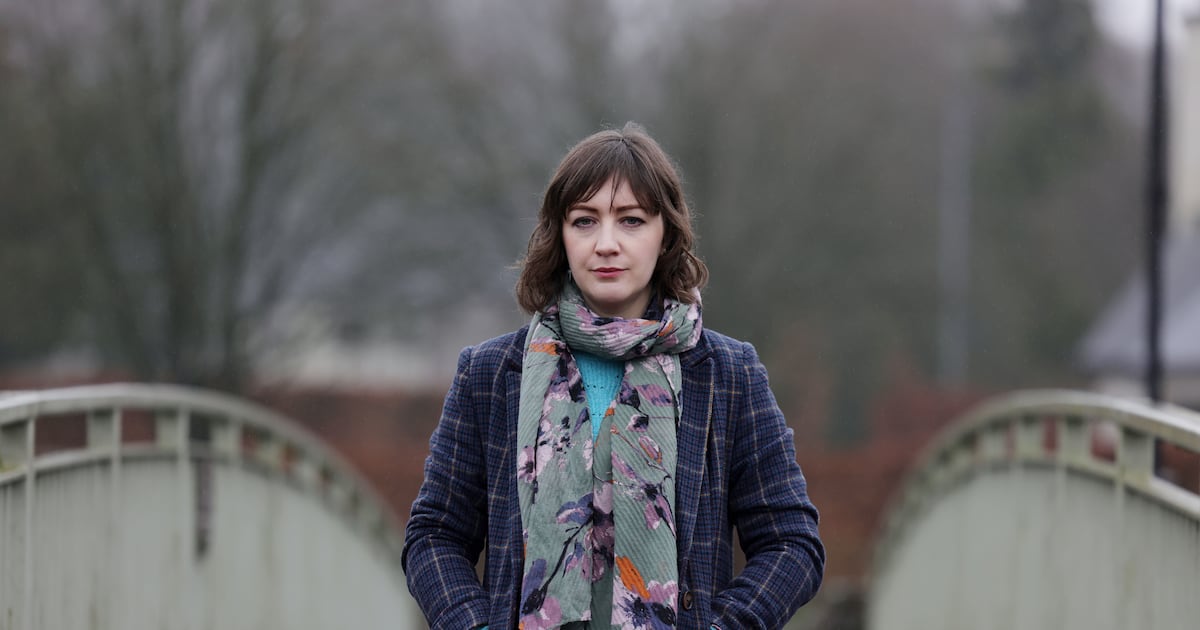
Each day, Jennifer McAree wakes up and clings to her mantra: “something will come up, something will come up.” The 37-year-old is a practical, accomplished, professionally successful and well-educated person who has found herself living back home with her parents in a small village near Monaghan town because of Ireland’s enduring housing crisis.
She checks online for houses every day. Most of them, she can’t afford, and when houses within her budget do appear she is quickly outbid. It’s hard to buy a house in Ireland as a thirtysomething, but it’s very difficult as a single person trying to do it alone.
“You’re just kind of living on hope day to day,” McAree says. “I’d be quite a science-minded person, but I’ve even looked into manifesting.”
McAree, who has been living at home for more than a year and a half, is one of an emerging generation of Irish people who feel that the housing crisis is posing a threat to the type of life they believed they were destined to have. Because while McAree’s struggle to buy her own home is difficult, what is far harder for her is the knock-on effect the housing crisis is having on her desire to have children. “I can feel time ticking,” she says.
“I had hoped to be at a really different stage in my life right now, and it hasn’t worked out that way. And I’d be a person who wouldn’t give up very easily, but it can be very difficult to keep going and keep positive, because it just seems like there’s so many barriers in my way.”
McAree is from a small, pleasant village – but one that is probably more suited to people who have already “settled down”. There are few people her age around – those who are, are probably already married. Dating apps offer few prospects, she says. She tries to go to classes and clubs, but she’s often the youngest in groups of retirees. She set up a book club, and she went on a singles trip that was a “total let-down”.
Her hopes of meeting someone here are limited, she feels, particularly while sharing a house with her parents. Her social world has become smaller; she explains that “you can’t really even have friends over for dinner”. As hard as it will be for her to buy a house, even that is now starting to feel more achievable than meeting someone and starting a family.
But even in Dublin, where the “pool” of thirtysomethings is much bigger, McAree says she has heard female friends describe how difficult it is to meet male partners who will consider planning a family with a woman their own age – dazzled as they can be by the illusion of infinite choice available on dating apps.
She says she also thinks women are more educated and independent, and less willing to “settle” for what previous generations of women accepted. “There’s a strange thing happening in the dating world, where it’s sort of at a standstill,” McAree says. She believes men simply don’t feel the same “urgency” to have children that women do, which makes dating harder.
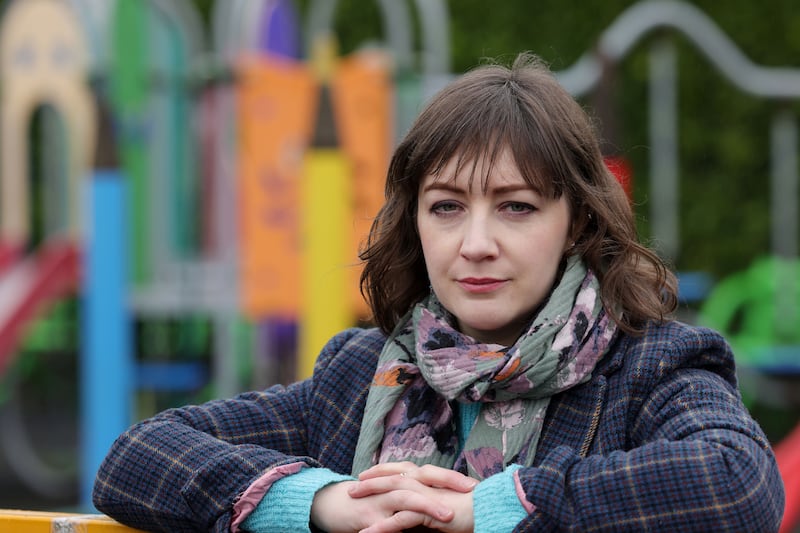 For Jennifer McAree, having ‘a little family of my own … feels so out of reach.’ Photograph: Alan Betson
McAree, who will turn 38 this summer, decided last year to put some of the hard-earned money she was saving for a house deposit towards freezing her eggs. She felt it was a decision she had to take, because “nothing was happening”.
“It was challenging, and it was quite lonely,” she says. While the people in the fertility clinic were nice to her, she felt they were “business like” in their approach. “It didn’t turn out to be as successful as I hoped. And they were saying to me when I’d finished, ‘you may have to do it again’,” she says.
She left the clinic feeling bamboozled by statistics that were presented to her about success rates and age. “You’re under even more pressure. You kind of feel like a bit of a failure, and you’re thinking to yourself ‘will this ever happen’?”
In common with many other European countries, Ireland’s birth rate is dropping to what some economists fear will be an unsustainable rate. The Republic’s fertility rate – the average number of children a woman would be expected to have over her lifetime – has fallen faster than expected to a rate of 1.5 from a rate of 2.0 in 2012. According to the UN, the fertility rate needed for a stable population is 2.1.
The amount that the Government will spend on child benefit this year will fall by €320 million, which the Department of Social Protection has confirmed is because of the State’s falling birth rate. Children who turn 18 and age out of qualifying for children’s allowance are not being replaced by babies first qualifying for the same social welfare payment. “Peak baby” occurred in Ireland in 2010 when 77,000 babies were born. The birth rate has consistently fallen since then; 54,000 babies were born in 2024. This was the last year the Republic hit “peak child,” the point at which the total number of children in the population started to decline.
A falling birth rate can make the Republic’s social welfare system less sustainable, its workforce smaller and the State harder to run. It can also present a genuine threat to what is termed the social contract, if voters who deeply desire children feel that the Government is not doing enough to remove the barriers getting in the way of their family planning. Research published last December by the National Economic and Social Council (NESC) pointed out that the housing crisis was playing a role in suppressing fertility rates.
At the point I’m at now, I think it may be too late in life … I don’t want to be coming up towards a pension and trying to raise kids
— Sam Kelly
It said secure housing was “an essential element” in encouraging people to have children. It specifically pointed to the falling population rates in the Republic’s five cities (Limerick, Galway, Waterford, Cork and Dublin) and said “high housing costs and short-term lets” were “displacing families” and leaving behind older populations. So populations are growing around the State’s cities, but not in them.
The same report also warned that the Government can fall into a “vicious cycle” in which it doesn’t support migration or fertility because it is worried about the current pressures on infrastructure and housing. But this only suppresses fertility further and increases emigration, pushing the State into a “downward spiral of stagnation,” creating a pattern that NESC warned is very difficult to reverse.
For some people, such as McAree, the housing crisis has, to some extent, suspended their lives. Those who have had to move home with their parents can feel that they are missing out on the chance to meet a life partner in a bigger, more expensive city.
But even for those who have already met the person they hope will be the future father or mother of their children, the housing crisis and the cost of living can still have a knock-on effect on planning for a family.
Thirty-six-year-old Kate Malley from Greystones, Co Wicklow, believes she would already be a mother if it wasn’t for the housing crisis and her fears about childcare affordability. She and her partner have been together for four and a half years. Malley works in the reception/administrator field while her partner is employed in the food-and-beverage industry.
“Money” is the big barrier, she explains. “We haven’t got a place of our own.” Saving in a high-cost rental market is a challenge, she has found. “I think that we need to get home with one of the parents temporarily, just to put a bit of money aside.”
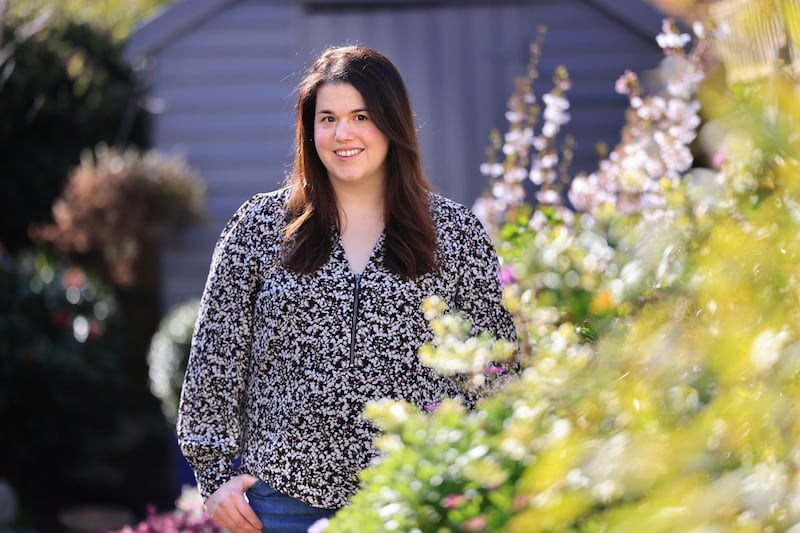 Kate Malley, Greystones: ‘Even people with reasonable paying jobs struggle in terms of childcare costs.’ Photograph: Dara Mac Dónaill
Malley is very conscious of her age, and how postponing pregnancy, because of their situation, may impact her fertility and ultimately her hopes to become a mother. “It’s something that I’m thinking about, but I need to have the right circumstances as well. I would want to make sure that if I’m having a child, I’m bringing them into the right circumstances. That I have enough money to support them.”
She wouldn’t rule out having a child while living with either set of parents, but is hopeful it won’t come to this. She works in a relatively low-paying sector but points to how “even people with reasonable paying jobs, they even struggle in terms of childcare costs. I hear of a lot of people where one of the parents doesn’t go back to work, because financially it doesn’t make sense as everything is being spent on childcare. That’s the other thing I’m thinking of down the line. I genuinely don’t know what we could do because I don’t think it would be enough to have just one of our salaries.”
[ Back home as an adult: ‘I’m 37 and waking up in my husband’s childhood 4ft bed’Opens in new window ]
For Malley, the problem is not just being unable to start a family at the moment. There’s also the fact that delaying having a child now could limit her potential to have siblings for any future child. In an ideal world she would like to have had “two or three children”.
She finds conversations and coverage of falling birth rates “frustrating”. “I’m sure there’s a lot of people in my situation. They would if they could and they can’t.”
She wishes more could be done to resolve the housing crisis. “I think when that becomes settled, it will make things a lot easier for all families, and people wanting to start a family.”
Helena Tubridy, a fertility coach who is working on a guidebook on fertility, said she is seeing increasing numbers of couples who are struggling to have their first or second child after the housing crisis or the cost of living delayed their family planning. “It’s so hard for people to get a house, and people are hanging on longer in their apartment and they’re not having that second child yet,” she says.
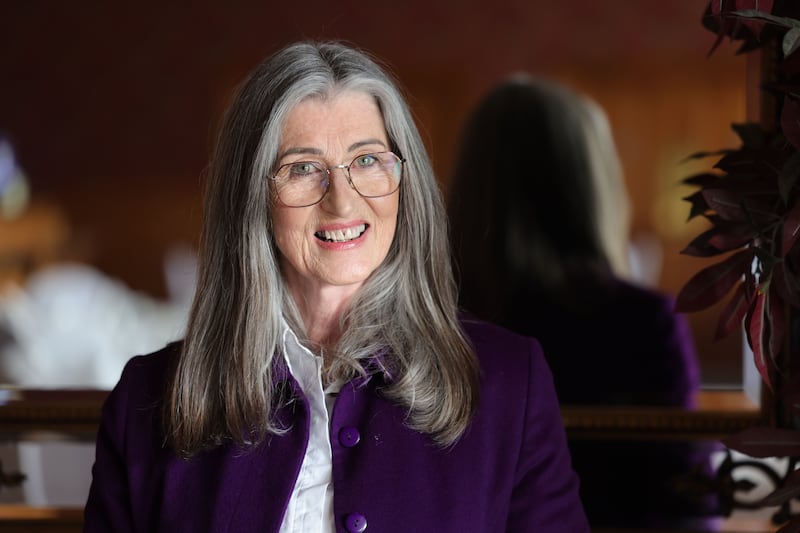 Fertility expert Helena Tubridy. Photograph: Alan Betson
An additional factor, which was referenced in the NESC report, is how the housing crisis may be forcing those who want to have children out of larger, urban areas. This could mean that young families from cities like Dublin are settling down further from their support networks. The lack of access to a grandparent, aunt or uncle can have a significant effect on the childcare costs a family might face for a second or third child.
Tubridy says she is seeing a number of cases of what is called “secondary infertility” – when a couple who already have one child struggle to have another – in cases where young parents say they felt pressure to have a larger age gap than they would have liked between their first and second child.
[ House prices rising at 7% with average cost of Dublin home now close to €600,000Opens in new window ]
“It’s really responsible people who are feeling really squeezed. They are looking ahead and saying ‘how will we afford to pay a mortgage, pay for our existing childcare, and have another child’?”
Another woman, from Co Cork, is 36 with a 35-year-old partner. She would really like to start a family but says her current living situation makes that impossible.
“It’s something I want [having children] and I’m worried the choice will be made for me, rather than me making the choice”, she says. “Because I’m in my 30s I’ve had a lot more time to think about what having kids will be like, the challenges around that and the financial pressures.”
“We’re renting at the moment, trying to save for a house.” Her rental property is “not suitable” to raise a family, she explains. “Housing is one of the main issues. It just feels it’s hopeless. We’re trying not to think about it, but it does get a bit hopeless putting money aside every month.”
She is trying to make sure she’s in good physical health for when the time comes that she can try to start a family. “I watch my weight. I’m big into fitness. I don’t drink and I’ve never smoked,” she says, but she remains conscious of her age in fertility terms.
Mentally she is ready to have children, “but I wouldn’t do it with the way things are”. She feels “sad for what could be”. She knows postponing having a baby, combined with the cost of childcare, may influence the number of children she has in the future.
She would like to see the Government follow the French lead and offer free egg freezing to women. “I don’t have any ethical dilemmas around that. That would be a step in the right direction for people”, she says. She’s also like to see more done to manage the high costs of childcare. “That would be major.”
Thirty-eight-year-old Sam Kelly, from Wicklow, says he wonders how anyone of his age can afford to have children. He recently bought a house in Rosslare, Co Wexford, with his partner. The couple lived with her mother for a while as they tried to save and he believes the choice for his generation is coming down to either having a house or children.
“If I’d had a child by now, I wouldn’t own this house,” he explains. Kelly commutes to Kildare for work and also runs a business in Greystones. He found it hard to find a house he could afford, even with such a commute. He doesn’t know if he’ll ever be in a position to have children. “Someone our age cannot afford to have kids … The fear would be, even with the price of childcare you’d have to give up your job to stay at home to look after them.” With a long commute, he’s conscious of the increasing cost of fuel.
“At the point I’m at now, I think it may be too late in life … I don’t want to be coming up towards a pension and trying to raise kids.” He’s seen a change in expectations across his peer group. “I think there’s a whole psychological and social effect. When friends see friends not having kids … it becomes a trend. And once that happened it becomes the norm.
“It’s no longer, in the friend circles, a conversation of ‘when are you going to settle down and have a kid, get the house, get the garden?’ The conversations now are ‘what are you doing in your career and what kind of house do you want’?”
[ Ireland’s mothers are the oldest in the EU. Why?Opens in new window ]
Kelly thinks people in their 30s have grown up with an acceptance that having children may be out of reach. “As we were growing up through our young adult years, it was the first thing we accepted. I don’t even feel like I had something taken away from me, because I don’t feel like I ever had the opportunity.”
The Department of Housing was involved in the membership of NESC, which worked on the recent report on fertility trends. Ireland’s most recent action plan on housing, which was published late last year, is one of the most holistic so far. For example, it considers seriously for the first time the policy issues around causes of homelessness, such as domestic abuse. But the connection between the housing crisis and falling fertility is not explicitly addressed in the plan.
While we can clearly see that people are having fewer babies, we do not always have robust data to explain why that is.
For women such as McAree, it is “frustrating” to see some commentary that ascribes the State’s falling birth rate to vague claims about a more hedonistic or selfish generation of millennial women, rather than concrete socioeconomic factors including housing and the cost of living. She really wants to have children, and would if she could.
“What I want to get across is that I am not single and childless for want of trying,” McAree says. Her last relationship, which had been more than two and a half years long, ended after her partner decided he did not want to commit long term. That was when she moved home.
She says it’s hard not to feel angry with how things are, and “how the Government has allowed this to happen”.
McAree describes her life now as being trapped in a loop of “hope and despair – picking myself back up again and again, in the hope something good will happen”.
“That I’ll finally be able to afford a little house with a garden. That I’ll bump into a great guy on a similar wavelength who knows what he wants and won’t mess me around. That I will finally have a little family of my own. But it feels so out of reach and it’s very hard to stay positive when it feels like the entire system is against you.”