
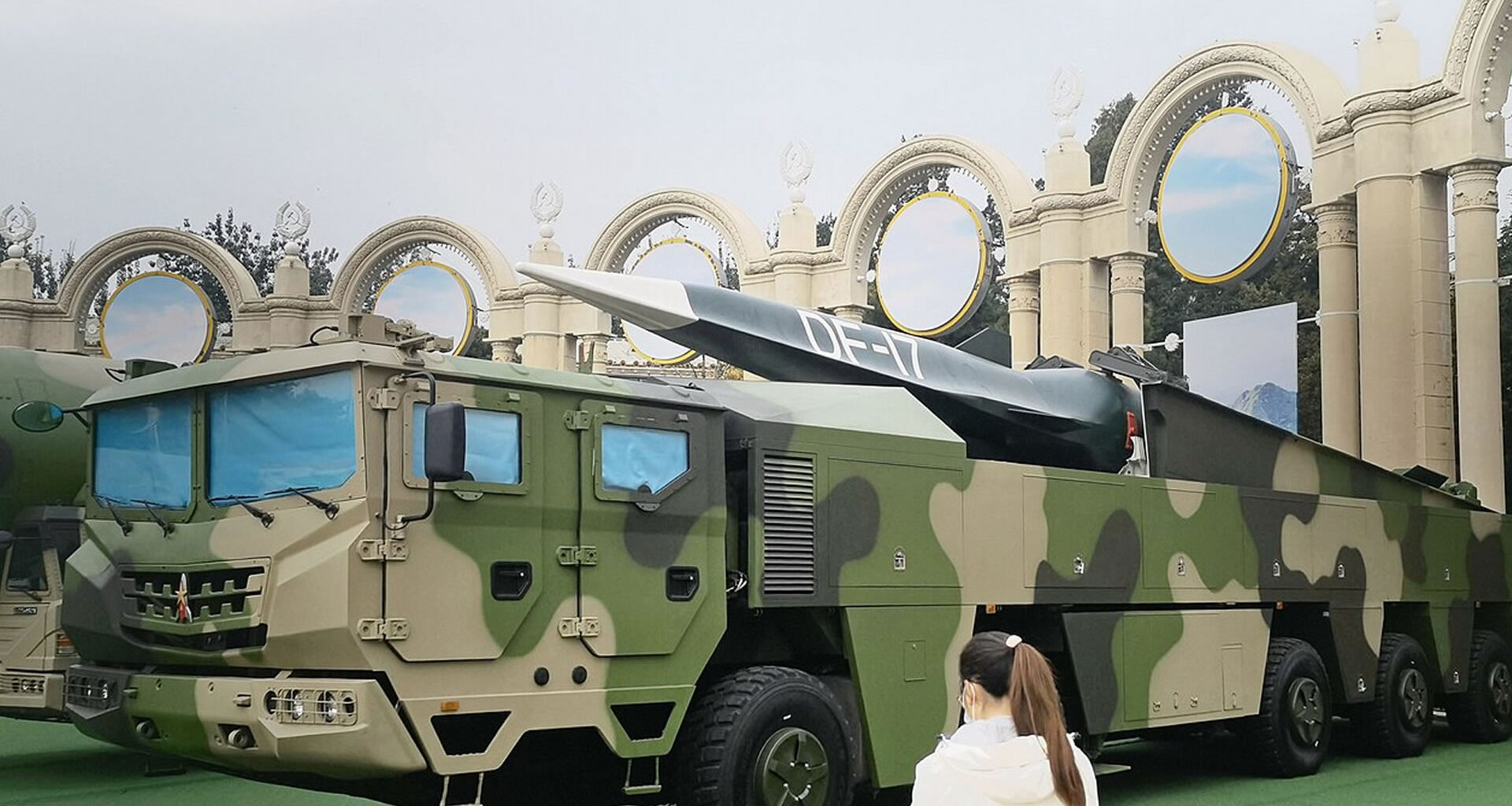
Chinese scientists can now reportedly have developed new simulation software that can reduce scramjet engine modelling from years to just weeks. If true, this could prove ground-breaking for accelerating research into things like hypersonic missiles.
At present, scramjet engine development is one of the hardest engineering problems to solve, so any boost to that will be very useful indeed.
In case you are unaware, scramjets (supersonic combustion ramjets) are designed to enable air to enter the engine at hypersonic speeds. Such engines typically use shockwaves to compress air (not turbines), and fuel is burned while the engine is moving at supersonic speeds.
According to reports, it is this last element that is typically the hardest to solve for. In more traditional jet engines, the incoming air is typically slowed down before mixing with fuel.
Scramjets, however, require combustion to happen in a fraction of a millisecond, which is not enough time to “slow” down incoming air. Simulating this process at speeds of Mach 5 or above is tricky, as air at this speed tends to act “strangely.”
Faster scramjet simulation
For example, air molecules tend to break apart (dissociate) at these speeds, and temperatures typically rise significantly, leading to ionization. This is far from an equilibrium, which is something models tend to love, i.e., conditions are not balanced or predictable.
Getting modelling right under these conditions is essential to designing the engine for ignition timing, flame stability, and ultimately thrust output. According to the South China Morning Post (SCMP), the new model is not about better hardware, but rather better modelling parameters to better match reality.
As the team explains, their solution isn’t about brute-force simulating everything, but rather focusing on what actually matters. Essentially, it approximates complex chemical reactions intelligently, while focusing on detail only where it matters (e.g., combustion zones).
You can liken it to rendering a video game in ultra-HD only where you’re looking, not everywhere. To do this, the team explains, they split the engine into 221 million tiny 3D boxes (called “cells”).
Each one of these “cells” can calculate temperature, pressure, velocity, and chemical reactions independently. This massively increases accuracy, but does come at the cost of more compute demand.
According to the team, this setup not only produces similar high-fidelity simulations possible in supercomputers, but is considerably faster, enabling simulations to be run in just a week, rather than years.
Still just a simulation
And the results were surprising. As the SCMP reports, the team found that the improved model showed that combustion efficiency was lower than expected, with thrust up to 21.6% lower, too.
This means that previous modelling was likely overly optimistic of engine performance, and reveals that real engines will like underperform with existing designs.
Insights like this will prove invaluable for scramjet (and hypersonic) design teams, as they will help them iterate much faster and more realistically in the future. It will also, in theory, enable them to better optimize engine design, potentially leading to faster, more efficient engines.
But, as impressive as this sounds, it is important to note that this is still just a simulation, and ot a real-world proof of concept of an engine. Claims around simulations being run in a week, rather than years, likely still require serious hardware to run.