
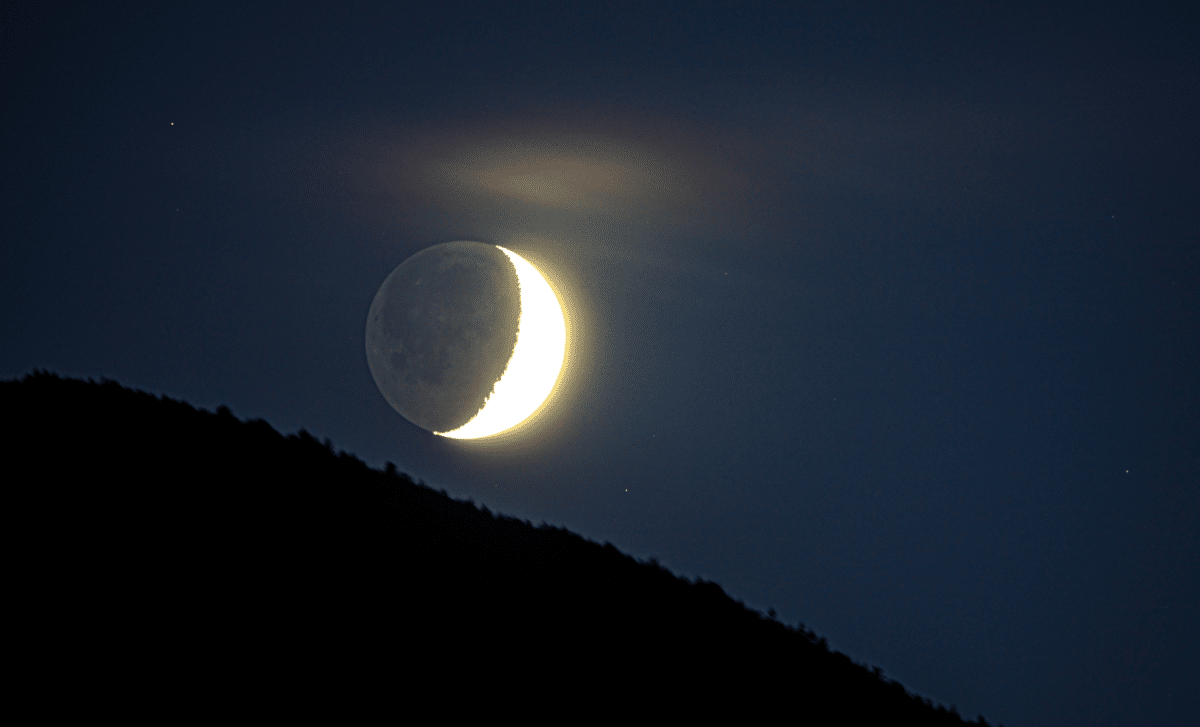
This week, skywatchers are in for a rare treat. Earthshine will bathe the moon in a soft glow, offering a glimpse of its unlit surface like never before.
What is Earthshine?
Earthshine is an enchanting optical phenomenon that occurs when sunlight reflects off the Earth’s surface and casts a subtle, ethereal light on the shadowed portion of the moon. Often referred to as the Da Vinci glow or the old moon in the new moon’s arms, this effect highlights the moon’s hidden features, including the ancient lunar seas. According to Space.com, it can only be seen when the moon is in its waxing crescent phase, right after the new moon when most of its surface is in shadow.
While not a new discovery, Earthshine remains a rare and mesmerizing sight. This week, skywatchers are given a unique opportunity to catch this natural wonder, especially on the evenings of March 19 and March 20, when the moon’s surface will appear faintly illuminated, thanks to light reflected from Earth’s clouds.
The Best Time to See Earthshine
For those hoping to witness this breathtaking phenomenon, the best time to look is just after sunset. On March 19, the moon will be visible low on the western horizon, with its razor-thin crescent forming a soft silhouette against the dimming sky. The moon will be positioned to the lower right of Venus, approximately 10 degrees above the horizon. For reference, this is about the width of your clenched fist held at arm’s length.
If you’re unable to catch the first glimpse on March 19, don’t worry. The following evening, March 20, will offer an even better view. By this time, the moon will be slightly higher in the sky, and its faint crescent, now just 2% lit, will appear just above Venus. The earthshine will be more noticeable, revealing the faint outlines of the moon’s surface features, including craters and mare, the vast, ancient seas of volcanic rock.
A Celestial Event You Can’t Miss
The moon’s subtle illumination by Earthshine brings into focus the moon’s hidden face, the side that we rarely see in full detail. This gives amateur astronomers and casual stargazers alike a rare opportunity to glimpse the moon’s geological past. As the sunlight reflects off Earth’s surface and gently washes over the lunar disk, the lunar seas and craters become visible in a way they are rarely seen.
Beyond the scientific wonder of the event, Earthshine also holds a romantic allure. This quiet glow serves as a reminder of the ancient connection between Earth and the moon. It’s a celestial phenomenon that has captivated humanity for centuries, and for those lucky enough to catch it, the sight of the softly lit crescent will be unforgettable.
How to Spot Earthshine: A Quick Guide
If you’re ready to witness Earthshine, the first thing you’ll need is clear skies. Light pollution can obscure the delicate glow, so a dark location away from city lights is ideal. Use a telescope or binoculars for a closer view, although the crescent moon will be visible to the naked eye in clear conditions.
Check the western horizon just after sunset on March 19 and 20, and look for the moon’s crescent. The best spot for viewing will be in the southern sky, just above Venus. The more you observe the moon’s surface, the more you’ll notice the faint light illuminating the craters and ancient sea beds—those once-filled basins where lava flowed billions of years ago.
The Science Behind Earthshine: How It Happens
Earthshine is more than just a pretty sight. It’s a phenomenon that provides valuable scientific insights into both the moon and Earth’s atmosphere. The light that reflects off Earth’s clouds and oceans carries with it important data about the Earth’s surface and its cloud cover. For astronomers, this can offer clues about Earth’s environmental conditions and how they may affect lunar observations.
Additionally, Earthshine has been instrumental in moon studies, particularly in understanding the moon’s geological makeup. As light from Earth highlights the shadows on the moon’s surface, it allows scientists to see features that would otherwise be obscured by the sun’s glare. This makes Earthshine a useful tool for lunar research, giving scientists an alternative view of the moon’s surface without needing to wait for special lunar missions or spacecraft imaging.
A Glimpse of the Moon’s Hidden History
While Earthshine is a visual treat for skywatchers, it also serves as a reminder of the moon’s complex and mysterious history. The glowing crescent offers a rare glimpse of the moon’s surface features, where lava once filled ancient basins to form the seas that still mark its surface today. These features, created billions of years ago by meteoric impacts and volcanic activity, are largely hidden from view due to the harsh sunlight during other phases of the moon.
This event serves as a reminder that the moon, which we often see as a simple, static object in the night sky, is actually a complex world full of history, mystery, and hidden beauty.