
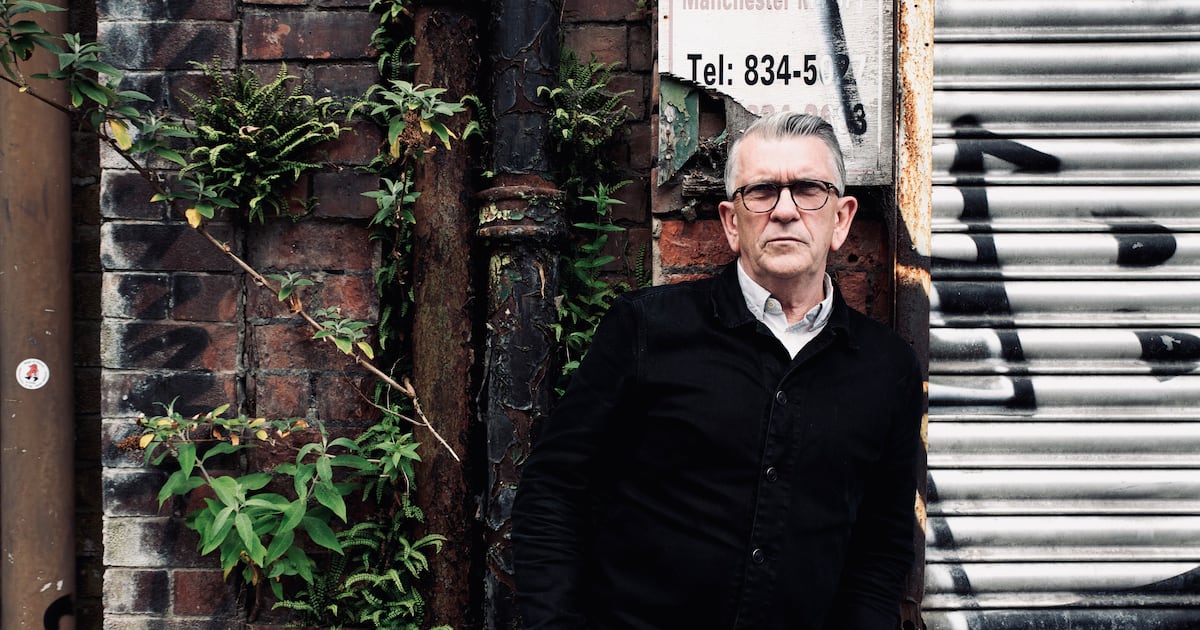
During an imperial career from 1983 until 1987, The Smiths reigned supreme as the most revered British band since The Beatles. The cultural impact of the Mancunian-Irish quartet was remarkable. In 1985, their second album, Meat Is Murder, knocked Born in the USA off the number-one slot in the UK at the peak of Bruce Springsteen’s superstardom.
Andy Rourke, The Smiths’ bassist, died in 2023, at the age of 59. All the surviving members – the inimitable Morrissey, the guitar maestro Johnny Marr and the drummer Mike Joyce – have written autobiographies.
Joyce’s, which is the most recent of the trio, is entitled The Drums, after his credit on every Smiths release. It is a celebration of The Smiths from the perspective of Joyce’s drum stool, which he maintains was the best seat in the house.
While Joyce offers insight into why the band’s internal relations disintegrated, his book is essentially a love letter to the group, the 1980s and the sheer joy of being in a band.
“I’m always asked what it was like to be in The Smiths,” an infectiously cheerful and unassuming Joyce says. “Just to say it was great doesn’t do it any justice at all, really. I could sit down and talk to people for hours, but I still wouldn’t be able to convey the majesty and wonder of it all. I wanted to give people a flavour of it and talk about some of the great experiences I had.”
[ Johnny Marr: I turned down Smiths reunion and acted to protect band’s legacyOpens in new window ]
Joyce, who will be in Ireland shortly for the latest leg of his book tour, is pleasantly surprised by the cross-generational profile of fans attending his events. “Half the people are around my age, and the other half are kids who weren’t even born when we were around,” he says.
“In Nottingham a girl burst into tears, which doesn’t occur a lot. Well, it might happen to Harry Styles every time he walks out the door, but this doesn’t tend to happen to someone in a band from 40 years ago.”
Fans’ enduring love for The Smiths heartens the drummer, who is currently playing in Pete Doherty’s live band.
“It’s not nostalgic for these young kids,” he says. “They’re getting into the band as a brand-new thing. We came out right smack bang in the middle of the 1980s, but we were never really ‘a 1980s band’. I think this is why the music really resonates with people after all these years. If those songs had come out in 1972 or 2022, they would still connect with listeners.”
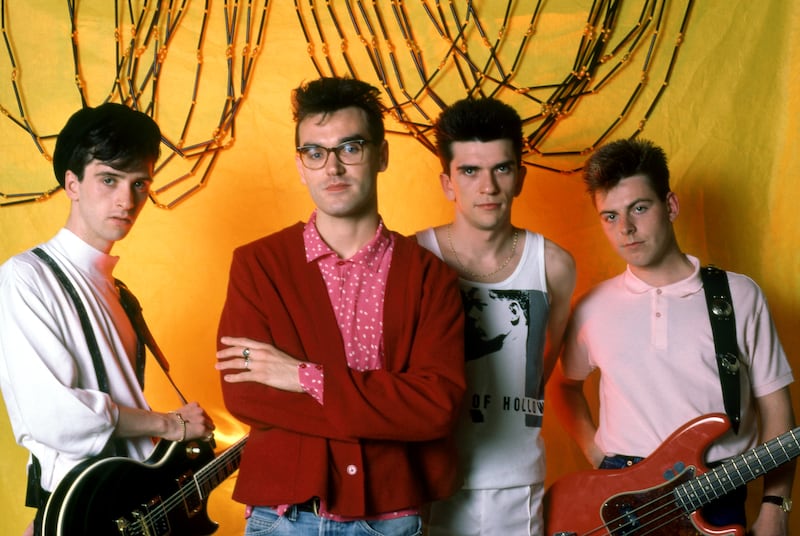 The Smiths: Johnny Marr, Morrissey, Mike Joyce and Andy Rourke in 1985. Photograph: Ross Marino/Getty
He puts The Smiths’ ongoing appeal down to those timeless songs. “Again, it is testament to the sound we created from a very traditional line-up of bass, drums, guitar and vocals,” he says.
“It was so different, so we were never pigeonholed into any genre or subset of 1980s music. I do some deejaying now, and whenever I play How Soon Is Now? out in a nightclub, it sounds majestic. It is truly timeless and doesn’t sound like a 1980s record, but just an amazing song that continues to move people.”
[ The Drums by Mike Joyce: A love letter to the greatest Irish band of all timeOpens in new window ]
The drummer has fond memories of touring Ireland and performing in towns and cities slightly off the beaten track, such as Waterford, Limerick, Letterkenny and Dundalk. “My dad is from Mayo, so playing the Leisureland centre in Galway was special,” Joyce says. “It felt like coming home, and it was magnificent.
“The National Stadium in Dublin was amazing, too. Just riotous. Again, it was above and beyond people passively watching a gig. It was mayhem. Cork was also complete madness. If you thought The Smiths were a bit boring, you weren’t at our Irish gigs.”
Next month, Joyce and his wife, Tina, will explore Mayo between book-tour stops to compensate for fleeting visits when he was on the road with The Smiths.
“I went over a bit with my dad when I was young,” he says. “My uncle had a farm, which was great thing for a kid growing up in the built-up city of Manchester to experience.”
♦ ♦ ♦
Joyce writes in The Drums: “For all of our shared ancestral heritage, it’s a miracle the band made it out of 1982, such were our apparent differences and the sense of total social dislocation from our singer and lyricist.”
The drummer draws a distinction between the musicians and their vocalist.
“My initial reaction to Morrissey – or, as he was known back then, Steven – was as an artist,” he says. “I was completely blown away by him from the very start. We didn’t tend to head out for a pint together, whereas I would with Johnny and Andy.
“I felt he didn’t want me to get too close to him. I didn’t really want him to meet my friends, either, so it was fine. However, our relationship changed over the years. We became closer through all the experiences we shared together.”
The Drums testifies to how powerful a unit a band can be. “Nobody else can really understand what it was like apart from the four of us,” Joyce says.
Sinéad O’Connor was very naive when we first met, as she hadn’t played any gigs. This didn’t matter at all, because in a live situation her voice was out of this world. The Lion and the Cobra was an incredible album
“Once this started to become an overriding feeling, our own unique gang mentality kicked in, and I feel lucky to have been a part of it. We were creating something special, so it was inevitable we would forge strong bonds. Otherwise we probably would’ve split up.” Eventually they did split up, of course.
After releasing their fourth and final album, Strangeways, Here We Come, which all four members consider to be their best work, Marr quit. Exhausted by their intense schedule and the additional burden of effectively managing the band in his early 20s, Marr went on to collaborate with numerous other artists and to launch a solo career.
According to Joyce, Marr’s departure was a shock. “I saw Johnny every day for four years, and I mean literally every single day,” he says. In 2023, Rourke’s death led to their reconciliation.
“I got a text from Francesca, Andy’s wife, about a memorial service in Manchester,” he says. “It was very private, with no press or public present whatsoever. I’d seen Johnny a little bit at football over the years, because we are both [Manchester] City fans. It felt good to reconcile.”
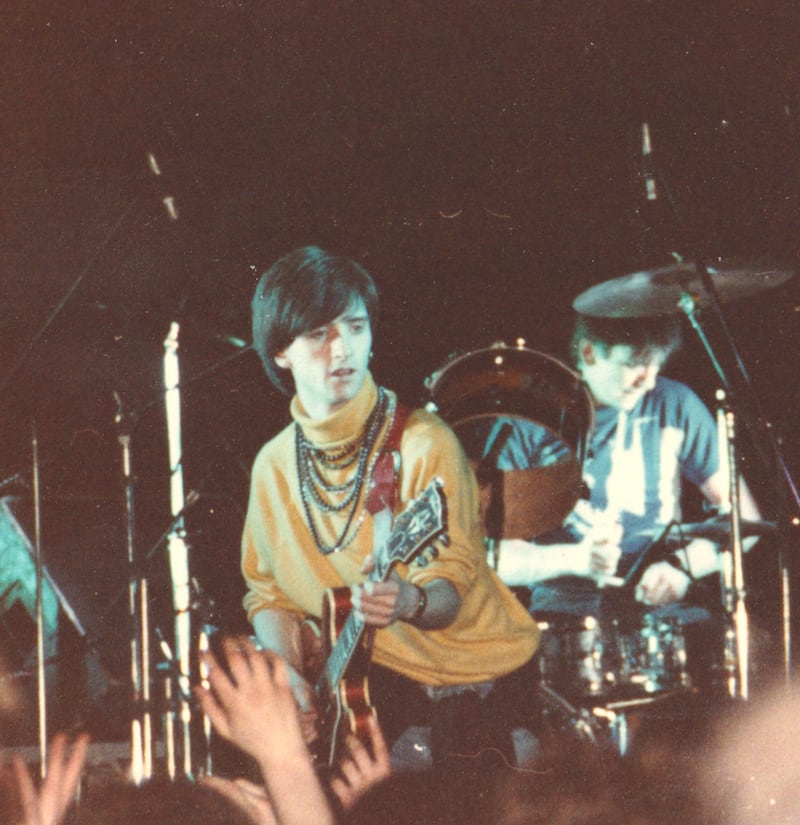 The Smiths: Johnny Marr and Mike Joyce on stage in 1983. Pic sent by Dusty Miller PR dustymillerpr@gmail.com
In 1996, Joyce sued Morrissey and Marr for an equal share of the band’s royalties; the singer and guitarist had been getting 40 per cent each, with Joyce and Rourke on 10 per cent each. Joyce won, receiving £1 million in back royalties and a 25 per cent share from then on.
Joyce has not communicated with the singer for more than 30 years and doesn’t see them mending their relationship. “I don’t feel it will ever happen between myself and Morrissey,” he says. “Again, it goes back to our first meeting. I’m not desperate to speak to him, and he is not desperate to speak to me. I’m cool with that.”
Joyce worked alongside Rourke as Sinéad O’Connor’s rhythm section for her early live performances. “She was very naive when we first met, as she hadn’t played any gigs,” he says. “This didn’t matter at all, because in a live situation her voice was out of this world. The Lion and the Cobra was an incredible album.
“She was so wonderful. I loved the way she was so outspoken and ruffled feathers. Sinéad and Andy left us far too soon. It is a massive shame they are not still here, but what an impact they both had on the international stage. They were two beautiful souls.”
The Smiths will probably never get back together, although they did, momentarily, in a surreal way for Joyce. “I had a really strange dream a few years ago where me, Andy, Johnny and Morrissey were sitting in a room,” he says.
“We’d decided to re-form, and we were discussing the opening song we should play at the first gig back. I said, ‘After four, say what you think should be the first song.’ After counting to four, all four of us said in unison, ‘Hand in Glove’, and we all started laughing. It freaked me out for a few days.”
After everything they’ve been through together, Joyce is still a devotee of his old band. “When people come up to me and say, ‘Hi, Mike, I hope I’m not bothering you, but I’m a massive Smiths fan,’ the first thing I always say is, ‘So am I.’
“People tell me that The Smiths changed their life. Well, they certainly changed mine. What I am trying to do in this book is to convey the incredible feeling of being in a band as beautiful as The Smiths.”
The Drums is published by New Modern. Mike Joyce’s book tour visits Dolan’s Warehouse, Limerick, on Thursday, April 2nd; Róisín Dubh, Galway, on Saturday, April 4th; Limelight 2, Belfast, on Sunday, April 5th; Sugar Club, Dublin on Tuesday, April 7th; and Spirit Store, Dundalk, on Wednesday, April 8th