
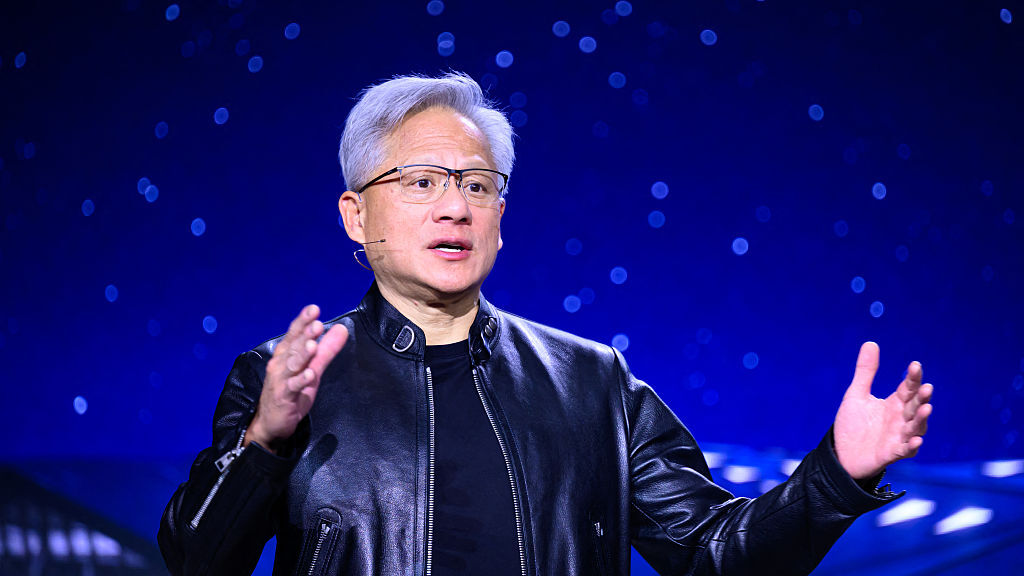
Jensen Huang had a message for the tech industry’s wave of AI-driven layoffs this week and it wasn’t polite. Sitting down with Jim Cramer at Nvidia’s GTC conference in California on Tuesday, the company’s (NASDAQ: NVDA) founder and CEO was asked why tech giants keep announcing job cuts and crediting his chips as the reason: AI is letting us do more with less, the logic goes, so we need fewer people.
Huang’s response was in earnest, offering a rather pointed assessment of the leaders making those calls.
“Because you’re out of imagination. For companies with imagination, you will do more with more. For companies where the leadership is just out of ideas, they have nothing else to do, they have no reason to imagine greater than they are then when they have more capability, they don’t do more,” he said.
Read that again. The CEO of the company selling AI chips to virtually every major technology company on earth just told Jim Cramer on live television that executives who respond to AI breakthroughs by cutting headcount are, in his view, simply out of ideas. They can’t imagine a bigger future, so they settle for a cheaper present.
Now consider who has been doing exactly that. Meta (NASDAQ: META) is reportedly preparing to hand out pink slips to roughly 15,000 employees, around 20% of its global workforce, even as it doubles its AI budget to $135 billion in 2026. Amazon (NASDAQ: AMZN) eliminated 16,000 corporate roles in January, explicitly citing AI and automation as the efficiency engine behind the cuts (1). And Microsoft (NASDAQ: MSFT) quietly cut more than 15,000 positions throughout 2025, about 7% of its global headcount, while committing $80 billion to AI infrastructure, with CEO Satya Nadella himself warning that 2026 could be “messy” as the industry shifts from AI demos to actual integration (2).
These are Nvidia’s largest customers. And Jensen Huang just called their approach uninspired.
When Cramer pushed back with, “why not do more with more, rather than more with less?” Huang’s framework was clear: it’s a leadership failure, not a technology constraint. The companies cutting jobs aren’t being forced to do so by AI’s limits. They’re choosing to harvest short-term cost savings instead of investing in growth. In his view, that’s a failure of vision.
Story Continues
Cramer, to his credit, had pressed exactly the right nerve. These hyperscalers, he noted, are “spending a fortune and making nothing” pouring billions into AI capex while trimming payroll and sending a muddled signal to investors about whether any of it is working (3).
The question that lingers after watching the interview: why would the CEO of a company so financially intertwined with Meta, Amazon, and Microsoft say something that reads, unmistakably, as a public rebuke of how they’re running their businesses?
The answer may come down to two things Huang made clear elsewhere in the same conversation.
First, Nvidia’s customer base is diversifying fast enough that Huang can afford candor. He told Cramer directly that Nvidia used to “start out at the hyperscalers” but has since expanded well beyond them into sovereign governments, on-premise enterprise infrastructure, healthcare, manufacturing, and a new generation of AI-native companies. He specifically highlighted Dell’s “incredible” growth and “huge pipeline” as evidence that on-premise computing has become a serious revenue driver in its own right. At GTC 2026, every major industry was represented from transportation and retail to life sciences and ascendant cloud alternatives like CoreWeave, OCI, and others that are giving the traditional Big Three a run for their money (3).
In short: if Meta or Amazon decided to take their business elsewhere tomorrow, Huang is signaling he’d feel a crevice, not a crater. That changes what a CEO is willing to say in public.
Second, Huang has reframed the entire relationship between Nvidia and the hyperscalers in a way that quietly flips the power dynamic. Rather than positioning Nvidia as a supplier to the cloud giants, he argued to Cramer that the company is actually a demand generator for them. By building its developer ecosystem on CUDA and integrating it into cloud platforms, Nvidia drives developers and enterprises onto AWS, Google Cloud, and Azure, not the other way around.
“They’re not just our customers. We are their market partners. We bring customers to them.” Huang said.
That’s a supplier telling its buyers: you need us more than the transaction suggests. It’s also a quiet explanation for why Huang doesn’t feel the need to bite his tongue about their strategic choices. If you’re the one generating the demand, you have standing to comment on how it’s being used.
Read More: 5 essential money moves to make once you’ve saved $50,000
Read More: Young millionaires are ditching stocks. Why older Americans should take note
There’s also something worth sitting with in Huang’s broader philosophy here. His implicit argument is that AI should be a lever for expansion, not contraction — that a truly imaginative business, handed more computing power than it’s ever had, should dream bigger rather than run leaner. The fact that the world’s most well-resourced technology companies are using AI as rationale to shrink their headcounts strikes him as a profound failure of ambition. That’s a provocative stance. It also has real investment implications.
Cramer, who has been one of Nvidia’s most vocal long-term boosters, emerged from the GTC interviews bullish on the stock and skeptical of the hyperscalers’ narrative. He called Nvidia “too cheap to avoid” on a forward earnings basis, citing analyst projections of $15 in EPS by 2027 — a figure that would put it at roughly 12 times 2027 estimates, a steep discount to the S&P 500’s 18x multiple (4).
The irony at the heart of this story is hard to miss. The hyperscalers are spending record sums on Nvidia hardware to become more efficient and the man selling them the technology just went on national television and called that strategy a symptom of running low on ideas. Whether that’s a warning to investors, a pitch for Nvidia’s continued dominance, or both, one thing is for certain: the most powerful CEO in AI right now is not afraid to say what he really thinks about where the bodies are falling.
Join 250,000+ readers and get Moneywise’s best stories and exclusive interviews first — clear insights curated and delivered weekly. Subscribe now.
We rely only on vetted sources and credible third-party reporting. For details, see our editorial ethics and guidelines.
This article provides information only and should not be construed as advice. It is provided without warranty of any kind.