
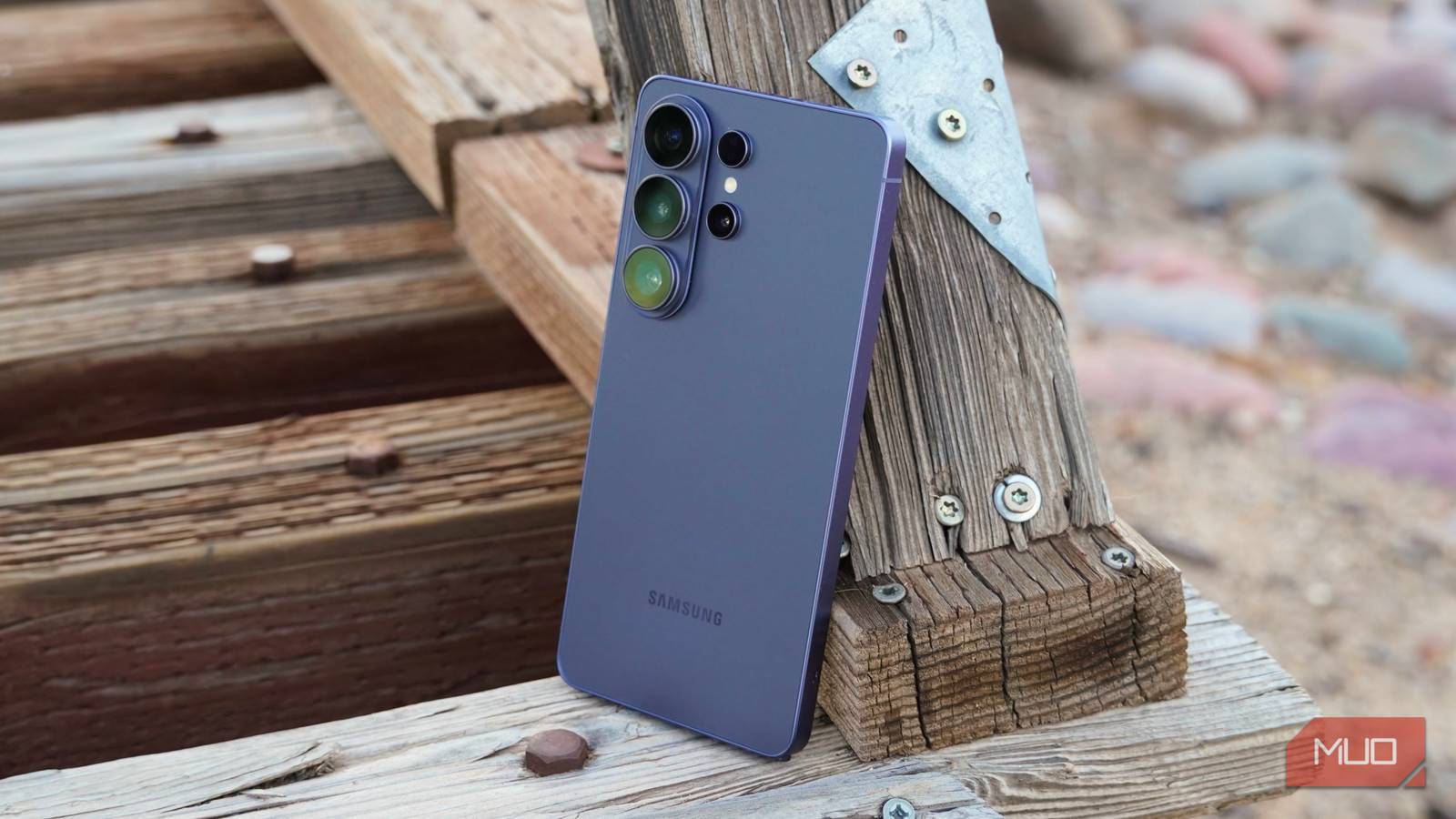
Nothing bothers me more than the status quo when testing out a new smartphone. Maybe it’s simply because I’m an enthusiast obsessed with innovation, or perhaps it’s because I cycle through tens of phones each year. Either way, I like seeing companies take risks, which is why I’m one of the few to appreciate the marvel of thin phones like the Samsung Galaxy S25 Edge and iPhone Air. After spending two weeks with the new Galaxy S26 Ultra as my daily driver, I’m happy to report that Samsung’s latest flagship is exciting, innovative, and risky in completely different ways.
The crown jewel of the Samsung Galaxy S26 Ultra is the Privacy Display, a feature that allows you to automatically or selectively hide the contents of your screen from prying eyes. If you hate nosy people looking at your phone while on public transportation, this screen mode is for you. It’s not just a software feature, either — it uses a custom Flex Magic Pixel display architecture that took half a decade to develop. It’s one of the coolest, and truly original, smartphone features we’ve seen debut in a long time.
And yet, the same Privacy Display that makes the Galaxy S26 Ultra unique also clearly and obviously limits quality and brightness. The phone is also missing inbuilt Qi2 magnets or a larger battery capacity, so it’s hard to call it perfect. That said, the Samsung Galaxy S26 Ultra feels like the only U.S. phone worthy of “ultra” branding.
If I didn’t think the 6.9-inch form factor is just too big, it’d have a shot at becoming my main smartphone.
Samsung sent us the Galaxy S26 Ultra for review. It had no input on the contents of this article, and didn’t see it before publishing.

8.5/10
SoC
Snapdragon 8 Elite Gen 5
Display
6.9-inch Dynamic Super AMOLED 2X
RAM
12 or 16 GB
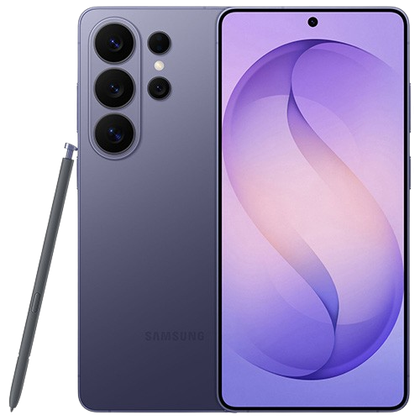
Samsung’s latest Galaxy S26 Ultra is yet another iterative upgrade, but the small changes make a big difference. The brand took risks by adding innovative features like Privacy Display and Horizontal Lock. Performance and battery life are great, with the Galaxy S26 Ultra charging up to 75% in just 30 minutes over a cable. All told, it’s a true flagship in every way but one — missing Qi2 support looms large.
Pros & Cons
Fast and consistent Snapdragon 8 Elite Gen 5-powered performance
Really quick wired charging speeds
Large 6.9-inch OLED with Privacy Display and S-Pen support
Underrated hardware and software-based camera upgredes
No Qi2 or MagSafe support, slower wireless charging
Display is dimmer when viewed off-angle
Same battery capacity as Galaxy S20 Ultra
Samsung Galaxy S26 Ultra pricing and availability
Samsung officially revealed the Galaxy S26 lineup, including the flagship Galaxy S26 Ultra, at a Galaxy Unpacked event in San Francisco on Feb. 25, 2026. The phone became available for pre-order that same day, with general availability and a global launch coming later on March 11. The Samsung Galaxy S26 Ultra retails for $1,299.99 for the base-model 256GB storage variant, which is the same price as the Galaxy S25 Ultra. It’s the only phone in this year’s Galaxy lineup to not receive a price hike.
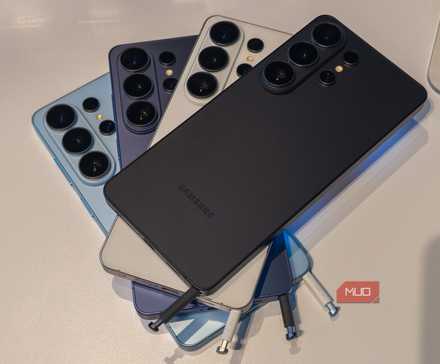
You can find the Galaxy S26 Ultra in Cobalt Violet, White, Black and Sky Blue colorways, with two additional options exclusive to Samsung’s online store: Pink Gold and Silver Shadow. If you want to upgrade your storage, you can pay extra for a 512GB or 1TB storage configuration. The 256GB and 512GB models come with 12GB of memory, while the 1TB configuration is the only one to ship with 16GB of memory. Aside from purchasing directly from Samsung, you can buy the Galaxy S26 Ultra from your cellular carrier or major retailers like Best Buy and Amazon.
SoC
Snapdragon 8 Elite Gen 5
Display
6.9-inch Dynamic Super AMOLED 2X
RAM
12 or 16 GB
Storage
256GB, 512GB, or 1TB
Battery
5,000 mAh
Operating System
Android
Colors
Violet, Sky Blue, Black, White, Silver Shadow, Pink Gold
Weight
214g
The Galaxy S26 Ultra design is familiar
That might not be a bad thing — if you love big phones
The Samsung Galaxy S26 Ultra isn’t exactly the same as the Galaxy S25 Ultra — it uses an all-aluminum chassis, sports more rounded corners, and features a new rear camera bump design. If you’ve seen other recent Samsung phones, you know exactly what to expect here. Just like the Galaxy S25 Edge and Galaxy Z Fold 7, the three primary cameras on the Galaxy S26 Ultra sit atop a unified camera pedestal. The other sensors, including the flash, remain outside the pedestal. It’s a bigger camera bump than last year’s model, but it’s one I find to be more attractive.
Some might find the switch from titanium to aluminum to be a downgrade, but it isn’t. Paired with a redesigned vapor chamber, the aluminum chassis, by all indications, helps the Galaxy S26 Ultra run cooler and more stable. It’s true that titanium isn’t as strong as aluminum, but it’s lighter and more conductive, which are arguably the more important characteristics for a smartphone. As a result, the Galaxy S26 Ultra is four grams lighter than the Galaxy S25 Ultra, and measures just 7.9mm thick.
I can’t help but think the Galaxy S26 Ultra’s design is a reflection of Samsung’s hubris, however.
With the iPhone 17 Pro Max coming in at 8.75mm thick and the Google Pixel 10 Pro XL measuring 8.5mm thick, the Galaxy S26 Ultra will feel noticeably lighter in the hand. It’s one reason that, despite the Galaxy S26 Ultra’s large footprint, I’ve had a fine experience using it. I still prefer phones that are even lighter and more compact, but this one is for people who want a big screen without some of the drawbacks. The thinner profile makes it easier to type and maneuver with one hand than similar phones in its size class.
I can’t help but think the Galaxy S26 Ultra’s design is a reflection of Samsung’s hubris, however. It was able to make the Galaxy S26 Ultra thinner and lighter than the competition, in part, because it excluded inbuilt Qi2 magnets for yet another year. The phone technically supports Qi2 25W speeds, but requires a case or accessory for magnetic alignment. If you don’t use a certified case, you probably won’t get the fastest speeds.
None of this is very consumer-friendly, as MagSafe chargers and accessories should be standard at this point. Apple added the feature to iPhones in 2020 and Google added it to Pixels last year. The bigger problem might not be the lack of hardware magnets, but the design of Samsung’s camera bump. It protrudes so far into the middle of the device that it may interfere with Qi2 cases, chargers, and accessories. So, even if you go the extra mile to add Qi2 magnets to your Galaxy S26 Ultra, there’s no guarantee it’ll work with your gadgets.
All of this could’ve been avoided by Samsung either adding inbuilt magnets or revamping the camera bump to accommodate Qi2 accessories — preferably both. Instead, Samsung doubled down on its thin-and-light build and camera bump design. It’s a black mark on what is otherwise an incredible device.
Credit: Brady Snyder / MakeUseOf
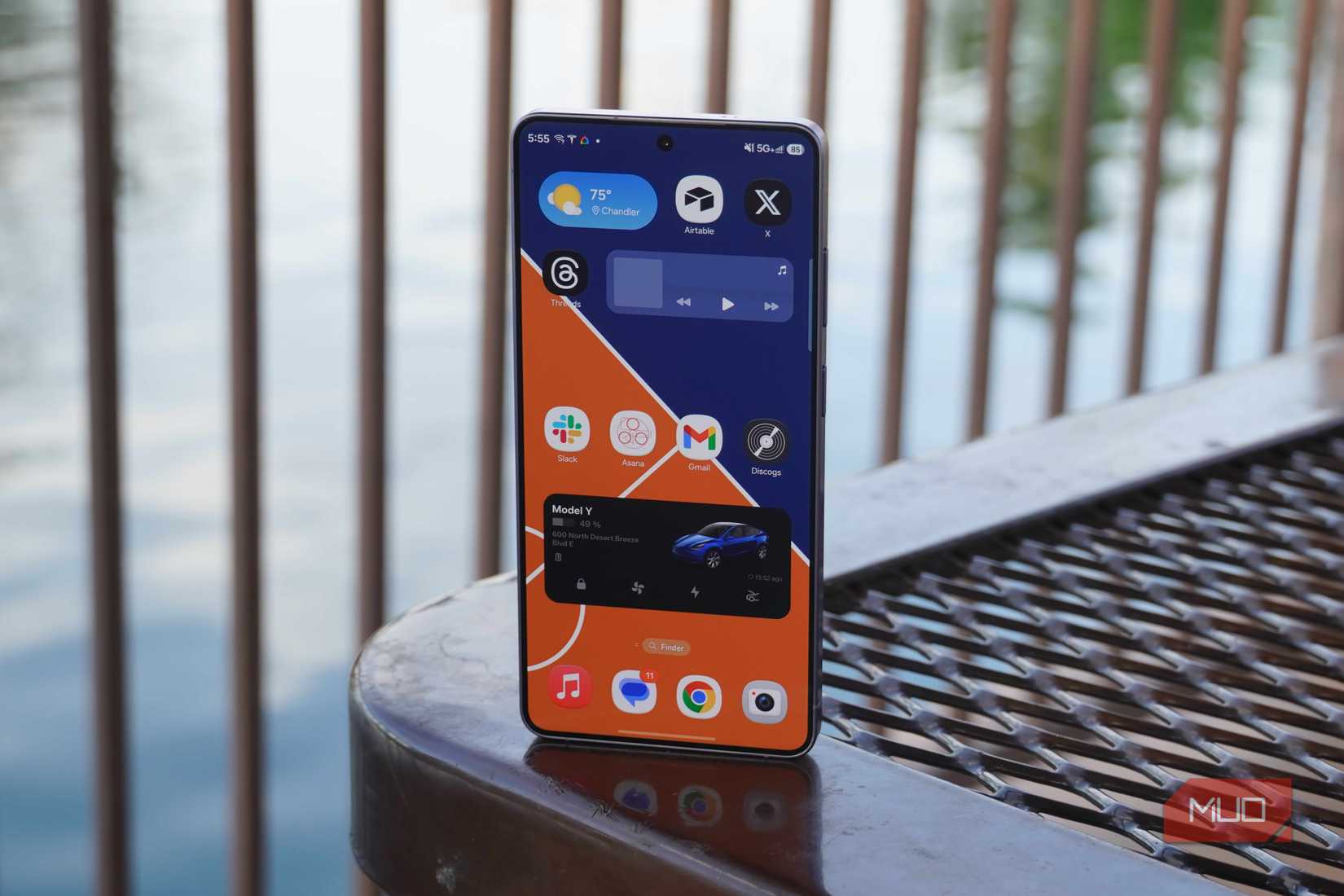
Samsung uses Gorilla Armor 2 on the front of the Galaxy S26 Ultra, which is pretty scratch-resistant and very anti-reflective. It’s an excellent piece of glass that seriously improves outdoor visibility. On the back, Gorilla Glass Victus 2 is there, and you get an IP68 certification as well.
The Galaxy S26 Ultra does have a physical SIM card tray, which is important to note as Apple and Google have removed this offering on its U.S. flagships.
Samsung’s Privacy Display is an engineering feat
But it looks less sharp and bright, so should it have left the laboratory?
Samsung’s new display might be the best or worst thing about the Galaxy S26 Ultra, depending on your preference. I’m in the former camp — I can’t believe the Privacy Display feature works as well as it does. It’s not a gimmick, but it doesn’t come without consequences either. The display is still a 6.9-inch QHD+ OLED panel with a variable refresh rate up to 120Hz, although it uses Samsung’s new Flex Magic Pixel architecture. It essentially uses narrow and wide pixels that can be disabled individually to limit visibility in certain situations.
The wide pixels, when active, create an almost-perfect viewing experience that can be seen from any angle. When the Privacy Display feature is enabled, those wide pixels are disabled, leaving only the narrow pixels active. This means that your screen can only be viewed head-on, limiting prying eyes. It’s like using a privacy screen protector, but better. Privacy Display can be enabled or disabled at will and requires no extra accessories, and works to obstruct unwanted viewing from any angle. Privacy screen protectors only block viewing from left or right, not top or bottom.
I’ve been using Privacy Display on trains, at sporting events, and in airports, and it’s a game changer. I can do whatever I want on my smartphone without worrying about who’s watching. That means entering passwords, managing my online banking, or viewing confidential information. For even greater protection, you can turn on Maximum Privacy Protection. It makes your phone screen effectively unviewable off-angle, but also adds a metallic haze that washes out the display’s colors.
The trade-off here is that the Galaxy S26 Ultra’s screen isn’t as bright as the Galaxy S25 Ultra. This is more noticeable at certain viewing angles than at others, but you don’t need a fancy measurement tool or expert eyes to pick up on it. I’ve been testing the Galaxy S26 and Galaxy S26 Ultra side-by-side, and the base model actually offers more consistent brightness at certain angles. I’ll go on the record here and say I think the compromises are worth it — Privacy Display is awesome, and I want it on every smartphone — but it’s not without drawbacks.
The S Pen is still here, albeit without the Bluetooth features removed last year. This is my first S Pen experience, and it ended up being more valuable than I expected. The stylus is accurate and there’s a satisfying glide when using it to jot down notes or draw quick scribbles on the Galaxy S26 Ultra screen. I can’t lie and say that I’ll use it often, because I won’t. Considering the magnetic technology used to power the S Pen interferes with Qi2 accessories, I must admit I’m willing to give it up for proper MagSafe support.
Related
I’d happily lose the S Pen on the Galaxy S26 Ultra for this one feature
Qi2 and the S Pen are inherently at odds, because MagSafe magnets interfere with Samsung’s iconic stylus. Is it finally time to say goodbye?
This is the only Samsung camera system worth buying
The Galaxy S26 and S26 Plus have embarrassing hardware — not the Ultra
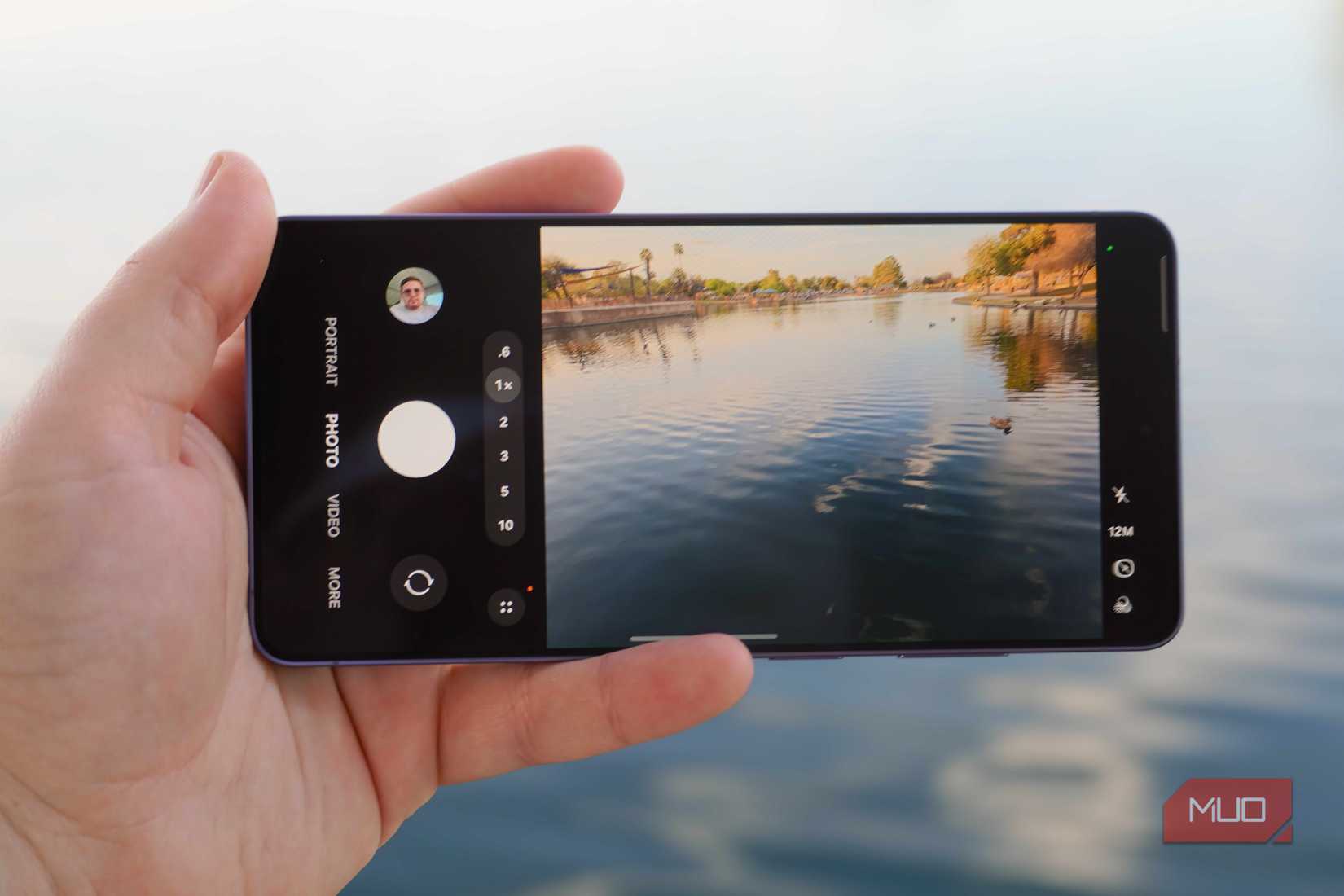
Credit: Brady Snyder / MakeUseOf
At first glance, you might think that the Galaxy S26 Ultra offers the same camera hardware as the Galaxy S25 Ultra. In fact, the primary 200MP shooter and 50MP telephoto camera both now sport wider apertures for better low-light performance. The main camera gets the boost from f/1.7 to f/1.4, while the telephoto camera moves from f/3.4 to f/2.9. In addition to the default 12MP shooting mode, the Galaxy S26 Ultra can take crisper 200MP photos with multi-frame HDR processing.
The new 50MP telephoto lens offers 5x optical zoom like the Galaxy S25 Ultra, but the Galaxy S26 Ultra ditches the periscope lens design for an All Lens On Prism (ALoP) design. In the real world, this shift results in better background blur for telephoto shots. Between the wider aperture and improved bokeh effect, the 5x telephoto zoom camera is actually much better than that of the Galaxy S25 Ultra.
Considering the Galaxy S26 and Galaxy S26 Plus camera systems haven’t been updated since the Galaxy S22 series, there’s only one Samsung camera worth buying.
The wider apertures, new image-signal processing (ISP) pipeline, and improved stabilization help Galaxy S26 Ultra photos come out better than ever. The color science is particularly good, as Samsung goes with a true-to-life look rather than oversaturation. You can see the results for yourself in the camera samples below:
The Galaxy S26 Ultra includes four rear cameras; in addition to the 200MP primary and 50MP telephoto, you get a 12MP, 3x telephoto lens and a 50MP ultrawide camera. The front-facing sensor is a 12MP wide-angle camera. It would’ve been nice to see Samsung try something new with the selfie camera, like Apple’s square sensor on the iPhone 17 series.
Regardless, this is still the most versatile camera system in the U.S. The Galaxy S26 Ultra offers native 5x and 3x optical zoom lengths without sensor cropping, which Google and Apple flagships can’t match. Considering the Galaxy S26 and Galaxy S26 Plus camera systems haven’t been updated since the Galaxy S22 series, there’s only one Samsung camera worth buying. It’s the Galaxy S26 Ultra.
It’s blazing fast, just like the last one
Let’s be honest, smartphone chips have been speedy enough for a while
Let’s state it plainly: smartphones are fast, and they’ve been fast for a while. iPhones have offered state-of-the-art performance for years, and Qualcomm’s big turning point was the Snapdragon 8 Elite platform last year. While the Galaxy S26 Ultra is powered by a new Snapdragon 8 Elite Gen 5 for Galaxy processor, if you have the Galaxy S25 Ultra — or another Snapdragon 8 Elite phone — you probably won’t notice much of a real-world impact. Those with older phones, or a Google Pixel, will see a bigger upgrade.
We benchmarked the Galaxy S26 Ultra against the regular Galaxy S26, last year’s Galaxy S25, the iPhone 17 Pro Max, and the Pixel 10 Pro. The results were about what you’d expect, with a few surprises. For one, the Tensor G5 chip in the Pixel 10 Pro couldn’t hold a candle to the A19 Pro in the iPhone 17 Pro Max or the Snapdragon 8 Elite Gen 5 in the Galaxy S26 series. The gaming performance is particularly embarrassing for Tensor, but Apple and Samsung beat Google in almost every test.
The Galaxy S26 performs better than the Galaxy S26 Ultra in quick bursts, but the Ultra model wins under sustained loads. In the 3DMark Steel Nomad Light Stress Test, the Galaxy S26 Ultra was 5% more stable than the base Galaxy S26. This shows that Samsung’s new vapor chamber and cooling system really does make a difference for gaming and demanding use cases.
Samsung Galaxy S26 Ultra
Samsung Galaxy S26
Samsung Galaxy S25
iPhone 17 Pro Max
Google Pixel 10 Pro
Geekbench 6 (single / multi / GPU)
3,606 / 10,614 / 23,144
3,613 / 10,860 / 23,149
2,636 / 8,973 / 17,077
3,801 / 9,740 / 45,978
2,125 / 4,943 / 4,581
Geekbench AI
6,080
5,111
4,860
6,542
3,596
3DMark Steel Nomad Light
2,495
2,566
2,487
2,567
1,007
Steel Nomad Light Stress Test (Lowest / Best / Stability)
1,781 / 2,309 / 77.1%
1,585 / 2,292 / 72%
1,357 / 2,176 / 62.4%
1,912 / 2,558 / 74.8%
954 / 1,004 / 95%
CrossMark (Overall / Productivity / Creativity / Responsiveness)
2,512 / 2,068 / 1,890 / 10,550
2,528 / 2,106 / 1,879 / 10,643
1,800 / 1,859 / 1,827 / 1,562
—
1,635 / 1,293 / 1,100 / 10,845
Samsung paired the Galaxy S26 Ultra’s Snapdragon 8 Elite Gen 5 chip with 12GB of RAM, unless you opt for the 1TB storage model, in which case you’ll get 16GB. It could’ve matched the Pixel 10 Pro by making 16GB memory standard, but the 12GB should be enough for almost everyone. It’s powered by One UI 8.5, based on Android 16, and will get seven years of Android OS upgrades.
While the 5,000mAh battery capacity in the Galaxy S26 Ultra has been unchanged since the Galaxy S20 Ultra, it’s still seemingly good enough. The phone now charges up to 75% in a half hour, and it’s simply amazing. I’ll plug in my phone to doomscroll for a bit, and by the time I’m finished, it’s nearly full. The battery gives me roughly 6.5 hours of screen-on time from a full charge. On my most extreme day, I used 108% of battery and received 10 hours and 31 minutes of screen-on time in exchange.
Should you buy the Samsung Galaxy S26 Ultra?
You should buy the Samsung Galaxy S26 Ultra if:
You want the most versatile camera system on a smartphone
You need a large screen, S Pen support, and innovative display modes like Privacy Display
You have a phone that’s a few years old and need a performance or battery boost
You should NOT buy the Samsung Galaxy S26 Ultra if:
You think $1,300 is just too much to pay for a smartphone
You don’t like the display quality trade-offs that come with Privacy Display
You consider fast wireless charging and inbuilt Qi2 magnets essential features
The Samsung Galaxy S26 Ultra is more expensive than the Google Pixel 10 Pro XL and the iPhone 17 Pro Max, so you’ll have to weigh whether the extra power and versatility is really worth the extra cost. It’s true that $1,300 is a lot to pay for a slab smartphone. If you have a recent Galaxy S Ultra model, you probably don’t need to upgrade. Those with a pre-Snapdragon 8 Elite phone (Galaxy S24 Ultra and earlier) will notice the biggest performance and quality-of-life upgrades.
While we can’t give Samsung any credit for choosing not to aggressively upgrade the Galaxy S26 and Galaxy S26 Plus, the end result is clear. The Galaxy S26 Ultra is the best phone in Samsung’s 2026 lineup, and it isn’t even really that close.
SoC
Snapdragon 8 Elite Gen 5
Display
6.9-inch Dynamic Super AMOLED 2X
Storage
256GB, 512GB, or 1TB
Battery
5,000 mAh
RAM
12 or 16 GB
Operating System
Android
The Samsung Galaxy S26 Ultra is all about further refinement. Almost everything is better, but you might find it hard to notice the differences compared to recent iPhone or Android flagships. If you have an older smartphone, the jump to the Galaxy S26 Ultra could feel monumental.