
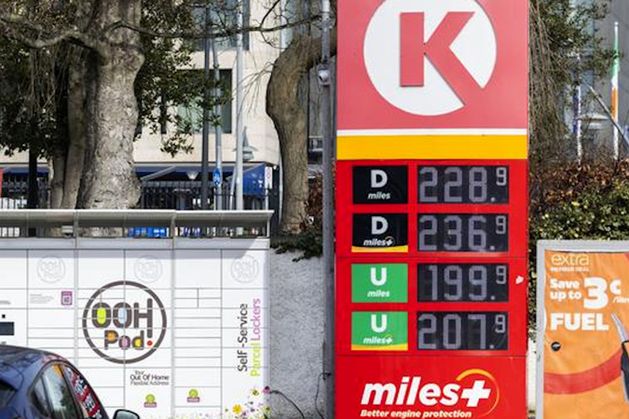
An Irish Independent survey of prices at pumps around the country found a number of stations pricing diesel close to €2.30 a litre.
Diesel stood at 228.9c a litre at Circle K in Hartstown, Dublin, with petrol priced at 199.9c. At the Applegreen filling station in Dublin’s Knocklyon, the price of diesel rose from 214.8c to 219.8c a litre in the space of a few hours on Friday afternoon.
Down south in Co Cork, diesel at Texaco in Douglas was at 228.9c a litre, while Maxol in Carrigaline was charging 223.9c a litre.
Out west, Circle K in Bohermore, Galway city was at 228.9c for diesel and 199.9c for petrol, while it was much the same at Circle K on the Limerick Road in Ennis, Co Clare, at 228.9c for diesel and 199.8c for petrol.
There was uproar when it didn’t happen
Prices were slightly cheaper at Circle K in Ballina, Co Mayo, at 215.9c for diesel and 194.9c for petrol.
Vincent Jennings, CEO of the Convenience Stores and Newsagents Association (CSNA), said fuel prices are unlikely to drop below €2 a litre any time soon.
The CSNA represents more than 1,500 retailers and 300 filling stations across the country.
Mr Jennings said prices could rise to “north of €2.30 or €2.35”, and benefits of a potential 20c cut to excise on fuel “have already been eroded by these most recent increases”.
Even when supports are introduced on Tuesday, he said, stations will have to continue selling older stock bought at higher prices, meaning the cut to excise will take time to filter down.
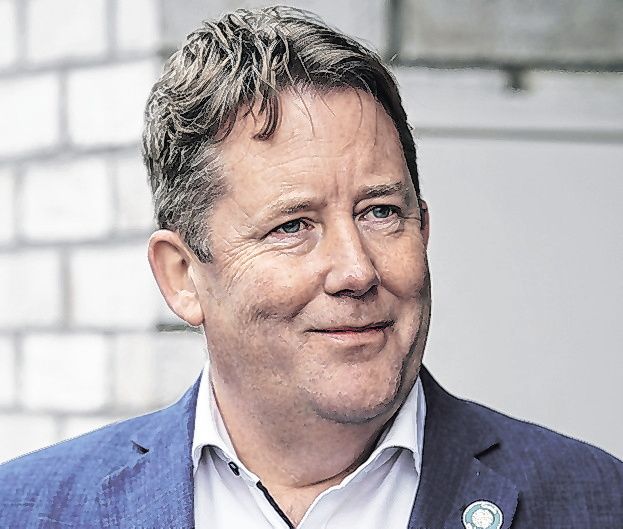
Transport Minister Darragh O’Brien. Photo: Getty
“That won’t wash through to the people who have not got deliveries due until Friday or Saturday of next week,” he said.
“Even with the good weather, there will be less sales this week in anticipation of a drop, so it’s going to take longer for the old stock to wash through.”
He said there are concerns that, should fuel prices continue to rise at pace, next week’s state intervention will be appreciated, but could only amount to “a drop in the ocean”.
“There isn’t a single person who can tell you what the price will be this time next week. You’re not going to see something below €2 for a little while, much and all as we want it to be that, because the economy requires it,” he said.
Reflecting on the last drop in excise duty following Russia’s invasion of Ukraine four years ago, Mr Jennings said the messaging around that was “appalling” and it has to be made clear by the Government that a cut to excise will not bring an immediate drop in prices.
“Government came out and said we’ve dropped the price of excise from midnight and the expectation was that’s going to be there on the pumps tomorrow,” he said.
“There was uproar when it didn’t happen. This will happen in a graded fashion.
“The retailers didn’t all of a sudden become greedy, but we have to stay in business, and you can’t stay in business if you’re selling for substantially less than what you’re buying it for.”
We’ve also had a commitment from them to have a dialogue every two weeks
Mr Jennings reiterated calls for members of the public not to take out their frustrations on members of staff on-site at the forecourts.
“Be kind. That’s the most important thing, be kind,” he said.
The Irish Road Haulage Association (IRHA) met Transport Minister Darragh O’Brien on Thursday, and the Government is set to work through the weekend to finalise a support package, including supports for hauliers.
IRHA president Ger Hyland said he is “absolutely” confident the supports delivered by the Government next Tuesday will be sufficient, even with fuel jumping in price again.
“I will be in constant contact with the minister, and he has promised that by the time Tuesday comes, we will have a package fit for purpose to bring to our members,” Mr Hyland said.
“As well as a commitment from the Government, we’ve also had a commitment from them to have a dialogue every two weeks. We can change this going forward if we have to, this isn’t going to be written in stone.
“Whatever we thrash out with the Government, we will be able to renegotiate with them again.”
There is no fear of a cliff-edge scenario for hauliers, as Mr Hyland said it has been made clear the sector will require further supports, even if the conflict in the Middle East were to end tomorrow.
“When this conflict is over, and who knows when that will be, it will take at least six months of extra supports for our industry before fuel returns to what would be ‘normal’ prices from before the conflict,” he said.