
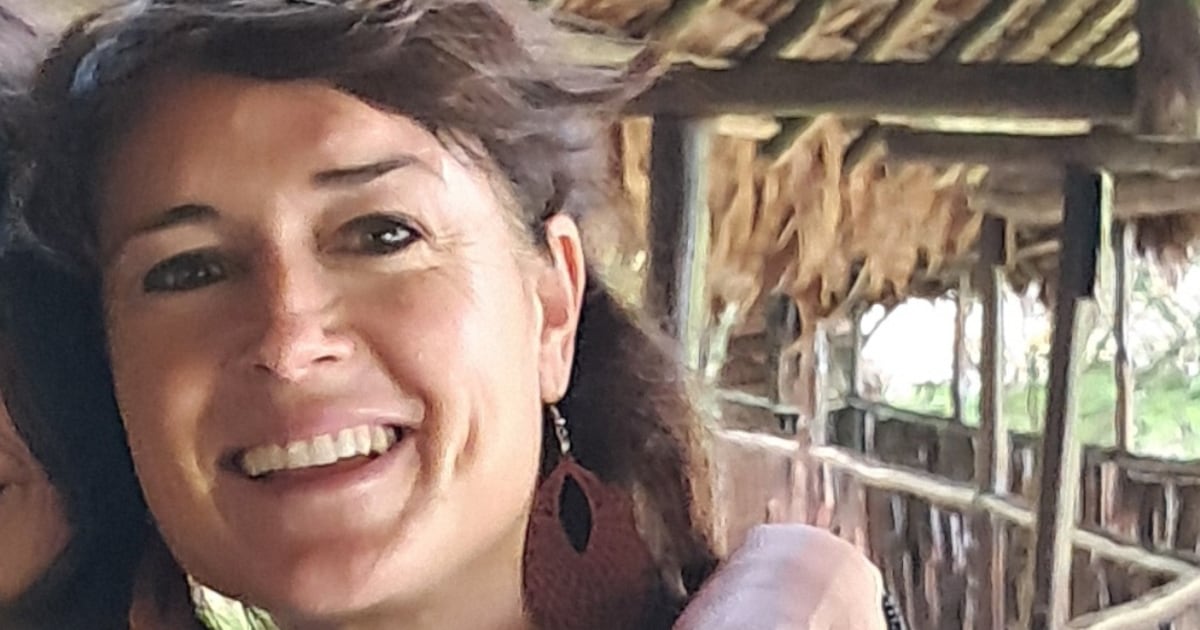
Evanna Lyons, a psychotherapist from Meath, first went to the sprawling Tanzanian capital, Arusha, to work at a mental health clinic in May 2014. The youngest of five, she was born in Kenya but moved as a child to live in Ireland and later to Greenwich in Connecticut, “a big change from the countryside in Meath”, she recalls.
After a degree in sociology, psychology and archaeology in UCD, she trained as a counselling psychotherapist and later as a clinic supervisor.
Although she says her formative work experience was gardening for Sylvester Stallone in Hawaii, her first job was as an AA Roadwatch traffic news presenter at RTÉ.
In Arusha she met – and later married – Alexis Cronin, another Irish expat, from Waterford. An architect, he had come from building mansions for rich clients in London’s Notting Hill to Arusha to build a church for Pallottine priests in the slums of the city’s Esso area.
“It was the complete polar opposite, but it was a great challenge and a new adventure,” he says.
Lyons and Cronin were both struck by the amount of plastic waste dumped in Arusha’s streets and rivers and decided to do something about it. So, in 2016 they formed a recycling start-up called Dunia Designs to create something beautiful from plastic waste, with the name coming from the Swahili word for Earth or world.
Their first product – made on their veranda – was a pouffe, stitched together with recycled fabric and stuffed with shredded waste plastic collected on the streets.
Since then, they have recycled 900 tonnes of plastic waste, and the business has grown to include eye-catching and stylish bespoke furniture, while also providing employment and education. The collections include armchairs, beds, ottomans, sofas, dining tables, benches and mirrors, as well as greenwood decking all made from waste material.
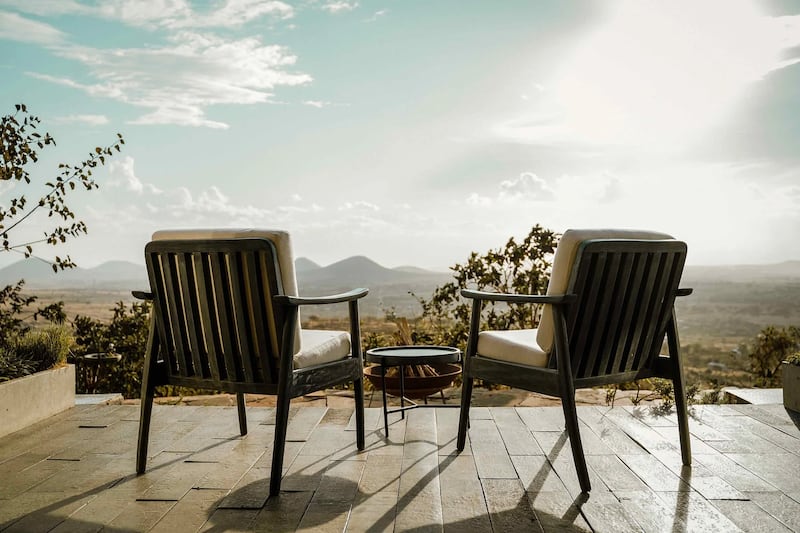 Dunia Designs uses plastic waste to make furniture and decking in Tanzania. Photograph: Dunia Designs
All its products are made from a material called greenwood, which is waste plastic that is cleaned and shredded before being transformed.
“It’s easy to start a business in Tanzania, but not easy to maintain it,” says Lyons. “The country has been given a lot of Irish aid but the tax system does not incentivise the private sector. They have a very unfair tax system called the TRA [Tanzanian Revenue Authority] and everyone struggles with it.
“You apply for a permit and away you go but, once in, there are a lot of hoops to jump which makes business cumbersome and not straightforward.”
Daily life, however, can be easy for expats, given the division of labour.
“You are expected to have house help so there is a lot less daily grind and you are expected to outsource jobs and to be an employer. The cost of labour is quite low and the average income is extremely low.
“We pay over the odds for our 35 employees and pay our part-time house staff full-time pay. You end up paying for the education of their children, so you have a responsibility as an expat.”
Their own children, aged eight and nine, attend an English international school on a beautiful campus with a swimming pool where there is a great emphasis on the outdoors. “There are only two other white children in their class so there is a lovely balance and the children love it. That’s a huge reason why we are still here.”
Their son Malachy speaks fluent Swahili “but I am still learning”, says Lyons.
They get back to Ireland twice a year to spend time with their families “because my parents are in their 80s and so time with them is precious – and the kids have loads of cousins”.
Despite the beauty of Arusha and its surroundings and the benefits of lovely weather that means they can live outdoors, “there isn’t a sense of deep safety. You can’t go out after dark and you need security issues at the door, so freedom has to be managed.
“It is beautiful and wild, but very managed. I would like our kids, when they are teenagers, to be able to go out, ride their bicycles and visit their friends, to have that freedom.”
Both Lyons and Cronin say running the business is the hardest part – enjoyable but taxing “and not for the faint hearted”. They are now thinking of establishing a franchise for Dunia Designs.
“We have developed new ideas around recycling plastic and have gone very far into it with high-end furniture compared to what we thought at the beginning,” Lyons says. “Paris Design Week went very well so we are getting close to a franchise model which we will put out to tender.”
With the franchise, “people can take this recipe for recycling wherever you have a plastic crisis – cut and paste it geographically around the world and make a difference”.
It means the couple will not need to be in Tanzania and can be shareholders and not employers any more, without that sense of responsibility.
In a place like Tanzania, where there are no facilities for recycling, “you can make a difference” as they have proved. duniadesigns.org