
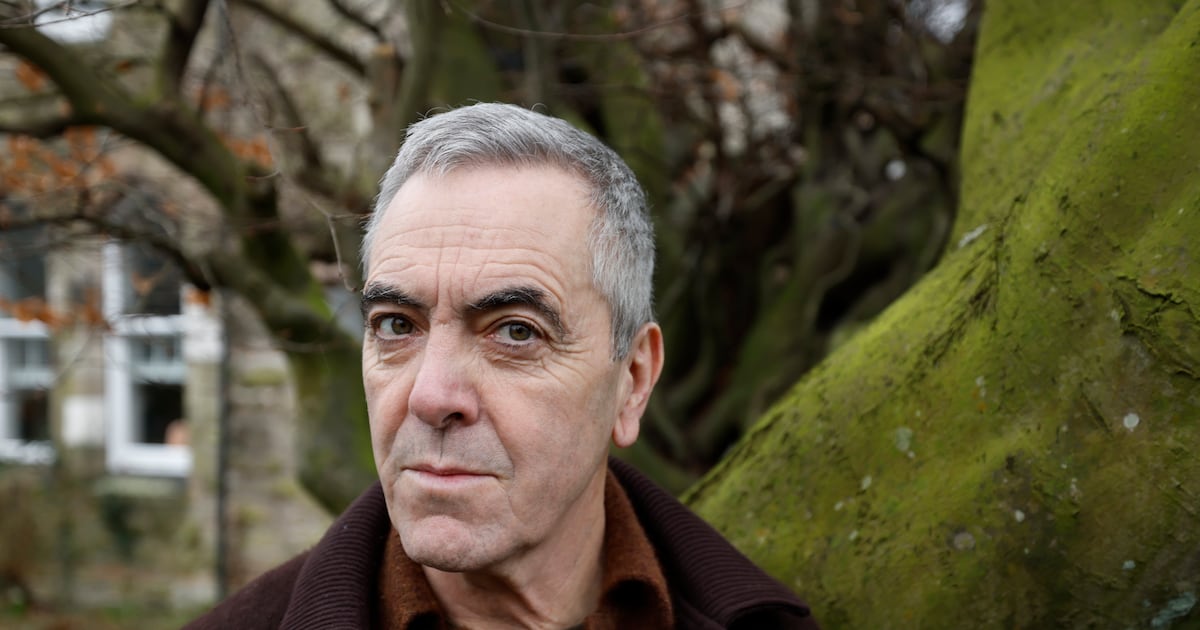
James Nesbitt is explaining why his work with the families of the Disappeared means so much to him when he is overtaken by emotion; his voice cracks, he breaks off his sentence, he apologises.
“Even now, I find it – I get very moved, sorry.” He turns it into a joke. “I cry more than Charles Ingalls in Little House on the Prairie.”
The actor is describing getting to know Michael McConville and Margaret – known as Mags – McKinney; McConville was only 11 years old when his mother, Jean, was taken from their flat in west Belfast in 1972, and McKinney’s son Brian, a 22-year-old Housing Executive worker, disappeared in 1978 along with his friend John McClory.
They are among those known as the Disappeared, 17 people who were abducted, murdered and secretly buried by republican paramilitaries during the North’s Troubles. The remains of four – Joe Lynskey, Columba McVeigh, Robert Nairac and Seamus Maguire – have yet to be recovered.
“In all of my conversations and experience with the Disappeared over the years since 2000,” says Nesbitt, “all of it is ultimately about humanity. Rather than rage, humanity.”
He marvels at McKinney’s “compassion and understanding, having been through the worst”; he describes how she told her son’s story – “my Brian had the mind of a six-year-old” and the “years of anguish, every night, her thinking, is he coming home?
“She would imagine him crying for his mother before he was put in the grave.”
After a search based on information given to the Independent Commission for the Location of Victims’ Remains (ICLVR) – which aims to recover the bodies of the Disappeared – Brian and John’s remains were discovered in a double grave in a bog in Co Monaghan in 1999.
“When they did the dig, the first thing they found when the shovel went in was his white Adidas shoes, which she kept.”
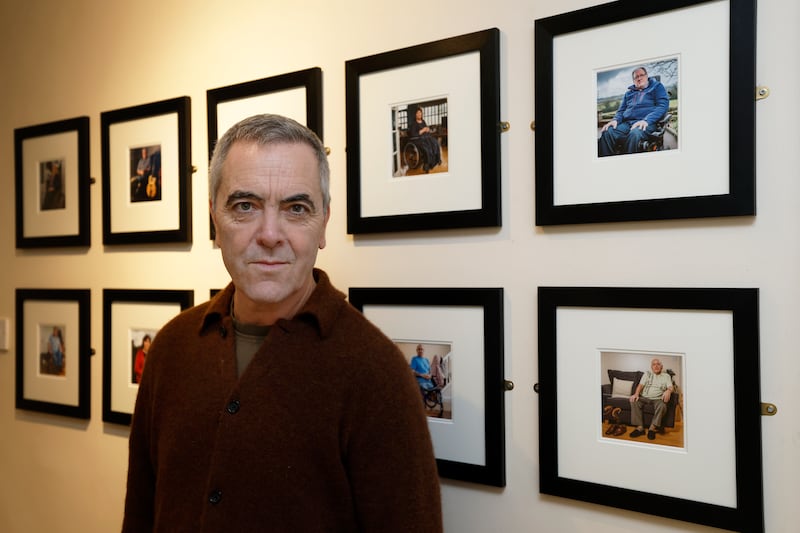 James Nesbitt on working with Wave: ‘It gripped me immediately.’ Photograph: Nick Bradshaw
But, says Nesbitt, “it was a story, unbelievably, of hope and [a] kind of resolution”. She met Bill Clinton, and “was able to turn the president of the United States to tears.”
This, he says, sums up “why people are still so interested and compelled to follow these stories, because it is about humanity. It’s about loss, and it’s about decency and it’s about doing the right thing.
“There’s no two sides to it … this is a story that resonates with people everywhere.”
Since 2003, Nesbitt has been a patron of Wave, the largest cross-community victims and survivors group in Northern Ireland, which works with about 3,500 people every year who have been bereaved, injured or suffered trauma due to the Troubles, including the families of the Disappeared.
Wave includes in this group the relatives of Lisa Dorrian and Gareth O’Connor, who disappeared in 2005 and 2003 respectively; they are not covered by the ICLVR because its remit stops at the 1998 Belfast Agreement.
Nesbitt’s involvement began at a Wave fundraising event in 2000; he compares it to “the first time going on the Big Dipper. You go on and you get into the little car, and you don’t know what’s about to happen, but away you go.
I was self-aware, I knew I was famous, I knew I had an impact
— James Nesbitt
“It gripped me immediately, because it was the stories – traumatic, harrowing stories, extraordinary stories about ordinary people, and there was an organisation at that time who were prepared to represent anyone, no matter what age, where they came from, what class … where they could come together to begin to explore the trauma they’ve been through.”
[ Family of Jean McConville criticise ‘hurtful’ Disney+ dramatisationOpens in new window ]
To get involved “just seemed like a natural thing to do”, he says. “It had that same kind of immediate impact like falling in love.”
“It’s like” – he clicks his fingers, to emphasise the immediacy of the moment – “and then you’re on board.”
He still has the painting of a cow he bought that night. “I thought it was [by] Paul Bell, the really successful artist of cows, and I think I was conned,” he jokes.
For many people, it would have been job done; auction attended, picture bought, money raised. “It becomes something you can’t let go of,” says Nesbitt. “The story was an awful lot bigger than me.”
He pauses; again, the tears threaten. “There’s probably, I think, at my heart all my life … there’s always a bit where I’m thinking about my mother or my father.
“Even then, when she was kind of disappearing into Alzheimer’s … there was always something in me thinking, Mummy would like that. My mother would be proud of that.
“And also, because I was self-aware, I knew I was famous, I knew I had an impact, and also I’d left home, I was in exile, but for me, Ireland, the North, will always be my home.
“So, it was an opportunity to connect with that, and to do something. Do the right thing.
Growing up in Broughshane, Co Antrim – where Nesbitt’s father Jim was the headmaster of a rural Protestant primary school – and then the university town of Coleraine, “as much as the Troubles were a backdrop to my childhood, they were up the road a bit”.
His first stage role came in 1978, in the Riverside Theatre’s Christmas production of Oliver, and at 19 he left Northern Ireland to study acting in London.
Today, Nesbitt looks back on his “fortuitous success” in television and film and the profile it gave him; his many credits include a starring role in the long-running ITV series Cold Feet, which debuted in 1997, and playing the role of Ivan Cooper in the 2002 film Bloody Sunday.
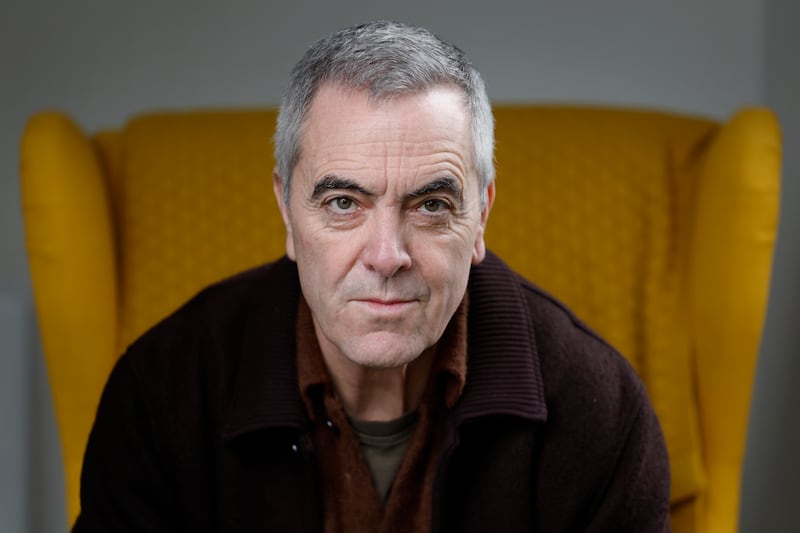 Actor James Nesbitt in Belfast: ‘I think certainly I was losing track of myself.’ Photograph: Nick Bradshaw
He recalls its director, Paul Greengrass, telling him “for any actor, particularly from the North, you have to take on the Troubles at some point.
“It’s kind of like taking on King Lear – it’s a privilege and a responsibility.”
Yet, he says, it was only when he met people such as McConville and McKinney “that you can engage with what trauma is, meant, and what people have lived with all their life.”
“Truthfully,” he says, “it felt that there was no way I couldn’t be involved.
“I think,” he continues, “if I’m honest, I think it sort of rescued me a wee bit.”
“My fame and all that went with it … I think certainly I was losing track of myself. I think I was probably a wee bit lost.
“It really countered a lot of the corruption, the difficulties that fame would bring and the way you get carried away … I certainly, at times, fell prey to that, and Wave, it was as much a healing for me.”
He emphasises it “would be wrong of me” not to say he is proud of the work he has done. “Yeah, I am. I am proud of it. People are scared of being proud of things. I am, but what I get from that pride has been good for me. It sustains me.”
At Wave, he is part of a “family”; he has met children and grandchildren, attended funerals, shared a lot of pain, but also a lot of laughter. “Protestants and Catholics who’ve been through trauma like you wouldn’t believe, sat beside each other.”
Nesbitt speaks warmly of another friend, Joe Griffin, who he got to know when he played him in the 2009 film Five Minutes of Heaven (when he was 11 Griffin witnessed his 19-year-old brother Jim being murdered by the UVF). “I took Joe to meet Pelé, Joe got a shirt signed by Pelé.”
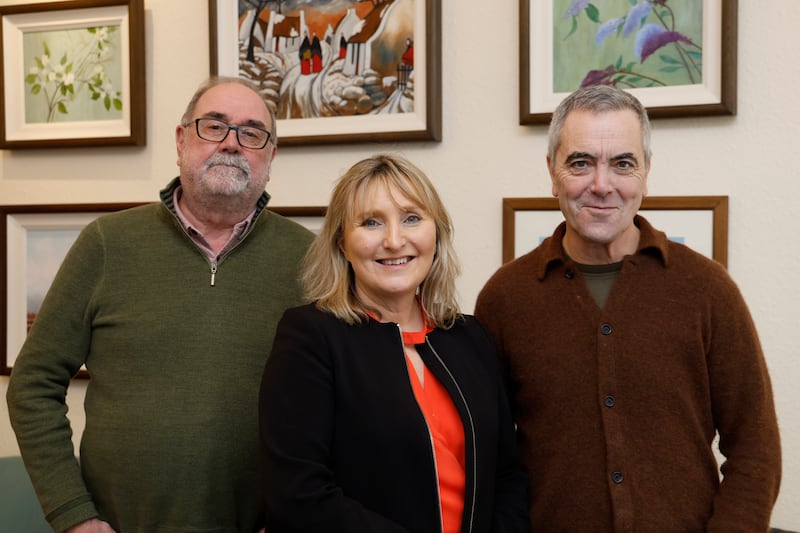 James Nesbitt at the offices of Wave Trauma in Belfast with Wave board member Dennis Godfrey and chief executive Sandra Peake. Photograph: Nick Bradshaw
“Joe loved that,” says Wave chief executive Sandra Peake. She is keen to emphasise this is typical of Nesbitt; he puts in “hours and hours that nobody sees”, from unexpected donations to remembering phone calls on anniversaries.
“Why Jimmy was so important at the start was because so few people would stand with those families, yet he stood with us as a public figure, with profile,” says Peake. “He helped dilute the stigma – he was saying, it’s right and proper that we address this issue.”
More than 20 years on, time is running out. Each summer, Wave hosts a day of reflection, and each summer, there are more empty chairs, even as its referrals are increasing. “I do know there should be justice for those people,” says Nesbitt. “You cannot move on without addressing the trauma, the loss, the legacy for so many people.”
“Wave unites, again and again, and that’s one of the differences between the politics and the reality of these true stories, and I think we’ve more of a chance of moving on if we continue to acknowledge the work that places like this do.”
Throughout, Nesbitt has been part of that work, from travelling to Westminster with members of the Wave Injured Group, to campaigning for the victims’ pension, to accompanying relatives of the Disappeared to digs including, most recently, the search for McVeigh.
“When you see it for the first time, it’s horrifying,” he says. “In a bog, like a massive sheugh, in Bragan in Co Monaghan with Oliver and Dympna, standing beside them, standing watching them look at what seems to be an impossible task of finding their brother Columba, who’s been missing since 1975.
“To have seen the hope on their faces … and that’s the terribly crushing thing about it, the devastation they must go through, and then the ability to get up in the morning and go again, it’s humbling and it’s life-affirming.”
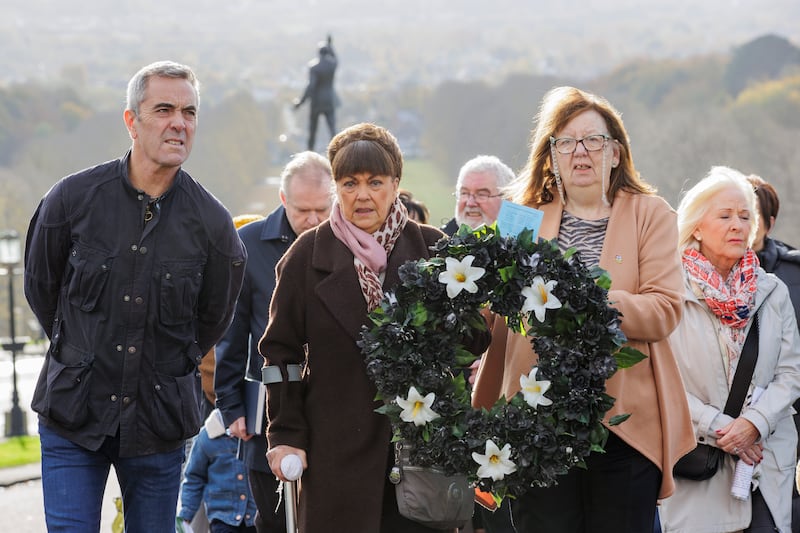 James Nesbitt walking with Joe Lynskey’s niece Maria Lynskey (centre) and Columba McVeigh’s sister Dympna Kerr (right) during the 17th annual All Souls Silent Walk for the Disappeared at Stormont in 2023. Photograph: Liam McBurney/PA Wire
Despite multiple searches, McVeigh is still missing. Nesbitt recites the names of the others: Lisa Dorrian, Seamus Maguire, Joe Lynskey, Robert Nairac. “A lot of people may have mixed views on Robert Nairac, but a British soldier doesn’t deserve to be lying on Irish soil.”
Yet he emphasises that 14 people have been found and their remains returned to their families. “It’s a process that has worked. There is hope out there.”
This is his appeal: “I have watched over the years as families have gone through unimaginable trauma, but I have seen the success, I’ve seen the shift and the resolution, the joy of finding your loved one’s remains so that you can, like everyone else, give a burial, a Christian burial, whatever kind of burial you want.
[ Who was Robert Nairac and what happened to him?Opens in new window ]
“Go to a wake, tend a grave, bring flowers, communicate with your loved one, knowing that they’re there.
“Everyone knows what the pain of loss is, but everyone has the comfort and very basic right of being able to give their loved ones a burial or have a wake, have a grave they can go to.
“If you think you know something, it means you know something. Look into your conscience and try to help, because these people have suffered enough.”
Anyone with information on any of the four outstanding ICLVR Disappeared cases – Joe Lynskey, Columba McVeigh, Robert Nairac and Seamus Maguire – should contact the ICLVR. All information is treated in the strictest confidence.
The ICLVR can be contacted by telephone: +353 1 602 8655, email Secretary@iclvr.ie or by post to: ICLVR PO Box 10827
Anyone with information about Lisa Dorrian should contact the PSNI or www.crimestoppers-uk.org.