
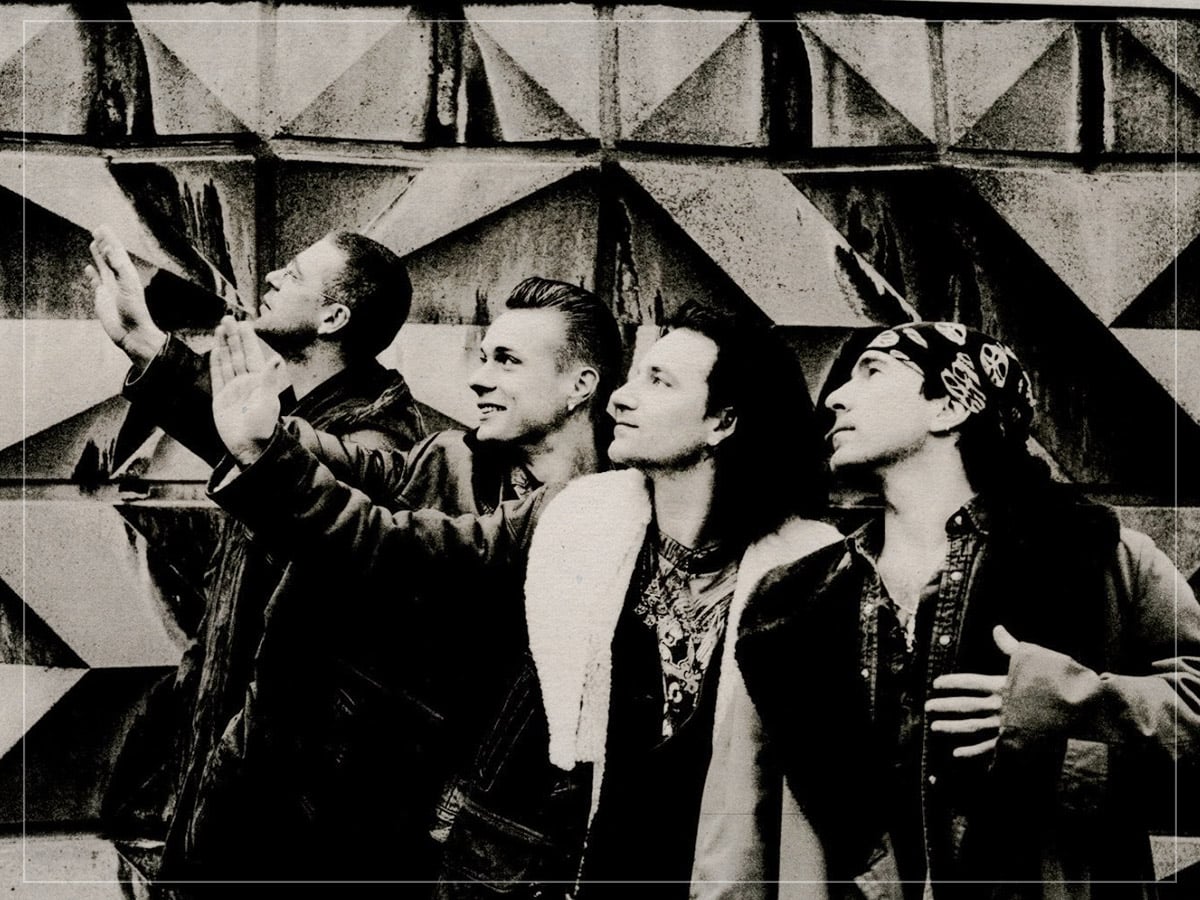
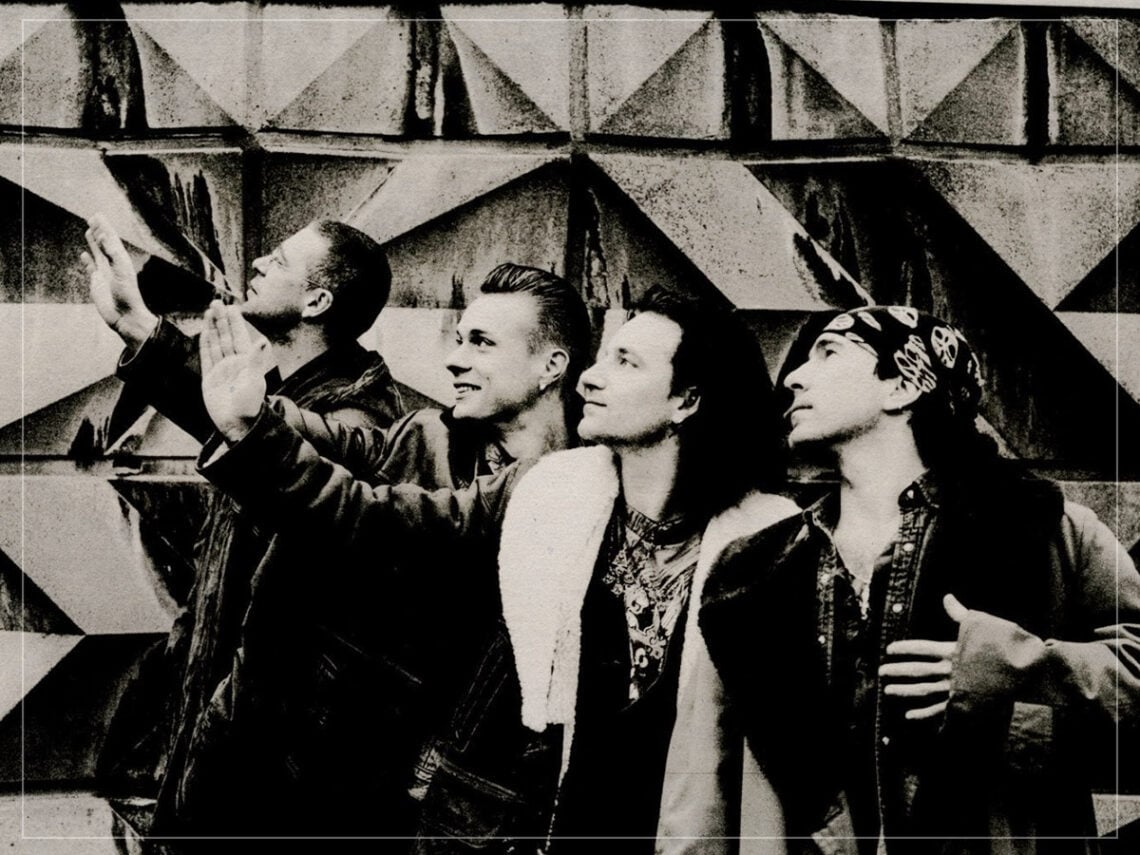
(Credits: Anton Corbjin)
Sun 22 March 2026 16:00, UK
Let’s face it, Bono can be pretty fucking irritating.
For better or worse, the U2 frontman has blazed through the rock scene for almost half a century with a spring in his step and a fire in his belly to create some force of change. Whether that finds him up on stage in front of tens of thousands or becoming the face of various charitable causes, it’s a motto he’s always stood by.
But is it really his place to be that beacon? This is a debate that has existed in the minds of many Bono critics over the years, as well as, to be fair, the man himself. He previously described some of his lyricism in Band Aid’s ‘Do They Know It’s Christmas’ as “tone deaf” and said he had fallen victim to a complex of white saviourism, much to the umbrage of Bob Geldof.
Yet it is this latter area which becomes a huge sticking point in the context of his wider work, especially when it comes to an album like The Joshua Tree. Iconic as it may be within the scores of U2’s repertoire and beloved by fans the world over, the storming and lasting success of the record somewhat masks its uglier truth.
It’s an album so acclaimed that it almost warrants no sonic dissection – every single track of the 11 has its own bespoke Wikipedia page, just to give you an idea of the scale of this beast. But between the trails of ‘I Still Haven’t Found What I’m Looking For’ to ‘One Tree Hill’, it now becomes apparent that impact has taken much larger precedence than intention.
 (Credits: Far Out / Island Records)
Because if you burrow deeper beneath the surface of The Joshua Tree, what you will discover is not an ode to America and all its supposed greatness, but a stark dichotomy between the politics Bono presents to the world versus what his inner monologue dictates. This is an album not of celebration and reverence of the world, but instead of doling out unsolicited pity to those perceived as lesser souls.
To exhibit this, you only have to look so far as the comments the frontman made in the autumn of 1985 on a humanitarian visit to Egypt and Ethiopia. “Spending time in Africa and seeing people in the pits of poverty, I still saw a very strong spirit in the people, a richness of spirit I didn’t see when I came home,” he said.
“I saw the spoiled child of the Western world. I started thinking, ‘They may have a physical desert, but we’ve got other kinds of deserts.’ And that’s what attracted me to the desert as a symbol of some sort.” It’s contrived, to put it mildly, but when he started recording for the album mere months after his return, it was clear the trip had made some form of impression.
Yes, of course: the 1980s were a different time. But does it really stand up as a solid reasoning to witness some of the starkest forms of poverty and deprivation on the planet and attempt to translate that into the barren landscapes of America, where, despite its vastness, hedonism and overconsumption stand just on its doorstep?
At the end of the day, the Joshua Tree and the Mojave Desert pale in comparison to Ethiopia. It’s in California, for God’s sake. Travel only around 140 miles, and you’re right in the heart of LA – it’s hardly the escapist environment that the band were pining to portray.
 (Credits: Far Out / MUBI)
Then, in taking into account the backstory of songs like ‘Mothers of the Disappeared’, the web of complexity only grows more intertwined. Having been in Nicaragua and El Salvador and learning of the child kidnappings that took place at the hands of the Argentine government, Bono felt compelled to write about it – because, of course, he did.
Surely, if he were so intent on platforming the stories of suffering and plight throughout impoverished parts of the world, he would have been far better off handing the microphone over to those very people and creating an album out of their words and tales. Instead, what we were handed was a rock record focused on those ideals through the very Westernised lens Bono claimed he was rejecting.
The ironic ringing of “Tonight thank God it’s them, instead of you” seems terribly familiar in this context, seeming as though the train of thought was that Bono was the only appropriate person who could insert themselves from the outside and tell a story that wasn’t theirs to share in the first place.
Putting this in the context of what is considered one of the most significant albums in American history makes for a pretty uncomfortable reckoning when you truly look into the process behind it. On top of that, you have to remember that U2 aren’t even an American band themselves, and the whole thing just gets more confusing.
This isn’t an attempt to cancel The Joshua Tree. It’s an iconic staple of the U2 catalogue and regarded as an important piece of culture; nothing can immediately reverse that. But it is proof that behind the veneer of golden acclaim lies some often questionable morals, even from those who we feel are on the right side of humanity. The convolution of those dilemmas is becoming more impossible to face.
