
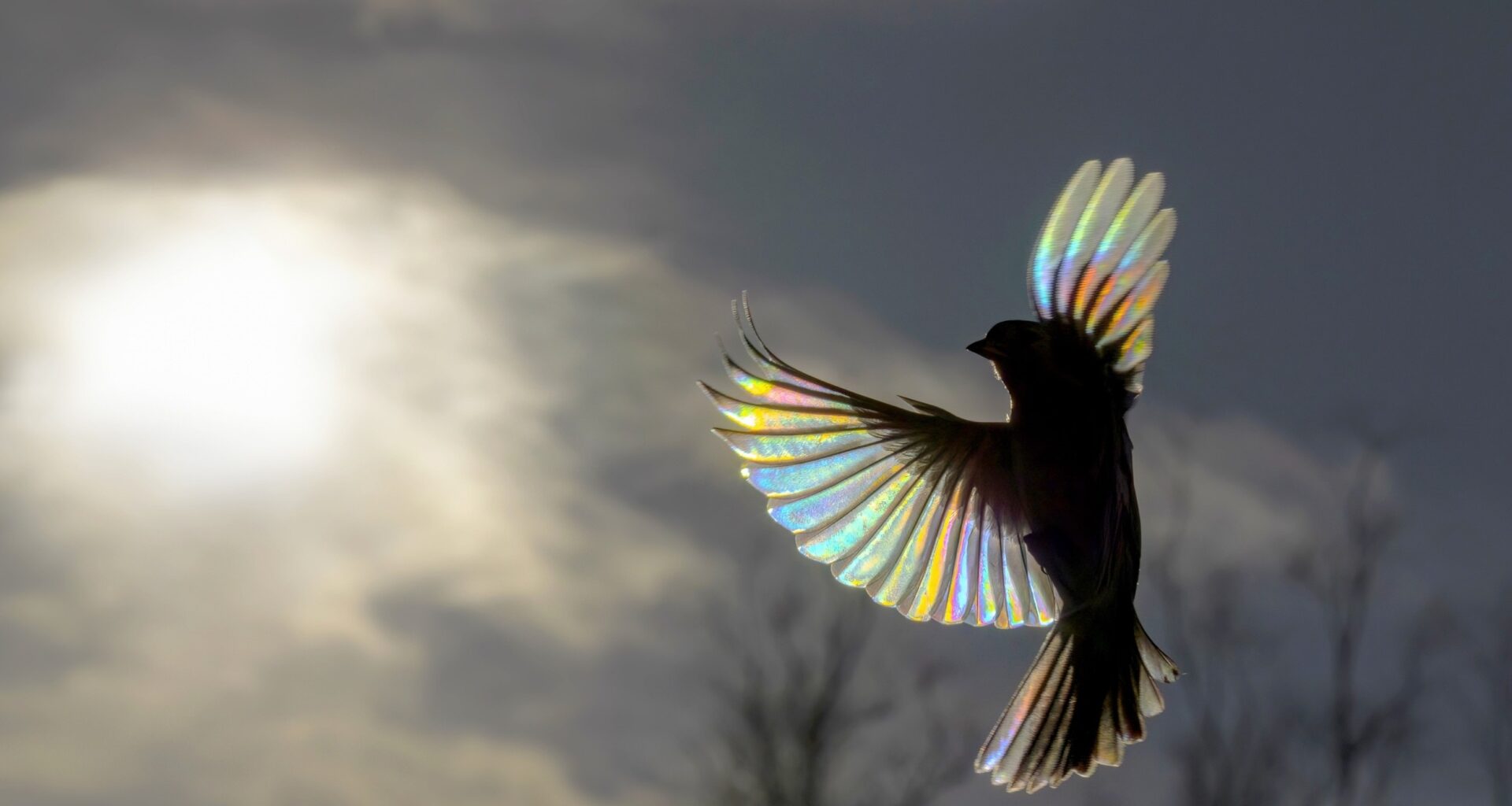
Scientists have measured for the first time how bird feathers send body heat toward space, identifying northern bobwhite quail as unusually strong emitters.
The finding reframes feathers as active thermal structures that shape how birds gain and lose heat beyond what color alone can explain.
Bird feathers send heat upward

Feathers from five North American species revealed that some birds release heat upward through open air more effectively than others.
Thomas Lee at the University of California, Los Angeles (UCLA) demonstrated that bobwhites emit more heat than closely related species.
That contrast held even when the birds appeared similar in visible color, separating how feathers look from how they handle energy.
The narrow range across most species limits sweeping conclusions, but it establishes a measurable pathway that invites closer comparison.
Invisible colors and infrared heat
Visible shades told only part of the story because much of the sun’s energy arrives outside the band humans notice.
The team tracked near-infrared sunlight because feathers can reflect it without changing how a bird looks.
The researchers also measured mid-infrared, heat emitted by warm bodies, which matters when exposed birds lose energy upward through clear air.
As a result, two birds can appear nearly identical yet gain solar heat and shed warmth at different rates.
Birds handle heat by region
Across several species, warmer places often matched feathers that took in less of the sun’s total energy.
Lower absorptance, the share of incoming radiation a surface keeps, reduces heat loading before a bird starts active cooling.
Song sparrows from southern California deserts showed the lowest solar uptake, while Iowa bobwhites absorbed more than birds from Mexico or Florida.
Earlier bird research showed that near-infrared reflection can protect birds from heat, and these regional patterns sharpen that picture.
Similar birds manage heat differently
Bobwhites mattered for another reason, because visible color failed to predict how their feathers handled hidden wavelengths.
Birds from Iowa, Florida, and southern Mexico, looked similar to human eyes, yet their total solar uptake split once invisible light entered.
Such a mismatch suggests plumage can preserve camouflage while changing heat management, a useful trait in exposed grasslands and prairies.
Under open sky, small optical tweaks could matter even when feathers do not look different.
Open sky helps heat escape
Open habitats made bobwhites especially revealing because grassland birds spend long stretches with nothing above them but sky.
Under those conditions, heat can escape through an atmospheric window, wavelengths that pass readily through air, instead of returning immediately.
With no roof, branches, or cliff overhead, some body heat leaves upward toward the colder sky rather than staying near the bird.
Sky exposure becomes a real selective pressure, though the study was too small to measure its exact strength.
Black birds handle heat differently
Common ravens complicated the story because birds that looked equally black did not handle sunlight in the same way.
Their subspecies, regionally distinct populations within one species, showed different near-infrared uptake even when human vision saw almost no difference.
Warm-region ravens absorbed more total sunlight than cooler-region ravens, even though both groups looked black to human eyes.
Seen that way, dark plumage does not carry one fixed thermal cost across an entire species.
Dark bird feathers are not always hot
Dark feathers do not automatically overheat a bird, because where absorbed energy sits can matter as much as total load.
Older plumage studies showed that wind and feather structure can strongly change how much absorbed solar heat reaches skin.
Warm-climate ravens may therefore absorb more sunlight without paying the same penalty a simpler color rule would predict.
Heat biology, then, depends on wind, behavior, and feather structure as well as shade and air temperature.
Limits of measurement
The study stayed preliminary because measuring whole birds pushed instruments designed for cleaner, flatter, man-made materials.
Many populations had only three specimens, and separating single feathers produced misleading readings instead of a bird’s true surface behavior.
One check found an intact song sparrow back gave a reading nearly three times that of one loose feather.
Still, those limits show why museum collections can answer questions that fieldwork alone cannot easily reach.
Bird feathers inspire cooling technology
The payoff reaches beyond bird biology because feather optics could guide materials that stay cooler without pumps or power.
“A ‘hot’ topic in thermal engineering is to create passively cooling structures,” said Lee recently.
That combination of reflected sunlight and emitted heat makes feathers attractive models for passive cooling design.
Conservation also stands to gain, since hidden thermal traits may help forecast which populations can handle hotter days.
A new role for bird feathers
Bird plumage now looks less like decoration and more like climate equipment, tuned across color, sunlight, and escaping heat.
Feather color still matters, but hidden heat traits add another layer to how birds meet their climates.
That extra layer may guide better conservation forecasts and smarter cooling materials, while reminding researchers how much remains unseen.
The study is published in the journal Integrative Organismal Biology.
—–
Like what you read? Subscribe to our newsletter for engaging articles, exclusive content, and the latest updates.
Check us out on EarthSnap, a free app brought to you by Eric Ralls and Earth.com.
—–