
 Spending retirement savings
For decades, Kevin did exactly what financial advisers say the general public should do: work hard, stay out of debt and save consistently for retirement.
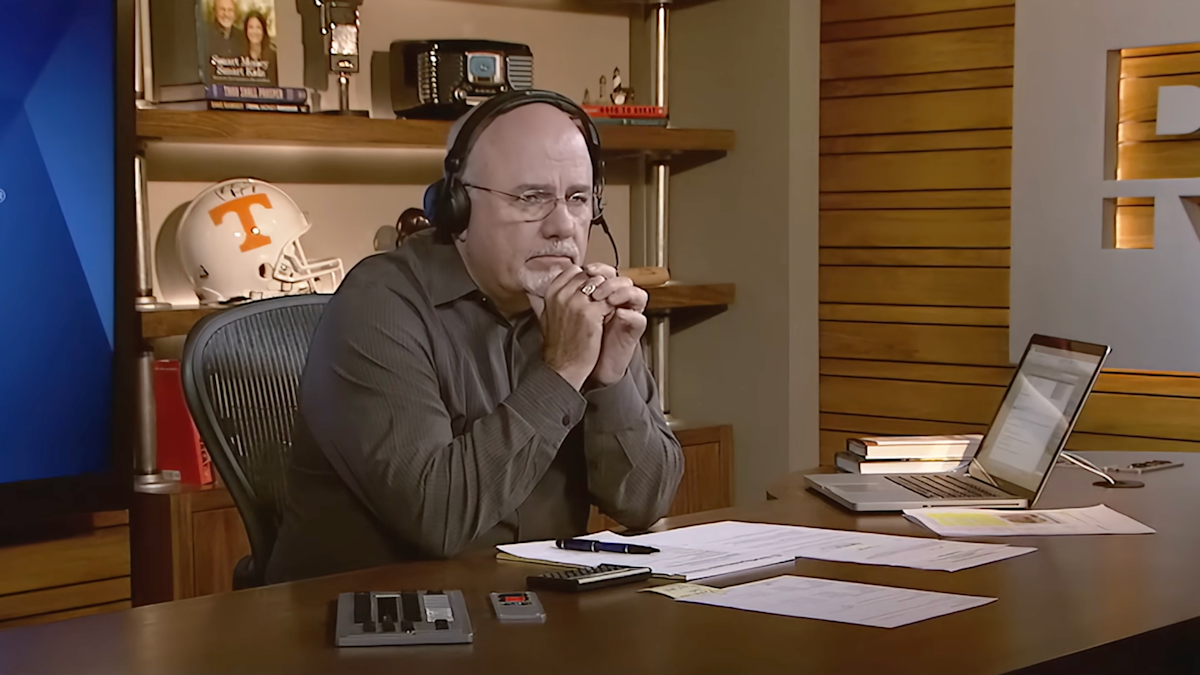
By the time he called into The Ramsey Show (1), the Atlanta electrician had done all of it. After 35 years of marriage and a lifetime working in construction, Kevin and his wife had built a nest egg of about US$1.7 million (C$2.3 million).
Yet instead of feeling relieved as retirement approached, he felt anxious.
“My question is a little more psychological than financial,” Kevin told host Dave Ramsey during the call. “It’s just there’s something in my head about seeing those savings going the other direction.”
Kevin, who planned to retire around age 66, said he and his wife expected to bring in about US$96,000 (C$131,000) a year in income. Their home still carried a mortgage, but their financial outlook appeared stable. In fact, he admitted they may never need to touch their investment principal unless a major medical issue arose.
Still, the idea of spending their savings — even small amounts — made him uncomfortable.
Ramsey described Kevin as a classic example of a self-made millionaire.
“You don’t feel like a millionaire, do you?” Ramsey asked during the call.
Kevin quickly answered no.
Many retirees face the “retirement spending paradox (2),” which is the challenge of switching mentally from saving money to spending it after decades of disciplined accumulation.
In Canada, 70% of Canadians report having negative feelings (3) about their RRSP contributions, even though their intention to save and grow their nest egg remains steadfast.
Once retirement begins, however, the financial equation flips. Instead of adding money to accounts, retirees must begin withdrawing from them — a phase financial planners call decumulation.
For lifelong savers, that shift can feel deeply unsettling. A study found that 6 in 10 Canadians (4) are afraid they will outlive their retirement savings.
Even when retirement projections show their portfolios are sustainable, retirees may worry about market downturns, rising health-care costs or simply running out of money.
Longevity also plays a role. According to data from Statistics Canada (5), Canadians are living longer than previous generations, with life expectancy now extending into the mid-80s on average. For healthy couples retiring at 65, there is a strong probability that at least one spouse will live into their 90s (6).
Story Continues
That long time horizon can make retirees hesitant to spend too quickly.
Read more: The ultra-rich are bailing on volatile stocks right now — these 4 shockproof assets are their new safe havens
Ramsey’s advice to Kevin focused on a simple concept: practice.
“You’ve spent 66 years building up one muscle — you’re saving muscle,” Ramsey told him.
Instead of making drastic financial changes, Ramsey suggested starting small.
He asked Kevin how much he typically spends on a cruise vacation. Kevin estimated about US$4,000 (C$5,469).
Ramsey’s assignment was simple: double it.
“I want you to plan to spend $8,000 on a cruise this year,” Ramsey said. “You’ve got $1.7 million. I didn’t even take the sweat off your interest.”
With a portfolio of that size, Ramsey argued, occasional larger purchases would barely affect the couple’s long-term finances.
He offered another example: Kevin had mentioned wanting a high-end woodworking tool that cost just over US$3,000.
“Perfect,” Ramsey replied. “You didn’t tell me $300,000.”
After years of disciplined saving, retirees may need to learn to enjoy their money intentionally.
Financial planners often recommend creating a structured withdrawal strategy to ease the psychological transition into retirement.
One widely known guideline is the 4% rule (7), which suggests retirees can withdraw roughly 4% of their portfolio in the first year of retirement — adjusting for inflation in future years — while maintaining a strong chance their savings will last about 30 years.
Others prefer a “bucket strategy (8),” dividing retirement savings into separate pools for short-term spending, medium-term investments and long-term growth.
The goal is to make spending part of the plan.
Without that structure, retirees may fall into the opposite problem: accumulating wealth but never using it to enjoy the retirement they spent decades preparing for.
Ramsey encouraged Kevin to broaden his perspective beyond personal spending.
“Find somebody to give some money to,” he suggested. “Increase your generosity level.”
For Canadians approaching retirement milestones, the lesson may be simple but powerful: financial success isn’t just about accumulating wealth — it’s also about learning to use it with confidence.
We rely only on vetted sources and credible third-party reporting. For details, see our editorial ethics and guidelines.
The Ramsey Show (1); Brief Glance (2, 3); Benefits and Pensions Monitor (4); Statistics Canada (5); Fidelity (6); CHIP Reverse Mortgage (7); The Globe and Mail (8)
This article provides information only and should not be construed as advice. It is provided without warranty of any kind.